DeSantis Signs 10th Death Warrant of 2026 for Orange County Killer Dusty Ray Spencer
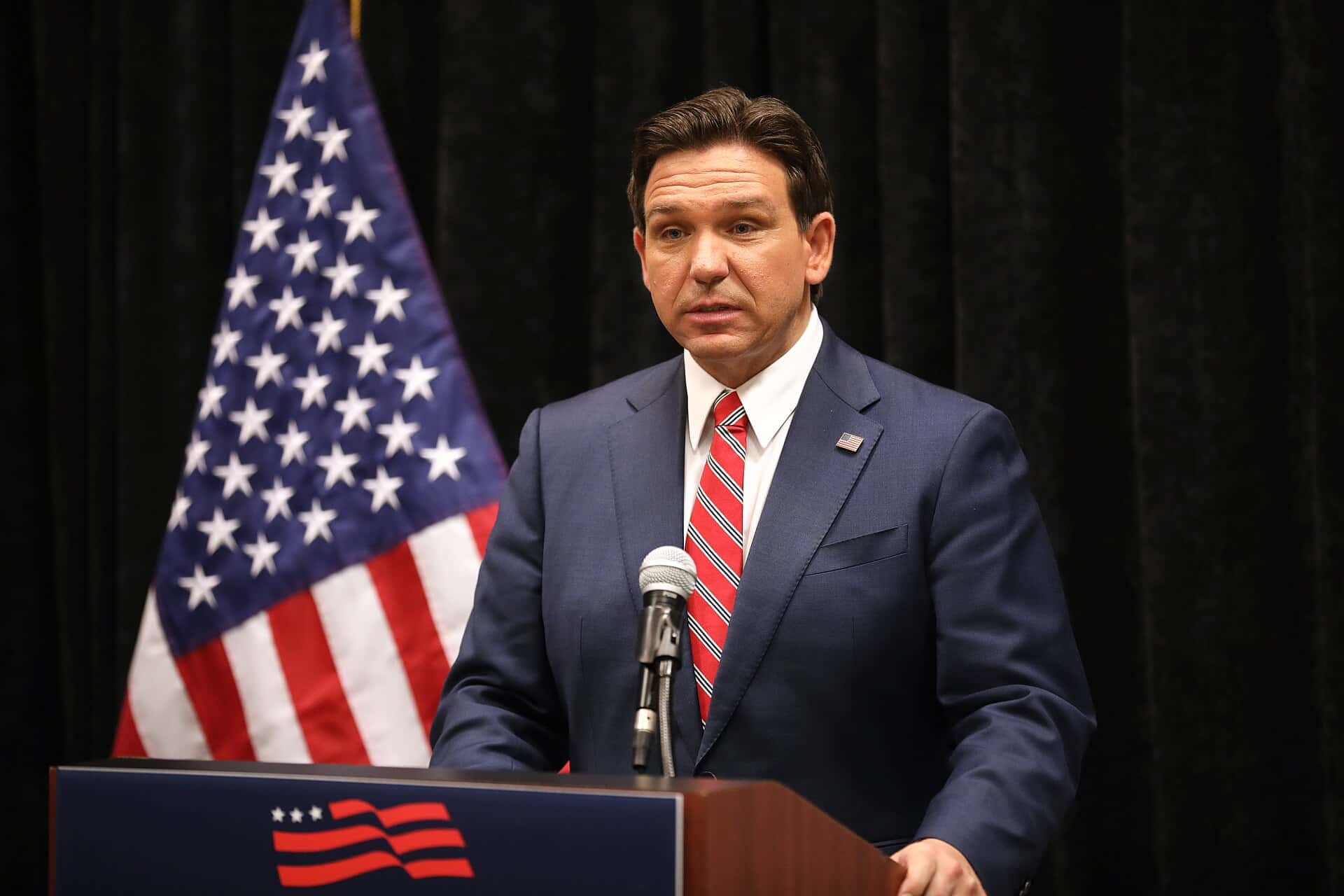
Gov. Ron DeSantis signed his 10th death warrant of 2026 on June 2, ordering the execution of Dusty Ray Spencer, a 74-year-old man who has spent more than three decades on Florida's death row for the 1992 stabbing murder of his wife in Orange County. Spencer is scheduled to die by lethal injection on June 25 at Florida State Prison in Starke, the facility where the state carries out its executions.
The signing marks a striking milestone in a year that has seen Florida move at an unusually rapid pace. Reaching a 10th death warrant by early June puts the state on a trajectory that far outstrips its typical annual rhythm, reflecting an accelerated execution schedule under DeSantis. Each warrant sets in motion a tightly scheduled sequence of legal review and procedural steps that culminate, absent a court intervention, in an execution date.
Spencer's case dates to 1992, when prosecutors say he killed his wife by stabbing in Orange County. A jury convicted him and he was sentenced to death, beginning a stay on death row that has now stretched across more than 30 years. At 74, he is among the older inmates facing imminent execution in Florida, a reflection of how long capital cases can remain in the legal system before a warrant is finally signed.
How a Florida Death Warrant Works
In Florida, the governor holds the sole authority to sign a death warrant, the document that schedules an execution and triggers the final phase of a capital case. Once signed, a warrant typically sets an execution date several weeks out, creating a compressed window during which the inmate's lawyers can pursue last-minute appeals and the state prepares to carry out the sentence.
The warrant for Spencer sets June 25 as the execution date, roughly three weeks after the June 2 signing. That interval is consistent with the timeline Florida has used in recent cases, giving courts a defined period to consider any remaining legal challenges. Lethal injection is the state's primary method of execution, administered at Florida State Prison in Starke.
The signing of a warrant does not by itself guarantee that an execution will proceed on the scheduled date. Inmates can file appeals raising claims about their convictions, sentences, or competency, and courts can issue stays that pause or delay an execution. The process is designed to provide a final layer of judicial scrutiny even after decades of prior litigation.
Florida's death row population includes inmates whose cases have moved through years of trial proceedings, direct appeals, and post-conviction challenges. By the time a warrant is signed, most of those avenues have typically been exhausted, leaving a narrow set of issues that can still be raised in the warrant phase.
The governor's signature also sets the broader machinery of the state in motion. The Department of Corrections begins its own preparations, the courts brace for an expedited round of filings, and the legal teams on both sides shift into the final phase of a case that may have been dormant for years. A warrant transforms a long-settled sentence into an active matter with a fixed deadline, concentrating attention on a case that had largely receded from public view.
The Role of the Florida Supreme Court
The Florida Supreme Court occupies a central position in the warrant process. After a governor signs a death warrant, the condemned inmate's case generally returns to the court for review of any newly raised claims, and the justices set an expedited schedule to resolve them before the scheduled execution date. The court's decisions in this phase often determine whether an execution proceeds as planned.
That review typically focuses on whether there are legal grounds to halt the execution, such as procedural errors, new evidence, or constitutional questions about the inmate's competency to be executed. The compressed timeline of a warrant means the court must act quickly, and its rulings can be appealed further to federal courts, including the U.S. Supreme Court, in the days before an execution.
Florida's appellate framework for capital cases is structured to balance finality with continued judicial oversight. Decades of appeals usually precede a warrant, but the warrant phase preserves a final opportunity for courts to weigh claims that could affect whether the sentence is carried out. For inmates like Spencer who have been on death row for many years, this stage often turns on narrow legal questions rather than the underlying facts of the crime.
The outcome of any appeals in Spencer's case will shape whether the June 25 date holds. Without a stay from the courts, the execution would proceed as scheduled at Florida State Prison.
An Accelerated Pace of Executions
Florida's pace in 2026 stands out. Signing a 10th death warrant by early June represents a notably high rate of executions for a single year, and it reflects a broader pattern of accelerated activity under DeSantis. The cadence has drawn attention to how aggressively the state is moving to carry out sentences that, in many cases, were imposed decades ago.
The acceleration has practical effects throughout Florida's criminal justice system. Each warrant requires coordination among the governor's office, the courts, the Department of Corrections, and the legal teams on both sides. A higher volume of warrants compresses these efforts into a shorter span of time, placing demands on the institutions responsible for managing capital cases.
For the families of victims, an execution can represent a long-delayed resolution after years or decades of waiting. Spencer's case stems from a 1992 killing, meaning more than 30 years have passed since the crime that led to his death sentence. The lengthy interval between conviction and execution is common in capital cases, where extensive appeals are a built-in feature of the system.
The state's increased pace also intensifies the work of defense attorneys who represent death row inmates, often pro bono or through public funding. A faster schedule leaves less time between warrants, requiring lawyers to prepare appeals on compressed timelines while courts move quickly to rule.
The 2026 pace has also drawn the attention of legal observers and advocacy groups who track capital punishment nationally. A state reaching its 10th warrant before the midpoint of the year stands out against historical patterns, in which Florida and most other death penalty states carried out far fewer executions annually. Supporters of capital punishment view the accelerated cadence as the state finally enforcing sentences that juries imposed long ago, while critics question whether the speed allows for adequate review of each case.
Florida State Prison and the Execution Process
Florida State Prison in Starke is the site of the state's executions. The facility houses the execution chamber where lethal injections are administered, and it serves as the destination for inmates once a warrant has been signed and an execution date is set. The prison has been central to Florida's capital punishment system for decades.
When an execution is scheduled, the Department of Corrections follows a detailed protocol governing the days and hours leading up to it. The procedures cover the inmate's final period of confinement, the administration of the lethal injection, and the official witnessing of the execution. These protocols are designed to ensure the process is carried out according to state law.
The timing of Spencer's execution, set for June 25, places it within the dense schedule Florida has maintained throughout 2026. Each execution at Starke follows the same general framework, with the specific date and details governed by the individual warrant. For Spencer, that framework now points toward a late-June date unless courts intervene.
The concentration of executions at a single facility underscores the logistical dimension of the state's accelerated pace. Carrying out a high number of executions in a single year requires sustained coordination at the prison, where the chamber and the staff responsible for the process are based.
A Case Decades in the Making
Spencer's path to a death warrant traces back to the early 1990s. The 1992 murder of his wife in Orange County led to his conviction and death sentence, and he has remained on Florida's death row ever since. The span of more than three decades illustrates the extended life cycle of many capital cases in the state.
Over those years, capital cases typically pass through multiple layers of review, from the original trial to direct appeals and then to post-conviction proceedings that can stretch on for years. By the time a warrant is signed, the case has usually been examined repeatedly by state and federal courts. The warrant represents the final administrative step in a process that began with the crime itself.
At 74, Spencer is among the older inmates facing execution in Florida this year. His age and the length of his time on death row reflect how long the interval between sentencing and execution can become. The June 2 warrant brings his case to its final stage, with the execution scheduled for June 25 at Florida State Prison.
What's Next
The coming weeks will determine whether Spencer's execution proceeds on June 25 as scheduled. His legal team may pursue appeals in the warrant phase, and the Florida Supreme Court is positioned to review any claims raised before the date arrives. Further appeals to federal courts remain possible in the final days, as is customary in capital cases.
Absent a stay from the courts, the execution would be carried out by lethal injection at Florida State Prison in Starke. The state's machinery for capital punishment, from the Department of Corrections to the prison staff in Starke, will continue its preparations under the timeline set by the warrant.
More broadly, the 10th warrant of 2026 signals that Florida's accelerated execution schedule is likely to continue. With the year not yet half over, the state has already approached a pace that surpasses its historical norms, and observers across the legal and corrections systems will be watching how the rest of the year unfolds. For now, attention centers on Spencer's case and the late-June date that DeSantis set with his signature.
Spotted an issue with this article?
Have something to say about this story?
Write us a letterComments
No comments yet. Be the first to weigh in.
Related Coverage

Lauderhill Police Officer Accused of Taking Over Dead Man's Home After Welfare Check, Using His Identity on Permit
21h ago

Sarasota man indicted on federal threat charge over Instagram videos vowing to 'hunt' Jewish people
1d ago

Miami-Dade Jury Recommends Death for Alberto Sierra in 2012 Killings of His Estranged Wife and Her Two Young Daughters
1d ago

Leo Govoni special needs trust fraud trial pushed to May 2027 as families wait for missing $100 million
1d ago