DeSantis Signs FIRE Act at Bay of Pigs Museum, Targeting Foreign Influence from Cuba, China, Russia and Other Adversaries
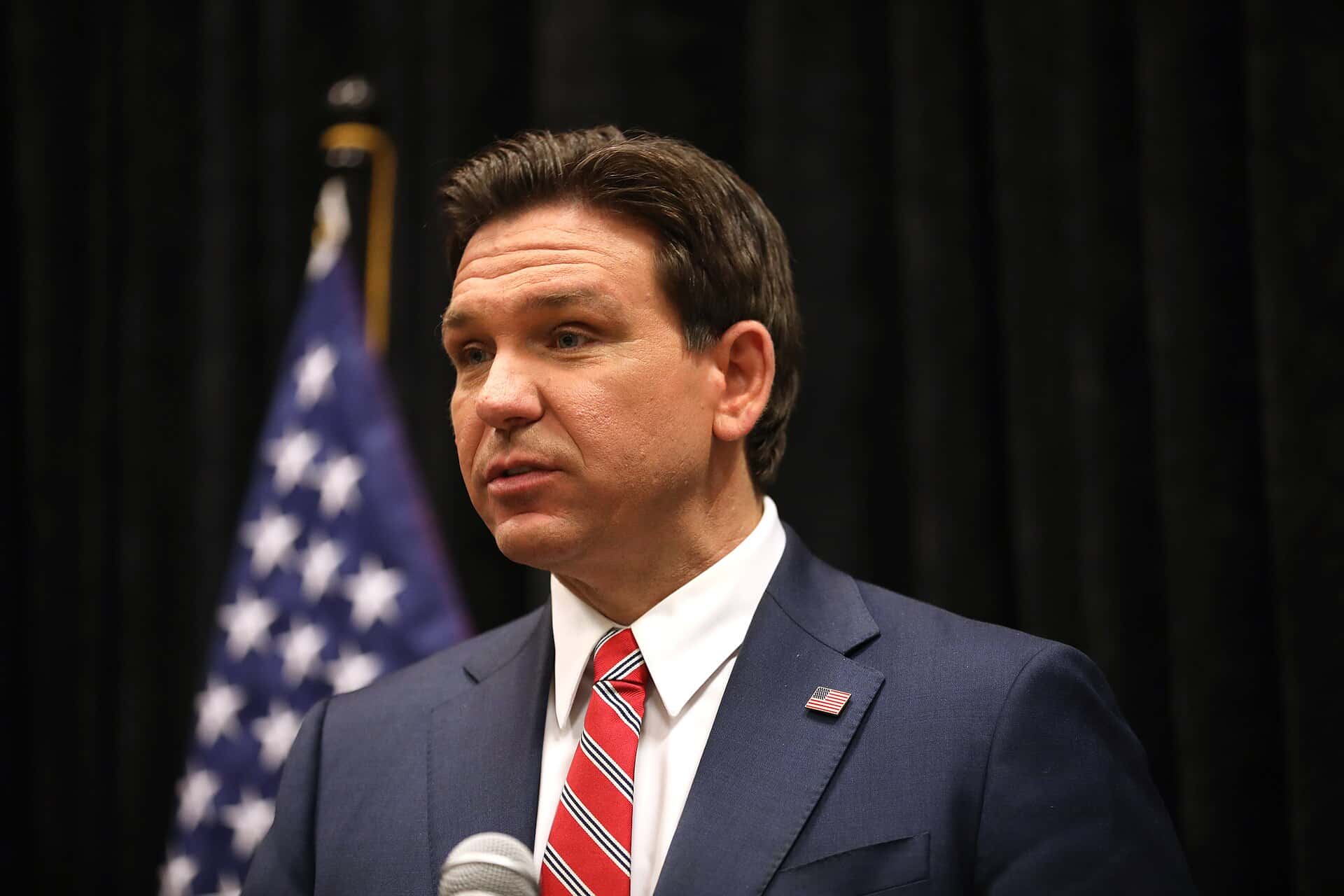
Governor Ron DeSantis signed sweeping new legislation on May 8 targeting foreign influence operations in Florida, choosing the Bay of Pigs Museum and Library in Miami's Little Havana neighborhood for the signing ceremony in a deliberate nod to the state's Cuban exile community. The Foreign Interference Restriction and Enforcement Act, known as the FIRE Act, expands a broad set of restrictions on dealings between Florida institutions and governments designated as foreign adversaries, including Cuba, China, Russia, Iran, North Korea, Venezuela, and Syria.
What the FIRE Act Does
The legislation signed by DeSantis targets foreign adversary influence across multiple domains of Florida public life. It prohibits Florida state agencies, universities, school districts, and local governments from entering into certain contracts, agreements, or financial relationships with entities tied to designated countries of concern. It also establishes new criminal and civil penalties for violations, creates a state designation process for domestic and foreign terrorist organizations, and bars state funds from flowing to any school or educational program affiliated with a group so designated.
Among the most sweeping provisions, the law terminates all existing sister city and sister state agreements between Florida localities and foreign countries of concern, effective July 1, 2026. It also prohibits the Florida Secretary of State from facilitating or promoting new sister city or sister state affiliations with adversary nations going forward. Several Florida municipalities have maintained long-standing sister city relationships with cities in China and other countries that now fall under the law's prohibitions, and those localities will need to formally wind down those agreements before the July 1 effective date.
The law also adds restrictions in the education sector, prohibiting school voucher scholarship funds from supporting any private school that promotes or is affiliated with a terrorist organization. Additional provisions bar surrogacy or adoption contracts with nationals of foreign adversary countries, establish penalties for state officials who accept foreign benefits without disclosure, and restrict lobbying and government contracting activities connected to foreign adversary governments.
The Bay of Pigs Setting
DeSantis chose the Bay of Pigs Museum and Library on Calle Ocho for the signing ceremony in what his office described as a fitting venue given the legislation's focus on Cuba and other authoritarian regimes. The museum commemorates the April 1961 failed invasion of Cuba by a CIA-trained paramilitary force composed largely of Cuban exiles, an event that remains a touchstone of South Florida's Cuban American community.
The governor was joined at the signing by members of the Cuban exile community and Republican state legislators who sponsored the bill. DeSantis argued that Florida, home to the largest Cuban diaspora in the United States as well as substantial Venezuelan, Nicaraguan, and other communities that have fled authoritarian rule, has a particular obligation to lead the country in resisting foreign government influence operations.
The legislation builds on earlier Florida laws restricting foreign adversary involvement in Florida's economy and educational system. Florida passed measures in prior legislative sessions targeting Chinese government-affiliated entities in particular, including restrictions on Chinese ownership of land near military bases and critical infrastructure. The FIRE Act expands those restrictions to a broader set of countries and a wider range of activities.
Cuba and the Florida Diaspora
For Florida's Cuban American community, the law carries deep personal resonance. Hundreds of thousands of Cuban exiles and their descendants live in Miami-Dade, Broward, and other South Florida counties, and many have family members who remain in Cuba under the rule of the Cuban Communist Party. Organizations representing the exile community have long pushed for state and federal policies that limit any legitimization of the Cuban government or Cuban government-affiliated entities.
The law's provisions on sister city agreements are directly relevant to Cuban ties. Miami-Dade County and several Florida cities have in the past maintained or considered sister city relationships with municipalities in Cuba and other adversary nations. Under the FIRE Act, any such agreements must be dissolved by July 1.
Florida's Venezuelan community, concentrated in Doral and other parts of Miami-Dade County, will also take note of the law's application to Venezuela. The state's response to the Maduro regime has been a consistent priority for South Florida politicians, and the inclusion of Venezuela in the FIRE Act's list of countries of concern aligns with the community's longstanding advocacy for a hard line against the Caracas government.
Impact on Florida Universities and Schools
Florida's major public universities have been navigating a shifting regulatory landscape around foreign adversary relationships for several years, and the FIRE Act adds another layer of compliance obligations. The University of Florida, Florida State University, the University of South Florida, and other flagship institutions will need to review their existing research partnerships, grant agreements, student visa programs, and faculty exchange arrangements to ensure compliance with the new law's prohibitions.
The restriction on Confucius Institutes, Chinese government-funded cultural and language programs that operate at some American universities, has been a focus of earlier state legislation, and the FIRE Act reinforces the existing prohibitions. Universities have largely already shuttered Confucius Institute programs in response to prior state and federal pressure, but the new law ensures those prohibitions are codified with additional enforcement mechanisms.
For K-12 schools participating in Florida's school voucher program, the requirement that scholarship dollars not flow to schools affiliated with terrorist organizations is primarily a compliance certification issue. School choice administrators will need to verify that participating private schools do not have operational ties to designated organizations, a process that in most cases involves straightforward documentation rather than significant operational changes.
Effective Date and Enforcement
The FIRE Act takes effect July 1, 2026, giving state agencies, local governments, universities, and school districts roughly eight weeks from the signing date to achieve compliance with the most immediate requirements. The termination of sister city agreements by that same date creates a defined deadline for municipal governments to formally dissolve any covered relationships.
Enforcement will be handled through a combination of civil penalties, contract terminations, and, for the most serious violations, criminal prosecution. The law designates the Florida Attorney General's Office as a primary enforcement body and provides new investigative tools to identify and pursue violations. Entities that fail to comply face loss of state contracts, grant eligibility, and, in the case of schools, access to voucher scholarship funds.
Legal challenges are possible. Organizations that oppose the law on First Amendment or preemption grounds may argue that certain provisions exceed the state's authority to regulate foreign relationships, which is traditionally a federal government domain. Similar foreign adversary legislation in other states has drawn legal scrutiny, and Florida's law will likely be tested in federal and state courts in the months after it takes effect.
Broader Context in Florida's National Security Push
The FIRE Act is the latest in a series of DeSantis-era measures positioning Florida as a state that takes national security threats from foreign adversaries more seriously than the federal government. The governor has repeatedly argued that China in particular represents an existential economic and security threat and that Florida must act at the state level to counter Chinese influence in areas where federal policy has been slow to move.
Florida's restrictions on Chinese land purchases near military installations, restrictions on technology from Chinese companies in state government systems, and earlier Confucius Institute prohibitions all prefigured the broader FIRE Act framework. With the signing of the new law, Florida now has one of the most comprehensive state-level foreign adversary restriction regimes in the country, covering not just land and technology but research partnerships, cultural programs, contracting, and government-to-government relationships.
For Florida residents, the practical impact of the law will vary enormously by context. Most individuals will feel no direct effect. Businesses and institutions with international ties to the covered countries will face the most significant compliance demands. And communities with personal and cultural connections to Cuba, Venezuela, China, or other designated countries will navigate the law's restrictions with a complex mix of political solidarity and practical concern for programs and partnerships that may no longer be permitted under Florida law.
Florida's Military and Defense Landscape
Florida's extraordinary concentration of military installations adds a particular dimension to the state's concern about foreign adversary influence. MacDill Air Force Base in Tampa serves as the headquarters of US Central Command and US Special Operations Command, two of the most operationally active combatant commands in the US military structure. Eglin Air Force Base in the Panhandle is the Air Force's largest installation by land area and a center for weapons testing and development. Patrick Space Force Base supports military space operations at Cape Canaveral. Pensacola's Naval Air Station is one of the Navy's most important pilot training facilities, and NAS Jacksonville anchors naval aviation on Florida's northeast coast.
The proximity of foreign adversary interests to these installations has been a consistent concern for Florida's congressional delegation, state officials, and military base commanders. China's efforts to acquire land near military bases, its intelligence collection operations targeting military personnel, and its attempts to recruit current and former military members through economic and social incentives have been documented in federal investigations that have touched Florida-based personnel and installations. The FIRE Act's restrictions on foreign adversary activities around critical infrastructure and government facilities address those concerns directly at the state law level, complementing federal counterintelligence laws that already cover such conduct.
The law's sponsors have also pointed to Florida's role as a hub for international trade, finance, and commerce as a vector for foreign adversary influence that demands state-level attention. PortMiami and Port Everglades are among the nation's busiest cargo and cruise ports, processing billions of dollars in trade annually. The potential for foreign adversary-linked entities to gain positions within the supply chains, financial institutions, or service providers that support those ports represents a national security concern that the FIRE Act's contracting and business restrictions are intended to address.
Spotted an issue with this article?
Have something to say about this story?
Write us a letterComments
No comments yet. Be the first to weigh in.
Related Coverage

Miami shuts enclosed park slides after 13-year-old dies following Shenandoah Park incident
1d ago
Appeals Court Orders Hope Florida Grand Jury Report Expunged, Rules $10 Million Was Never Public Money
2d ago

Jacksonville Council Committees Clear $30 Million Gas Tax Loan to Rescue JTA Ahead of Oct. 13 Final Vote
2d ago
Florida Supreme Court Suspends Pinellas-Pasco Judge Jennifer Cruz Dubbeld 20 Days Over 2024 Campaign Misconduct
2d ago