Eglin Air Force Base Activates 337th Electronic Warfare Squadron for F-35 Operations
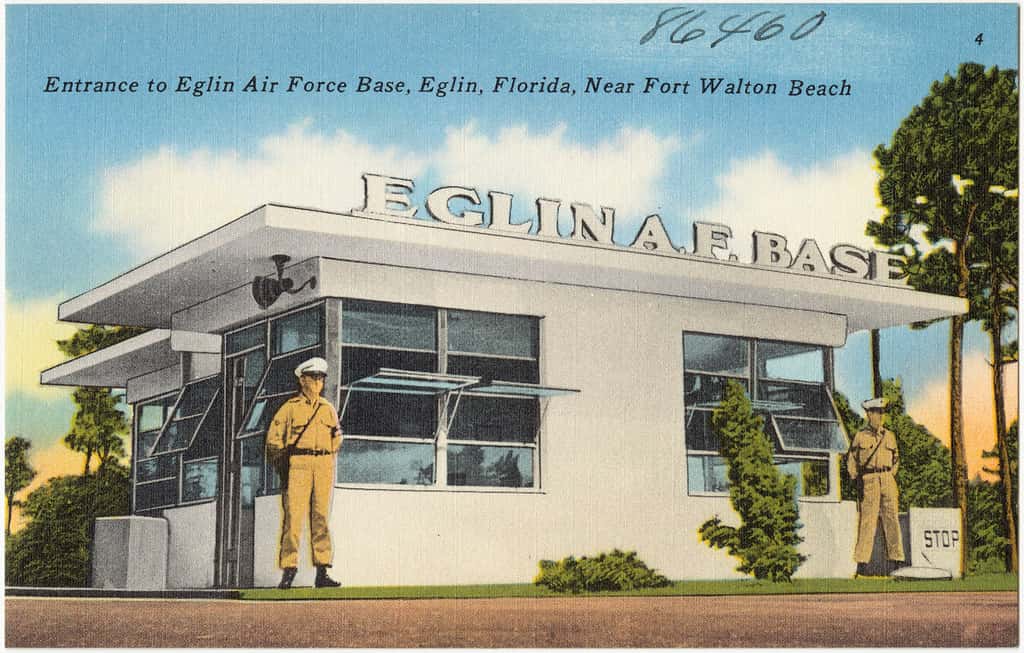
Eglin Air Force Base in Florida's Panhandle activated the 337th Electronic Warfare Squadron on May 11, 2026, formally standing up a new unit within the 350th Spectrum Warfare Wing. The all-civilian squadron is responsible for developing, testing, and collecting operational data on F-35 aircraft and for building combat-enhancement applications that improve the fighter's electronic warfare capabilities. The activation deepens the role of one of Florida's largest military installations as a central node in the broader F-35 enterprise that spans the United States and several NATO partner nations.
Eglin Air Force Base covers approximately 724 square miles across three Florida counties, making it one of the largest military installations in the country. Its sprawling footprint allows the base to support a wide range of test, training, and operational missions across multiple aircraft programs, and the addition of the 337th Electronic Warfare Squadron continues a multi-decade pattern of expanding the base's role in advanced aircraft development.
The 350th Spectrum Warfare Wing was established in 2021 to consolidate the Air Force's electronic warfare and spectrum management work into a single major operational unit. Eglin's selection as the wing's home reflected the base's existing concentration of test infrastructure and its proximity to the Gulf of Mexico's training ranges, both of which support advanced flight operations across the spectrum of Air Force missions.
What the 337th Electronic Warfare Squadron does
According to the announcement of the activation, the 337th Electronic Warfare Squadron is structured as an all-civilian unit within the 350th Spectrum Warfare Wing. The squadron's mission centers on developing, testing, and collecting operational data on F-35 aircraft, with a focus on the electronic warfare capabilities that allow the fighter to detect, identify, and respond to threats in contested electromagnetic environments.
The squadron is also responsible for producing combat-enhancement applications that can be uploaded to F-35 aircraft to improve their operational performance. The work involves a combination of software development, mission data file generation, and operational analysis, all of which contribute to the broader effort to keep the F-35 fleet's electronic warfare suite ahead of the threats it may encounter in contested airspace.
The unit also supports interoperability between the U.S. Air Force F-35 fleet and the F-35 fleets operated by NATO allies. Several NATO partner nations have purchased and now operate F-35s, and ensuring that the aircraft's electronic warfare capabilities function effectively across allied operations requires close coordination on mission data files, software updates, and operational doctrine. The 337th's interoperability work supports those allied operations.
Why this matters for Florida's Panhandle
Eglin Air Force Base is one of the largest economic engines in Florida's Panhandle. The base's payroll, contracts with local suppliers, and downstream economic activity support tens of thousands of jobs in Okaloosa, Santa Rosa, and Walton counties, where the base's footprint is concentrated. The activation of a new squadron adds to that economic base, even when the squadron is structured as an all-civilian operation rather than a unit with a large active-duty population.
The Panhandle's broader defense economy depends on the steady flow of new missions and units to the region's military installations. Eglin sits within a corridor that includes Hurlburt Field, which hosts Air Force Special Operations Command, and Tyndall Air Force Base, which has been undergoing reconstruction after Hurricane Michael and which serves as a base for advanced fighter operations. The cumulative footprint of those installations shapes the regional economy in ways that touch housing, education, retail, health care, and tourism.
For local governments in the Panhandle, the activation of the 337th Electronic Warfare Squadron reinforces the long-term federal investment in Eglin's mission set. Local leaders in Okaloosa and Santa Rosa counties have consistently advocated for continued federal investment in the region's installations, and the addition of a new squadron tied to the F-35 program is widely regarded as a positive signal about Eglin's strategic importance to the Air Force.
County commissioners and city councils in the surrounding communities, including Fort Walton Beach, Niceville, Crestview, and Destin, have routinely participated in advocacy efforts coordinated through chambers of commerce and the Greater Fort Walton Beach Chamber's military affairs council. Those local efforts work in tandem with state and federal officials to maintain the political alignment that supports the base's continued mission growth.
The F-35 enterprise at Eglin
Eglin Air Force Base has been a central node in the F-35 program since the early years of the aircraft's development. The base hosted the Joint Strike Fighter integrated training center where pilots and maintainers from the Air Force, the Marine Corps, the Navy, and partner nation air forces trained on the new platform. That training mission produced a deep institutional knowledge of the F-35 at Eglin that continues to inform the base's role in the program.
The 350th Spectrum Warfare Wing's establishment at Eglin in 2021 built on that existing F-35 expertise. The wing's mission encompasses electronic warfare across multiple Air Force aircraft programs, but the F-35 has been a particular focus given the centrality of the platform to the Air Force's future force structure and the complexity of its onboard electronic warfare suite.
The wing also draws on Eglin's existing test ranges that stretch into the Gulf of Mexico, where Air Force pilots can conduct live-fire and electronic warfare exercises with reduced civilian airspace conflicts. Those overwater ranges have been a defining feature of Eglin's operational capacity for decades and remain central to the base's value within the Air Force enterprise.
The new 337th Electronic Warfare Squadron extends that F-35-focused work. The squadron's all-civilian staffing model is consistent with the broader pattern of relying on civilian Air Force engineers, analysts, and developers to perform the specialized technical work required for electronic warfare and mission data generation. That structure also reflects the deep talent pool of defense-sector civilian workers in the Panhandle region.
Reactions from Florida officials
Florida's congressional delegation has consistently supported Eglin's mission expansion. Members from the Panhandle, including those representing the immediate area around the base, have repeatedly advocated for federal investments that grow the base's role in the broader Air Force enterprise. The activation of a new squadron tied to the F-35 program adds to a pattern of mission growth that members from the region have championed.
Senator Rick Scott and Florida's senior congressional leadership have historically backed Eglin's expansion in budget and appropriations processes. The base's economic and strategic importance to the state makes it a consistent priority for Florida's federal delegation, regardless of party. Members of the Florida House delegation representing northwest Florida have been particularly engaged on the appropriations questions that shape the pace of investment at Eglin.
State officials in Tallahassee have also engaged with Eglin's mission growth. The Florida Department of Economic Opportunity and the Florida Defense Support Task Force have both tracked Eglin's role in the state's defense economy and have supported initiatives aimed at sustaining and expanding the base's mission footprint. The state's broader defense alliance organizations work with local communities in the Panhandle to coordinate advocacy efforts on federal mission decisions.
Local impact across the Panhandle
The Panhandle's housing market, school systems, and small business sectors all interact with the rhythm of military mission activity at Eglin. The activation of the 337th Electronic Warfare Squadron, while structured as a civilian unit, generates ripple effects through the regional economy as the squadron staffs up, contracts with suppliers, and engages with the broader F-35 enterprise. Those effects extend beyond the immediate footprint of the base.
Local universities and community colleges in the Panhandle, including the University of West Florida, Northwest Florida State College, and Pensacola State College, have built academic and workforce development programs aimed at supporting the defense sector. Cybersecurity, engineering, and information technology programs in particular feed into the talent pipeline that supports units like the 337th, and the activation of new electronic warfare missions creates additional opportunities for graduates of those programs.
Defense contractors with operations in the Panhandle, including companies that support F-35 software development and electronic warfare research, are expected to engage closely with the new squadron's work. The region's contractor base includes both large national firms and smaller specialty companies, all of which contribute to the broader ecosystem that supports Eglin's missions.
F-35 program context
The F-35 Lightning II is the Pentagon's most expensive aircraft program and serves as the backbone of the future fighter fleet for the Air Force, Marine Corps, and Navy. Partner nation air forces in Europe, the Asia-Pacific, and the Middle East have also adopted the aircraft, creating a multinational fleet that depends on shared software updates, mission data, and operational doctrine to function effectively.
Electronic warfare is one of the F-35's defining capabilities. The aircraft's onboard sensors, computing systems, and electronic warfare suite are designed to allow pilots to operate in contested airspace where adversary radar and missile systems present sustained threats. Keeping that electronic warfare suite ahead of evolving threats requires continuous software development, mission data updates, and operational analysis, all of which fit within the mission portfolio of the 350th Spectrum Warfare Wing and its component squadrons.
The Air Force has been expanding the resources devoted to F-35 electronic warfare work as the aircraft enters broader operational use. The activation of the 337th Electronic Warfare Squadron is part of that expansion and reinforces the Air Force's commitment to sustaining the F-35's combat capabilities over the program's planned multi-decade service life.
What is next
The 337th Electronic Warfare Squadron is expected to ramp up its operational tempo over the coming months as the unit fills out its staffing and integrates into the broader 350th Spectrum Warfare Wing mission set. The squadron will work closely with F-35 operational units across the Air Force, with allied F-35 operators, and with the contractor base that supports the program's software development and mission data generation.
Eglin Air Force Base is expected to continue evolving as the Air Force adjusts the structure of its electronic warfare and spectrum management mission. The 350th Spectrum Warfare Wing's mission set has grown steadily since its 2021 establishment, and additional unit activations or mission expansions are possible as the Air Force responds to evolving threat environments and operational requirements.
For Florida's Panhandle, the activation of the 337th underscores the region's continued importance to the Air Force's most advanced aircraft programs. Local leaders, business communities, and educational institutions across Okaloosa, Santa Rosa, and Walton counties will continue to watch how the new squadron's mission shapes the broader pattern of federal investment in the region, and how that investment translates into jobs, contracts, and community resilience across the western Panhandle.
State-level defense advocacy organizations are also expected to monitor the 337th's growth. The Florida Defense Support Task Force and statewide industry associations work to ensure that mission decisions involving Florida bases align with the long-term planning of the Air Force and the broader Department of Defense. Those advocacy efforts have produced sustained dialogue between state leaders and federal officials over many budget cycles, and they will remain a feature of how Florida engages with the future of Eglin's role in the F-35 program.
The Panhandle's growing population, including a steady inflow of retired military personnel who return to the region after their service, also contributes to the talent pool available for civilian Air Force positions. The combination of resident expertise, contractor capacity, and educational programming gives Eglin the staffing depth it needs to absorb mission growth and to support the kind of specialized technical work that the 337th Electronic Warfare Squadron is now positioned to expand at the base.
Spotted an issue with this article?
Have something to say about this story?
Write us a letterComments
No comments yet. Be the first to weigh in.
Related Coverage

Ex-CIA official pleads guilty in $194 million fraud, will forfeit $102 million in Palm Beach and Hobe Sound real estate
1h ago

11th Circuit voids septic permit ban in Indian River Lagoon manatee case after federal 'harm' rule rollback
1h ago

Trump ties disaster aid to midterm campaign as Hurricane Isaias nears Florida Panhandle
20h ago

Trump Backs Camp David-Style Presidential Retreat at His West Palm Beach Golf Club on County Land
20h ago