Eleventh Circuit Strikes Down Florida's Stop WOKE Act for University Faculty
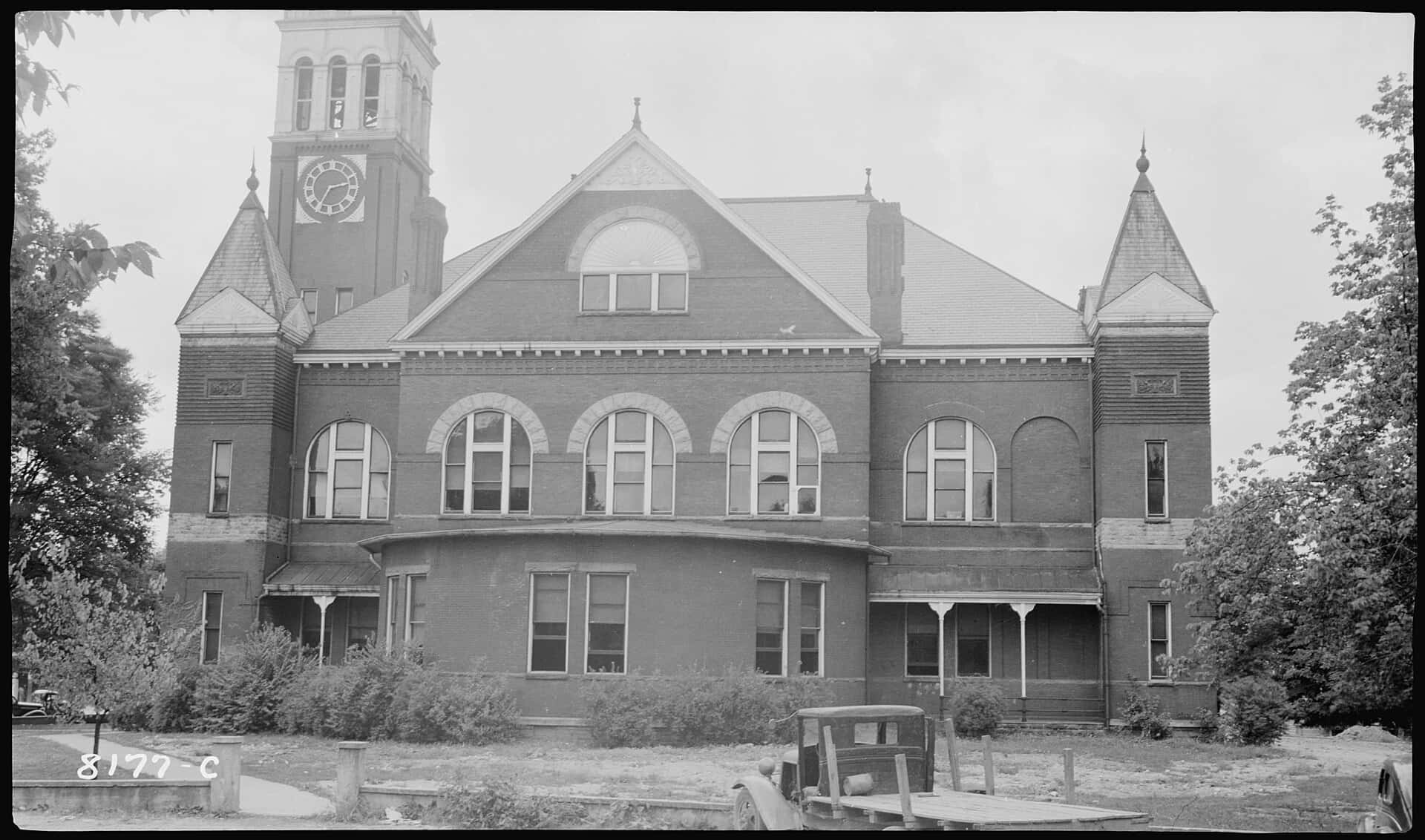
A federal appeals court on July 7, 2026, struck down Florida's Stop WOKE Act as it applies to public-university faculty, ruling that the state cannot restrict what professors teach and discuss in the classroom without violating the First Amendment. The decision from the United States Court of Appeals for the Eleventh Circuit is a significant setback for one of the signature higher-education laws of Governor Ron DeSantis's tenure, and it carries immediate consequences for the tens of thousands of instructors and students across Florida's public university system.
The law at the center of the case is formally titled the Individual Freedom Act, though it became widely known by the shorthand the DeSantis administration itself used to promote it, the Stop WOKE Act. As applied to public universities, it restricted the way faculty could present certain concepts related to race and identity in their instruction. The Eleventh Circuit concluded that those restrictions reach into constitutionally protected speech, and that the government's interest in promoting its own preferred viewpoints does not extend to controlling the classroom expression of every professor employed by the state.
Writing for the court, Judge Britt C. Grant described the state's approach in pointed terms, indicating that the power to promote government viewpoints does not amount to a power to, in the court's phrasing, act as a puppeteer over every university professor in the state. The ruling leaves the classroom provisions of the law unenforceable against public-university faculty and returns Florida's higher-education debate to a familiar crossroads: whether the state will appeal, potentially all the way to the United States Supreme Court, or adjust its approach for the coming academic year.
What the Stop WOKE Act Was Designed to Do
The Individual Freedom Act was enacted as part of a broader push by Florida lawmakers and the DeSantis administration to reshape what they described as ideological instruction in schools, universities, and workplaces. The law identified a set of concepts related to race, sex, and privilege and placed limits on how those ideas could be taught or endorsed, particularly the notion that individuals bear responsibility for historical wrongs committed by others of the same race or sex.
Supporters of the law framed it as a protection for students and workers against being compelled to affirm beliefs they did not hold. In the state's telling, the measure did not ban the discussion of history or difficult subjects but instead prevented public institutions from advancing a particular ideological position as settled fact. The administration presented the law as consistent with a wider agenda of what it called restoring balance and accountability to public education in Florida.
Critics, including faculty members and civil-liberties organizations, argued from the outset that the law was too vague and too sweeping, and that it would chill legitimate teaching. Professors in fields ranging from history and sociology to law and public health said they could not know with confidence which discussions might expose them or their universities to penalties. That uncertainty, they contended, was itself a constitutional problem, because it pressured instructors to avoid protected speech rather than risk running afoul of an ambiguous standard.
A Law That Had Already Faced the Courts
The July 2026 ruling did not arrive without warning. The Stop WOKE Act had been the subject of legal challenges almost from its inception, and its university provisions had previously been blocked by lower-court action before the dispute worked its way to the Eleventh Circuit. The pattern of injunctions and appeals meant that the law's application to public-university classrooms had been contested and uncertain for an extended period.
The appellate decision now provides a more definitive answer at the federal circuit level, at least for the classroom-instruction provisions as they touch faculty. By grounding its reasoning in the First Amendment, the court framed the case not merely as a dispute about education policy but as a question about the limits of government authority over speech. That framing is central to why the ruling matters beyond Florida's borders even as its most direct effects are felt within the state.
The Eleventh Circuit's jurisdiction covers Florida, Georgia, and Alabama, so its interpretation of the Constitution governs across all three states. Because the case concerns a Florida statute and Florida's public universities, the ruling has both a direct Florida significance and a broader precedential weight. It also sets up the possibility of further review, since decisions of this magnitude on contested constitutional questions are frequently candidates for appeal to the nation's highest court.
Immediate Impact on Florida's Public Universities
Florida operates one of the largest public-university systems in the country, anchored by institutions such as the University of Florida, Florida State University, the University of South Florida, and the University of Central Florida, along with a network of other state universities serving hundreds of thousands of students. The ruling directly affects the faculty who teach at those institutions and the students who take their courses.
For faculty, the practical effect of the decision is a removal, at least for now, of the classroom restrictions the law imposed. Professors who had adjusted their syllabuses, softened discussions, or avoided certain topics out of concern about the law's reach may find that the immediate legal pressure to do so has been lifted. Because the ruling rests on First Amendment grounds and applies within the Eleventh Circuit, it speaks directly to the teaching environment on Florida campuses heading into the fall.
For students, the ruling touches the range of ideas and discussions they may encounter in their classes. The court's reasoning treated the free-speech interests of students as part of the constitutional picture, recognizing that restrictions on what faculty may say also shape what students are able to hear and debate. In a university setting, where the exchange of contested ideas is a core function, the two interests are closely linked.
The State's Rationale and the Challengers' Case
The dispute reflects a genuine clash of principles rather than a simple disagreement about policy preferences. On one side, the state advanced the view that a public university is an arm of government and that the government has a legitimate role in setting the terms of the education it funds and provides. From that vantage point, the law was an exercise of the state's authority to define its own curriculum and to prevent public resources from being used to promote a specific ideological message.
On the other side, the challengers argued that university faculty occupy a distinct position within the constitutional order. They contended that professors are not simply mouthpieces for the government's message but are engaged in teaching and inquiry that the First Amendment protects. Under this view, allowing the state to dictate the content of classroom instruction would give the government a degree of control over expression that the Constitution does not permit, even within institutions the state operates.
The Eleventh Circuit sided with the challengers on the classroom provisions, concluding that the state's interest in promoting its preferred viewpoints did not authorize it to control the instruction of every professor in the system. The court's puppeteer imagery captured the concern at the heart of the ruling: that a government empowered to script the speech of all its educators would hold a power over ideas that the First Amendment was written to constrain. The decision did not, by its own terms, resolve every possible question about the law, but it drew a clear line around faculty classroom speech.
Where the DeSantis Higher-Education Agenda Stands
The ruling lands in the middle of a broader effort by the DeSantis administration to reshape higher education in Florida, an agenda that has included changes to governance, curriculum, and hiring at state institutions. The Stop WOKE Act was among the most prominent legislative pieces of that effort, and its partial defeat in federal court is a notable check on one avenue the administration had used to influence classroom content.
The administration has consistently defended the law as a legitimate and popular measure, and the governor's office has framed the wider agenda as a response to what it describes as ideological capture of universities. A ruling against the law does not by itself undo the other components of that agenda, many of which rest on different legal footings such as the state's authority over university governance and administration. But it does narrow the tools available for regulating the substance of instruction.
How the state responds will shape the next phase of the fight. Officials could pursue an appeal, seek to rewrite the law in a way they believe would survive constitutional scrutiny, or shift emphasis toward the governance and administrative levers that remain available. Each path carries its own timeline and its own risks, and each would unfold against the backdrop of an academic calendar that does not pause for litigation.
What Comes Next for Florida Classrooms
The most immediate question is whether Florida will appeal the decision, and if so, whether the case will reach the United States Supreme Court. Constitutional disputes of this kind, involving the First Amendment and the authority of a state over its public universities, are exactly the sort of cases the high court sometimes agrees to hear. An appeal would extend the legal uncertainty, but it would also give the state an opportunity to seek a reversal at the highest level.
In the near term, faculty and administrators must prepare for a fall semester in which the classroom provisions of the law are not enforceable against professors within the Eleventh Circuit. Universities will need to communicate to their faculty what the ruling means for course planning, and instructors will weigh how to approach subjects they may have handled cautiously while the law was in force. The practical texture of teaching this fall will depend in part on how clearly that guidance is delivered.
For Florida students, families, and taxpayers who fund the state's universities, the ruling reopens a long-running debate about who controls what is taught in public higher education and where the boundaries of that control lie. The Eleventh Circuit has answered part of that question for now, but with a possible appeal ahead and a wider agenda still in motion, the larger contest over the direction of Florida's universities is far from settled. What is clear is that the fall term will begin with the classroom restrictions of the Stop WOKE Act set aside, and with the state facing a decision about how hard to fight to bring them back.
Spotted an issue with this article?
Have something to say about this story?
Write us a letterComments
No comments yet. Be the first to weigh in.
Related Coverage

Ex-CIA official pleads guilty in $194 million fraud, will forfeit $102 million in Palm Beach and Hobe Sound real estate
19m ago

11th Circuit voids septic permit ban in Indian River Lagoon manatee case after federal 'harm' rule rollback
20m ago
Trump ties disaster aid to midterm campaign as Hurricane Isaias nears Florida Panhandle
19h ago
Trump Backs Camp David-Style Presidential Retreat at His West Palm Beach Golf Club on County Land
19h ago