Eleventh Circuit Upholds the Two-Person Train Crew Rule in a Florida Railway Case
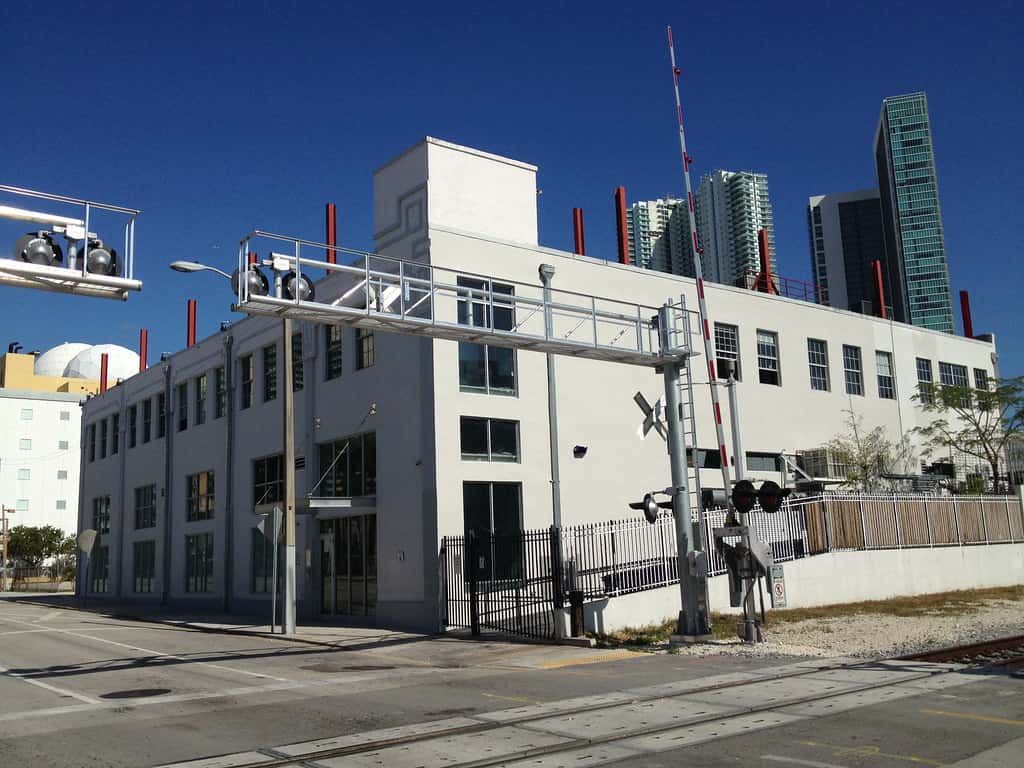
A divided panel of the United States Court of Appeals for the Eleventh Circuit has upheld the federal rule requiring at least two crew members on most freight trains, rejecting an industry challenge brought in a set of consolidated cases led by Florida East Coast Railway. The panel ruled 2 to 1 in favor of the Federal Railroad Administration.
The Eleventh Circuit hears appeals from federal district courts in Florida, Georgia and Alabama, which means its decisions are binding law throughout Florida. The challenge was one of several the rail industry mounted against the crew size regulation after its adoption.
The railroads argued that the rule was arbitrary and capricious under the Administrative Procedure Act, contending that the agency had not adequately demonstrated a safety justification for mandating a minimum crew size. The panel majority disagreed, leaving the requirement in place.
What the rule requires
The Federal Railroad Administration rule establishes a minimum crew size of two for most freight railroad operations in the United States, with defined exceptions for certain limited categories of operation. It codified as a federal requirement a staffing level that had long been standard practice under labor agreements but had not previously been mandated by regulation.
The regulatory question the agency confronted was whether to permit single person crews as railroads adopted technologies including positive train control, which automatically enforces speed restrictions and can stop a train to prevent certain categories of accident.
Railroads argued that these technologies reduce the safety case for a second crew member and that the staffing requirement imposes cost without corresponding benefit. Rail labor organizations argued that a second crew member performs functions no automated system replaces, including responding to on track emergencies, handling mechanical problems in the field and managing incidents at grade crossings.
The Federal Railroad Administration concluded that a minimum crew size was justified, and the Eleventh Circuit panel found that conclusion adequately supported.
The legal standard at issue
Arbitrary and capricious review under the Administrative Procedure Act asks whether an agency examined the relevant data and articulated a satisfactory explanation for its action, including a rational connection between the facts found and the choice made.
The standard is deferential to agencies in principle, though the degree of deference courts actually apply has been the subject of significant recent development in administrative law. Courts do not substitute their own policy judgment for the agency's, but they do require that the agency's reasoning be explained and supported.
Industry challenges to safety regulations frequently proceed on this theory, arguing that the agency failed to account for particular evidence, did not adequately justify the choice of one approach over an alternative, or did not properly weigh costs against benefits.
A 2 to 1 split indicates the case was genuinely contested. The dissenting judge's reasoning is part of the published opinion and can inform any further review.
Why Florida East Coast Railway
Florida East Coast Railway operates a freight rail line running along Florida's east coast between Jacksonville and Miami, serving the state's Atlantic seaports including Port Everglades, PortMiami and the Port of Palm Beach. It is one of the state's principal freight corridors.
The company also owns the track infrastructure that Brightline uses for its passenger service between Miami and Orlando, under a joint use agreement. That relationship has generated its own litigation: Florida East Coast Railway sued Brightline over an alleged breach of contract, arguing the passenger operator violated their agreement by negotiating a commuter rail arrangement with county governments without bringing the track owner into the discussion.
That dispute is separate from the crew size case but bears on the same corridor. A South Florida commuter rail project has been affected by the litigation, which turns on capacity allocation on shared track rather than on federal safety regulation.
Florida East Coast Railway's role as lead petitioner in the crew size case reflects its position as a significant regional railroad with a direct interest in staffing regulation.
What it means for Florida
Freight rail moves a substantial share of the goods entering and leaving Florida through its seaports. Containers arriving at Port Everglades, PortMiami and Jacksonville move inland by rail and by truck, and rail capacity affects the cost and reliability of that movement.
Staffing requirements affect railroad operating costs, and operating costs eventually flow into shipping rates. The magnitude of that effect is disputed, and the railroads' cost arguments were part of what the court evaluated.
Grade crossing safety is where the rule connects most directly to Florida communities. The state has a large number of at grade crossings, particularly along the densely developed east coast corridor where the rail line runs through the center of multiple cities. Crossing incidents are among the most common serious rail safety events in the state.
Hazardous materials movement is another consideration. Freight trains carry chemicals and fuels through populated areas, and the response to a derailment involving hazardous materials depends in part on crew capacity to act in the first minutes.
The broader regulatory picture
The crew size rule is one element of a larger federal rail safety framework that includes positive train control mandates, track inspection standards, hours of service limits for crews and requirements governing the transport of hazardous materials.
Rail safety regulation has received increased congressional attention following high profile derailments in other states, and legislative proposals addressing crew size, train length and inspection requirements have been introduced in Congress.
The Eleventh Circuit's decision resolves the challenge in this circuit. Parallel challenges in other circuits could produce different outcomes, and a split among the circuits is the most common route to Supreme Court review of a regulatory question.
The petitioners retain the option of seeking rehearing before the full Eleventh Circuit or petitioning the Supreme Court for review, and neither step is guaranteed to be taken or granted.
Local impact across the state
The Florida East Coast Railway corridor runs through Duval, St. Johns, Flagler, Volusia, Brevard, Indian River, St. Lucie, Martin, Palm Beach, Broward and Miami-Dade counties, passing through the downtowns of numerous cities along the way.
CSX operates the other major freight network in Florida, serving the western and central portions of the state and connecting to Port Tampa Bay. Together the two networks handle the state's freight rail traffic.
Communities along both corridors have engaged with rail issues through quiet zone designations, crossing improvements and grade separation projects, which are funded through a combination of federal, state and local sources.
The Brightline passenger service operating on the Florida East Coast corridor has added passenger train frequency to a line that previously carried freight only, which has intensified attention to crossing safety and to capacity allocation along the route.
Freight rail's place in Florida logistics
Florida's economy depends on goods movement to a degree that is not always visible. The state imports far more than it exports by volume, and consumer goods arriving at its seaports must move inland to distribution centers and retail.
Rail handles the long haul portion of that movement efficiently, particularly for containers moving to and from other states. Trucking handles the final distribution. The two modes are complements rather than substitutes for most freight, and the capacity of each affects the cost of the other.
Central Florida has developed as a distribution hub, with large warehouse complexes clustered around the Interstate 4 corridor. Rail access to those facilities is a factor in siting decisions and in the region's continued growth as a logistics center.
Passenger and freight sharing track
The Florida East Coast corridor is unusual in carrying both substantial freight traffic and frequent passenger service on the same infrastructure. Brightline operates passenger trains between Miami and Orlando over track that Florida East Coast Railway owns and uses for freight.
Shared corridors require careful scheduling. Passenger trains operate at higher speeds and on fixed schedules, while freight operations have different priorities. Allocating capacity between them is a commercial negotiation governed by the joint use agreement.
The proposed commuter rail service in South Florida would add a third category of service to the same corridor, which is the source of the capacity dispute now in litigation. Resolution of that question determines whether the commuter project proceeds.
What the ruling does not decide
The panel's decision addresses whether the Federal Railroad Administration acted within its authority and adequately explained its reasoning. It does not resolve the underlying policy question of whether two person crews produce measurably better safety outcomes than one person crews.
Courts reviewing agency action are not equipped to make that determination and do not attempt to. The judicial question is procedural and legal: did the agency consider the relevant evidence and explain its choice rationally.
That distinction matters for what happens next. An agency that reconsiders the rule through a new rulemaking, with a new record and new reasoning, is not bound by this decision to reach the same conclusion. Regulatory requirements adopted through rulemaking can be modified through rulemaking.
Where the case goes from here
The petitioners may seek rehearing before the full Eleventh Circuit or petition the Supreme Court, though neither route is likely to succeed absent unusual circumstances. En banc rehearing is granted rarely, and the Supreme Court takes administrative law cases principally when circuits disagree.
In the meantime, the rule governs freight operations in Florida, Georgia and Alabama. Railroads operating in those states must staff trains in compliance with the minimum crew requirement and the exceptions the regulation defines.
What is next
The rule remains in effect in the Eleventh Circuit. Railroads operating in Florida must comply with the two person minimum crew requirement subject to the exceptions the regulation defines.
Further appellate steps are available to the petitioners but have not been announced. Rehearing en banc is granted rarely, and Supreme Court review of administrative law questions depends heavily on whether a circuit split develops.
The separate Florida East Coast Railway and Brightline dispute over track capacity continues on its own track, and its resolution will determine the fate of the South Florida commuter rail project that depends on access to the corridor.
Spotted an issue with this article?
Have something to say about this story?
Write a letter to the editorComments
No comments yet. Be the first to weigh in.
Related Coverage

UN Security Council Extends Haiti Gang Suppression Force Through March 2027 as Florida Diaspora Watches
12h ago

Senate Passes Protect College Sports Act With Ashley Moody Amendment Backed by Miami, FSU and USF
13h ago
Rick Scott Renews Push to Send ACA Subsidies to Consumers as Florida Reels From Coverage Losses
15h ago
New Treasury Cuba Sanctions Rules Take Effect, Ending Group and Educational Travel Licenses
16h ago