Eleventh Circuit Upholds Two-Person Train Crew Rule Against Florida Railway Challenge
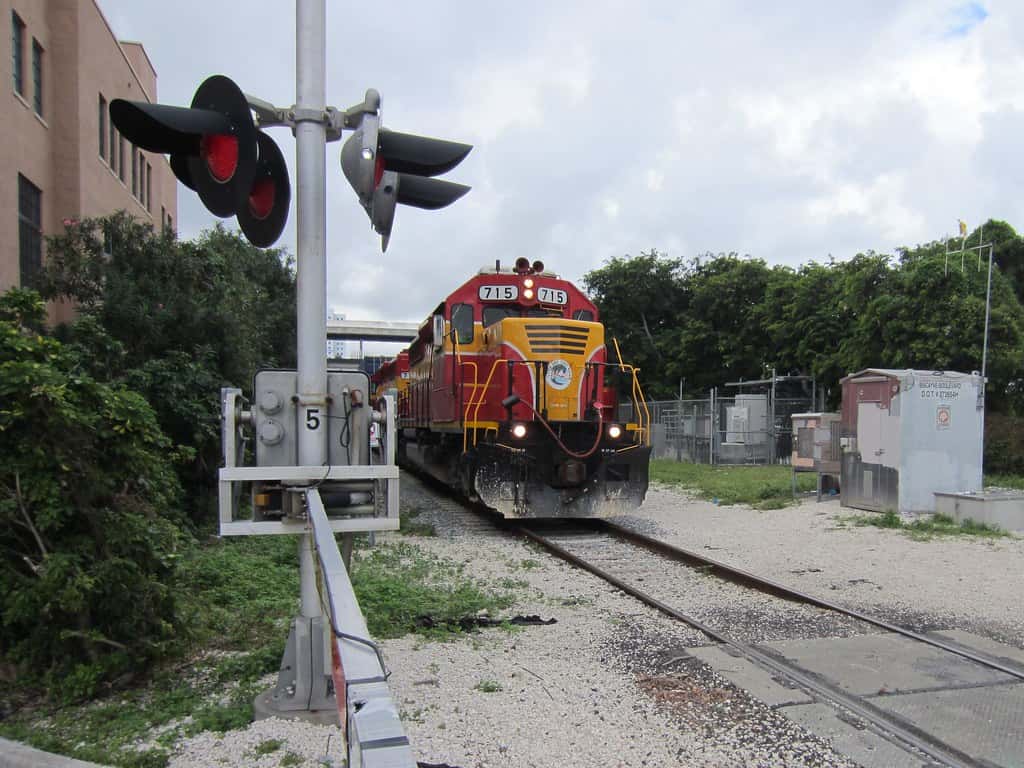
A divided panel of the U.S. Court of Appeals for the Eleventh Circuit upheld the Federal Railroad Administration's two-person train crew requirement on August 11, rejecting a challenge brought by six freight railroads and two industry groups in a case captioned for Florida East Coast Railway. The 2-1 decision ends a two-year effort to strike down a rule that the rail industry argued was unjustified and that unions have defended as a core safety protection.
The majority held that the FRA followed proper procedures in adopting the 2024 rule, was entitled to decline to wait for additional data before acting, and was not required to explain its departure from prior administrations' positions that such a rule was unnecessary. Judge Branch dissented, writing that the agency was obligated to explain the change in position and noting that the FRA's cost-benefit analysis did not account for the additional labor costs the rule imposes.
The case reached the Eleventh Circuit because Florida East Coast Railway, a freight carrier operating along Florida's Atlantic coast, was among the petitioners, and because the circuit covers Florida, Georgia and Alabama. The outcome binds railroads operating in those states and carries persuasive weight nationally.
What the rule requires
The FRA's Train Crew Size Safety Requirements Rule, adopted in 2024, generally requires that most freight trains operate with at least two crew members, typically an engineer and a conductor. The rule includes exceptions and a process for railroads to seek approval for alternative staffing arrangements under specified conditions.
The requirement had been an industry norm for decades under collective bargaining agreements rather than federal regulation. Railroads pursuing single-person crew operations, and eventually automated operations, needed either union agreement or the absence of a federal mandate. The 2024 rule closed the regulatory path.
The FRA justified the rule on safety grounds, arguing that a second crew member provides redundancy in emergencies, assists with track inspections and grade crossing incidents, and reduces the consequences of engineer incapacitation. The agency also pointed to the operational realities of long freight trains, which have grown substantially in length over the past decade.
The industry's position was that the agency had not produced data establishing that two-person crews are safer than one-person crews with modern technology, and that the FRA had reversed its own prior determination without adequate explanation. That reversal argument was the legal core of the challenge.
What the court decided
The majority found that the FRA acted within its authority and followed required procedures. On the central question of the agency's change in position, the majority held that the FRA was not required to explain its departure from prior positions in the manner the railroads argued was necessary.
The majority also held that the agency could reasonably choose to act rather than wait for additional data to accumulate. Agencies facing arguments that they should study a question longer before regulating routinely prevail on this point, since courts generally defer to agency judgments about the sufficiency of an evidentiary record.
Judge Branch's dissent focused on two points. The first was the change-in-position question, where the dissent would have required the FRA to explain why it now believes a rule is necessary that the agency previously determined was not. The second was the cost-benefit analysis, which the dissent said failed to include the additional labor costs the rule requires railroads to bear.
The cost-benefit criticism is significant beyond this case. Challenges to federal rules increasingly focus on the adequacy of regulatory impact analysis, and a dissent identifying an omitted major cost category is the kind of reasoning that gets cited in subsequent litigation.
Why this matters in Florida
Florida East Coast Railway operates roughly 350 miles of mainline track along Florida's Atlantic coast, connecting Jacksonville to Miami and serving the ports at Jacksonville, Port Everglades, PortMiami and Port Canaveral. It is the freight backbone of Florida's east coast logistics network.
Florida's economy depends heavily on freight movement. The state's ports handle substantial container and cruise volume, its agricultural sector ships perishables on tight schedules, and its construction industry moves aggregate and building materials in volumes that only rail can handle efficiently. Crew staffing rules affect the cost structure of all of it.
The rail corridor along Florida's east coast is also unusual in that it carries both freight and Brightline passenger service, which operates on FEC-owned track. Grade crossing safety along that corridor has been a persistent subject of scrutiny, with the corridor experiencing a high rate of crossing incidents relative to national averages.
Grade crossings are where the two-person crew argument becomes concrete rather than abstract. When a train strikes a vehicle or a pedestrian at a crossing, a second crew member can dismount to render aid, protect the scene and communicate with responders while the engineer manages the train. That scenario appears in the FRA's justification and in union advocacy for the rule.
What it means for Floridians
For rail workers, the ruling preserves jobs. Conductor positions across the industry were the direct subject of the dispute, and a decision striking down the rule would have removed the federal barrier to eliminating them over time.
For Florida shippers and, indirectly, consumers, the ruling maintains a cost structure the industry argued is unnecessary. Whether crew costs translate into shipping rates and eventually consumer prices is a chain with many intervening variables, and the effect at the retail level is not measurable in any direct way.
For communities along the FEC corridor, from Jacksonville through the Space Coast, the Treasure Coast, Palm Beach, Broward and Miami-Dade, the safety argument is the one that lands most directly. Those communities live with freight and passenger trains crossing surface streets dozens of times daily.
Local impact across the state
Jacksonville is the northern terminus of the FEC network and the headquarters of significant logistics activity, including CSX, which is headquartered in the city. Rail employment in Northeast Florida is substantial and concentrated.
The Space Coast, Treasure Coast and Palm Beach County corridors carry the mixed freight and passenger traffic that has drawn the most safety attention, with municipalities along the route having pushed for crossing improvements, quiet zones and pedestrian barriers over the past decade.
South Florida's ports, Port Everglades and PortMiami, depend on rail connections for inland distribution, and both have invested in on-dock or near-dock rail facilities specifically to move containers by train rather than truck. Any change in rail operating costs affects the competitiveness of those investments.
How the case got to the Eleventh Circuit
Challenges to federal agency rules follow a specific procedural path that explains why a national rail regulation was decided by a court sitting in Atlanta. Under the Hobbs Act and related provisions, petitions for review of certain agency orders go directly to a federal court of appeals rather than starting in a district court.
When multiple petitions are filed in different circuits, as happened here with six railroads and two industry groups, a lottery process consolidates them into a single circuit. The consolidated case docket numbers in this matter reflect that multi-petition structure.
Florida East Coast Railway's position as the named petitioner in the case caption is partly an artifact of that process rather than a statement about which railroad had the largest stake. The rule applies nationally, and the carriers challenging it operate across the country.
The practical consequence is that a single three-judge panel decided a question affecting freight rail operations nationwide. That is a normal feature of administrative law litigation and one reason agencies and challengers alike pay close attention to which circuit hears a case.
The automation question underneath
Crew size regulation is a proxy fight, and both sides have generally been candid about it. The railroads' long-term interest is in reducing crew requirements toward one person and eventually toward remote or automated operation, and the unions' interest is in preventing exactly that.
The technology enabling reduced crews exists in partial form. Positive train control, mandated after a series of fatal accidents and now deployed across most of the network, provides automated enforcement of speed limits and signal indications. Advanced sensing, remote diagnostics and automated inspection technologies have all matured.
What has not been demonstrated is the ability to handle the unstructured situations that a second crew member currently handles: a mechanical failure in a remote location, a grade crossing collision requiring immediate response, a blocked crossing needing a train to be separated, or an engineer becoming incapacitated.
Those scenarios are the substance of the FRA's safety justification and they are difficult to automate. The regulatory fight will continue as the technology develops, and the Eleventh Circuit's decision settles the current rule without settling the underlying question.
What's next
The railroads' options are limited but not exhausted. They may seek rehearing before the full Eleventh Circuit sitting en banc, or petition the U.S. Supreme Court for review. A 2-1 panel decision with a substantive dissent is the profile of a case that attracts further review requests, though grants are rare.
The regulatory path is the other route. Federal agencies can revisit their own rules, and a future FRA could initiate rulemaking to modify or rescind the requirement. That process would take years and would face its own litigation from the opposite direction.
For now the rule stands, and railroads operating in Florida, Georgia and Alabama must comply. The two-year legal campaign that six freight carriers and two industry groups mounted against it has ended at the appellate level.
The broader question the case leaves open is automation. The rail industry's long-term interest in reduced crew sizes is tied to technology that is still developing, and the regulatory fight over crew size is fundamentally a fight over how quickly that technology will be permitted to replace people.
Spotted an issue with this article?
Have something to say about this story?
Write a letter to the editor