Everglades Restoration Hits Milestones as Scientists Complete 2026 Review
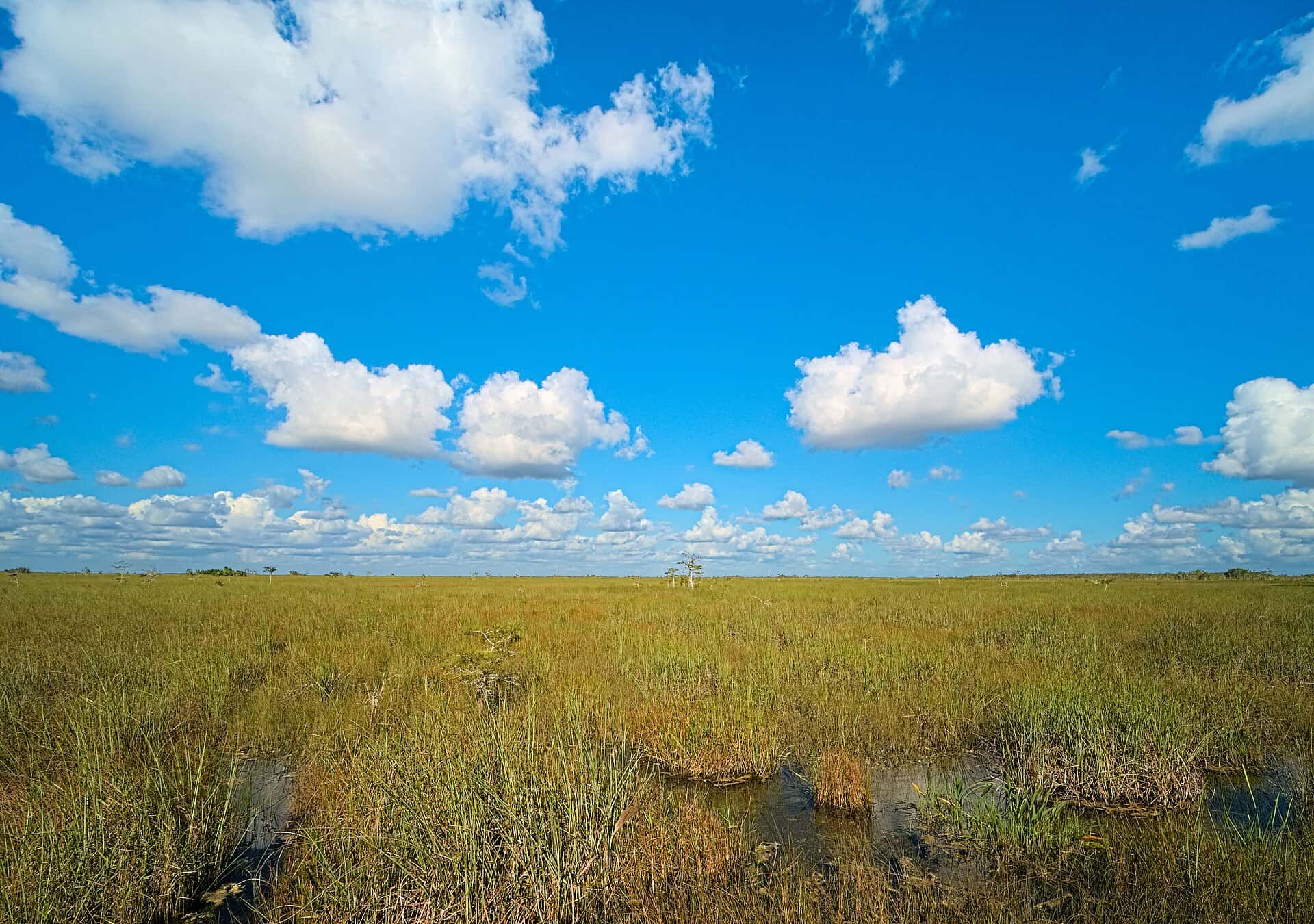
The largest ecosystem restoration project ever attempted anywhere in the world is showing measurable results, and an independent scientific panel is completing its assessment of that progress this month. The South Florida Water Management District released its 2026 South Florida Environmental Report documenting a year of restoration, scientific and engineering work across the Kissimmee Basin, Lake Okeechobee, the Everglades and the coastal estuaries, while the National Academies conducts public meetings as part of its eleventh biennial review of the Comprehensive Everglades Restoration Plan.
What the state is reporting
The headline figures from the district's annual report center on water storage. State officials say recent investments have tripled water storage capacity in South Florida, a metric that sits at the center of the entire restoration concept. The historical Everglades functioned as a slow sheet flow of water moving south from Lake Okeechobee across a broad shallow plain. A century of drainage and flood control severed that connection. Restoration is fundamentally about rebuilding the capacity to store water and release it south rather than dumping it east and west to the coasts.
Officials also point to Florida Bay reaching salinity targets for the first time in decades. Florida Bay sits at the southern terminus of the system, between the mainland and the Keys, and its health depends on receiving enough fresh water from the north to keep salinity within the range its seagrass beds and fisheries require. Hypersalinity events in Florida Bay have caused catastrophic seagrass die-offs, which in turn damaged the recreational and commercial fisheries that depend on that habitat.
Salinity targets being met is a direct and measurable indicator that water is reaching the bottom of the system. It is the kind of result restoration advocates have argued would eventually follow from upstream infrastructure work.
The EAA Reservoir acceleration
The single largest component of the current phase is the reservoir being built in the Everglades Agricultural Area south of Lake Okeechobee. Governor Ron DeSantis announced that all federally funded contracts have been executed to expedite completion of the EAA Reservoir by 2029, roughly five years ahead of the original schedule.
The project is designed to store, clean and send up to 120 billion gallons of fresh water south annually to the Everglades and Florida Bay. The stormwater treatment component is as important as the storage: water leaving Lake Okeechobee carries nutrient loads, principally phosphorus, that alter Everglades plant communities and drive the cattail expansion that has displaced native sawgrass across large areas.
The second function is defensive. Lake Okeechobee discharges east through the St. Lucie River and west through the Caloosahatchee have repeatedly triggered toxic algae events in the coastal estuaries, damaging fisheries, closing beaches and generating economic losses in Martin, St. Lucie and Lee counties. A reservoir capable of taking water south reduces the volume that has to go east and west.
Acceleration by five years matters because the alternative is another five years of the discharge cycle. Every summer without the reservoir is a summer in which heavy rainfall can force releases that the coastal communities absorb.
The money
Everglades restoration is funded through a state and federal partnership, with costs shared roughly evenly under the authorizing framework. The governor's proposed budget included an additional $1.4 billion, bringing the cumulative state investment figure officials cite to roughly $9.5 billion.
Federal appropriations run through the U.S. Army Corps of Engineers, which is the federal partner executing most of the construction. Those appropriations depend on annual congressional action, which introduces a variable the state cannot control. Congress faces a September 30 deadline to fund the federal government for fiscal year 2027, and extended funding uncertainty affects construction contract timing across Corps projects nationally.
Florida's congressional delegation has historically supported Everglades funding on a bipartisan basis, and the project is one of the few large-scale environmental programs that consistently draws support across the state's political divide.
The independent review
The National Academies of Sciences, Engineering, and Medicine conducts a congressionally mandated biennial review of restoration progress, and the eleventh edition is being completed this month with public meetings in South Florida.
Topics on the agenda include modeling for the Central Everglades Planning Project, depth and volume tradeoffs in operating decisions, the status of the Cape Sable seaside sparrow, and the Integrated Delivery Schedule that sequences the many component projects.
The Cape Sable seaside sparrow is a recurring and difficult element. The bird nests in short-hydroperiod marl prairie in the southern Everglades, and its nesting success depends on water levels staying low during a specific window. Managing water for the sparrow can conflict with managing water for other purposes, including sending more flow south toward Florida Bay. That tension is one of the genuine scientific and legal constraints on restoration operations.
The Academies reviews have historically been candid, praising progress where it exists while identifying where the schedule has slipped, where science is insufficient, and where competing objectives have not been reconciled. That independence is what makes them useful.
Why it matters to Floridians
The Everglades system supplies drinking water to a substantial share of South Florida's population through the Biscayne Aquifer, which is recharged by the same water that flows through the ecosystem. Water supply reliability for Miami-Dade, Broward and Palm Beach counties is not a separate issue from restoration. It is the same issue.
Saltwater intrusion is the specific mechanism connecting the two. As sea level rises and fresh water head pressure declines, salt water pushes inland into the aquifer, threatening well fields. Keeping fresh water in the system pushes back against that intrusion.
The economic dimension is substantial as well. Recreational and commercial fishing, boating, ecotourism and the property values tied to water quality in coastal communities all depend on the system functioning. Toxic algae events in the estuaries have produced measurable losses in hospitality and real estate on both coasts.
What remains unresolved
Restoration is now in its twenty-sixth year, and the original plan contemplated completion on a timeline that has long since passed. Component projects have been resequenced repeatedly, costs have risen substantially above original estimates, and some elements have not started.
Climate change was not a design assumption in the original plan. Sea level rise, changing rainfall patterns and higher temperatures all affect how the restored system will behave, and the scientific community has raised whether targets set decades ago remain the right ones.
Water quality standards remain contested. Meeting the phosphorus criterion in Everglades waters has required an extensive network of stormwater treatment areas, and agricultural nutrient management upstream continues to be a source of disagreement between agricultural interests and environmental organizations.
How the plumbing works
The engineered system that restoration is trying to modify is one of the most complex water management networks in the world. Lake Okeechobee sits at the center, held behind the Herbert Hoover Dike, which the Army Corps has rehabilitated over the past two decades at a cost in the billions.
Water leaving the lake has three possible paths. It can move east through the St. Lucie Canal to the St. Lucie River and the Indian River Lagoon. It can move west through the Caloosahatchee River toward Fort Myers and the Gulf. Or it can move south through the Everglades Agricultural Area toward the remaining Everglades and Florida Bay.
For most of the past century the southern path has been the most constrained, because the agricultural area occupies land the water used to cross and because the water leaving the lake carries nutrient loads that cannot legally be discharged into the Everglades without treatment.
The Corps operates the lake under a regulation schedule that balances flood control, water supply, navigation and ecological objectives. Revisions to that schedule are among the most contested decisions in South Florida, because every stakeholder group is affected differently by where the lake level is held.
The stormwater treatment areas
The mechanism that makes southern flow possible is a network of constructed wetlands covering tens of thousands of acres, designed to remove phosphorus from water before it enters the Everglades.
These stormwater treatment areas function biologically rather than mechanically. Water moves slowly through shallow vegetated cells where plants and periphyton take up phosphorus, and the treated water leaving them must meet a stringent numeric criterion before entering the protected area.
Meeting that criterion has required decades of research, construction and operational refinement, and it has been the subject of extended federal court supervision arising from litigation over Everglades water quality that dates to the late 1980s.
The treatment areas also perform poorly under certain conditions, including very high flow volumes and periods following drought when accumulated material can release phosphorus back into the water. Managing them is an ongoing operational challenge rather than a solved problem.
The EAA Reservoir now under construction is designed to work in combination with the treatment areas, providing the storage that allows water to be released at rates the treatment system can handle rather than in surges it cannot.
What's next
The National Academies review concludes its public meeting process this month, with the written report to follow. That document will be the most authoritative independent assessment available of where restoration actually stands.
Construction on the EAA Reservoir continues toward the accelerated 2029 target. Federal appropriations for fiscal year 2027 will determine the pace of Corps work across the program.
For Floridians, the practical indicators to watch are the ones that show up locally: whether Lake Okeechobee discharges to the estuaries decline, whether Florida Bay salinity stays within target, and whether summer algae events on the Treasure Coast and in the Caloosahatchee become less frequent. Those are the outcomes the infrastructure is being built to produce.
Spotted an issue with this article?
Have something to say about this story?
Write us a letterComments
No comments yet. Be the first to weigh in.
Related Coverage

Florida Panther Deaths Reach 14 in 2026 as Two Young Females Die on Collier and Hendry Roads
1d ago

71-Year-Old Man Killed by Nearly 12-Foot Alligator While Fishing at Winter Garden Park
3d ago

Extreme Drought Vanishes From Florida Map After a Week of Rain
4d ago

Record Sargassum Season Fades as Key West and UM Researchers Prepare for the Next Wave
Oct 11