FDLE Charges Pensacola Man in Child Exploitation Case Tied to Sex Offender Registry

Agents with the Florida Department of Law Enforcement have arrested a 22-year-old Pensacola man on multiple felony charges arising from a child exploitation investigation, according to the agency. Sebastian Christopher Ballensky faces counts including failure to register an internet identifier, promoting the sexual performance of a child, possession of child sexual abuse material, and transmission of material harmful to minors.
All charges are allegations. Ballensky is presumed innocent unless and until proven guilty in a court of law.
What the charges cover
The charges fall into two distinct categories, and the distinction explains how the case developed. The failure to register an internet identifier count is a registration compliance offense. The remaining counts are substantive child exploitation offenses.
Under Florida law, registered sexual offenders and sexual predators are required to report a defined set of information to authorities, including electronic mail addresses, internet identifiers, and applications used for communication. Changes to that information must be reported within statutory deadlines, and failure to do so is itself a felony.
Promoting the sexual performance of a child, possession of child sexual abuse material, and transmission of material harmful to minors are separate substantive offenses under Florida's chapter governing obscenity and child exploitation. Each carries its own penalty structure, and possession offenses in particular can be charged on a per-item basis, producing counts that multiply quickly.
The division that made the arrest
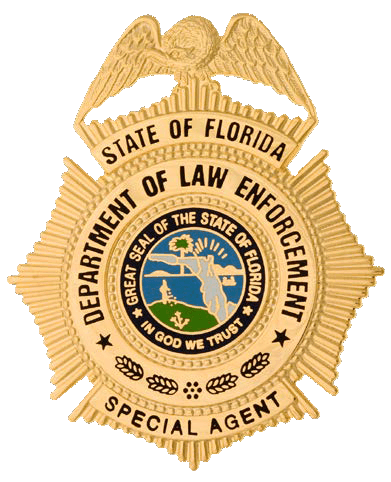
The arrest was made by FDLE's Missing Persons and Offender Enforcement division. That unit's mandate includes monitoring compliance among registered offenders and predators, a function that involves address verification, employment verification, and confirmation of the electronic identifier reporting the statute requires.
Registry compliance enforcement is a substantial workload. Florida maintains one of the larger registries in the country, and verification requirements are frequent enough that the agency's caseload runs continuously rather than episodically.
The investigative value of compliance monitoring extends beyond registration offenses. Discovering an unreported internet identifier often opens a broader inquiry into what that account was used for, which is a common pathway from a registration violation to substantive charges.
How internet identifier requirements work
Florida's internet identifier reporting requirement emerged from a recognition that address-based registration alone did not address online conduct. A registered offender who complies fully with residence reporting can still operate online under accounts authorities have no knowledge of.
The statute requires reporting email addresses, instant messaging names, social media accounts, and similar identifiers, with new identifiers reported before use. The reporting is submitted through the Department of Highway Safety and Motor Vehicles and the sheriff's office in the county of residence, with FDLE maintaining the statewide database.
These requirements have faced constitutional challenges in various states, with courts addressing First Amendment questions about compelled disclosure of online identity and the scope of restrictions on registered individuals' internet use. The U.S. Supreme Court has addressed related questions, holding in one case that a state law broadly barring registered offenders from social media violated the First Amendment.
Where the case goes next
An arrest begins rather than concludes a criminal case. Prosecutors in the relevant judicial circuit review the evidence and file formal charges, which may match, expand, or narrow what the arresting agency listed. The State Attorney for the First Judicial Circuit handles felony prosecutions in Escambia County.
The defendant will proceed through first appearance, arraignment, and pretrial proceedings, with the opportunity to enter a plea and to litigate suppression and other pretrial motions. Cases involving digital evidence frequently generate substantial motion practice over search warrant scope and forensic methodology.
Bond determinations in cases involving these charges are made by a judge considering the nature of the offenses, criminal history, community ties, and risk factors. Florida law provides for pretrial detention in defined circumstances when release conditions cannot reasonably protect the community.
Child exploitation enforcement in Florida
Florida operates a network of Internet Crimes Against Children task forces that coordinate investigations across federal, state, and local agencies. The task force structure exists because these cases routinely cross jurisdictional lines and require specialized digital forensics capacity that individual departments cannot maintain.
Undercover operations targeting online solicitation of minors are a recurring enforcement method. The Jacksonville Sheriff's Office announced an arrest in late July arising from Operation Checkmate, a multi-day effort in which investigators posed as minors online. Landon Cross, 33, was arrested after allegedly using an online platform to solicit a person he believed to be a teenage boy.
Those operations generate their own legal questions, principally around entrapment defenses, and Florida courts have developed a body of case law addressing when law enforcement conduct in online sting operations crosses into inducement.
What parents can do
Child safety organizations consistently emphasize that the most effective protective factor is a communication relationship in which a child will tell a parent when something happens online. Technical controls matter, but they are routinely circumvented and cannot substitute for that relationship.
Practical measures include understanding which platforms a child uses, knowing that predatory contact frequently begins on gaming platforms and mainstream social apps rather than obscure sites, and being aware that grooming typically proceeds through a gradual escalation designed to build trust and isolate.
Suspected exploitation can be reported to the National Center for Missing and Exploited Children through its CyberTipline, and to local law enforcement or FDLE directly. Reports through the CyberTipline are routed to the appropriate investigating agency.
The registry as a public resource
Florida's sexual offender and predator registry is publicly searchable through FDLE, allowing residents to search by name, address, or geographic radius. The system also offers email notification when a registered individual moves into a specified area.
Researchers have long debated the effectiveness of public registries as a crime prevention tool, with studies producing mixed findings on recidivism effects. What the registry does reliably provide is information, and Florida law makes that information broadly accessible.
Registry information reflects past adjudications and current compliance status. It does not indicate any current criminal allegation, and the presence of an individual on the registry is distinct from the charges described in this case.
How digital evidence shapes these cases
Cases in this category are built substantially on digital forensics, which introduces both investigative capability and procedural complexity that older case types did not involve. Devices are seized under warrant, imaged forensically to preserve the original state, and analyzed for content, metadata, and account activity.
Metadata frequently carries as much weight as content. Timestamps, file creation and access records, and device identifiers establish who possessed what and when, which is central to proving the knowledge element that most of these offenses require.
Provider records supply the other half. Platforms retain account registration information, login records, and in some cases communications content, all obtainable through legal process. The Stored Communications Act governs what may be obtained with a subpoena, a court order, or a warrant, with different showings required for each.
The defense side of these cases frequently focuses on attribution. Establishing that a device contained material is generally straightforward; establishing which person operated the device at the relevant time can be genuinely contested, particularly in shared living situations.
Florida's registration framework
Florida distinguishes between sexual offenders and sexual predators, with the predator designation applying to individuals whose qualifying offenses meet defined criteria and carrying more extensive reporting obligations and community notification.
Registration in Florida is generally lifetime, with limited removal provisions available only in narrow circumstances defined by statute. That is a stricter framework than many states, which provide tiered registration with defined durations based on offense severity.
Reporting obligations include in-person verification at defined intervals, notification of address changes within statutory deadlines, reporting of vehicles, employment, and educational enrollment, and the internet identifier requirement at issue in this case. Each carries independent criminal liability for noncompliance.
Residency restrictions add another layer. Florida law and numerous local ordinances restrict where registered individuals may live relative to schools, parks, and other locations where children gather. Those restrictions have been the subject of substantial litigation and have been documented as contributing to housing instability among registrants, which itself complicates compliance monitoring.
What FDLE does across the state
The Florida Department of Law Enforcement functions as the state's principal investigative agency, with responsibilities that extend well beyond the offender enforcement work involved in this case. Its regional operations centers conduct major case investigations, often at the request of local agencies that lack specialized capacity.
The agency operates Florida's crime laboratory system, providing forensic analysis in chemistry, biology, firearms, and digital evidence for law enforcement statewide. Laboratory capacity and turnaround times directly affect how quickly cases move through prosecution across every county.
FDLE also maintains the state's criminal justice information systems, including criminal history records, the sexual offender and predator registry, and the fingerprint identification infrastructure that supports background screening for employment and licensing.
Public corruption investigations fall within the agency's mandate as well, frequently in partnership with the Office of Statewide Prosecution. That combination has produced cases against public officials across Florida in recent years.
What's next
Court dates in the case will be set through the Escambia County court system, and case records are accessible through the clerk of court. Florida's public records law provides broad access to criminal case documents, with statutory exemptions protecting victim identifying information.
FDLE publishes arrest announcements through its press office, and the agency's regional operations centers issue releases for cases in their areas. Those releases are the primary official source of information as cases develop.
Anyone with information relevant to child exploitation investigations in Florida can contact FDLE directly or report through the CyberTipline. Reports can be made anonymously.
As with any pending criminal matter, the charges described here remain allegations, and the defendant is entitled to the presumption of innocence throughout the proceedings that follow.
Spotted an issue with this article?
Have something to say about this story?
Write a letter to the editor