Eleventh Circuit Revives Florida Medicare Fraud Suit and Preserves the False Claims Act Whistleblower System
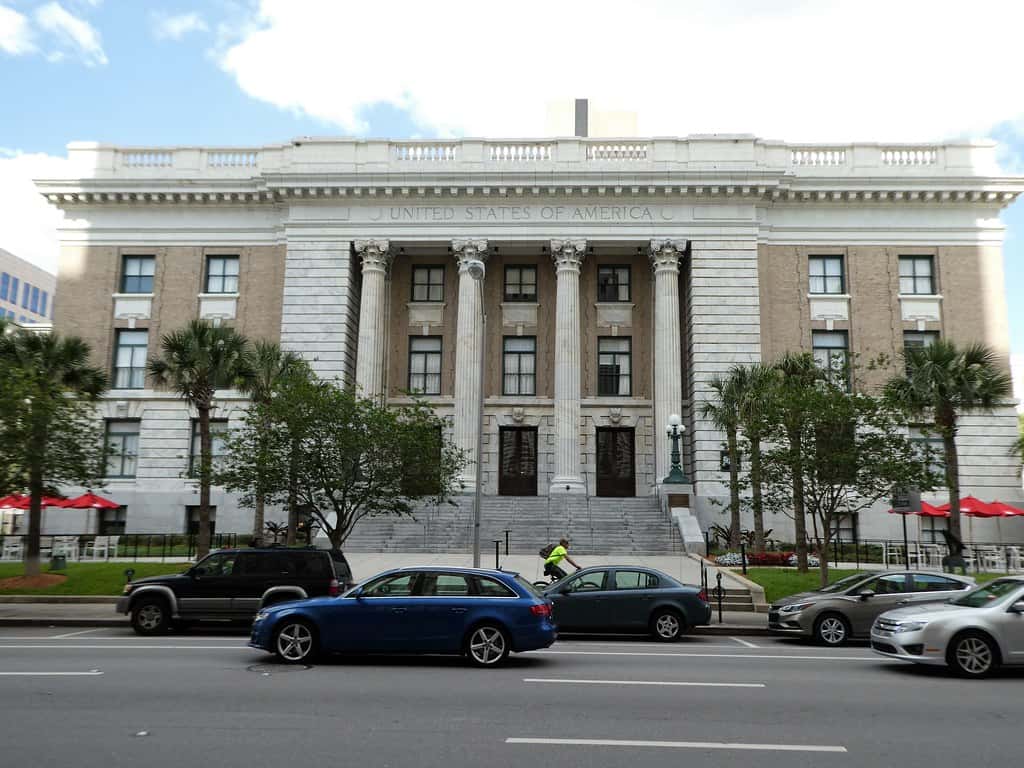
A federal appeals court has thrown out a Florida district judge's ruling that threatened to dismantle one of the federal government's most effective fraud enforcement tools, holding that private whistleblowers who sue on the government's behalf are not unconstitutionally exercising executive branch power.
The unanimous three judge panel of the Eleventh Circuit Court of Appeals revived a Medicare fraud lawsuit against a Florida health care network and, in doing so, preserved the False Claims Act whistleblower mechanism nationwide. The case, Zafirov v. Florida Medical Associates LLC, had produced a 2024 district court ruling that legal observers across the country had been watching closely.
The stakes extended well beyond the parties. The False Claims Act's qui tam provision, which allows private individuals to file suit on behalf of the United States and share in any recovery, has been the primary engine of federal health care fraud enforcement for decades. A ruling striking it down would have affected billions of dollars in pending and future litigation.
What the case is about
Dr. Clarissa Zafirov filed the underlying suit against her former employer, alleging that the network, doing business as VIPcare, systematically submitted false diagnosis codes to the Medicare Advantage program in order to inflate the monthly risk adjustment payments it received.
Medicare Advantage pays private plans a fixed monthly amount per enrollee, adjusted for the health status of the patient. Sicker patients generate larger payments, which is intended to prevent plans from avoiding costly enrollees. The design creates a corresponding incentive to record patients as sicker than they are, and enforcement against that practice has been one of the federal government's major health care fraud priorities.
Allegations of that kind are the paradigm case for the False Claims Act, which imposes liability for submitting false claims to the federal government and allows treble damages and penalties. The whistleblower provision exists because the people who observe such conduct are generally employees rather than regulators.
The allegations in the case remain allegations. The appellate ruling addresses whether the lawsuit may proceed, not whether the underlying conduct occurred.
The constitutional question
U.S. District Judge Kathryn Kimball Mizelle ruled in 2024 that the qui tam provision violates the Appointments Clause of the Constitution, reasoning that a private relator who litigates on behalf of the United States is effectively exercising the authority of an officer of the United States without having been appointed as one.
The argument drew on a line of reasoning that had been raised in dissents and academic commentary but had not previously been adopted by a court. It attracted immediate attention because if correct, it would invalidate the mechanism behind the large majority of False Claims Act recoveries.
The Eleventh Circuit panel disagreed. Its reasoning, as described in reports of the decision, holds that a private relator bringing a qui tam action is not acting as an illegal stand in federal officer, and that the provision is consistent with constitutional structure.
That conclusion aligns the Eleventh Circuit with the long standing understanding that had governed False Claims Act practice since the provision's modern form was adopted in 1986, and it restores the status quo that the district court ruling had disturbed.
Why the False Claims Act matters
The False Claims Act dates to the Civil War, when it was enacted to address contractors defrauding the Union Army. Its modern significance comes from 1986 amendments that strengthened the whistleblower provision and increased the share of recovery available to relators.
Since then, the statute has become the federal government's principal civil fraud enforcement tool, recovering tens of billions of dollars, with health care fraud accounting for the largest single category. Defense contracting, federal grants, pandemic relief programs and customs fraud have also generated substantial recoveries.
The mechanism works because of an information asymmetry. Federal agencies cannot audit every claim submitted by every provider and contractor, and fraud schemes are designed to survive routine review. Employees inside an organization see what auditors do not.
The financial incentive is what makes whistleblowers willing to act, since coming forward typically ends a career in the relevant industry regardless of statutory anti retaliation protections. Relators generally receive between 15 and 30 percent of the government's recovery.
The Florida connection
Florida's relevance to health care fraud enforcement is disproportionate and long standing. The state's large Medicare population, its concentration of Medicare Advantage enrollment, its density of health care providers and its history as a center for fraud schemes have made it a focus of federal enforcement for decades.
South Florida in particular has been the site of major enforcement actions involving home health, durable medical equipment, pharmacy and clinic billing. Federal strike force operations have repeatedly targeted the region.
Medicare Advantage risk adjustment has become the enforcement frontier, and Florida's high Medicare Advantage penetration makes it central to that effort. A substantial share of Florida Medicare beneficiaries are enrolled in Medicare Advantage plans rather than traditional Medicare.
The practical consequence of the appellate ruling for Florida is that pending qui tam cases in the state's federal courts, of which there are many under seal at any given time, proceed rather than facing dismissal on constitutional grounds.
What it means for Florida patients
For patients, the connection between whistleblower litigation and their own care is indirect but real. Risk adjustment fraud inflates what the federal government pays plans, which raises program costs borne by taxpayers and by Medicare beneficiaries through premiums.
There is also a clinical dimension. Diagnosis codes recorded for payment purposes enter a patient's medical record, and inaccurate diagnoses can affect future care decisions, insurance underwriting in other contexts and the patient's own understanding of their health.
Patients who believe diagnoses appear in their records that no physician discussed with them can request their records and ask their provider directly. That is not a common experience, but the documented enforcement cases indicate it is not rare either.
The appellate landscape
Because the district court ruling was the first to adopt the constitutional argument, the Eleventh Circuit's reversal removes the only judicial authority supporting it. Defendants in False Claims Act cases elsewhere had begun raising the argument, and the appellate decision substantially weakens those efforts within the circuit.
The Eleventh Circuit covers Florida, Georgia and Alabama, so its ruling binds federal courts in those states directly. Courts in other circuits are not bound but will find the reasoning persuasive or not on its merits.
Further review remains possible. Parties may seek rehearing before the full court or petition the Supreme Court, and a question of this constitutional significance is the kind that can eventually reach the justices, particularly if another circuit were to reach a different conclusion.
For now, the whistleblower mechanism operates as it did before the district court ruling.
Why the district court ruling drew attention
The 2024 decision was notable not only for its conclusion but for the volume of response it generated. Whistleblower advocacy organizations, the Department of Justice and health care compliance practitioners all treated it as a potentially transformative development.
Part of the attention reflected timing. Constitutional challenges to long standing federal enforcement structures have gained traction in several areas in recent years, and observers read the district court ruling as part of a broader pattern of courts revisiting settled arrangements.
Defense counsel in False Claims Act cases had begun incorporating the argument into motions nationally, which imposed litigation costs even where courts rejected it. The appellate reversal reduces that activity considerably.
What it means for Florida businesses
For health care organizations and federal contractors operating in Florida, the ruling restores the compliance calculus that existed before 2024. Organizations submitting claims to federal programs face the same exposure to qui tam litigation they did previously.
Compliance professionals had generally advised clients not to change practices based on a single district court ruling that was certain to be appealed, and that advice proved correct. Organizations that had relaxed internal controls on the expectation that the provision would fall now face the original enforcement environment.
The practical compliance implications are unchanged: documented internal reporting channels, prompt investigation of employee concerns and accurate coding practices remain the measures that reduce exposure.
How a qui tam case unfolds
False Claims Act whistleblower cases follow a procedural path unlike ordinary civil litigation, and understanding it explains why these cases take years and why most never become public.
A relator files the complaint under seal, meaning it is not served on the defendant and does not appear on the public docket. The Department of Justice then investigates, often for a year or more, to decide whether to intervene and take over the litigation.
When the government intervenes, the case gains substantial resources and the recovery rate rises sharply. When it declines, the relator may proceed alone, which happens frequently and succeeds less often. Either way, the complaint is eventually unsealed and served.
Because of the seal period, the cases visible in public dockets at any moment represent a fraction of those pending. The Eleventh Circuit's ruling affects all of them, including the ones no one outside the Justice Department currently knows exist.
Medicare Advantage and Florida's older population
Florida's Medicare population is among the largest in the country in absolute terms, and the state's Medicare Advantage enrollment share is high, which places a substantial portion of Florida seniors in plans paid through the risk adjustment system at the center of this case.
Risk adjustment exists for a defensible reason. Without it, plans would have a powerful financial incentive to avoid enrolling patients with expensive chronic conditions, which would undermine the entire structure of managed Medicare.
The enforcement problem is that the same mechanism rewards documenting conditions aggressively. The line between thorough documentation of a patient's actual health status and recording diagnoses that do not reflect clinical reality is where these cases are litigated.
What's next
The Zafirov case returns to the district court, where the underlying fraud allegations will be litigated on their merits. The defendants have denied wrongdoing, and an appellate ruling permitting a case to proceed says nothing about whether the claims will ultimately succeed.
Whether the defendants seek further appellate review of the constitutional question is the other open item. A petition to the Supreme Court would face long odds of acceptance absent a split among the circuits.
For the broader enforcement system, the ruling means the primary mechanism for uncovering federal program fraud continues to operate, and the pipeline of sealed qui tam cases in Florida's federal courts proceeds as before.
Spotted an issue with this article?
Have something to say about this story?
Write a letter to the editor