Convicted Felon Sentenced to Nine Years in Federal Prison in Gainesville Ammunition Case
A 36 year old Jacksonville man was sentenced Friday to nine years in federal prison for possession of ammunition by a convicted felon, the United States Attorney for the Northern District of Florida announced.
DeShawn Russ received the sentence following his conviction on the federal charge. According to court documents cited in the announcement by U.S. Attorney John P. Heekin, the case arose after the Gainesville Police Department responded to a report of a shooting that occurred within a vehicle, where officers found a bullet hole in the driver's side window.
No firearm was recovered in the case. Officers located a .380 caliber bullet in Russ's pocket, and that ammunition formed the basis of the federal charge.
The case illustrates a category of federal prosecution that accounts for a substantial share of the firearms docket in Florida's federal courts, and one that frequently produces sentences longer than many observers expect given the underlying conduct.
What the charge covers
Federal law prohibits any person convicted of a crime punishable by more than one year in prison from possessing a firearm or ammunition that has moved in interstate commerce. The statute treats ammunition the same as a firearm for purposes of the prohibition.
That equivalence is the feature of the law most often misunderstood. A person subject to the prohibition who possesses a single round of ammunition and no weapon has violated the statute as fully as one who possesses a loaded firearm.
The interstate commerce element is generally satisfied by proof that the ammunition was manufactured outside the state where it was possessed, which is typically established through an expert who identifies the manufacturer and its location. In practice this element is rarely contested.
The base statutory maximum for the offense is ten years. Enhanced penalties apply in cases involving defendants with certain categories of prior convictions.
How sentences are calculated
Federal sentencing operates under a framework in which a judge calculates an advisory range using the United States Sentencing Guidelines and then imposes a sentence after considering statutory factors, including the nature of the offense, the defendant's history and the need for deterrence.
For firearms and ammunition possession offenses, the guideline calculation is driven substantially by the defendant's criminal history and by whether the possession occurred in connection with another offense. A defendant with a significant record faces a range far above one with minimal history on identical conduct.
A nine year sentence on this offense indicates a calculation that produced a range near the statutory maximum, which generally reflects criminal history, offense characteristics or both. The public announcement does not detail the guideline calculation.
Federal sentences carry no parole. Defendants serve the sentence imposed, reduced only by earned credit for good conduct and by participation in qualifying programs, which means a federal term is served much closer to its full length than a comparable state sentence.
Why the case went federal
The same conduct could in many circumstances be charged under Florida law, which has its own prohibition on firearm and ammunition possession by convicted felons. The decision about which system prosecutes is made through coordination between federal and state prosecutors.
Federal prosecution is generally pursued when the defendant's record produces greater sentencing exposure federally, when the case connects to a broader federal investigation, or when it falls within a designated enforcement initiative directed at firearms offenses in a particular area.
Federal and state authorities in Florida have long operated joint firearms enforcement programs in which local police refer qualifying cases for federal prosecution. Those programs are built on the premise that longer, certain sentences deter armed offending.
The evidence on that premise is contested in the research literature, with some studies finding measurable deterrent effects from targeted firearms prosecution initiatives and others finding limited impact relative to program cost.
The Gainesville context
Gainesville sits in north central Florida and is best known as the home of the University of Florida, which dominates the city's economy and population. The Gainesville Police Department serves the city alongside the Alachua County Sheriff's Office and the university's own police department.
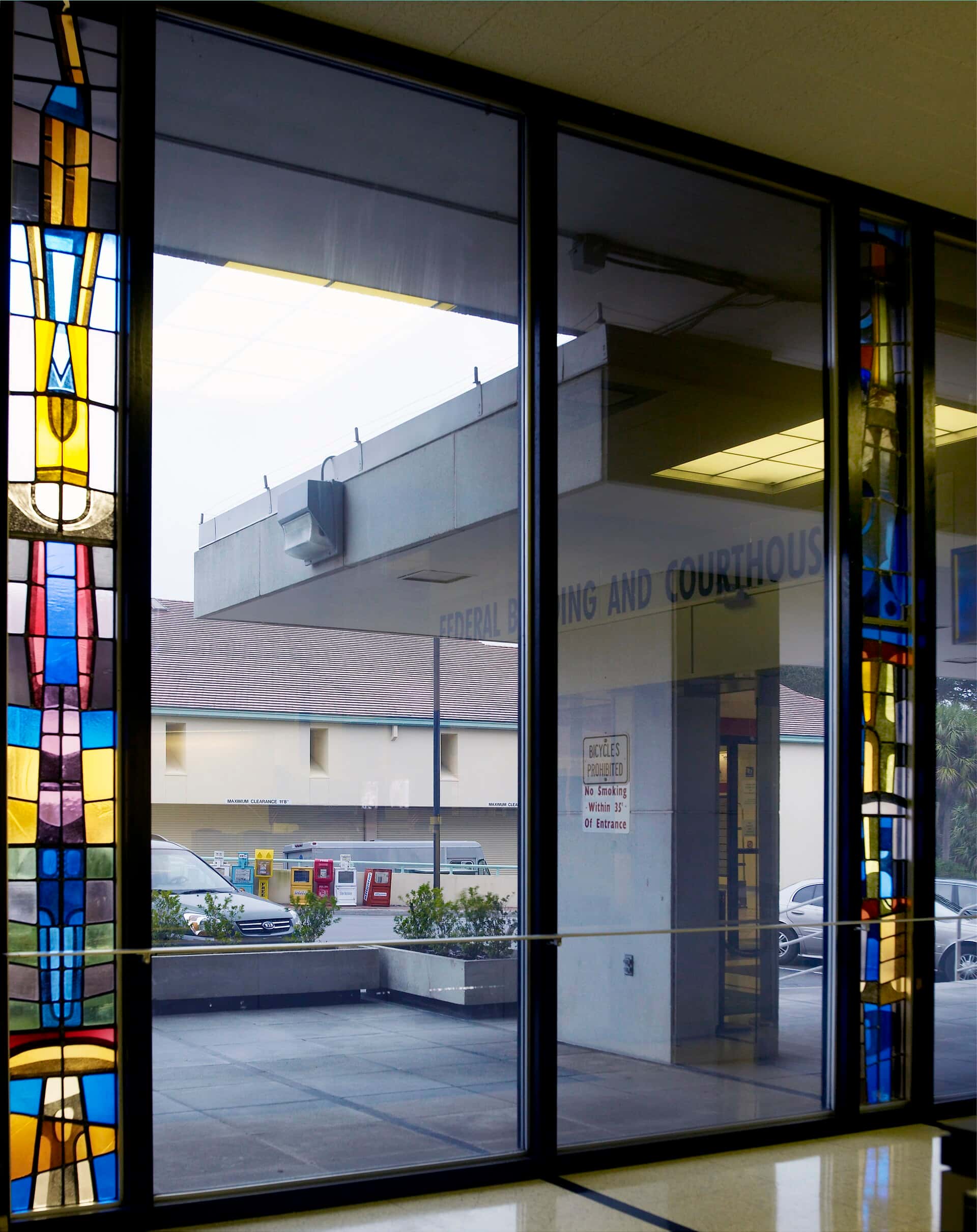
Cases originating in Gainesville that go federal are prosecuted in the Northern District of Florida, which covers the Panhandle and north central portions of the state and maintains courthouses including one in Gainesville.
The Northern District is geographically large and comparatively less populous than the Middle and Southern Districts, and its criminal docket includes a substantial firearms component alongside drug and fraud prosecutions.
What the case does not establish
The announcement describes a shooting that occurred within a vehicle and a bullet hole in the driver's side window, and it states that no firearm was recovered.
The conviction and sentence are for possession of ammunition by a convicted felon. The announcement does not indicate that Russ was charged with or convicted of causing the shooting, and readers should not infer conclusions about the underlying incident that the federal charge does not support.
That distinction is common in federal firearms cases. Prosecutors frequently charge the possession offense because it is provable on available evidence, while the broader conduct that brought officers to the scene may not be charged for reasons including insufficient evidence or the absence of federal jurisdiction over it.
The sentence reflects the offense of conviction, adjusted for the factors federal sentencing law directs a judge to consider.
The policy debate over possession sentences
Federal firearms possession prosecutions have drawn sustained policy attention from multiple directions, and the arguments are worth setting out.
Proponents argue that individuals with felony records who possess weapons or ammunition present elevated risk, that the offense is easy to prove and therefore produces reliable incapacitation, and that the prohibition is a reasonable consequence of a prior felony conviction.
Critics argue that sentences in the range of this case are disproportionate to conduct that involves no violence proven in court, that the prohibition applies indefinitely regardless of how old the predicate conviction is, and that enforcement patterns have produced significant racial disparities in who is prosecuted federally for these offenses.
Courts have also been active in this area, with litigation over the scope of the felon in possession prohibition proceeding in federal appellate courts following recent Second Amendment decisions. Those cases have produced varying results and have not settled the question nationally.
What it means for Floridians
The practical implication for anyone with a felony conviction is straightforward and frequently misunderstood: the federal prohibition covers ammunition as well as firearms, applies regardless of whether a weapon is present, and does not expire with time.
Restoration of firearms rights is possible in limited circumstances through processes that vary by jurisdiction and by the nature of the underlying conviction. Florida's clemency process addresses state rights restoration, and its effect on federal prohibitions depends on specific legal circumstances.
Anyone uncertain about their status should consult an attorney rather than relying on general information, because the consequences of being wrong are measured in years of imprisonment.
How a federal case moves from arrest to sentencing
Federal criminal cases follow a structured path that differs in several respects from state practice, and the sequence explains why sentencing typically occurs many months after the underlying incident.
A case begins with either a complaint or an indictment returned by a federal grand jury. Detention decisions are made at a hearing where the government may seek to hold a defendant pending trial based on flight risk or danger to the community.
Discovery in federal cases follows rules that require the government to disclose evidence it intends to use, along with material favorable to the defense. Motion practice, including challenges to searches and seizures, follows.
Most federal cases resolve by plea agreement rather than trial. After conviction by plea or verdict, the probation office prepares a presentence investigation report calculating the guideline range and detailing the defendant's history, and both parties may object to its findings before the judge imposes sentence.
Firearms enforcement across Florida's federal districts
Florida is divided into three federal judicial districts. The Northern District covers the Panhandle and north central counties including Alachua. The Middle District covers a broad band including Jacksonville, Orlando, Tampa and Fort Myers. The Southern District covers the southeast counties and the Keys.
Each district's U.S. Attorney sets prosecution priorities within national Department of Justice guidance, and firearms offenses have been a consistent enforcement focus across all three for many years.
Local police departments across Florida participate in referral arrangements under which qualifying firearms cases are evaluated for federal prosecution, generally through task forces that include federal agents from the Bureau of Alcohol, Tobacco, Firearms and Explosives working alongside local officers.
What happens after the sentence
A federal sentence is followed by designation, the process through which the Bureau of Prisons assigns a defendant to a specific institution based on security classification, medical needs, program eligibility and, where possible, proximity to family.
Most federal sentences include a term of supervised release that follows imprisonment, during which the individual reports to a federal probation officer and is subject to conditions set by the court. Violations of those conditions can result in a return to custody.
Reentry programming within the federal system includes education, vocational training and substance use treatment, and participation in certain programs can reduce the time served under provisions Congress enacted to encourage rehabilitation.
For a sentence of this length, release would come years from now, followed by the supervised release term. The felony firearms prohibition that produced the conviction continues to apply after release.
What's next
Russ will serve the sentence in federal Bureau of Prisons custody, with designation to a specific facility determined by the bureau based on security classification and other factors. A term of supervised release typically follows imprisonment in federal cases.
A defendant may appeal a federal conviction and sentence to the appropriate court of appeals, in this case the Eleventh Circuit, within the deadlines federal rules establish.
Federal firearms prosecutions in Florida continue at a steady volume, and the coordination between local police and federal prosecutors that produced this case operates across the state's three federal districts.
Spotted an issue with this article?
Have something to say about this story?
Write a letter to the editor