Fed Expected to Hold Rates Again, Keeping Florida Mortgages Near 6.5%
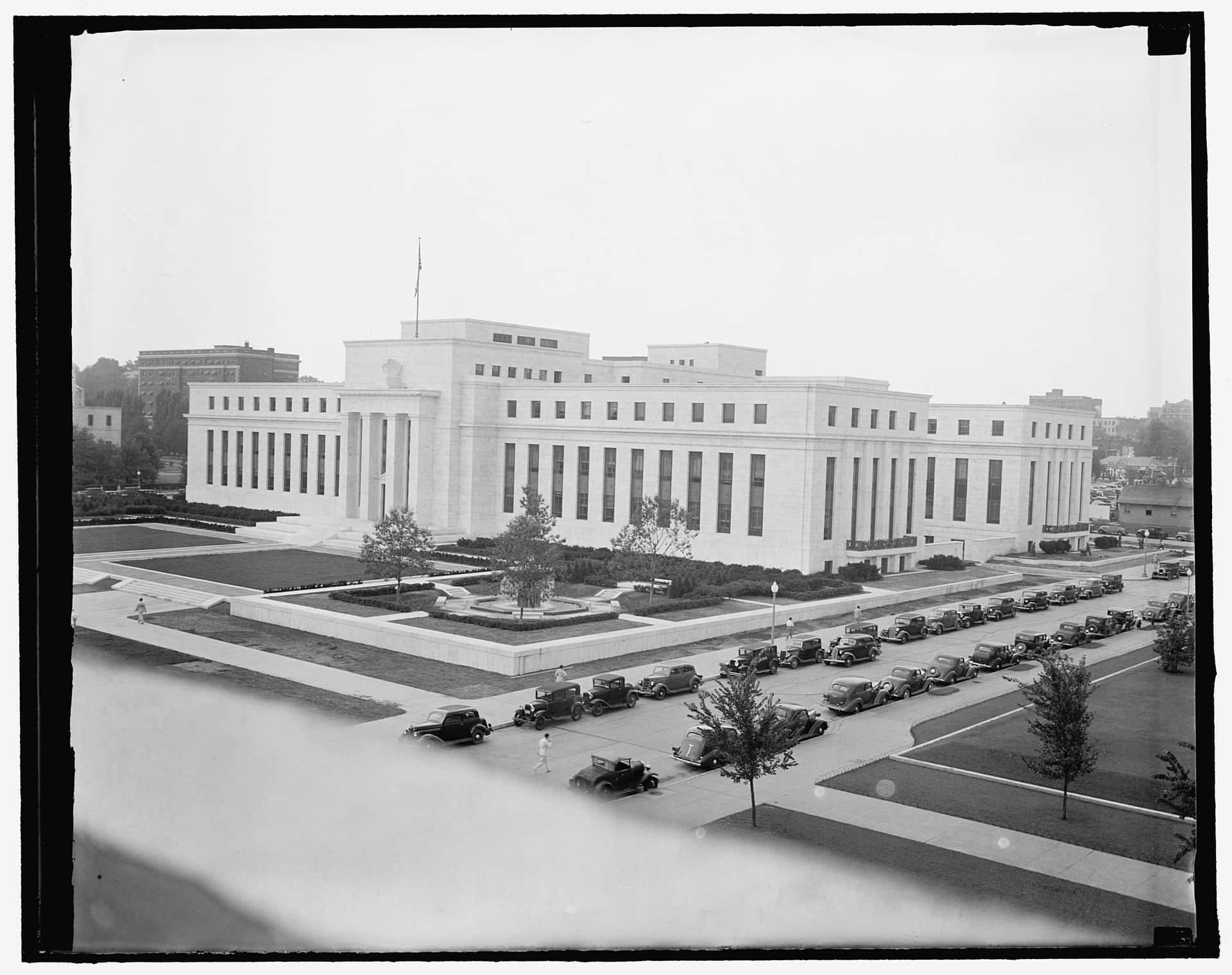
The Federal Reserve concludes a two-day policy meeting on Wednesday, and economists broadly expect no change. Forecasters polled by FactSet anticipate the Federal Open Market Committee will hold its benchmark rate steady in a range of 3.5 to 3.75 percent, which would mark the fifth consecutive meeting without a move. The announcement comes at 2 p.m. Eastern on July 29.
For Florida, the meeting matters less for what the Fed does than for what it signals. This is a non-projection meeting, meaning the committee will not release updated economic forecasts or the dot plot showing individual members' rate expectations. The information will come from the statement language and the chair's press conference.
Florida households have a concentrated exposure to interest rates that residents of many states do not, running through a housing market with among the highest insurance costs in the country, a large population of retirees living on fixed income and interest-bearing savings, and an economy heavily weighted toward construction, real estate and tourism.
What the Fed actually controls
A common misconception is that the Federal Reserve sets mortgage rates. It does not.
The FOMC sets the target range for the federal funds rate, which is the overnight rate at which banks lend reserves to one another. That rate anchors short-term borrowing costs across the economy, and it flows fairly directly into credit card rates, home equity lines of credit, auto loans and the yields on savings accounts and money market funds.
Thirty-year mortgage rates are a different animal. They track the yield on the 10-year Treasury note more closely than the federal funds rate, plus a spread that reflects prepayment risk and mortgage-backed securities demand. The 10-year Treasury responds to long-term inflation expectations, economic growth outlook, federal borrowing needs and global demand for U.S. debt.
The practical consequence is that the Fed can cut short-term rates without mortgage rates falling much, and mortgage rates can fall while the Fed holds. Florida homebuyers watching Wednesday's announcement for relief on their monthly payment are watching the wrong variable.
What the Fed can move is expectations. If the statement or the press conference shifts the market's view on the path of future policy, long-term yields respond, and mortgage rates follow.
Why the Fed is holding
The committee has held the federal funds rate in the 3.50 to 3.75 percent range across multiple consecutive meetings in 2026, citing inflation running above its 2 percent target as measured by personal consumption expenditures.
That is the central tension of the current policy stance. The Fed operates under a dual mandate of price stability and maximum employment. When inflation runs above target, the case for holding or tightening strengthens. When labor markets weaken, the case for easing strengthens. Holding is what a committee does when neither signal is decisive.
The risk of moving too early is that inflation reaccelerates and the committee has to reverse course, which damages credibility and typically requires more tightening than would have been necessary in the first place. The risk of holding too long is that restrictive policy accumulates damage in interest-sensitive sectors before the committee recognizes it.
Housing and construction are the interest-sensitive sectors that feel restrictive policy first and most severely, which is precisely where Florida's exposure sits.
The Florida housing calculation
Florida's June housing data showed a market functioning at higher rates rather than waiting for lower ones. Statewide single-family sales rose 9.3 percent year over year to 26,036 closings, with the median price up 4.9 percent to $432,000. Condominium and townhouse sales rose 14 percent to 8,900, with the median at $305,000.
Inventory told the more useful story: a 4.5-month supply for single-family homes and an 8.1-month supply for condominiums. Florida Realtors economists noted that 2026 trends more closely resemble 2023 than the frenzied period that preceded it, with mortgage rates hovering around 6.5 percent.
That 6.5 percent figure is the number Florida buyers actually live with. On a $432,000 median-priced home with 20 percent down, the difference between 6.5 percent and 5.5 percent is roughly $230 per month in principal and interest, which is meaningful but is not the dominant variable in Florida affordability.
The dominant variables are insurance and taxes. Florida homeowners insurance premiums are among the highest in the nation, and property tax reassessment on purchase can produce a bill far above what the seller paid under homestead protections. For many Florida buyers, the escrow portion of the payment rivals or exceeds what a full percentage point of mortgage rate movement would change.
What it means for Florida retirees and savers
Florida's demographic profile makes the Fed's decisions unusually consequential for household income, not just borrowing costs.
The state has one of the largest populations of residents over 65 in the country, and a substantial share of that population holds savings in certificates of deposit, money market funds and short-duration Treasury instruments. Those yields track the federal funds rate closely.
A holding pattern at 3.5 to 3.75 percent means those savers continue earning meaningfully more than they did during the near-zero rate period, which is genuinely positive for fixed-income households. It also means that when the Fed does begin cutting, that income declines.
The offsetting pressure is that inflation above target erodes purchasing power for anyone on a fixed income, and Florida's cost structure, particularly insurance, housing and utilities, has risen faster than headline national inflation in several categories.
For retirees carrying variable-rate debt, including home equity lines of credit and credit card balances, a hold means those costs stay elevated as well.
The construction and tourism channel
Florida's economy carries a higher-than-average concentration in construction and in leisure and hospitality, and both respond to rate policy through different mechanisms.
Construction responds directly. Residential and commercial development is financed, and elevated borrowing costs raise project hurdle rates, delay starts and reduce the number of projects that pencil. Florida's building permit activity is a reasonably direct read on how restrictive policy is landing in the state.
Homebuilders have adapted by offering mortgage rate buydowns, effectively subsidizing the buyer's rate to preserve sales volume. That tool works but compresses builder margins, and it is a signal of demand softness rather than strength.
Tourism responds indirectly, through consumer discretionary spending. Households facing higher debt service on credit cards and auto loans have less available for travel, which affects Orlando, Miami and the state's beach markets. Universal has reported softening attendance across the Orlando market beginning in June, one data point consistent with that channel.
Florida's revenue exposure
State government finances have their own sensitivity to interest rate policy, and Florida's revenue structure makes that sensitivity distinctive.
Florida has no personal income tax, which means the state depends heavily on sales tax collections and on documentary stamp taxes levied on real estate transactions and mortgage recordings. Both are cyclical, and both respond to the same forces that drive consumer spending and housing activity.
Documentary stamp revenue is the most directly rate-sensitive line in the state budget. When transaction volume falls, that revenue falls with it, and those collections fund affordable housing programs and other designated purposes in addition to general revenue.
Sales tax collections track consumer spending, including tourism spending by visitors. A national environment in which households are carrying elevated debt service costs affects discretionary travel, which flows through to Florida's largest revenue source.
The state has maintained healthy reserves, which provides a buffer. But the structural point stands: Florida's budget is more exposed to consumption and real estate cycles than states with broader tax bases, which means monetary policy reaches Tallahassee as well as household budgets.
What a rate cut would and would not fix
Because rate relief is frequently discussed as a solution to Florida's affordability problem, it is worth being precise about what it would actually change.
A meaningful decline in mortgage rates would reduce monthly principal and interest payments and would improve qualification for buyers on the margin. It would also likely increase transaction volume, since the lock-in effect that has kept homeowners with low-rate mortgages from selling would weaken.
What it would not do is reduce insurance premiums, property tax bills, or condominium association assessments, and those are the components that have risen fastest in Florida over the past five years. A homeowner whose insurance premium doubled does not get that back through a lower mortgage rate.
There is also a counterintuitive effect worth naming. Lower rates increase purchasing power, which in a supply-constrained market tends to push prices up. Buyers can end up paying a similar monthly amount for a more expensive house, with a larger principal balance. The relief is real but partial, and it is not the same as affordability.
Florida's affordability problem is primarily a cost-of-carry problem rather than a financing-cost problem, and it will be solved, if at all, through insurance market stability, property tax policy and housing supply rather than through the Federal Reserve.
What's next
The announcement lands at 2 p.m. Eastern on Wednesday, followed by the chair's press conference. Because this is a non-projection meeting, market reaction will hinge on language, specifically whether the statement retains or modifies its characterization of inflation and labor market conditions.
The subsequent meeting will carry updated projections, which historically produce larger market moves. Between now and then, the inflation and employment data releases will shape expectations more than any Fed communication.
For Florida households, the practical advice is unchanged by Wednesday's outcome. Buyers should underwrite total cost of ownership including insurance, taxes and any association fees rather than focusing on the mortgage rate. Savers should recognize that current yields on short-duration instruments will not persist indefinitely. And anyone carrying variable-rate debt should assume elevated costs for at least the near term.
The Fed is unlikely to change Florida's affordability equation on Wednesday. Insurance, property taxes and inventory are doing considerably more of that work.
Spotted an issue with this article?
Have something to say about this story?
Write us a letterComments
No comments yet. Be the first to weigh in.
Related Coverage

Trump and Melania Trump vote early in West Palm Beach as GOP sets Oct. 30 Daytona Beach rally
5h ago

Miami magistrate orders Trump to sit for BBC deposition by Dec. 11 or risk losing his $10 billion lawsuit
7h ago
Advocates Say ICE Plans to Deport Gravely Ill Krome and Broward Detainees to Africa; DHS Denies It
10h ago

ACA Open Enrollment for 2027 Opens Nov. 1: What Florida, the Nation's Largest Marketplace, Faces
10h ago