FHP Charges Driver With DUI in Madison County Crash That Killed a 9-Year-Old
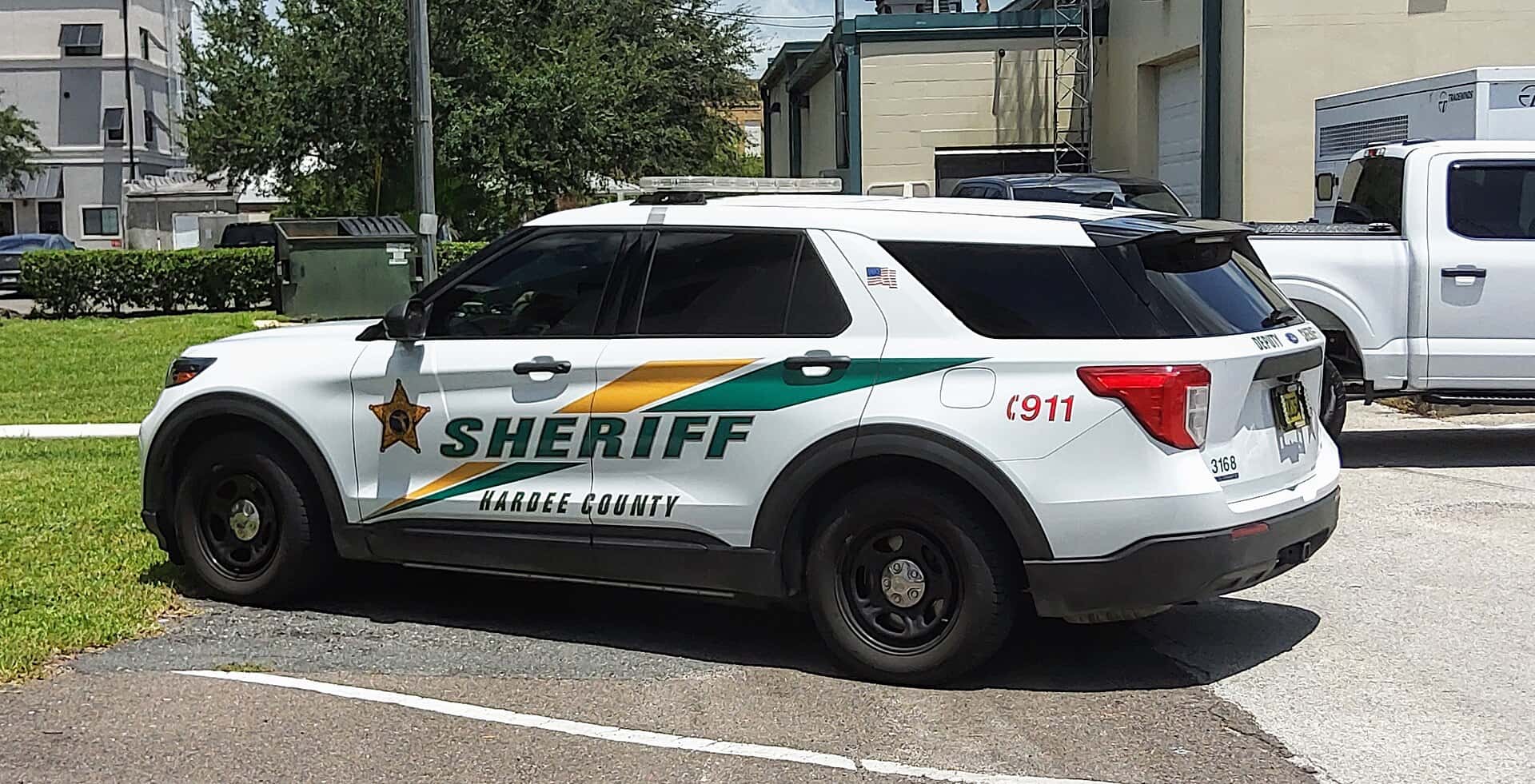
The Florida Highway Patrol has charged a 32-year-old driver with driving under the influence in connection with a 2025 crash in Madison County that killed a nine-year-old girl and critically injured a five-year-old. Authorities identified the driver as Bria Davis. The charge was announced in early September, more than a year after the crash, and reports indicate she had surrendered to authorities at the Hamilton County Sheriff's Office in August. Davis has been charged and has not been convicted.
What is known about the case
The crash occurred in Madison County, in the rural stretch of North Florida between Tallahassee and the Suwannee River. Two children were in the crash. A nine-year-old girl died. A five-year-old girl was critically injured.
The Florida Press does not name minors in criminal matters, and the children involved are not identified here.
The extended interval between a fatal crash and a criminal charge is common in impaired driving cases and reflects how these investigations actually work. Traffic homicide investigation is among the most technically demanding work state troopers perform, and the file that eventually reaches a prosecutor is assembled over many months.
Why traffic homicide cases take so long
A fatal crash investigation begins with scene documentation. Investigators photograph and measure the scene, record roadway evidence including skid and yaw marks, gouges and debris fields, and in modern cases download electronic data from vehicle control modules that capture speed, braking, throttle position and restraint use in the seconds before impact.
Reconstruction follows. Trained traffic homicide investigators apply physics to the physical evidence to establish speeds, angles and sequence. That analysis is what allows the state to say what happened rather than what a witness believed happened.
The toxicology component is frequently the longest pole. Blood draws in suspected impaired driving cases must be obtained lawfully, either by consent, by warrant or under statutory implied consent provisions, and the samples then go to a laboratory. Florida Department of Law Enforcement laboratories process a substantial statewide caseload, and turnaround on toxicology can take months. Results must then be interpreted, and in cases involving substances other than alcohol the analysis is considerably more complex.
Only after all of that does a completed file go to the State Attorney's Office, which conducts its own review before filing charges. The delay families experience between a death and an arrest is almost always this process rather than inattention.
What Florida law provides
Florida's DUI statute makes it unlawful to drive or be in actual physical control of a vehicle while under the influence of alcohol, a chemical substance or a controlled substance to the extent that normal faculties are impaired, or with a blood or breath alcohol level of 0.08 or above.
When a DUI causes the death of a person, the offense becomes DUI manslaughter, a second-degree felony under Florida law. If the driver knew or should have known the crash occurred and failed to render aid or provide information, the offense is elevated to a first-degree felony. Florida also provides for vehicular homicide as a separate offense not requiring proof of impairment, resting instead on reckless driving.
Charging decisions depend on what the evidence supports. A DUI charge is a different offense from DUI manslaughter, and the state must prove each element it charges. Prosecutors can and frequently do amend charges as an investigation is completed and reviewed.
Sentencing in Florida operates under a scoresheet system that assigns points based on the offense, prior record, victim injury and other factors, producing a lowest permissible sentence the court must impose absent grounds for departure. DUI manslaughter carries a substantial mandatory minimum term under Florida law.
Impaired driving in rural North Florida
Madison and Hamilton counties sit in a stretch of North Florida with characteristics that shape traffic safety outcomes. Rural two-lane highways carry higher speeds with narrow shoulders and limited lighting. Emergency medical response times are longer than in urban counties, and the nearest trauma centers are farther away, which affects survival rates for serious injuries.
Those conditions are why rural counties in Florida and nationally consistently record higher traffic fatality rates per mile traveled than urban ones, even though urban areas have more crashes in absolute terms.
The Florida Highway Patrol carries primary responsibility for state and federal highways in these counties, working alongside county sheriff's offices. In Madison County, as in many rural jurisdictions, the patrol's traffic homicide investigators handle the technical reconstruction work that smaller local agencies are not staffed to perform.
The statewide picture
Impaired driving enforcement has been a visible priority for Florida agencies. Recent examples from around the state illustrate the range of cases: the Hillsborough County Sheriff's Office reported arresting 27 impaired drivers over the Labor Day weekend through a joint-agency operation covering roads and waterways, and separate DUI manslaughter charges have been filed in recent weeks in Orange County, Palm Beach County and elsewhere.
Those enforcement numbers are the leading indicator. The lagging indicator is the set of cases like this one, where the crash happened long ago and the legal process is only now catching up.
What families face during the wait
The delay between a fatal crash and criminal charges is one of the least understood aspects of the system and one of the hardest on victims' families. Florida's constitutional victims' rights provisions give crime victims and their families rights to information about the case, to be present at proceedings and to be heard at sentencing.
State Attorney's offices in each judicial circuit maintain victim advocate staff whose function is to keep families informed and connected to services. The Florida Attorney General's Office administers a crime victim compensation program that can assist with funeral expenses, medical costs and counseling in qualifying cases.
Civil litigation runs on an entirely separate track from criminal prosecution, with different burdens of proof and different timelines. A criminal charge does not resolve civil claims and a civil settlement does not affect criminal exposure.
Florida's implied consent framework
Impaired driving cases turn substantially on whether a lawful chemical test was obtained, and Florida structures that through implied consent. Anyone who accepts the privilege of driving in Florida is deemed to have consented to a breath, blood or urine test if lawfully arrested for driving under the influence.
Refusing a test carries administrative consequences, including license suspension, and a refusal is admissible as evidence at trial. A second refusal is itself a misdemeanor offense.
Blood draws occupy a more restricted category. Federal constitutional law generally requires a warrant for a blood draw absent consent or exigent circumstances, following Supreme Court decisions that distinguished blood tests from breath tests in terms of intrusiveness.
In serious crash cases where a driver is unconscious or hospitalized, Florida law provides for blood draws under defined circumstances involving death or serious bodily injury. The lawfulness of the draw in any specific case is frequently litigated, and suppression of test results can be dispositive.
What the numbers show statewide
Florida records thousands of traffic fatalities annually, and the state's Department of Highway Safety and Motor Vehicles publishes crash and citation data through its public dashboards. Alcohol and drug involvement appears in a meaningful share of fatal crashes each year.
The state has pursued several policy levers over the past decade. Ignition interlock requirements apply to certain DUI convictions, requiring a device that prevents a vehicle from starting if alcohol is detected. Administrative license suspension takes effect independently of the criminal case. Enhanced penalties apply for elevated blood alcohol levels and for offenses committed with a minor in the vehicle.
Enforcement is distributed across the Florida Highway Patrol, county sheriff's offices and municipal police, with periodic multi-agency saturation operations timed around holiday weekends when impaired driving historically increases.
Prevention advocates have generally argued that enforcement alone has diminishing returns and that the larger gains come from transportation alternatives, which are unevenly available across Florida. Ride-hailing coverage that is dense in Miami, Orlando and Tampa thins considerably in the rural counties where the fatality rate per mile is highest.
What happens to a driver's license
The administrative and criminal tracks in a Florida DUI case run in parallel and independently. A DUI arrest triggers an administrative suspension through the Department of Highway Safety and Motor Vehicles, effective regardless of what happens in criminal court.
A driver has a limited window, generally 10 days from arrest, to request a formal review hearing challenging that suspension. The citation itself typically functions as a temporary permit during that period.
In cases involving death or serious injury, longer revocation periods apply upon conviction, and a DUI manslaughter conviction in Florida results in permanent revocation, subject to a limited possibility of hardship reinstatement after a lengthy waiting period and completion of program requirements.
None of that applies before adjudication. A person charged retains the presumption of innocence in the criminal case, though the administrative consequences can attach earlier based on the arrest and any test result or refusal.
Child passenger safety is a related and separate issue that traffic homicide investigations routinely examine. Florida law requires children through age five to be secured in a federally approved child restraint device, and investigators document restraint use in every crash involving children because it bears directly on injury outcomes and occasionally on additional charges.
What's next
The case proceeds through the Third Judicial Circuit, which covers Madison, Hamilton and several other North Florida counties. The State Attorney's Office there will make the formal charging determination, and the matter will move to arraignment and pretrial proceedings.
Whether the charge remains DUI or is amended as the completed investigative file is reviewed is among the open questions. Toxicology interpretation and reconstruction findings will drive that determination.
As with every criminal case, the charge is an allegation. The state bears the burden of proving impairment and causation beyond a reasonable doubt, and Davis is entitled to the presumption of innocence throughout.
Spotted an issue with this article?
Have something to say about this story?
Write us a letterComments
No comments yet. Be the first to weigh in.
Related Coverage

St. Johns County inmate accused of trying to arrange murder of witness in his drug case
16m ago

Six killed in fiery Florida's Turnpike crash after SUV strikes Road Ranger truck in Orange County
43m ago

12 hurt, including six juveniles, in shooting near FAMU's Bragg Memorial Stadium after homecoming game
4h ago

Self-Proclaimed Witch Shannon Ryan Sentenced to Life Without Parole for 2020 Murder of Young Mother Leila Cavett
1d ago