Florida Citrus Acreage Falls 21 Percent in a Year Even as Production Ticks Up
Florida's commercial citrus footprint shrank to 165,359 acres in the latest federal inventory, a decline of roughly 21 percent from the previous annual survey and a net loss of about 42,827 acres in a single year. The preliminary Commercial Citrus Inventory, compiled by the U.S. Department of Agriculture's National Agricultural Statistics Service in cooperation with the Florida Department of Agriculture and Consumer Services, was circulating through Florida newsrooms and agricultural trade publications this week as growers prepared for a new harvest season. The number matters far beyond the grove gate: citrus is the crop that built much of interior Florida, and the land coming out of production is rarely going back in.
What the federal survey found
The headline figure is total citrus acreage of 165,359 acres statewide. Orange acreage, which dominates the industry, stands at roughly 143,650 acres, down about 22 percent from the prior season. Grapefruit acreage declined by about 10 percent to roughly 11,456 acres. Specialty fruit, the category that captures tangerines, tangelos and similar varieties, fell about 11 percent to roughly 10,253 acres.
The inventory is not a forecast or an estimate of what growers intend to plant. It is a count of trees in commercial groves, assembled from grower reporting and field verification. That makes it one of the more concrete measures of the industry's physical scale, and it is the figure that lenders, packinghouses, juice processors and county property appraisers watch most closely.
Set against the longer record, the decline is severe. The 165,359-acre figure is roughly 65 percent below the 480,121 acres growers were working a decade ago, and roughly 73 percent below the 621,373 acres the industry farmed twenty years ago. An industry that once measured itself in hundreds of thousands of acres is now measured in the low six figures.
Polk and Highlands counties absorb the biggest losses
The geography of the decline is concentrated in the heart of the state. Polk County lost more acreage than any other county in the survey, shedding roughly 10,944 acres from the previous season. Even after that loss, Polk remains the state's largest citrus county, with about 37,529 total acres. Highlands County follows at roughly 34,671 acres.
Those two counties, along with neighboring DeSoto, Hardee and Hendry counties, form the spine of what is left of the Florida citrus belt. The belt has been migrating south and inland for decades, first pushed by devastating freezes in the 1980s and more recently squeezed by disease and development pressure. What the new numbers show is that the retreat is still underway rather than stabilizing.
For local governments in those counties, the acreage figure carries budget consequences. Land classified as agricultural is assessed differently than land converted to residential or commercial use, and large-scale conversion changes the tax base, the demand for roads and schools, and the character of communities that have organized themselves around groves and packing operations for generations.
Fewer trees, more boxes
The survey contained a genuinely surprising counterpoint. Even as acreage fell, output rose. Florida's all-citrus production for the 2025-2026 season came in at roughly 15.7 million boxes, up about 7 percent from roughly 14.7 million boxes the prior season.
That combination, less land and more fruit, points to something growers have been describing for several seasons: the acreage still in production is, on average, more productive than the acreage leaving it. Groves that were already failing, whether from disease, storm damage or age, were the first to be pulled. Meanwhile, growers who have invested in newer plantings, individual protective covers for young trees, improved nutrition programs and denser planting configurations have seen yields per acre recover somewhat from the industry's lowest points.
It would be a mistake to read the production uptick as a turnaround. A 15.7 million-box season remains a small fraction of what Florida produced in its peak years, when the state routinely harvested well over 200 million boxes of oranges alone. The 7 percent gain is a gain from a very low base, and it rests on a shrinking land area, which limits how far it can carry the industry.
The disease and economics behind the decline
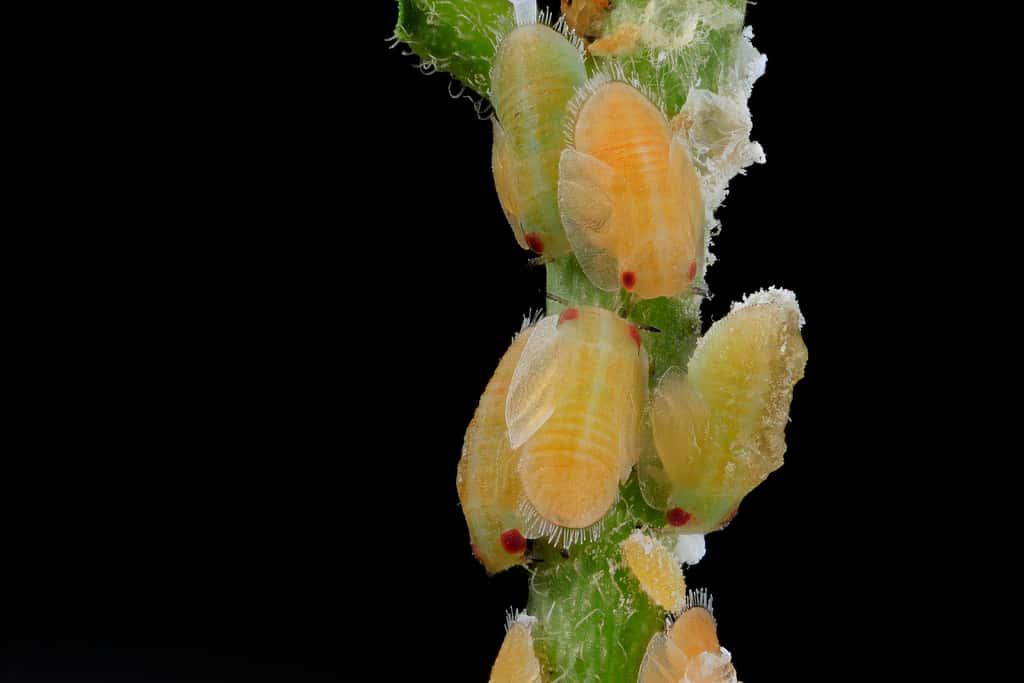
The primary driver of the long decline is citrus greening, formally known as huanglongbing, a bacterial disease spread by the Asian citrus psyllid. Infected trees produce smaller, bitter, prematurely dropping fruit and eventually decline to the point of commercial worthlessness. There is no cure in wide commercial use, and management strategies focus on suppressing the insect vector, improving tree nutrition and replanting with trees given protective coverings during their most vulnerable years.
Layered on top of the disease pressure is a straightforward economic calculation. Grove land in central Florida sits in the path of some of the fastest residential growth in the country. When a grower faces years of expensive disease management with uncertain returns, and a residential developer is willing to pay a price per acre that a grove could never generate, the arithmetic frequently favors selling.
Hurricane damage has compounded both problems. Storms in recent seasons stripped fruit, downed trees and flooded groves across the southern half of the peninsula, and the recovery cost for a marginal grove is often higher than its market value as agricultural land. State research funding and federal disaster assistance have slowed the exit, but they have not reversed it.
What it means for Floridians
Most Floridians do not farm citrus, but the industry's contraction touches the state in several practical ways. Citrus processing, packing, trucking and equipment supply employ thousands of people in interior counties where alternative employment is thinner than on the coasts. As acreage falls, those jobs consolidate into fewer facilities, and some of those facilities close.
Consumers feel the shift primarily through orange juice pricing. Florida no longer supplies the majority of the juice consumed in the United States, and processors have increasingly relied on imported concentrate from Brazil and elsewhere. That import dependence links the price of a domestic breakfast staple to foreign harvests, currency movements and trade policy in ways it was not linked a generation ago.
There is also a land-use dimension that shapes daily life for people who have never picked an orange. Groves function as open space, aquifer recharge area and wildlife corridor. When thousands of acres convert to rooftops and pavement in a single year, the consequences show up in stormwater runoff, traffic on two-lane county roads, and pressure on school capacity in districts that had planned around slower growth.
Where policy stands
The state has spent heavily on citrus research and grower assistance, funding work at the University of Florida's Institute of Food and Agricultural Sciences and supporting replanting programs designed to get young trees into the ground with better odds of survival. The Florida Department of Agriculture and Consumer Services has also promoted the state's citrus brand and worked on marketing and labeling questions that affect grower returns.
Growers and industry groups have pressed for continued research funding, expanded crop insurance options tailored to citrus, and predictability in the labor supply that harvests the crop. None of those levers is likely to reverse a 21 percent single-year acreage decline on its own, and industry representatives have generally framed their goal as stabilizing a smaller but viable industry rather than restoring the acreage of past decades.
Local governments in the citrus belt face a parallel policy question about what replaces the groves. Some counties have pursued agricultural land preservation programs and rural boundary policies. Others have leaned into the tax revenue that development brings. The choices made in Polk, Highlands, DeSoto and Hardee counties over the next several budget cycles will do more to determine the shape of interior Florida than anything decided in Tallahassee.
What replaces a grove
Land leaving citrus production does not sit idle for long in Florida. The most common outcome in Polk, Highlands and Hardee counties has been conversion to residential subdivision, followed by pasture, sod production, row crops and, increasingly, utility-scale solar installations. Each of those uses generates different tax treatment, different water demand and different traffic.
Solar has grown quickly as an alternative. Utilities have acquired or leased large tracts of former grove land in the interior counties, where flat topography, existing transmission access and willing sellers make development straightforward. For a grower facing years of disease management costs, a long-term lease payment from a utility offers predictable income without the risk of another season.
Residential conversion carries the largest consequences for local government. A grove generates minimal demand for schools, emergency services and road capacity. A subdivision on the same acreage generates all three. County commissions in the citrus belt have been working through comprehensive plan amendments and rural boundary questions that will determine how much of the remaining agricultural land is available for that conversion.
There is also a category of land that simply stops producing without being converted. Abandoned groves, left standing after a grower ceases management, become reservoirs for the psyllid population that spreads greening to neighboring operations. Growers have described abandoned acreage as one of the more difficult problems in the industry, because the cost of removal falls on someone who has already exited.
The labor question
Citrus harvesting in Florida is done largely by hand, and the workforce that does it is predominantly seasonal and heavily immigrant. Growers have relied on the federal H-2A agricultural visa program in increasing numbers as domestic labor availability declined, and the administrative cost and wage requirements of that program factor into whether a grove is economically viable.
Mechanical harvesting has been researched extensively but has not displaced hand picking at scale for fresh fruit, and the trunk shake and catch systems developed for juice oranges saw limited adoption before the acreage decline reduced the market for them.
The contraction of the industry has consequences for the workforce that extend beyond citrus. Harvest crews in Florida move between crops and regions across the season, and the loss of citrus acreage removes a substantial block of work from that calendar, affecting the economics of the entire migrant agricultural labor system in the state.
What's next
The preliminary inventory will be followed by a final version, and the first official production forecast for the coming season is expected in the fall, when USDA typically issues its initial estimate for oranges, grapefruit and specialty fruit. Those numbers will indicate whether the yield-per-acre improvement seen in the last season holds or whether it was a one-year recovery from storm-suppressed harvests.
Growers will also be watching the pace of new plantings. Replanting is the only mechanism by which acreage can recover, and because young citrus trees take several years to reach commercial production, any planting decisions made this year will not show up in harvest numbers until near the end of the decade.
For now, the direction is unambiguous. Florida is producing slightly more fruit on substantially less land, in fewer counties, with fewer growers. Whether the industry stabilizes at something near its current scale or continues to contract is the question the next several inventories will answer.
Spotted an issue with this article?
Have something to say about this story?
Write us a letterComments
No comments yet. Be the first to weigh in.
Related Coverage
Florida Single-Family Home Sales Slip 3.5% in September as Rising Mortgage Rates Stall Growth
1h ago

Miami Cites Club at Brickell Bay Over Short-Term Rentals, Warning of Fines Up to $5,000 a Day
1d ago
Lennar to Buy Boynton Beach Mall, Plans Homes, Shops and Civic Space on 91-Acre Site
1d ago
Florida Supreme Court Rules 2021 Pre-Suit Notice Law Does Not Apply to Older Homeowner Insurance Policies
1d ago