FEMA Approves $317 Million for Florida Recovery and Mitigation Projects
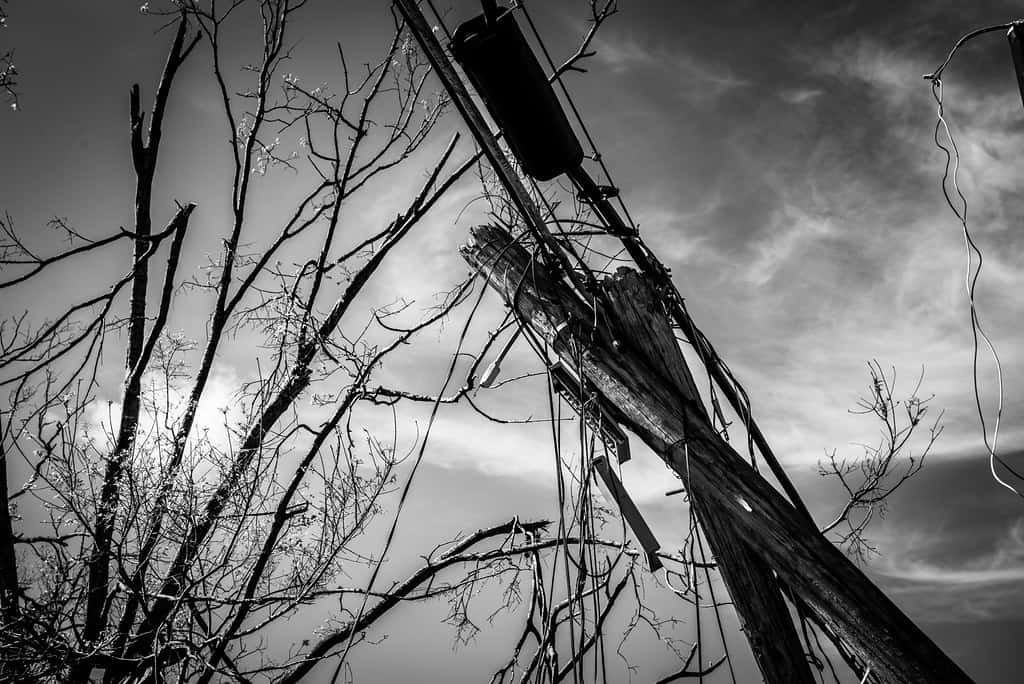
The Federal Emergency Management Agency has approved $317 million for disaster recovery and hazard mitigation projects across Florida, covering work on homes, hospitals, utilities, parks, and electrical systems. Nearly $167 million flows through the Hazard Mitigation Grant Program for projects designed to reduce future storm and flood damage, and roughly $150 million reimburses recovery work through FEMA's Public Assistance program.
The approval is part of a much larger flow. FEMA has provided more than $1.5 billion in funding for 2,368 disaster recovery and hazard mitigation projects across Florida during 2026. A separate September announcement added more than $37.1 million, bringing the total approved since January 20 past $835 million.
Most of the work traces to federally declared disasters, most recently Hurricane Milton. FEMA reimburses these costs at no less than a 75 percent federal share through the Public Assistance program, with the remainder covered by state and local government.
The difference between the two programs
The distinction between Public Assistance and hazard mitigation funding is the most important thing to understand about how federal disaster money works, and the two are frequently conflated.
Public Assistance reimburses eligible applicants, meaning state and local governments and certain nonprofits, for costs already incurred responding to and recovering from a declared disaster. It covers debris removal, emergency protective measures, and the repair or replacement of damaged public infrastructure. It restores what existed.
The Hazard Mitigation Grant Program is forward looking. It funds projects intended to reduce damage in future events: elevating flood prone structures, hardening electrical systems, acquiring and demolishing repeatedly flooded properties, upgrading stormwater capacity, and strengthening critical facilities.
The mitigation share of this particular tranche, nearly $167 million out of $317 million, is the more consequential half over the long run. Federal studies have consistently found that mitigation spending returns multiples of its cost in avoided future losses, and the returns are largest for flood and wind projects in high exposure areas.
What Florida households should know about the limits
The most common misunderstanding about FEMA involves individual assistance. Public Assistance reimburses governments, not homeowners. When a hurricane damages a house, the primary recovery mechanism for a household is insurance, not FEMA.
FEMA's Individual Assistance program exists but is designed to address immediate needs rather than to make a household whole. Awards typically cover temporary housing, essential home repairs to make a dwelling habitable, and certain disaster related expenses. The average award is a small fraction of what rebuilding a damaged home costs.
The practical implication is that Florida homeowners cannot substitute federal assistance for insurance. Standard homeowners policies exclude flood, which must be purchased separately through the National Flood Insurance Program or a private carrier. NFIP policies carry a 30 day waiting period, so buying during an approaching storm accomplishes nothing.
Households in mapped flood zones with federally backed mortgages are required to carry flood coverage. Households outside mapped zones frequently are not, and a substantial share of flood claims come from properties outside high risk zones.
Where the money goes in Florida
Funding follows damage, which in recent years has concentrated in the regions Hurricanes Ian, Idalia, Helene, and Milton affected. Southwest Florida, the Big Bend, and the Tampa Bay area have absorbed the largest shares.
Utility hardening has been a recurring category. Underground conversion of distribution lines, stronger poles, and grid segmentation reduce both the number of outages and restoration time, and Florida utilities have pursued these programs with both ratepayer and federal support.
Hospital and health facility projects matter disproportionately because those facilities must function during and after a storm. Hardening a hospital's electrical and water systems keeps an emergency department open when the surrounding area has lost power.
Property acquisition, in which a government buys a repeatedly flooded property, demolishes the structure, and converts the land to permanent open space, is the most effective mitigation measure available and the most difficult politically. It removes a property from the tax roll and requires a willing seller.
The federal disaster funding debate
Florida's dependence on federal disaster funding is substantial, and it intersects with a national policy conversation about how the cost of building in high hazard areas should be distributed.
Critics of the current arrangement argue that federal subsidies encourage development in places that would otherwise be uninsurable, and that the cost lands on taxpayers nationally. Supporters note that Florida's population and economic output make it a major contributor to federal revenue, and that disaster response is a core federal function.
The National Flood Insurance Program carries substantial debt and has been operating on short term reauthorizations for years, which creates recurring uncertainty for Florida real estate transactions that require flood coverage to close. Florida's congressional delegation has been active on flood insurance reauthorization for that reason.
Proposals to restructure FEMA, reduce the federal cost share, or tighten eligibility surface periodically. Any such change would fall harder on Florida than on almost any other state.
How local governments can use this
Mitigation funding is competitive and requires local governments to apply, produce benefit cost analyses, and manage the grants. Counties and municipalities with experienced grant staff capture more funding than those without, which creates a systematic disadvantage for smaller and rural jurisdictions.
The Florida Division of Emergency Management administers these programs at the state level and provides technical assistance to local applicants. Residents who want particular mitigation work in their community, such as stormwater improvements or a flood prone property buyout program, should raise it with county commissioners and city councils, since those bodies decide what gets submitted.
Why mitigation returns more than it costs
The nearly $167 million flowing through the Hazard Mitigation Grant Program in this tranche is the portion most likely to change outcomes in the next storm, and the evidence behind that category of spending is unusually strong.
Federal studies examining decades of mitigation investment have consistently found that every dollar spent on hazard mitigation avoids several dollars in future disaster losses. The returns are highest for riverine and coastal flood projects and for wind retrofits in hurricane exposed regions, which describes most of Florida.
The mechanism is straightforward. A house elevated above the base flood elevation does not flood in an event that would have inundated it. A hardened substation does not fail. A stormwater system sized for current rainfall intensity does not back up into streets. Each avoided failure eliminates not only repair costs but the cascading expenses of displacement, business interruption, and emergency response.
The obstacle is timing. Mitigation costs money now to avoid costs later, and the later costs fall on future budgets and often on future officeholders. That asymmetry is why mitigation has historically been underfunded relative to its demonstrated return, and why federal programs that fund it matter.
Florida has one further advantage in this arithmetic. Its building code, strengthened substantially after Hurricane Andrew, means new construction already incorporates wind resistance that older housing lacks. Mitigation funding largely addresses the existing stock built before those standards took effect.
Where the state and local share comes from
The federal share of at least 75 percent under the Public Assistance program means that state and local governments carry the remainder, and that portion is not trivial for smaller jurisdictions.
Florida has historically covered a portion of the non federal share at the state level, which reduces the burden on counties and municipalities. The specific split varies by disaster declaration and by program.
For a small county recovering from a major storm, even a reduced local share can represent a significant fraction of an annual budget. That creates pressure to defer other capital needs, and it is one reason disaster recovery in rural Florida tends to proceed more slowly than in populous counties with larger tax bases and dedicated grant staff.
Cash flow is a separate problem from cost share. Public Assistance reimburses, which means a local government must spend money first and recover it afterward, sometimes years later. Jurisdictions without reserves have to borrow in the interim, and the interest on that borrowing is not always reimbursable.
These mechanics explain why two counties hit by the same storm can be at very different stages of recovery three years later, and why the difference correlates more closely with administrative capacity than with damage severity.
The insurance market connection
Disaster funding and Florida's property insurance market are linked more tightly than most residents realize, and the relationship runs in both directions.
When mitigation reduces expected losses across a region, reinsurance models eventually reflect that reduction, and reinsurance cost is one of the largest components of a Florida homeowners premium. Community level mitigation therefore has an eventual effect on individual premiums, though the transmission is slow and diffuse.
The National Flood Insurance Program's Community Rating System formalizes part of this. Communities that adopt floodplain management practices exceeding minimum requirements earn premium discounts for all policyholders within their jurisdiction. Several Florida communities participate, and the discounts can be substantial.
Running the other way, a robust insurance market reduces pressure on federal disaster assistance, because insured losses are paid by carriers rather than absorbed by government programs. Underinsurance shifts cost to the public.
Florida's flood insurance take up rate outside mapped high risk zones remains low, and a substantial share of flood damage in recent storms occurred at properties without flood coverage. That gap is the single largest source of uncompensated household loss in Florida disasters, and no amount of Public Assistance funding addresses it.
What's next
FEMA continues to announce Florida approvals on a rolling basis as projects clear review, and the agency publishes each announcement on its site with the project categories included. Those releases are the primary record.
Project obligation is not the same as project completion. Money approved in 2026 funds work that may take several years, particularly for large infrastructure projects that require design, permitting, and construction.
The 2026 hurricane season has so far produced no Florida landfall, which means this funding stream is working through a backlog rather than responding to new damage. That is the best possible condition for a recovery program, and it gives the state a window to complete mitigation work before the next major storm arrives.
Spotted an issue with this article?
Have something to say about this story?
Write us a letterComments
No comments yet. Be the first to weigh in.
Related Coverage
Alligator Alcatraz Is Closed, but Florida Is Still Chasing More Than $500 Million in Federal Reimbursement
4h ago

Florida Voters Face Few New Rules on Nov. 3 as Other GOP States Roll Out Citizenship and ID Laws
1d ago

Florida Leads the Nation in ICE Detainer Arrests as Local Police Take a Growing Role, New Data Show
1d ago
Federal Government Again Asks Miami Judge to Toss Lawsuit by Nearly 1,000 Cubans With I-220A Papers
1d ago