FEMA Reaches Peak Hurricane Season With a Thinner Workforce and a Strained Disaster Fund
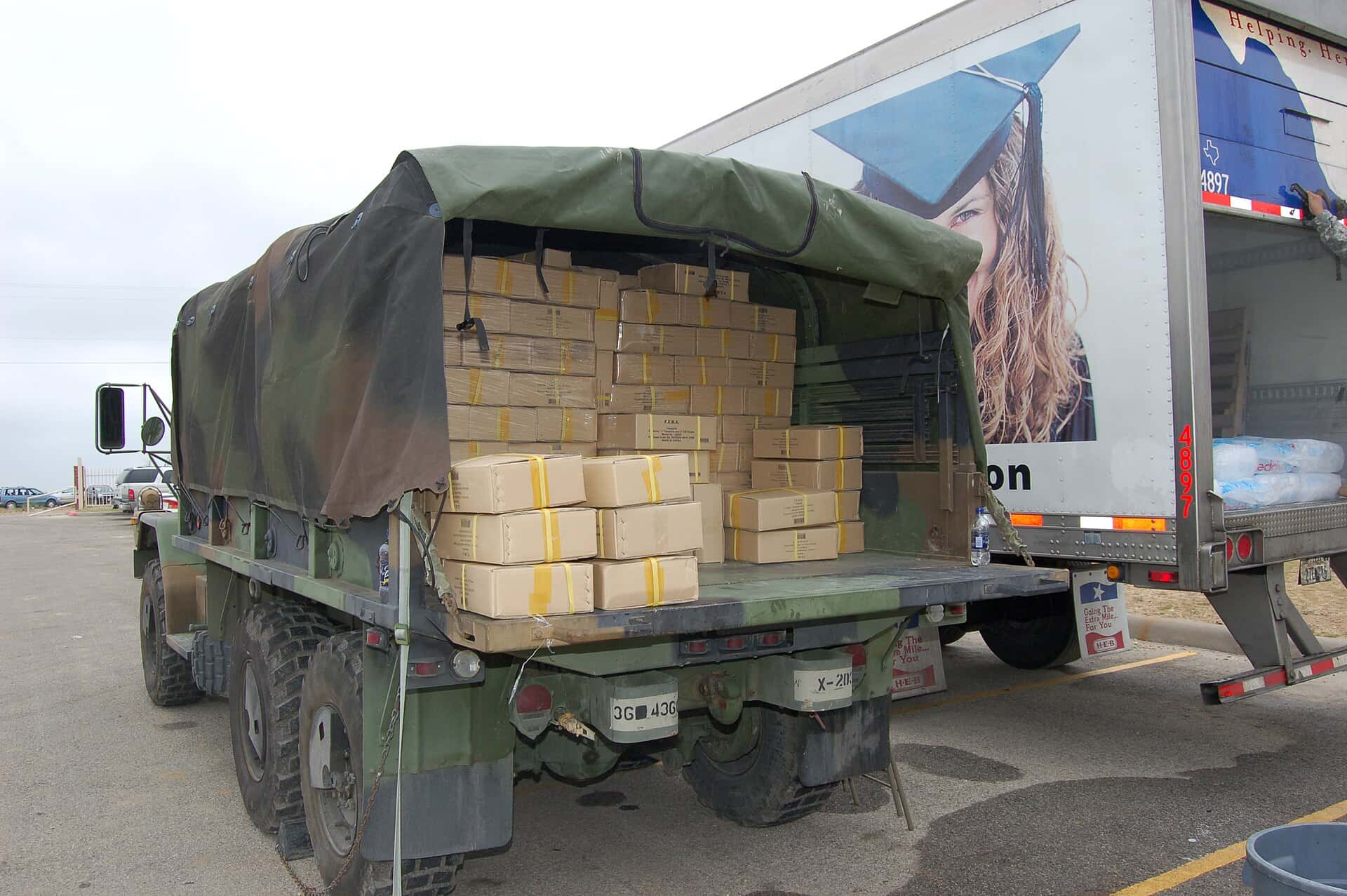
The Federal Emergency Management Agency has reached the climatological peak of hurricane season carrying a substantially reduced workforce and a disaster relief fund the agency's own monthly reporting projected would run a $7.8 billion deficit in September. For Florida, which draws on federal disaster assistance more frequently than almost any state, the condition of FEMA at this point in the calendar is not an abstract federal management story.
FEMA has lost close to 20 percent of its staff since January 2025, with total headcount reported around 21,100 in March. More consequential for storm response, the agency reported having somewhat more than 30 percent of its disaster workforce classified as ready in late May, according to acting administrator Bob Fenton. The disaster workforce is the deployable cadre that staffs disaster recovery centers, conducts damage assessments and processes individual assistance.
Agency leadership has said publicly that FEMA is ready for hurricane season, pointing to prepositioned resources including more than 300,000 generators, more than 7 million meals and 3 million liters of water available for rapid deployment. Those stockpiles are real, and prepositioning is the part of disaster response FEMA does best.
What the disaster relief fund deficit means
The Disaster Relief Fund is the account that pays for federal disaster response and recovery, and a projected deficit does not mean the fund runs out of money on a particular day. It means projected obligations exceed available balances, which triggers a management mechanism called immediate needs funding.
Under immediate needs funding, FEMA restricts spending to life-saving and life-sustaining activities and defers longer-term recovery obligations. In practice, that means new disaster response continues while public assistance projects already underway, rebuilding schools, repairing roads, restoring water systems, get paused until Congress appropriates more.
Florida communities have been on the receiving end of that mechanism before. Projects from earlier hurricanes that are still working through the public assistance pipeline are exactly the category that gets deferred, which pushes local governments into carrying costs they expected to be reimbursed for.
Congress has historically replenished the fund through supplemental appropriations after major disasters, and that pattern is likely to hold. The timing gap between the deficit and the appropriation is where the disruption lives.
The staffing question
FEMA's permanent staff is small relative to its mission, and the agency has always relied on a reservist workforce activated for specific disasters. Those reservists are the people who staff disaster recovery centers where survivors apply for assistance, who inspect damaged homes, and who work with local governments on public assistance applications.
A disaster workforce with roughly a third of its cadre ready is a meaningfully constrained response capability, particularly if two significant disasters occur simultaneously. Concurrent events are the scenario emergency managers worry about, because FEMA's model assumes it can surge resources to one place at a time.
The practical effect on survivors is measured in wait times. Longer waits for inspections, longer processing for individual assistance applications and fewer physically staffed recovery centers are the visible symptoms of a thin deployable workforce.
State emergency management fills part of that gap, and Florida's Division of Emergency Management is among the most capable state agencies in the country, built up through repeated major responses. That capacity is a genuine advantage Florida holds over states with less recent disaster experience.
Policy changes running underneath
Beyond staffing, a set of policy changes since January 2025 has reshaped what FEMA does. Cuts have reached climate forecasting programs, hazard mitigation grants and flood risk standards, and the administration has signaled an intent to restructure the agency's relationship with states more fundamentally.
The Building Resilient Infrastructure and Communities program, the primary federal source of pre-disaster mitigation funding, was terminated and subsequently restored by court order after roughly a year of uncertainty. Florida communities with multi-year applications in that pipeline lost planning time that cannot be recovered.
Proposals to shift a larger share of disaster costs onto states have circulated, including changes to the cost-share formula that currently has the federal government covering the majority of eligible public assistance costs. For Florida, where a single major hurricane can generate billions in public infrastructure damage, a cost-share change would be a significant fiscal event.
The president has indicated that a broader FEMA overhaul would come after hurricane season, which places the policy question in the same December window as the appropriations deadline.
NOAA and the forecasting side
Forecasting cuts have run parallel to the FEMA changes, and they matter to Florida in a direct operational way. The National Hurricane Center, headquartered in Miami, depends on data from the National Oceanic and Atmospheric Administration's satellites, buoys, aircraft reconnaissance and modeling infrastructure.
Hurricane forecast accuracy has improved dramatically over the past two decades, particularly track forecasting, and those improvements came from sustained investment in observation and modeling. Track accuracy is what allows emergency managers to issue evacuation orders with enough lead time and narrow enough scope to be practical.
Intensity forecasting remains the harder problem, and rapid intensification, where a storm strengthens dramatically in the final hours before landfall, is the scenario that most threatens Florida coastal communities. Improving it requires exactly the research investment that has been under pressure.
NOAA's seasonal outlook has helped somewhat this year, with the agency raising the probability of a below-normal season to 75 percent on the strength of a developing strong El Nino. A quiet season is the best possible circumstance for an agency operating with reduced capacity.
How a Florida disaster declaration actually works
The sequence matters because it determines when money moves. A governor requests a federal disaster declaration after a preliminary damage assessment, the president grants or denies it, and the declaration specifies which counties are covered and which categories of assistance are authorized.
Individual assistance covers households: temporary housing, home repair, personal property replacement and disaster unemployment. Public assistance covers governments and certain nonprofits: debris removal, emergency protective measures and permanent repair of public infrastructure.
Counties are added to declarations over time as assessments proceed, which is why residents in one county sometimes see neighbors across a county line receiving assistance before they do. That lag is administrative rather than substantive, but it generates enormous frustration.
The Small Business Administration operates a separate disaster loan program that is frequently the larger source of federal recovery money for both homeowners and businesses. Those are loans rather than grants, and the distinction is one many survivors do not appreciate until they are in the application process.
What Florida does differently
Florida's state-level emergency management structure is unusually developed, a product of repeated major hurricanes and of institutional lessons learned after Hurricane Andrew in 1992 exposed the inadequacy of the response systems that existed then.
The state maintains its own emergency operations center, prepositions resources independently of federal action, and coordinates a mutual aid system that moves personnel and equipment between counties without waiting for a federal declaration. Utilities in Florida operate their own extensive prestaging and mutual aid arrangements.
County emergency management offices in Florida are, by state requirement, more robust than in many states, and the state's building code, strengthened significantly after Andrew, has measurably reduced wind damage in newer construction. Mitigation built into the code is the least visible and most effective disaster policy the state has.
None of that substitutes for federal individual assistance, which is what pays for temporary housing, home repairs and personal property replacement for households after a disaster. That program runs through FEMA and cannot be replicated at the state level.
The recovery record Florida is still working through
Federal disaster money moves slowly, and Florida communities are still processing obligations from hurricanes that made landfall years ago. Public assistance projects routinely take five or more years from declaration to final closeout, involving damage documentation, scope negotiation, procurement, construction and audit.
Communities in southwest Florida hit by Hurricane Ian in 2022 and in the Big Bend affected by Helene and Milton in 2024 remain inside that pipeline. Local governments in those areas have been carrying rebuilding costs and awaiting reimbursement, which strains municipal budgets in small counties with limited reserves.
Housing recovery is the slowest component everywhere. Rebuilding damaged housing stock requires construction labor, materials and insurance settlements to arrive simultaneously, and shortages in any one of them extends the timeline. Rental costs in affected areas typically spike and stay elevated for years.
That backlog is the reason a disaster relief fund deficit matters even in a quiet season. The projects being deferred are not hypothetical future storms but existing obligations to communities already rebuilding.
What residents should know
Individual assistance is not insurance and does not make households whole. Maximum grant amounts are limited, and the program is designed to address urgent needs rather than to fund full recovery. Homeowners who rely on it in place of insurance are consistently disappointed by what it provides.
Registration for assistance after a declared disaster runs through FEMA directly, and survivors are advised to register even if they have insurance, since the programs interact and insurance settlements can leave gaps that assistance may cover.
Documentation is the practical advice that matters most and that people most often skip. Photographs of a home's condition before a storm, an inventory of significant property, and copies of insurance policies stored where they survive a flood all substantially improve outcomes in both insurance claims and federal assistance applications.
What's next
The peak of the season passes September 10, with meaningful risk continuing through October and into November. Whether FEMA's current posture is tested depends entirely on whether a storm finds the Florida coast.
The appropriations calendar runs to December 11, which is when disaster relief fund replenishment, any FEMA restructuring proposal and the flood insurance program's next authorization all converge. Florida's congressional delegation will be central to each of those decisions.
Spotted an issue with this article?
Have something to say about this story?
Write us a letterComments
No comments yet. Be the first to weigh in.
Related Coverage
Florida Races Pull In Tens of Millions as 2026 Midterms Head Toward Record $11.6 Billion in Ad Spending
45m ago

Another Fed Rate Hike May Be Coming as Mortgage Rates Top 7% and Florida Gas Hits $4.08
1h ago
DHS Says Ukrainian and Sudanese TPS Holders Keep Protection Past Oct. 19, but No Formal Notice Leaves Florida Families Waiting
17h ago

Rubio Defends Trump's Waiver of New Russia Sanctions as Rick Scott Voices Doubts
19h ago