Central Florida School Districts Cut Hundreds of Jobs as Enrollment and State Dollars Slide
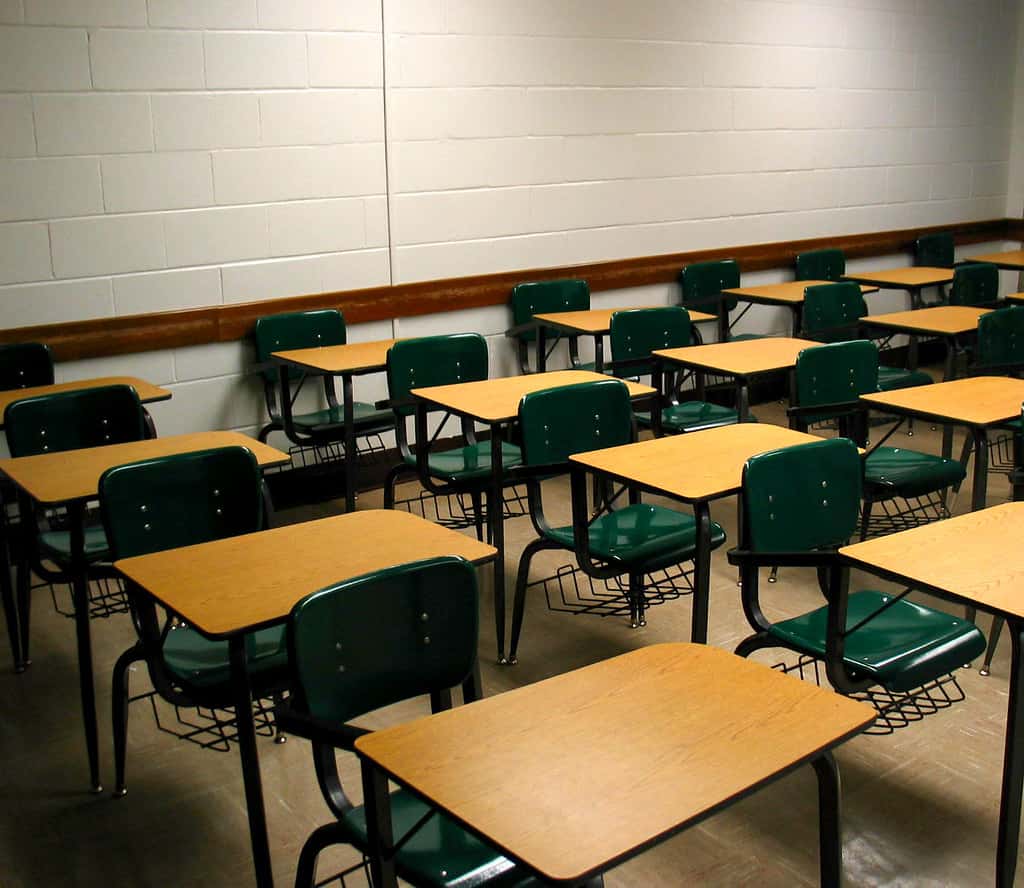
Seminole County Public Schools cut 314 teacher and support staff positions heading into the 2026-27 school year, a response to a projected $26.4 million budget deficit driven substantially by an expected decline of between 1,500 and 2,000 students. The final tally came in higher than the district's initial projection, and it makes Seminole one of the clearest examples of a squeeze now affecting districts across Central Florida.
District leaders have said they expect most of the reduction to come through attrition and retirement rather than layoffs of current employees, and they have not proposed closing any schools. Instead the district is looking for consolidation efficiencies: one bookkeeper covering two elementary schools, shared administrative staff between campuses, coaches working across multiple smaller schools.
The academic picture complicates the narrative. Seminole reported that 95 percent of its schools earned an A or B grade, the highest combined total the district has recorded since 2011. A district that is performing well by the state's own accountability measure is simultaneously cutting hundreds of positions, and the reason is enrollment rather than results.
Why Florida school funding follows students
Florida distributes operating money to districts through the Florida Education Finance Program, which allocates dollars on a per-student basis adjusted for program type and local cost factors. The structure is straightforward in effect: enrollment is revenue. A district losing 2,000 students loses the funding attached to those students regardless of whether its fixed costs decline proportionally.
They generally do not. A school that loses fifteen students spread across six grade levels does not need one fewer teacher, and it still needs the same principal, the same custodial coverage, the same air conditioning and the same bus routes. Enrollment losses distributed thinly across many campuses produce revenue declines without producing corresponding cost reductions.
That mismatch is why declining districts face disproportionate pain. Growth districts can add capacity incrementally as revenue arrives. Shrinking districts have to find savings in a structure built for a larger student body, and the options are consolidation, staff reduction or school closure.
Seminole has chosen the first two and declined the third, which is the politically easier combination and the fiscally less effective one. School closures generate the largest savings and the largest community opposition, and districts across the country routinely defer them until the arithmetic makes deferral impossible.
Where the students went
Three forces are pulling enrollment out of Florida's traditional public schools simultaneously, and Seminole County illustrates all three.
The largest is the state's voucher expansion. Florida made its scholarship programs universally available, removing the income caps that previously limited eligibility, and the resulting shift moved substantial numbers of students into private schools and home education programs while carrying public funding with them. Families who were already paying private tuition became eligible, which converted existing private enrollment into a public expenditure and also lowered the cost barrier for families considering the switch.
The second is demographic. Birth rates in Florida, as nationally, have declined, and the cohorts now entering kindergarten are smaller than the cohorts leaving twelfth grade. That trend is arithmetic rather than policy, and it will continue to shrink school-age populations for years regardless of any other decision.
The third is immigration enforcement. Districts in Central Florida have reported attendance effects associated with intensified federal and state immigration enforcement, as families in mixed-status households withdraw students or keep them home. Districts do not collect immigration status, so the effect is inferred from attendance and withdrawal patterns rather than measured directly, but administrators across the region have described it consistently.
Housing cost is a fourth factor operating underneath the others. Working families priced out of Orange and Seminole counties move outward or out of the region entirely, and school-age children move with them. Districts in Florida's exurban ring have grown while inner-ring suburban districts have flattened.
A regional pattern, not one district
Seminole is not alone. Central Florida districts have described bracing for a convergence of budget pressures, and the combination is the same across the region: enrollment decline, voucher expansion, the expiration of federal pandemic relief funding that cushioned budgets for several years, and inflation in the non-personnel costs districts cannot control.
The federal money is the piece that has changed most abruptly. Elementary and Secondary School Emergency Relief funds supported staffing, tutoring, mental health positions and facilities work across Florida districts, and those funds have now run out. Districts that used the money for recurring costs rather than one-time investments faced a cliff, and the cuts arriving this year are partly that cliff working through payroll.
Property tax revenue has provided some offset, since Florida districts levy a required local effort millage and rising assessed values generate more revenue at a constant rate. But the state adjusts the required local effort rate to account for value growth, which limits how much a district actually keeps from a hot real estate market.
The November ballot adds a variable. A proposed constitutional amendment would expand the homestead exemption to $250,000, which would reduce the taxable value base that funds local school levies. Whether and how the state would backfill that revenue is not settled, and district finance officers across Florida are watching the measure closely.
What gets cut when districts cut
The order of reductions in a Florida district follows a fairly predictable sequence, shaped by what is legally protected and what is politically visible. Central office administration is reduced first because it is the least visible to parents. Support staff positions follow. Classroom teachers are protected longest, though larger class sizes eventually accomplish the same reduction without eliminating named positions.
The categories that absorb the most damage are usually the ones without a statutory requirement behind them. Media specialists, art and music instruction at the elementary level, instructional coaches, and behavioral and mental health support staff sit outside the class size amendment's protections and outside most state mandates.
Transportation is another common target, and it produces the most immediate parent complaints. Districts under budget pressure extend walk zones, consolidate routes and increase ride times, decisions that show up in family logistics within days of implementation.
Athletics and extracurricular programs are typically protected at the high school level and squeezed at the middle school level, where participation is lower and community attention is thinner. Seminole's approach of sharing coaches across smaller schools fits that pattern.
The teacher workforce effect
Florida has struggled with teacher recruitment and retention for years, and districts announcing staff reductions operate in tension with that. A district that cuts 314 positions this year may be recruiting aggressively for hard-to-staff subjects next year, because the reductions are concentrated in areas with surplus while shortages persist in mathematics, science, special education and English language instruction.
Attrition-based reduction complicates that further. Allowing positions to disappear as employees retire means the district does not choose which positions it loses. A district can end up short in the exact areas it most needs while carrying capacity it does not.
Teacher pay has been a persistent Florida issue, with the state directing substantial recurring money toward raising minimum salaries while leaving less room for increases to experienced teachers. That compression, where a fifteen-year veteran earns close to a new hire, has been cited repeatedly in exit surveys.
Districts in budget contraction have almost no room to address that, which is the quieter long-term cost of the current squeeze.
The voucher math nobody agrees on
Florida's scholarship programs are the most contested variable in this budget picture, and the disagreement is genuinely analytical rather than merely partisan. Supporters argue that when a student leaves a district school, the district loses the student's cost as well as the student's funding, making the transfer close to revenue-neutral. Critics argue that districts lose the marginal revenue while retaining most of the fixed cost.
The evidence leans toward the critics on the fixed cost point, at least in the short run. A district that loses one student per classroom across a hundred classrooms loses a hundred students worth of funding and cannot eliminate a single teaching position. The savings only materialize when losses concentrate enough to close a section, a grade level or a school.
Supporters counter that districts have historically been slow to make exactly those consolidation decisions, and that budget pressure is what finally forces efficiency into systems that would otherwise carry excess capacity indefinitely. Seminole's decision not to close schools while cutting 314 positions is the kind of choice that argument points to.
The second-order effect is on which students remain. Scholarship uptake is not evenly distributed across student populations, and districts have reported that the students remaining in traditional public schools are more likely to require higher-cost services, including special education and English language instruction. Per-student funding weights adjust for some of that, but district finance officers argue the weights do not fully capture the cost.
Resolving this empirically will take years of data that Florida is only now beginning to accumulate at scale, since universal eligibility is a recent change.
What parents should watch
Class size is the most direct measure of whether cuts have reached the classroom. Florida's constitutional class size amendment sets caps that apply at the school average level for most grades, which gives districts more flexibility than a hard per-classroom limit and means individual classes can exceed the number parents expect.
School board budget hearings are the venue where these decisions are made and the one most families skip. Districts publish tentative and final budget hearing dates, and the tentative hearing is where the millage rate and the broad allocation decisions are set.
Parents should also watch for program consolidation announcements rather than only for staffing numbers. A district that keeps its teacher count while eliminating an elementary music rotation or reducing media center hours has made a real cut that will not appear in a headline about positions.
What's next
Districts across Florida will produce enrollment counts in the fall that determine actual rather than projected funding, and the gap between projection and count is where mid-year adjustments come from. A district that projected a 2,000-student loss and experienced a 2,600-student loss faces another round.
The November property tax amendment is the other pending variable. If it passes, districts will spend the following legislative session pressing Tallahassee on how the lost local revenue gets replaced, and that argument will shape budgets well beyond Central Florida.
Spotted an issue with this article?
Have something to say about this story?
Write us a letterComments
No comments yet. Be the first to weigh in.
Related Coverage

Broward Schools to Pilot Free Pads and Tampons in Student Restrooms at Seven Campuses
1h ago

Pasco proposes closing Fox Hollow Elementary and remaking two west Pasco schools under 'Elevate 34668'
2d ago

Florida's proposed K-12 science standards face scrutiny ahead of December state board vote
3d ago

Santa Rosa Board Keeps Schools Closed Until Oct. 19, Reversing Isaias Reopening Order as Escambia, Okaloosa and UWF Set Returns
5d ago