Florida Endures One of Its Hottest Julys on Record as the Tropics Stay Quiet

Florida is finishing July 2026 with much of the state on pace for one of its ten warmest Julys on record, according to National Weather Service climate data cited in regional forecasts, even as the Atlantic basin has stayed unusually quiet through what is normally the ramp-up phase of hurricane season. Cities from Miami to Jacksonville, including Gainesville, Bradenton and Naples, have logged temperatures placing them in their top five warmest Julys measured by average temperature as of July 28. Fort Lauderdale and Lakeland were running first on that list.
How hot it has been
The heat has been driven by a persistent upper-level ridge over the Southeast that suppresses cloud cover and traps warm air near the surface. That pattern, commonly described as a heat dome, has pushed heat index values across the peninsula into the 105 to 112 degree range on many afternoons, with humidity doing most of the work.
Heat advisories have been issued repeatedly through the month across South Florida, Southwest Florida and the Palm Beaches. National Weather Service offices have posted advisories when the heat index is forecast to reach the local criteria threshold, which in Florida is generally 108 degrees for at least two hours. Southwest Florida saw peak heat index values around 110 degrees during a mid-month advisory period.
In Northeast Florida, a Jacksonville-based National Weather Service meteorologist said Wednesday, July 29, was expected to run warmer than the previous day, with heat index potential reaching 115 degrees in parts of the forecast area. Even so, the local picture there carries an asterisk. Jacksonville has recorded ten days with a feels-like temperature above 108 degrees since the start of July, a total that is lower than the corresponding counts in 2023, 2024 and 2025.
That distinction matters. Ranking high on average temperature is not the same thing as setting daily records, and much of Florida's July ranking this year is being driven by unusually warm overnight lows rather than by extreme afternoon highs. Warm nights are the more consequential health signal, because they deny the body the overnight recovery period that limits cumulative heat stress.
Who is most at risk
Heat is the deadliest weather hazard in the United States in a typical year, ahead of hurricanes, tornadoes and flooding. In Florida the burden falls unevenly. Outdoor workers in agriculture, construction, landscaping and roofing face sustained exposure. Older residents, particularly those living alone or without reliable air conditioning, face elevated risk from cardiovascular strain. Infants, people with chronic illness, and those taking certain medications that impair thermoregulation are also more vulnerable.
Florida has no statewide heat standard for outdoor workers. A 2024 state law preempted local governments from adopting their own heat protection ordinances, which ended an effort in Miami-Dade County to require water, shade and rest breaks for outdoor workers. Federal heat rulemaking at the Occupational Safety and Health Administration remains in progress and has not taken effect.
County health departments and emergency management agencies have run cooling center programs during advisory periods, with locations typically posted through county emergency management websites and 211 referral lines. Utilities across the state have also promoted bill assistance programs as summer electricity consumption climbs.
The electricity bill effect
Sustained heat translates directly into higher power bills. Florida Power and Light, which serves roughly half the state, is operating under a four-year rate settlement approved by the Public Service Commission in November 2025. That settlement provides for base-rate increases of about $945 million in 2026 and about $705 million in 2027.
Under the approved figures, a residential customer in traditional FPL territory using 1,000 kilowatt hours a month sees a bill move from roughly $134.14 to roughly $136.64 in 2026, with further increases projected in 2027, 2028 and 2029. Northwest Florida customers using the same amount see a decrease in 2026, from roughly $143.60 to roughly $141.36, before increases in later years.
Those figures describe a 1,000 kilowatt hour baseline. Actual summer usage in Florida routinely runs well above that level, which is why bills in July and August feel disproportionate to the stated rate change. The Office of Public Counsel and allied consumer groups have said the settlement could produce cumulative increases of roughly $6.9 billion over four years.
A quiet Atlantic, for now
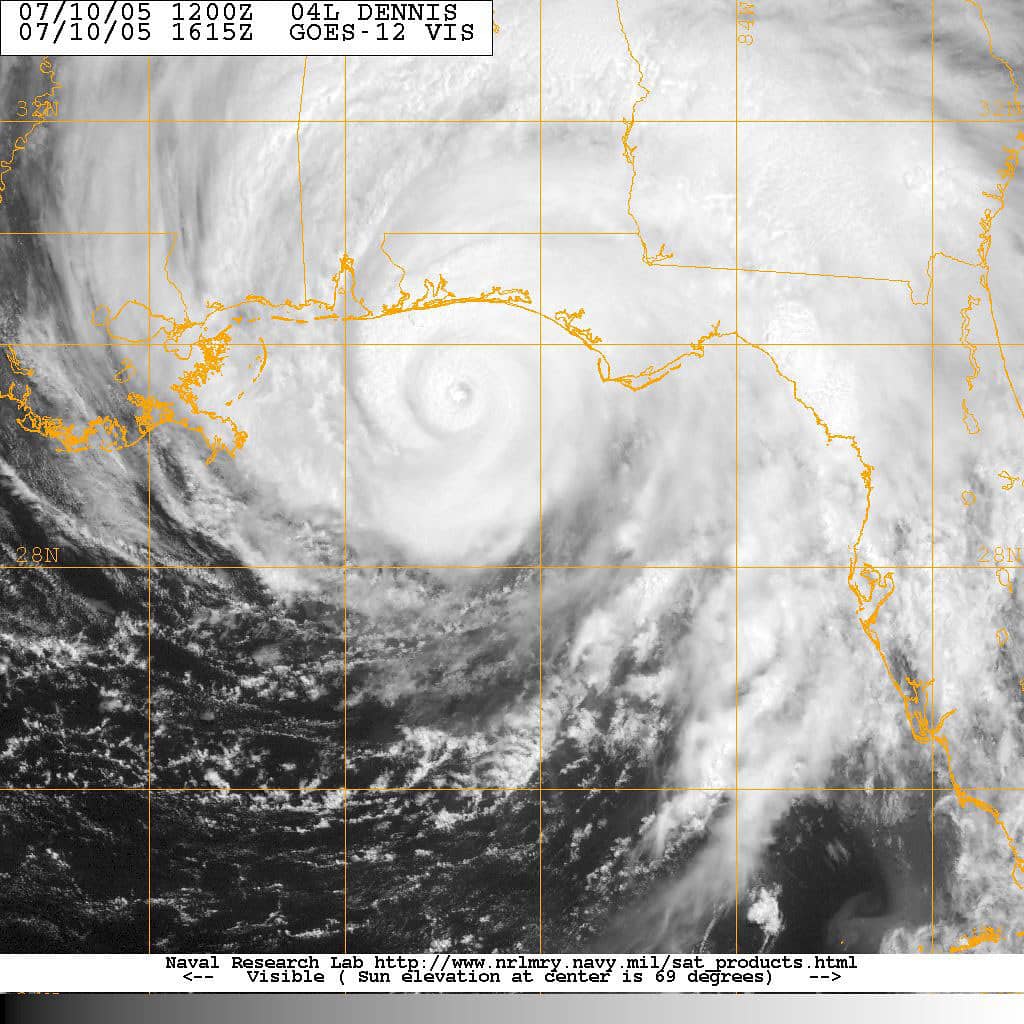
The contrast with the heat is the state of the tropics. The National Hurricane Center's Tropical Weather Outlook issued on July 29 indicated that tropical cyclone formation was not expected during the following seven days across the North Atlantic, the Caribbean Sea and the Gulf. Forecasters were tracking two tropical waves, one in the eastern Atlantic near 24 degrees west and one in the central Atlantic near 45 degrees west, both moving west at 15 to 20 knots without organized development.
NOAA's preseason outlook, issued in May, called for a below-normal 2026 Atlantic hurricane season, with a 55 percent chance of below-normal activity, a 35 percent chance of a near-normal season and a 10 percent chance of an above-normal season. The forecast range was 8 to 14 named storms, 3 to 6 hurricanes and 1 to 3 major hurricanes.
A quiet July says very little about September. Climatologically, Atlantic activity accelerates sharply in the second half of August and peaks around September 10. NOAA is scheduled to release its updated seasonal outlook in early August, ahead of that peak.
What it means for Floridians
The practical guidance for the remainder of the summer has not changed. Limit strenuous outdoor activity during the afternoon, hydrate before thirst sets in, check on older neighbors and relatives during advisory periods, and never leave children or pets in parked vehicles. Vehicle interiors can exceed 120 degrees within minutes on a Florida afternoon.
For households watching their power bills, utilities generally recommend setting thermostats as high as comfort allows, using ceiling fans to permit a higher setting, changing air filters, and taking advantage of budget billing programs that smooth summer peaks across the year.
The quiet tropics are an opportunity rather than a reprieve. Emergency managers have consistently used low-activity stretches to push preparedness messaging, because supplies are available and prices are normal in late July in a way they are not once a storm enters the forecast cone.
What the heat does to the grid
Sustained high temperatures test Florida's electricity system in a way few other conditions do. Peak demand in Florida occurs on hot summer afternoons, when air conditioning load across millions of households and businesses coincides. Utilities plan generation and transmission capacity against those peaks.
Florida's generation mix is dominated by natural gas, which supplies the large majority of the state's electricity, with nuclear and a rapidly growing solar component making up most of the remainder. Solar generation is well matched to summer afternoon demand in daylight hours, though the evening peak that follows sunset is where the fit weakens.
The state's utilities have not issued conservation appeals of the kind seen in Texas or California during recent heat events, and Florida's system has generally handled summer peaks without emergency measures. The reserve margin maintained by Florida utilities is comparatively generous, a legacy of hurricane resilience planning as much as of demand growth.
Localized outages during heat events are more commonly caused by equipment failure under thermal stress, by afternoon thunderstorm damage and by vegetation contact than by generation shortfalls. Transformer failures increase measurably during extended heat.
Heat and the agricultural calendar
Florida agriculture operates on a calendar shaped by heat. The state's signature crops, including citrus, tomatoes, peppers, strawberries and sugarcane, are largely winter and spring crops, precisely because summer conditions in the peninsula are hostile to most field production.
What continues through the summer is livestock management, nursery and ornamental production, aquaculture and the maintenance work that prepares fields for fall planting. Cattle operations across central Florida manage heat stress through shade provision and water access, and heat stress reduces weight gain and reproductive performance measurably.
Nursery and ornamental horticulture, one of Florida's largest agricultural sectors by value, runs year-round under shade structures and greenhouses, and cooling costs in those facilities rise with ambient temperature.
Farmworkers face the most direct exposure. Florida's preemption of local heat protection ordinances means that water, shade and rest provisions are set by employer policy and by federal general duty clause obligations rather than by a specific state standard. Agricultural employers subject to federal contracts and to certain certification programs operate under stricter requirements.
The long-term temperature record
Placing a single hot July in context requires care, and the honest statement is that both short-term variability and long-term trend are present in the record.
Florida's instrumental temperature record extends back more than a century at several stations, and the statewide average temperature has risen over that period, with the increase more pronounced in overnight minimum temperatures than in daytime maximums. That pattern, warmer nights outpacing warmer days, is consistent with what is observed globally and is attributable in part to increased atmospheric water vapor and, in urban areas, to the heat island effect.
Urban heat island effects are substantial in Florida's large metropolitan areas. Impervious surface coverage, reduced tree canopy and waste heat from air conditioning and vehicles raise nighttime temperatures in urban cores relative to surrounding areas, in some measurements by several degrees.
Sea surface temperatures in the waters surrounding Florida have also been elevated in recent years, which affects both overnight air temperatures along the coasts and the energy available to tropical systems. Record marine heat in the Florida Keys in 2023 produced widespread coral bleaching that resource managers are still assessing.
None of that determines what any individual summer will bring. What it does establish is that the baseline against which a hot July is measured has itself been moving.
What's next
Forecasters expect the ridge pattern to persist into early August, keeping heat index values in the advisory range across much of the peninsula. Afternoon thunderstorm chances remain typical for the season, with the sea-breeze collision producing storms over the interior most days.
NOAA's August update to the seasonal hurricane outlook is the next scheduled milestone. It will incorporate observed sea-surface temperatures, the current state of the El Nino Southern Oscillation, and wind-shear patterns across the basin, and it typically narrows the preseason ranges.
The Florida Press will report the updated outlook when NOAA releases it.
Spotted an issue with this article?
Have something to say about this story?
Write a letter to the editor