Florida Executes Richard Knight for 2000 Double Murder in Coral Springs, the State's Seventh Execution of 2026
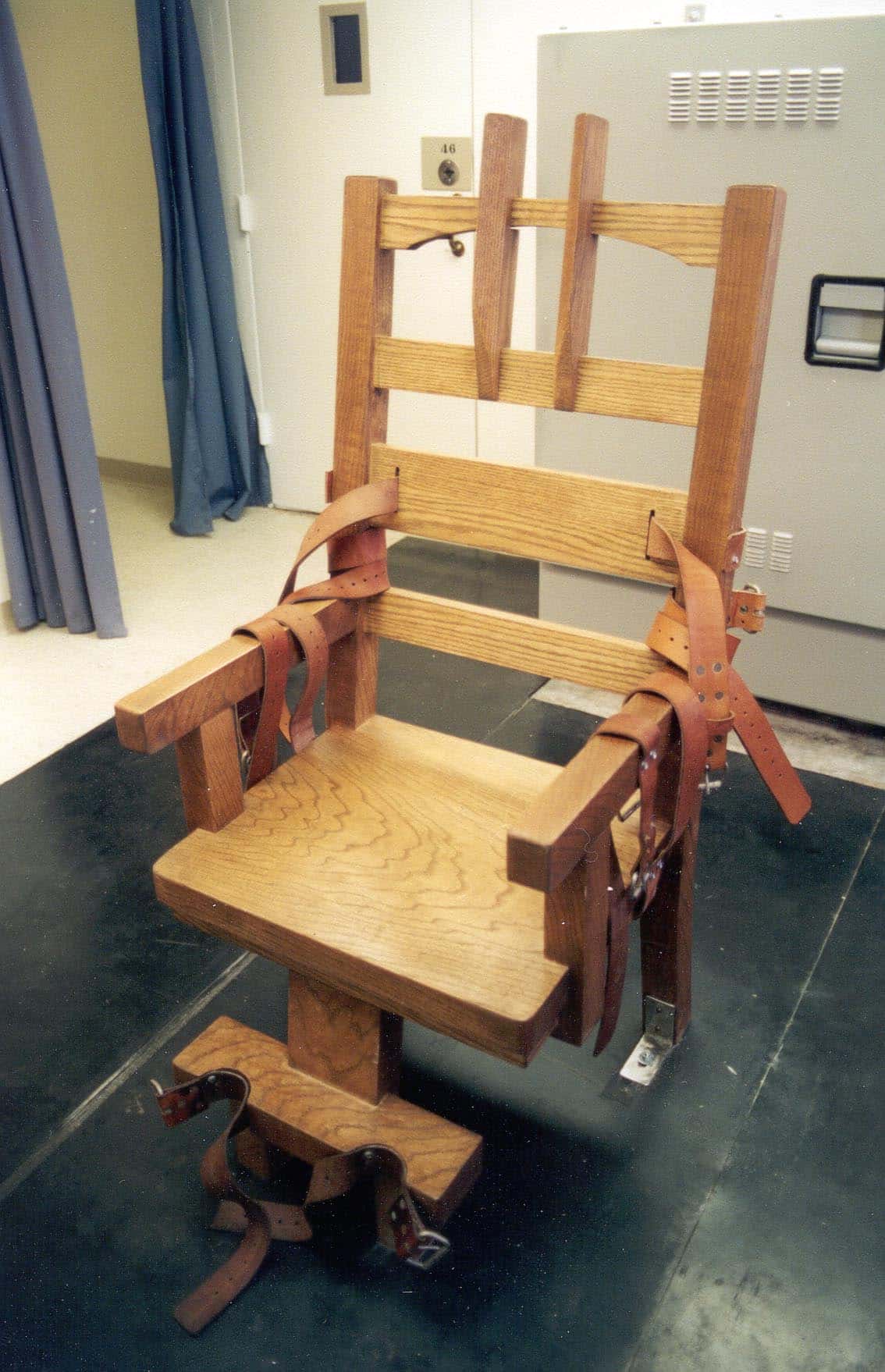
Richard Knight, 47, was executed at Florida State Prison near Starke on the evening of May 21, 2026, becoming the seventh person put to death by the state of Florida this year. Knight was pronounced dead at 6:13 p.m. following a three-drug lethal injection administered by the Florida Department of Corrections. The execution took place amid stormy weather at the North Florida prison complex that has served as the site of Florida executions for decades.
Knight was convicted of two counts of first-degree murder for the killings of Odessia Stephens and her 4-year-old daughter, Hanessia Mullings, in Coral Springs in June 2000. Stephens and her daughter lived in Broward County, and Knight had been residing in the same home as his cousin, the cousin's girlfriend Stephens, and the couple's young child. The murders occurred on a night when Knight's cousin was away at work, leaving Knight and Stephens alone in the residence with the child.
According to prosecutors and trial records, Stephens informed Knight that evening that he would need to move out of the home by the following morning. Knight became angry at the news and attacked Stephens with a knife, stabbing her more than 20 times. Fourteen of those wounds were to her neck. After attacking Stephens, Knight then turned on Hanessia Mullings. Both victims died from their injuries. Knight was arrested, tried in Broward County, and ultimately sentenced to death for both murders following a trial that presented physical evidence, witness testimony, and forensic findings to the jury.
Florida's Record-Setting Execution Pace
Knight's execution was the seventh carried out by Florida in 2026, continuing a pace of executions that has made Florida one of the most active death penalty states in the country. In 2025, Florida carried out 19 executions, a number that set a state record and placed Florida among the top states nationally for the number of executions performed in a single year. The 2025 total reflected a deliberate acceleration of Florida's execution schedule, driven in part by a backlog of death row inmates whose cases had reached the end of the state and federal appeals process and in part by a stated policy priority of carrying out lawfully imposed sentences.
Florida uses a three-drug lethal injection protocol for executions. The three-drug method, which is used by a number of states that carry out capital punishment, has been the subject of ongoing legal challenges from death row inmates and civil liberties organizations who argue that the protocol can cause unconstitutional suffering if administered improperly or if the drugs used do not function as intended. Florida courts and federal courts have repeatedly upheld the state's execution protocol in the face of those challenges, and the state has continued to use it without interruption.
The execution of Knight took place against a backdrop of continuing national debate over capital punishment. Florida's high volume of executions in 2025 and its continued pace in 2026 have drawn attention from both supporters of the death penalty, who argue that Florida is fulfilling its obligation to carry out sentences that courts have determined are appropriate, and from opponents, who contend that the acceleration of executions increases the risk of executing someone whose guilt has not been established beyond any possibility of doubt or who may have valid legal claims that have not received adequate review.
Final Appeals Rejected
The Florida Supreme Court denied Knight's final appeals the Friday before his execution, rejecting a claim that newly discovered evidence warranted a stay of execution or further review of his conviction. At the center of Knight's final legal argument was an unidentified fingerprint found on a knife at the crime scene, a piece of physical evidence that Knight's attorneys contended pointed to an alternate perpetrator or at minimum raised questions about the completeness of the original investigation.
The Florida Supreme Court rejected that argument, noting that the fingerprint issue was raised and addressed during Knight's original trial. The court found that the evidence did not meet the legal standard for newly discovered evidence sufficient to overturn a conviction or warrant additional proceedings. With that ruling, Knight's legal options were exhausted and the execution proceeded as scheduled.
Courts considering claims of newly discovered evidence in capital cases apply a stringent standard, requiring that the evidence not have been discoverable through the exercise of due diligence at the time of trial and that it be of such character that it would probably produce an acquittal on retrial. The Florida Supreme Court's ruling indicated that the fingerprint evidence did not satisfy those requirements in Knight's case, a conclusion his attorneys disputed but were unable to overcome through the appeals process.
Knight's Final Statement
Richard Knight delivered a brief final statement before his execution. His words were: "I want to give thanks to Yahweh, who is the most high." The statement offered no direct acknowledgment of the crimes for which he was convicted and no address to the families of his victims. Final statements from death row inmates are a longstanding part of the execution process in Florida and other death penalty states, offering the condemned a last opportunity to speak on the record before the sentence is carried out.
The families of Odessia Stephens and Hanessia Mullings had waited more than 25 years from the time of the murders to the day of Knight's execution. The June 2000 killings left a young child dead alongside her mother in a case that Broward County prosecutors described at trial as a senseless act of violence triggered by a mundane dispute over living arrangements. The Coral Springs community where the murders occurred is a suburban city in northern Broward County, and the case drew significant attention in the area when it was prosecuted.
Death Penalty in Florida: Context and Controversy
Florida has one of the largest death row populations in the United States, a consequence of decades of capital prosecutions and a legal framework that permits a wide range of aggravating circumstances to make a defendant eligible for the death penalty. The state's death row is housed at Florida State Prison and at Union Correctional Institution, both located in the Starke area of Bradford County in North Florida, a rural region where the presence of the prison complex has been part of the local economy and civic identity for generations.
The pace of Florida executions has accelerated markedly in recent years. Before the 2025 record of 19 executions, Florida had gone through periods of relative inactivity in its execution schedule, shaped by legal challenges, changes in drug availability for lethal injection, and the pace at which governors signed death warrants. The current acceleration reflects a convergence of factors: a large cohort of death row inmates whose appeals have reached their conclusion, a governor who has signed death warrants at a high rate, and a legal environment in which execution protocols have been upheld through multiple rounds of court review.
Critics of the current pace, including defense attorneys and civil liberties organizations, have raised concerns about whether the volume of executions leaves adequate time for the review of individual cases and whether the acceleration reflects sound policy or political calculation. Supporters, including prosecutors and victims' rights advocates, argue that the families of murder victims are entitled to see sentences carried out within a reasonable time and that lengthy delays between conviction and execution serve neither justice nor the public interest.
The Knight execution did not generate the level of public attention that some Florida executions have attracted in recent years. Cases involving claims of innocence, questions about intellectual disability, or high-profile crimes have sometimes drawn large crowds of protesters or supporters outside Florida State Prison on execution nights. The stormy weather that accompanied Knight's execution on the evening of May 21 reflected the broader atmospheric conditions that characterize North Florida in late spring, a season of afternoon and evening thunderstorms that can bring heavy rain and lightning to the region with little warning.
What Follows
Florida's execution schedule for the remainder of 2026 has not been publicly announced in full, but the pace established in 2025 and continued through the first five months of 2026 suggests that additional executions are likely before the end of the year. Death warrants in Florida are signed by the governor and set an execution date approximately 30 days in advance, giving condemned inmates and their attorneys a fixed window in which to pursue any final legal options. The Florida Supreme Court and federal courts review last-minute appeals in capital cases under expedited schedules, typically issuing rulings within days of an execution date.
The Florida Department of Corrections handles the logistics of executions, including the three-drug protocol, the presence of witnesses, and the processing of the condemned in the hours before the sentence is carried out. State law governs the execution process in detail, including provisions for the final statement, the presence of spiritual advisers, and notification of victims' families. Florida State Prison, where Knight was executed and where most Florida executions have historically been performed, is a maximum-security facility that houses both Florida's death row and a general inmate population serving long sentences for serious crimes.
Richard Knight was 47 years old at the time of his execution, meaning he was in his early twenties when the murders of Odessia Stephens and Hanessia Mullings occurred in June 2000. He spent more than two decades on Florida's death row as his appeals moved through the state and federal court systems before the Florida Supreme Court's denial of his final appeal cleared the way for the execution that was carried out on the stormy evening of May 21, 2026.
Spotted an issue with this article?
Have something to say about this story?
Write us a letterComments
No comments yet. Be the first to weigh in.
Related Coverage

Two Spring Hill men indicted in 2018 home invasion killing of young father in Hernando County
1h ago
Operation Cooked: Undercover Osceola Sting Nets At Least 20 Arrests of Men Accused of Seeking Sex With Children
3h ago

Federal Jury Convicts Three Naples Men in $30,000 Murder-for-Hire Plot Targeting a Man Whose Brother Wanted Him Dead
5h ago

Woman known only as 'Cinnamon,' found dead on a boat off Key West in 1999, identified through DNA
23h ago