Florida Measles Cases Hit 25-Year High as Vaccine Mandates Face Rollback
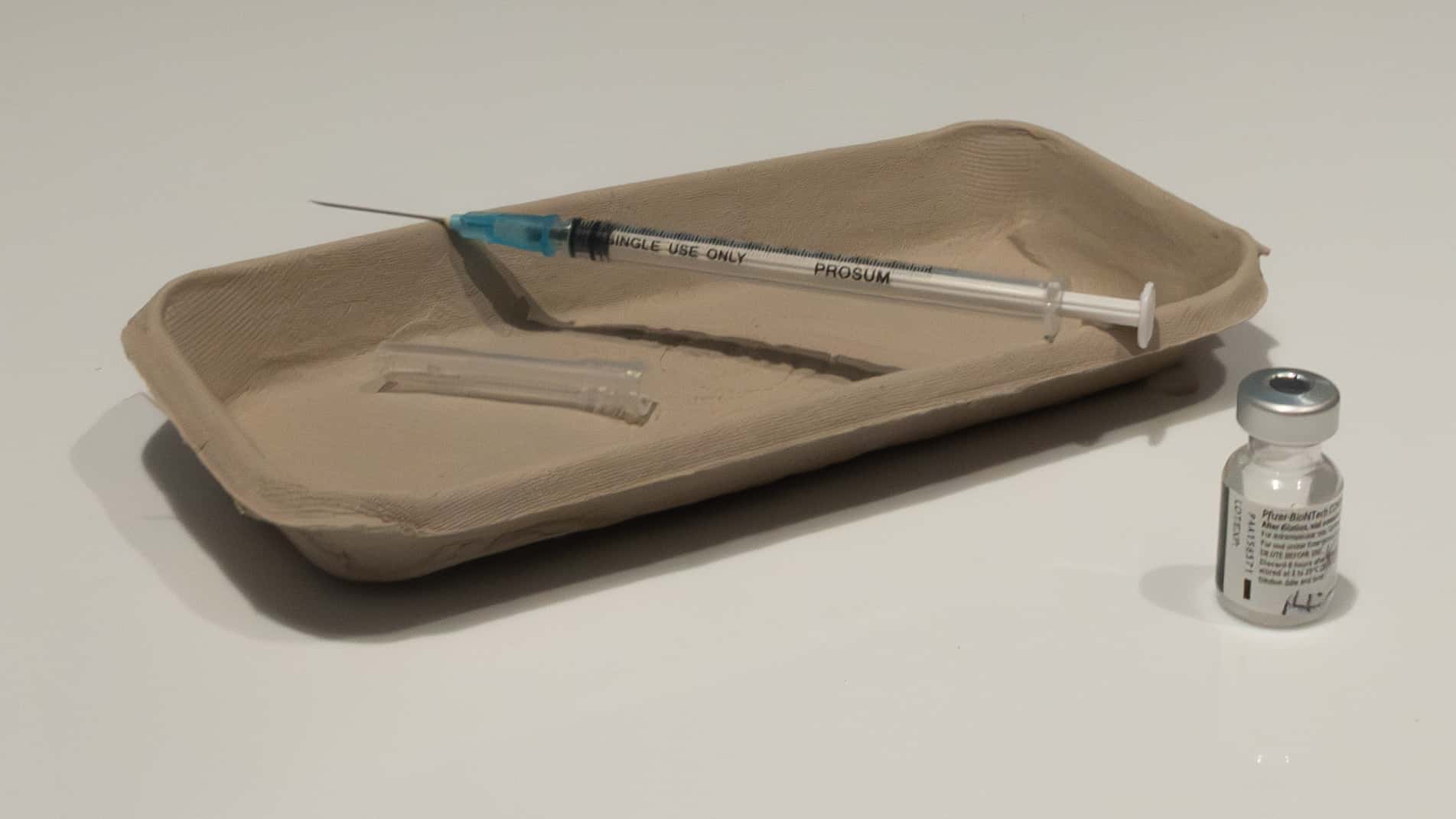
Florida is heading into the start of the school year with its largest measles caseload in a generation. State health data reported 154 measles cases as of May 23, 2026, the highest single-year total the state has recorded in roughly 25 years, and case counts had been climbing through the spring rather than leveling off.
The rise coincides with a significant policy shift. Florida's surgeon general has announced plans to remove vaccine mandates for school attendance, a change that would affect requirements covering hepatitis B, chickenpox, Haemophilus influenzae type b and pneumococcal disease alongside other routine childhood immunizations. Florida would become the first state to move in that direction at a moment when measles is actively circulating within its borders.
The timing matters because measles transmission and school calendars are tightly linked. Florida districts open the 2026-27 year in the second week of August, concentrating millions of children into shared indoor spaces during a period when the state is already reporting elevated case counts.
Why measles behaves differently from other viruses
Measles is among the most transmissible infectious diseases known. Its basic reproduction number, the average number of people an infected person would infect in a fully susceptible population, is generally estimated in the range of 12 to 18, far above influenza or most respiratory viruses.
It spreads through airborne particles that remain suspended and infectious in a room for up to two hours after an infected person has left. That property means transmission does not require direct contact or even simultaneous presence. A pediatric waiting room, a school cafeteria or a retail store can serve as a transmission site.
Infected people are contagious for roughly four days before the characteristic rash appears, during a period when symptoms look like an ordinary respiratory illness with fever, cough, runny nose and conjunctivitis. That presymptomatic and early-symptomatic transmission window is why measles outbreaks are difficult to contain through case isolation alone.
Complications are not rare. Roughly one in five unvaccinated people who contract measles in the United States is hospitalized. Pneumonia is the most common serious complication in children. Encephalitis occurs in approximately one in a thousand cases and can cause permanent neurological injury. Measles also suppresses immune memory for months to years afterward, leaving survivors more vulnerable to other infections.
The threshold problem
Because measles is so transmissible, the vaccination coverage required to interrupt community spread is high, generally cited around 95 percent for two doses of the measles, mumps and rubella vaccine. That threshold is unusually demanding compared with other vaccine-preventable diseases.
The practical consequence is that measles control is unforgiving of small declines. A community that drops from 95 percent to 90 percent coverage does not experience a proportionally small increase in risk. It crosses a threshold below which sustained transmission becomes possible, which is why measles resurgence tends to appear suddenly rather than gradually.
Coverage is also not uniform within a state. Statewide averages can mask clusters of low vaccination in particular schools, counties or communities, and outbreaks concentrate in those clusters. Florida's case pattern in 2026 has included a campus outbreak, which reflects that clustering dynamic.
The people who cannot be protected by their own vaccination depend entirely on this community threshold. That group includes infants too young for their first MMR dose, which is typically given at 12 to 15 months, children undergoing chemotherapy, transplant recipients on immunosuppressive therapy, and people with certain immune conditions.
What the mandate rollback would change
Florida currently requires proof of specified immunizations for children entering public and private schools and licensed child care, with exemptions available for medical reasons and religious objection. School immunization requirements function as the enforcement mechanism that has kept coverage near threshold levels in most states for decades.
The proposed change would end mandates for a set of vaccines, converting them from requirements to recommendations. The state's framing has emphasized parental decision-making and bodily autonomy. Public health organizations, including physician groups, have argued that removing requirements will reduce coverage and that measles, given its transmissibility, is the disease most likely to demonstrate that reduction first.
Some elements of Florida's requirements are set in statute rather than by administrative rule, which means a full rollback would require legislative action. The scope of what the health department can change unilaterally versus what requires the Legislature has been a live question in the debate.
What is not in dispute is the direction of travel. Florida is moving toward a lighter mandate regime during a year in which its measles caseload reached a 25-year high, and the interaction between those two facts is the substance of the public health concern.
What Florida parents should know
For families, the practical guidance has not changed regardless of what happens to mandates. The MMR vaccine is given in two doses, typically at 12 to 15 months and again at 4 to 6 years. Two doses are approximately 97 percent effective at preventing measles, and one dose is roughly 93 percent effective.
Parents planning international travel, or travel to a domestic area with an active outbreak, should know that infants as young as 6 months can receive an early dose in those circumstances, though that early dose does not count toward the routine two-dose series.
Adults who are uncertain of their status can check records or, where records are unavailable, receive a dose without harm. People born before 1957 are generally presumed immune through childhood infection. Adults vaccinated between 1963 and 1967 may have received an inactivated vaccine that was less effective and may benefit from revaccination.
Anyone with symptoms consistent with measles, particularly fever with rash, should call ahead before going to a clinic or emergency department rather than walking in. That call allows the facility to arrange isolation and avoid exposing other patients in a waiting room, which is one of the more common amplification points in outbreaks.
The stakes for a state like Florida
Florida carries several characteristics that raise its exposure. It receives an enormous volume of international visitors through Miami, Orlando and Tampa, which increases the frequency of imported cases. Measles importation is the seed for nearly every domestic outbreak, since the disease was declared eliminated from continuous domestic transmission in the United States in 2000.
The state's theme parks, cruise terminals and convention business concentrate large numbers of people from many origins in shared indoor environments. It has a large population of older adults, some immunocompromised, and a large population of young children.
Regional health authorities have separately warned of increased measles activity across the Americas, which raises the baseline probability of importation into Florida from travel within the hemisphere.
The elimination status of measles in the United States is itself at stake nationally. Sustained transmission of a single chain for more than 12 months would end that designation, an outcome public health officials have warned is possible if coverage continues to decline.
What an outbreak response costs
Measles response is expensive and labor intensive in ways that are invisible until an outbreak occurs.
Each confirmed case triggers a contact investigation. Because measles is airborne and remains infectious in a room for up to two hours after an infected person leaves, contact tracing must identify everyone who shared airspace with the case during the infectious period, not merely those who had direct contact. For a case who visited a grocery store, a clinic and a school, that list can run to hundreds of people.
Health department staff then must determine each contact's immunity status, offer post-exposure prophylaxis where appropriate within a narrow time window, and arrange quarantine for susceptible contacts. Published analyses of measles outbreaks in the United States have put public health response costs in the tens of thousands of dollars per case.
Those costs fall on county health departments whose budgets are set without reference to how many measles cases will occur. Staff diverted to outbreak response are staff not doing routine work, which means an outbreak degrades other public health functions for its duration.
How Florida compares nationally
School immunization requirements exist in every state, but the exemption structures vary considerably, and those differences drive measurable coverage differences.
All states permit medical exemptions. Most permit religious exemptions. A smaller number permit philosophical or personal belief exemptions. States that have eliminated nonmedical exemptions have generally seen coverage rise, and states with easily obtained exemptions have generally seen it fall.
Florida currently allows medical and religious exemptions. The proposal to remove mandates entirely for a set of vaccines would move the state beyond the existing spectrum rather than to a different point on it, since no state has eliminated school immunization requirements outright.
That is what has drawn national attention to Florida's decision. Public health researchers view it as a natural experiment whose results will be legible in case counts, and the professional consensus among medical organizations is that the experiment's likely outcome is more disease. Whether that materializes, and how quickly, will be measurable within a year or two given how sensitive measles is to coverage changes.
What's next
The immediate marker is the school year. Districts open Aug. 10, and case counts through late August and September will indicate whether the spring trend continues, accelerates or subsides. Health departments will conduct contact tracing on individual cases, which for measles typically involves identifying everyone who shared airspace with a case during the infectious period.
The policy track runs separately. Any statutory changes to school immunization requirements would need to move through the Legislature, and the 2027 session will be the venue for that. Rule changes within the health department's authority could proceed sooner.
For families, the actionable step ahead of the school year is verifying that children are current on the two-dose MMR series, regardless of what the requirement structure looks like by fall. County health departments and pediatric practices can confirm records and administer catch-up doses.
Whatever Florida decides about mandates, the virus itself is indifferent to the policy debate. Its arithmetic depends only on how many susceptible people it can reach.
Spotted an issue with this article?
Have something to say about this story?
Write us a letterComments
No comments yet. Be the first to weigh in.
Related Coverage

Orange County Dengue Cases Rise to Five as Aerial Spraying Is Planned in Apopka
9h ago

Hillsborough Dengue Cases Reach 259 as State Workers Go Door to Door in Five Tampa Neighborhoods
1d ago
Florida Health Department Moves Closer to Dropping Four School Vaccine Requirements After Heated Lake Mary Hearing
2d ago

DeSantis Says Florida Has Cut 220 Medicaid Providers and Sent 150 Fraud Referrals as Crackdown Expands
5d ago