Florida Panthers Face a Pivotal Offseason After Their Championship Run Comes to a Halt
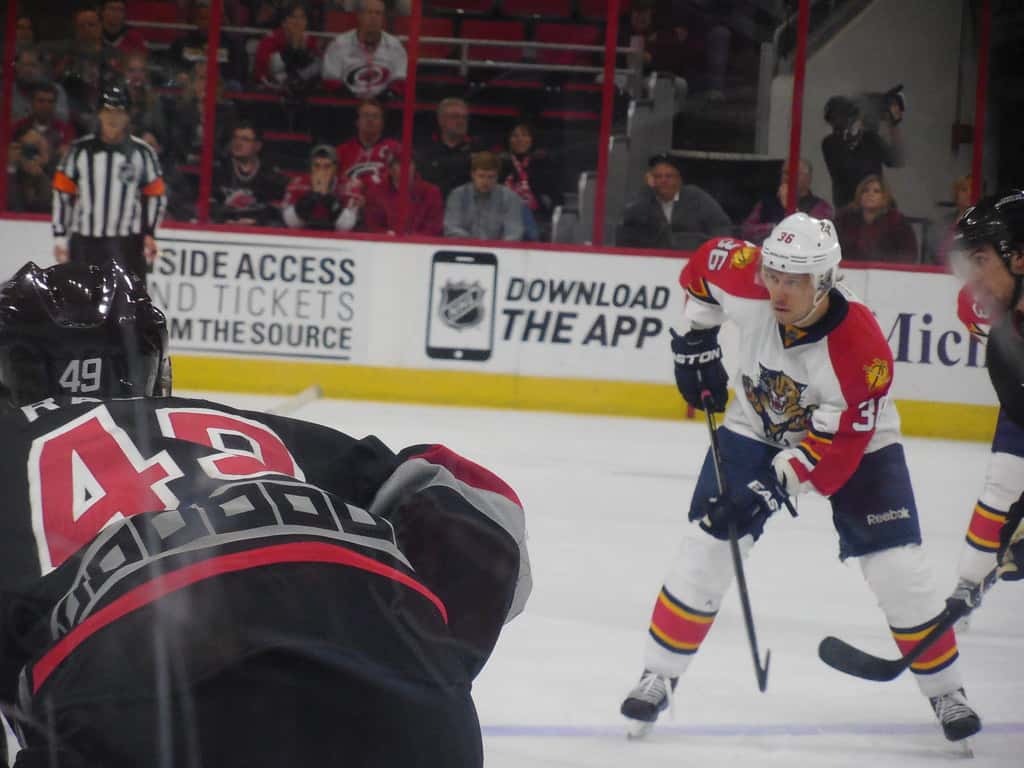
The Florida Panthers are navigating one of their most consequential offseasons in years after a season that ended without a return to the Stanley Cup Playoffs, an abrupt turn for a franchise that had reached the game's biggest stage in consecutive years. Injuries, roster questions, and looming decisions in goal have converged to make the summer of 2026 a period of retooling for a team intent on climbing back into contention in the NHL.
A season that fell short
The Panthers missed the 2026 playoffs, a stark departure for a club that had recently been among the league's elite and had appeared in the Stanley Cup Final in consecutive seasons. Falling short of the postseason after that run of success underscored how quickly circumstances can change in professional hockey, where health, depth, and margins determine which contenders advance and which fall away.
A major factor in the disappointing season was the loss of captain Aleksander Barkov, who, according to reports, suffered a significant knee injury during training camp that required surgery and kept him out for the season. Losing a franchise cornerstone and defensive anchor for an entire campaign is the kind of setback that can derail even a deep and talented roster. The absence reshaped the team's outlook from the outset.
The combination of the missed playoffs and the injury to a key leader set the stage for an offseason of evaluation. For a team that had grown accustomed to deep playoff runs, a year on the outside prompts a reassessment of the roster, the depth chart, and the moves needed to get back to championship contention. That reassessment is now underway.
Deep playoff runs also exact a hidden cost that often surfaces the following year. Extended seasons compress the offseason, shorten recovery windows, and add mileage to the bodies of core players who log heavy minutes in the postseason. Teams that reach the final two rounds in back-to-back years frequently confront a season in which accumulated wear catches up with them, and the Panthers now face the task of separating that kind of natural regression from problems that require structural fixes to the roster.
The goaltending question
Among the most closely watched storylines is the future of goaltender Sergei Bobrovsky, a veteran who has been central to the Panthers' recent success but who, according to reports, is heading toward the open market at an advanced stage of his career after a difficult season. Goaltending is a pivotal position, and how the Panthers address it will shape their prospects for the coming season and beyond.
A netminder's performance can swing a team's fortunes, and questions about an aging goaltender coming off a down year force difficult decisions about whether to re-sign, replace, or restructure the position. Teams weigh the value of experience and playoff pedigree against the risks of decline and the cost of a contract. Those calculations are among the most important a front office makes.
How the Panthers resolve their goaltending situation will send a signal about their direction. Committing to a veteran, pursuing a replacement, or developing a younger option each carries trade-offs in cost, risk, and timeline. The resolution of that question is likely to be one of the defining elements of the team's offseason and a key determinant of its competitiveness.
The goaltending market across the NHL adds another layer of complexity. Reliable starters are scarce, and teams that need one often find themselves competing for a limited pool of available options through free agency, trades, or internal development. That scarcity can inflate the price of proven netminders while raising the stakes on any bet placed on an unproven one. For the Panthers, the timing of their decision matters as much as its substance, because waiting too long can leave a front office choosing from a thinner set of alternatives once rival clubs have addressed their own needs.
Retooling the roster
Beyond goaltending, the Panthers face broader roster decisions as they seek to return to contention. Reports have linked the team to a series of offseason moves aimed at adding toughness and depth, and the front office is expected to weigh extensions, additions, and departures as it reshapes the group. As with any offseason chatter, some reported moves remain to be confirmed and finalized through official channels.
Retooling after a down year involves balancing the core that produced recent success against the need for fresh contributions. Salary cap considerations, player health, and the competitive landscape of the league all factor into how aggressively a team can remake its roster. The Panthers' management must navigate those constraints while trying to reload for another push.
The return of a healthy Barkov, if he recovers as expected from his injury, would itself represent a significant addition to the lineup, restoring a leader and two-way force the team missed for a full season. Getting a franchise player back can function almost like a major acquisition, and his recovery will be a storyline to watch as the team prepares for the coming campaign.
Depth has been a hallmark of recent contenders, and rebuilding it is rarely as simple as signing a single high-profile name. The most durable rosters spread scoring across multiple lines, protect leads with responsible defensive play, and withstand the injuries that inevitably arrive over a long season. A year in which the Panthers lost their captain highlighted how thin margins can become when the top of the lineup is disrupted, and it may push the front office to prioritize resilience and versatility as much as raw talent when it fills out the group.
The cap and the calendar
Every offseason decision in the NHL unfolds against the constraints of the salary cap, a ceiling that forces front offices to choose between competing priorities rather than pursuing all of them at once. A team that commits substantial money to one position, whether in goal or elsewhere, necessarily limits what it can spend on the rest of the roster. The Panthers, like every contender, must weigh the long-term commitments already on their books against the flexibility they will want to preserve for future moves.
The calendar shapes those choices as much as the cap does. Free agency, the draft, and the trade market each open windows that close quickly, and the sequencing of moves can determine whether a team lands its preferred targets or settles for fallback options. A front office that acts decisively early can shape the market to its advantage, while one that waits risks being boxed in by the decisions of rivals. For the Panthers, the coming weeks represent a compressed period in which several interlocking questions must be answered in a coherent order.
What it means for Florida fans
For the Panthers' South Florida fan base, the offseason carries both concern and optimism. The missed playoffs were a disappointment after years of deep runs, but the underlying talent, the anticipated return of an injured captain, and an active approach to roster building give supporters reason to believe the team can rebound. The summer's decisions will shape expectations for the season ahead.
The franchise's recent success helped grow hockey's profile in a nontraditional market, drawing new fans and energizing the region around the sport. Sustaining that momentum depends on returning to contention, which makes the offseason moves consequential not just for on-ice results but for the broader connection between the team and its community. Fans will be watching how the front office responds.
South Florida's sports landscape is crowded, with professional teams across multiple leagues competing for attention. The Panthers' rise had established hockey as a compelling part of that mix, and a return to contention would reinforce the sport's foothold. The stakes of the offseason therefore extend to the team's place in the regional sports conversation.
Hockey's foothold in South Florida
The growth of hockey in South Florida has been one of the more striking stories in the region's sports culture, transforming a market once viewed as an afterthought for the sport into a place where the game draws sustained attention. Deep playoff runs filled the arena in Sunrise, turned game nights into regional events, and introduced the sport to fans who might otherwise have followed only football, basketball, or baseball. That momentum, built over several years, represents an asset the franchise will want to protect through a period of retooling.
A down season tests the durability of that connection. Casual fans drawn in by winning can drift away when results decline, while the committed base that formed during the deep runs tends to remain. The Panthers' challenge is to keep the broader audience engaged through a transitional year, and the clearest path to doing so runs through a credible plan to return to contention. Communicating direction, and then delivering on it, matters for the relationship between the team and a region still relatively new to the sport.
The competitive landscape
The NHL is a league of fine margins, where health, depth, and goaltending often separate contenders from teams that miss the playoffs. The Panthers experienced that reality in 2026, when the loss of a key player and other factors kept them out of the postseason despite their recent pedigree. Rebuilding a contender requires addressing weaknesses while preserving the strengths that fueled prior success.
Competition within the league does not stand still, as rival teams make their own offseason moves to improve. The Panthers must retool against a backdrop of shifting rosters across the NHL, which raises the degree of difficulty in reclaiming a top position. Front offices that navigate the offseason effectively give their teams the best chance to rise back into contention.
For a franchise with championship aspirations, the goal of the offseason is clear: assemble a roster capable of competing deep into the playoffs. The Panthers' recent Final appearances set a high bar, and the organization's moves this summer will be measured against the expectation of returning to that level. The path runs through the goaltending decision, roster retooling, and the health of key players.
What's next
The Panthers will continue working through their offseason decisions, including the resolution of the goaltending situation and any additions or extensions to the roster. Those moves, some already reported and others still to come, will define the team's shape heading into training camp and the new season. Official confirmations will clarify which reported moves become reality.
Barkov's recovery from his knee injury will be a central storyline, as his return would restore a franchise cornerstone to the lineup. The team's medical and preparation staff will manage that process, and updates on his progress will be closely followed by fans and observers as the season approaches.
Ultimately, the Panthers' offseason is about converting a disappointing year into a springboard for a return to contention. With a talented core, an injured captain expected back, and an active approach to roster building, the franchise has the pieces to bounce back. Whether the summer's decisions deliver that rebound will become clear when the puck drops on the new season.
Spotted an issue with this article?
Have something to say about this story?
Write a letter to the editorComments
No comments yet. Be the first to weigh in.
Related Coverage

Trevor Lawrence Throws Three Touchdowns as Jaguars Rout Patriots 35-6 in Jacksonville
3h ago

Rays Finish 98-64 and Await Yankees or Red Sox for ALDS Game 1 at Tropicana Field
5h ago
Florida Gators Jump 13 Spots to No. 8 in AP Poll After 52-28 Rout of No. 4 Ole Miss
9h ago
Baker Mayfield Out at Least Three Weeks as 0-3 Buccaneers Turn to Undrafted Rookie Jalon Daniels
17h ago