Florida Panthers Miss 2026 Playoffs After Back-to-Back Stanley Cup Championships
From Dynasty to the Sideline in One Season
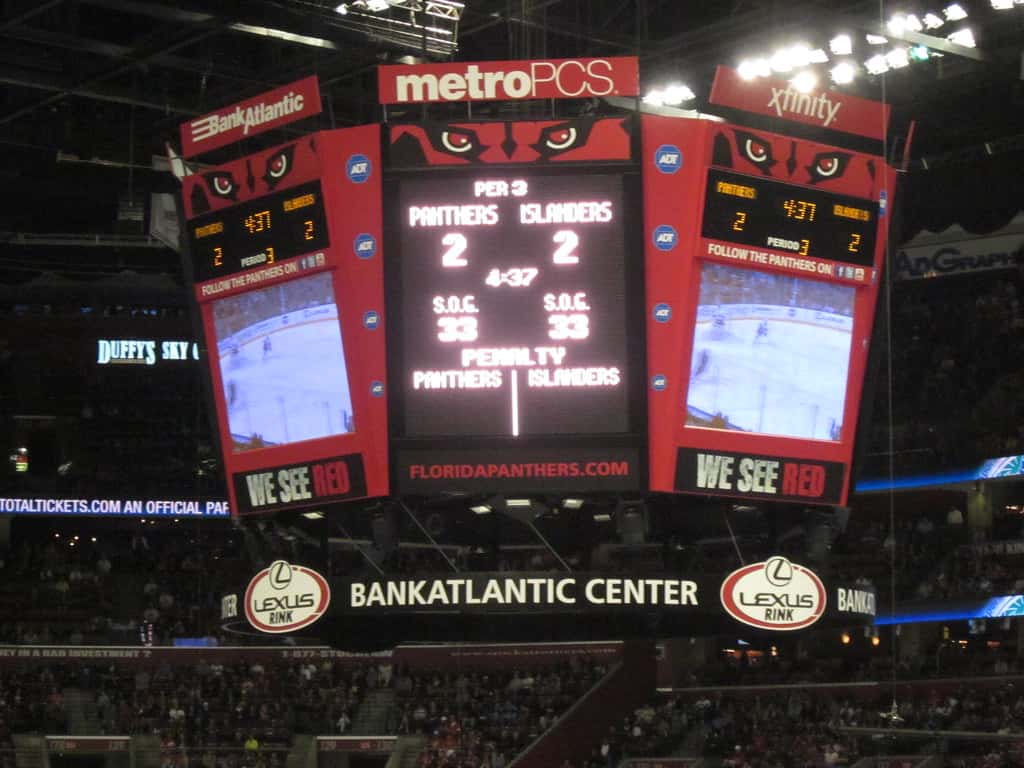
The Florida Panthers entered the 2025-26 NHL season as one of the most celebrated franchises in the sport, fresh off consecutive Stanley Cup championships in 2023 and 2024 and widely regarded as the class of the Eastern Conference. Less than a year after hoisting the Cup for the second straight time, the Panthers were watching the 2026 playoffs from home, eliminated after a 9-4 loss to the Pittsburgh Penguins that made their postseason absence mathematically official. The collapse stands as one of the most striking reversals of fortune in modern NHL history.
With their elimination confirmed, the Panthers became the first defending Stanley Cup champions to miss the playoffs the following season since the Los Angeles Kings in 2015. The Kings, who won championships in 2012 and 2014, fell out of playoff contention the year after their second title. Florida now shares that distinction, a sobering achievement for a franchise that believed it had built the foundation for sustained championship-level competition.
The 9-4 loss to Pittsburgh that sealed their fate served as a jarring final note for a season full of disappointment. The Panthers, who had been defined by disciplined, suffocating defensive play throughout their championship runs, surrendered nine goals in the game that ended their year. It was a performance that encapsulated the dysfunction and disarray of a season unlike any the franchise had experienced during its recent run of success.
The Barkov Injury That Changed Everything
No single moment defined the Panthers' 2025-26 season more than the injury suffered by Aleksander Barkov at the very first full-team practice of training camp. Barkov, the franchise center and captain whose two-way game and leadership had been the cornerstone of Florida's championship identity, tore both his ACL and MCL in the opening practice session before the regular season had even begun. The injury immediately cast a shadow over everything that followed.
Barkov's absence removed the player most responsible for the structure and execution of the Panthers' system on both ends of the ice. As a five-time finalist and two-time winner of the Frank J. Selke Trophy, awarded to the NHL's best defensive forward, Barkov represented an irreplaceable combination of offensive production, defensive responsibility, and on-ice leadership. No team in the NHL, regardless of depth, can comfortably absorb the loss of such a player for an entire season without significant consequences.
The timing of the injury, at the very first full-team skate of training camp, denied the Panthers any opportunity to adjust their roster strategy before the season began. Management was left scrambling to realign line combinations, redistribute responsibilities, and ask players throughout the lineup to fill roles they were not suited to handle for an extended period. The ripple effects of Barkov's absence were felt throughout every facet of the team's game for months.
Further Injuries Compound a Brutal Year
The Barkov injury would have been difficult enough to absorb on its own, but the Panthers' injury troubles did not stop with their captain. Brad Marchand, who had been brought in as a scoring option and veteran presence to supplement the lineup, suffered a lower-body injury that kept him sidelined for a significant portion of the season. Sam Reinhart, one of the team's primary offensive producers and a player who scored 57 goals during the 2023-24 championship campaign, also missed time due to a foot injury.
The accumulated absence of Barkov, Marchand, and Reinhart stripped the Panthers of most of their proven offensive production at various points during the season. Replacement players and depth options who were adequate as role players when surrounded by elite talent were asked to shoulder responsibilities far beyond their capabilities. The results were predictably difficult, as the Panthers struggled to generate consistent offense and win close games without the personnel that had defined their recent success.
The injury situation also disrupted team chemistry in ways that statistics cannot fully capture. Championship teams rely on established patterns, trust built over shared experiences, and the intuitive understanding that players develop through repeated repetition together. When a significant portion of a team's core is unavailable, that chemistry erodes, and new combinations take time to develop the kind of cohesion that postseason contenders require. The Panthers never found that cohesion in 2025-26.
Bobrovsky's Difficult Season in Net
Among the individual statistical disappointments of the Panthers' season, the performance of goaltender Sergei Bobrovsky stood out as a particular concern. Bobrovsky posted a goals-against average of 3.05 and a save percentage of .878 across 51 games, numbers that represented a significant departure from the level of play that had helped anchor Florida's championship teams in recent seasons.
The .878 save percentage was only the second time in Bobrovsky's 16-season NHL career that he finished with a save percentage below .900, a threshold generally considered the baseline for adequate starting goaltending. The rarity of that occurrence speaks to how unusual the 2025-26 season was for one of the league's most accomplished goaltenders, a two-time Vezina Trophy winner who had been one of the pillars of Florida's defensive success during the championship years.
Bobrovsky's struggles raised questions about whether the accumulation of playoff mileage had begun to affect his ability to perform at an elite level. The Panthers leaned heavily on their goaltender during their back-to-back championship runs, with Bobrovsky facing large shot volumes and high-pressure situations across multiple rounds of playoffs in consecutive seasons. Whether his 2025-26 numbers reflect a temporary decline related to workload, the effects of a depleted defense in front of him, or a longer-term trend in his performance will be one of the central questions the franchise faces heading into the offseason.
Three Seasons, 314 Games: The Cost of Dominance
To understand why the Panthers found themselves in this position, the numbers behind their championship run offer important context. Over the three seasons prior to 2025-26, the Florida Panthers played 314 games, the most of any team in the NHL over any three-year span in league history. The back-to-back championship runs required the team to play deep into June in consecutive years, compressing recovery time and placing sustained physical and mental demands on players, coaches, and support staff alike.
The NHL's playoff structure is designed to be physically demanding by nature, and deep postseason runs exact a toll that offseason rest only partially compensates for. Players who battle through seven-game series in multiple rounds across consecutive years accumulate bumps, bruises, and wear on joints and soft tissue that does not always manifest as a documented injury but nonetheless affects performance over the course of subsequent seasons. The Panthers' 314-game workload over three years represented an extraordinary cumulative demand on the franchise's core personnel.
League historians and analysts noted that the combination of a historically high game count and the sudden, serious injury to the franchise's centerpiece player at the very start of training camp was a confluence of circumstances severe enough to challenge any defending champion. The Panthers were not simply dealing with normal regression or a difficult schedule. They were managing the physical consequences of an unprecedented workload at the same moment their most important player was lost before the season began.
What the Offseason Holds
The Panthers now face an offseason filled with difficult questions about the roster's composition, age profile, and health. General manager Bill Zito and head coach Paul Maurice will need to conduct a thorough assessment of which players are capable of returning to championship-level performance and which have been diminished by the accumulated demands of recent seasons. The evaluation will extend to every position on the ice, from goaltending through the defensive corps and into a forward group that was decimated by injuries in 2025-26.
Contract decisions will complicate the roster review. Several players are entering contract years or have expiring deals that will require the organization to make difficult choices about investment and commitment. The salary cap situation, shaped by the contracts signed during the championship years, limits the Panthers' flexibility to make significant additions through free agency, meaning internal development and smart trades will need to drive much of the roster reconstruction if Florida is to return to playoff contention in 2026-27.
The Barkov situation will be the first order of business. The Panthers' franchise player is expected to require a full recovery timeline from his ACL and MCL tears, and the organization will need realistic medical guidance about when he can return to game action and at what level of performance. Barkov's return, if it comes at full health and effectiveness, would immediately transform the team's outlook. The Panthers know better than most franchises what Barkov brings to their system and how different the team looks with and without him in the lineup.
A Franchise at a Crossroads
The 2026 playoff absence does not erase what the Panthers accomplished in 2023 and 2024. Back-to-back Stanley Cup championships represent a level of achievement that defines legacies and earns permanent places in franchise history. The players and coaches who delivered those titles, including Barkov, Reinhart, Matthew Tkachuk, and coach Paul Maurice, gave South Florida something that had never been achieved in the organization's history before 2023. Those championships are permanent.
But the question now is whether the franchise can reload rather than rebuild. The distinction matters because the Panthers' core is not young. Several key contributors are in their late 20s or early 30s, and the wear of their recent workload is already visible in the injury history of the 2025-26 season. A true rebuild centering on youth and new players would take years and likely require parting ways with veterans who still believe they have championship hockey left in them. A reload would attempt to keep the core intact and return to contention quickly if the injury situation normalizes.
Panthers fans and ownership have experienced the pinnacle of the sport in recent years and will expect a return to playoff hockey in 2026-27. Whether that is realistic depends heavily on Barkov's recovery, the bounce-back potential of Bobrovsky, and the organization's ability to find solutions through the draft, trades, and free agency that address the gaps exposed by a historically difficult season. The path back starts now, in the quiet of an early summer that is the first the Panthers have experienced without deep playoff commitments since 2022.
South Florida Reflects on a Remarkable Run
For South Florida's hockey community, the 2025-26 season has been a difficult adjustment after two years of championship celebration. Amerant Bank Arena in Sunrise, which hosted Stanley Cup championship rallies and saw the franchise become a point of civic pride for a region not traditionally associated with hockey culture, was quieter in the spring of 2026 than it had been in the two years prior. The absence of playoff hockey was felt throughout the region's sports landscape.
The rapid growth of the Panthers' fan base during the championship years means that many South Florida hockey fans experienced their first playoff runs during the title seasons and have not yet experienced a losing or non-playoff year as Panthers supporters. How the fan base responds to a difficult season and a postseason absence will be a test of whether the roots of hockey culture in the region have grown deep enough to sustain support through adversity as well as triumph.
The Panthers remain one of the most accomplished franchises in the NHL over the past four years by any measure, and the organizational infrastructure that produced back-to-back championships still exists in Sunrise. The decisions made in the coming months will determine how quickly that infrastructure can produce a team capable of competing for the Stanley Cup again. For a franchise that knows what it feels like to win the sport's ultimate prize, anything short of a return to the top will feel incomplete.
Spotted an issue with this article?
Have something to say about this story?
Write us a letterComments
No comments yet. Be the first to weigh in.
Related Coverage
Orlando City Edges Columbus Crew 3-2 on Iván Angulo's Late Winner and Maxime Crépeau's Record 12 Saves
2h ago
Inter Miami Routs D.C. United 4-0 as Messi and Suárez Score Twice Each, Climbs to Second in the East
3h ago
Brandon Hagel Scores Twice in Final Two Minutes for Hat Trick as Lightning Beat Islanders 5-3
1d ago
Kirill Kaprizov's Hat Trick Spoils Panthers' Home Opener as Wild Win 4-1 in Sunrise
2d ago