Florida Panthers Miss NHL Playoffs for First Time Since 2019 After Injury-Ravaged Season Ends Two-Time Champions' Title Defense
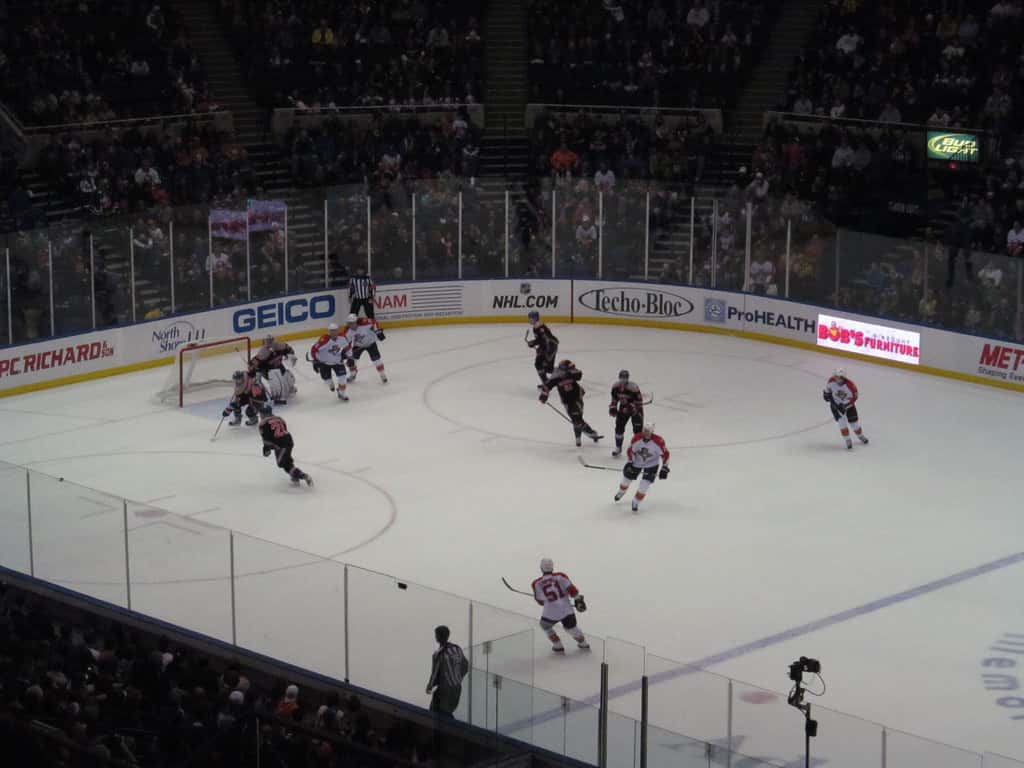
The Florida Panthers, who hoisted the Stanley Cup in back-to-back seasons in 2024 and 2025, will not be defending their championship in the 2026 Stanley Cup playoffs. The two-time defending champions finished the 2025-26 regular season with a 37-36-3 record and were officially eliminated from playoff contention following a 9-to-4 loss to the Pittsburgh Penguins, missing the postseason for the first time since the 2018-19 season. The collapse of a title defense that many believed could produce an unprecedented third consecutive championship was driven almost entirely by catastrophic injury losses to the franchise's most important players.
The Barkov Injury That Changed Everything
The Panthers' season effectively ended before it began when captain Aleksander Barkov suffered tears to both the ACL and MCL in his right knee during the first full-team training camp practice. Barkov, who had spent the previous two seasons establishing himself as arguably the best two-way center in the NHL, missed the entire 82-game regular season. Head coach Paul Maurice has repeatedly described Barkov as the best player in the world, and the team's performance over a full season without him illustrated just how irreplaceable his contributions had been during the championship runs.
The timing of the injury was devastating not just because of Barkov's individual value but because of what it represented for the team's preparation and confidence heading into the season. Training camp is typically a time for a defending champion to sharpen its systems and build the chemistry that carries a team through a long playoff run. Losing the captain in the opening minutes of the first full practice eliminated any possibility of that kind of preparation and placed an enormous burden on the rest of the roster from day one.
Barkov underwent surgery and spent the season in rehabilitation. The Panthers initially hoped he might return by late March 2026, which would have given him a narrow window to help the team push for a playoff spot. But by the time he was approaching a return to practice, the Panthers had fallen too far out of playoff contention to make a realistic push, and he adjusted his recovery timeline accordingly, focusing on being healthy for the 2026-27 season rather than rushing back for a depleted roster.
Tkachuk and the Wave of Injuries Behind Barkov
Barkov's absence was compounded by an injury to the team's other marquee player, winger Matthew Tkachuk, who missed the first 47 games of the season after undergoing offseason surgery to repair a torn adductor muscle and a sports hernia. Tkachuk returned to the Panthers lineup on January 19, 2026, but by that point the team had already accumulated a deficit in the standings that proved impossible to overcome.
The injury parade did not stop with Barkov and Tkachuk. Jonah Gadjovich missed 72 games with an upper-body injury. Tomas Nosek missed 60 games with a knee injury. Dmitry Kulikov was sidelined for close to 60 games due to a shoulder injury and a broken nose. In total, the Panthers lost nearly 500 man-games to injury over the course of the season, a figure that represents one of the most severe injury burdens endured by any NHL team in recent memory.
The sheer volume of absences meant that the Panthers were regularly dressing lineups that bore little resemblance to the championship roster, calling up players from the AHL affiliate and asking depth players to carry responsibilities far beyond their established roles. The coaching staff worked to maintain structure and competitiveness, but the depth of the injury losses made it impossible to replicate the connected, confident play that had defined the two championship teams.
How the Season Unfolded
The Panthers opened the season without Barkov and with a lineup full of players being asked to step up in his absence. The team was competitive in the early weeks, but without their captain's defensive reliability, faceoff dominance, and offensive creation, they struggled to reach the level of consistency that had characterized the championship seasons. As October became November and injuries continued to pile up, the Panthers' standing in the competitive Atlantic Division began to slip.
Tkachuk's return in January provided a temporary lift, and the Panthers had a stretch of better hockey in late January and early February as he found his form. But by that point the team needed a near-perfect second half to make the playoffs, and they were not capable of sustaining that level of play given the depleted roster. The elimination became official in early April, ending any remaining hope of a playoff run and giving the team's healthy players an early off-season to recover.
The Panthers finished 37-36-3, a record that tells a story of a team that competed without giving up but simply lacked the personnel to match the standard they had set in the previous two seasons. Their minus-39 goal differential over the full season contrasted sharply with the positive differentials that had characterized both championship campaigns. The team gave up more goals than it scored, a fundamental problem that no amount of character or competitive effort could fully overcome.
Historical Significance of the Collapse
The Panthers became the first team to win back-to-back Stanley Cups and then fail to qualify for the playoffs the following season since the 2014-15 Los Angeles Kings, who won consecutive championships in 2012 and 2014 and then missed the postseason the following year. They also became the first two-time defending champion in the salary cap era to fail to reach the playoffs, a distinction that underscores how unusual the injury circumstances of the 2025-26 season were.
The comparison to the Kings is instructive. Los Angeles recovered from their playoff miss and returned to the postseason in subsequent seasons, eventually building another competitive window. Panthers fans and management are hoping for a similar rebound, particularly given that the core of the team, including Barkov, Tkachuk, and several key supporting players, remains under contract and will be healthy for 2026-27.
Coach Paul Maurice, who guided the team to both championships, expressed confidence in the organization's ability to return to contention. He emphasized that the roster that won back-to-back Cups was not dismantled or fundamentally changed, and that the 2025-26 season should be understood as an aberration produced by extraordinary injury circumstances rather than a sign that the team's championship window has closed.
The Path to Returning to Contention
The Panthers enter the off-season with several important decisions to make. Barkov is expected to be fully healthy for training camp 2026, which alone would transform the team's outlook. Tkachuk should benefit from a full off-season of recovery following the surgery that affected his start to 2025-26. The nucleus of a championship-caliber roster remains largely intact, with most of the team's key contributors locked into multi-year contracts.
The 2026 NHL Draft and free agency period will give general manager Bill Zito the opportunity to address some of the depth concerns that the injury season exposed. The Panthers are likely to look for additional defensive depth and insurance at forward positions where they were most vulnerable when injuries hit. The NHL draft lottery gives the team a chance to add a top prospect, as Florida's poor record will give them a higher probability of a top pick than they would typically expect as a recent Cup winner.
The Sunrise community and the Panthers fanbase that had experienced the remarkable back-to-back championship era are understandably disappointed by the playoff miss. Amerant Bank Arena, which was sold out for dozens of playoff games over the previous two seasons, will not host Stanley Cup playoff hockey this spring. The hope is that 2025-26 will be remembered as a lost season due to circumstances outside anyone's control, and that the 2026-27 Panthers will return with their full roster and their championship identity restored.
What's Next for the Florida Panthers
The focus for the Panthers organization through the summer is recovery and roster evaluation. Barkov's rehabilitation will be the most closely watched storyline, as the team's medical staff ensures that he is fully prepared for a return to his pre-injury level of play. Any setback in his recovery would significantly alter the team's outlook for next season and its ability to compete for a third championship.
The Panthers have committed to making another championship run with the core group that won back-to-back Cups. The organization's ownership, led by Vincent Viola, has shown a consistent willingness to spend to the salary cap ceiling to keep the roster competitive. That financial commitment will be important as the team navigates the off-season, since keeping key players under contract and adding depth requires resources that not all smaller-market franchises are willing to commit.
For Florida hockey fans, the 2026 playoff bracket will unfold without the Panthers for the first time since 2019. The back-to-back championship runs produced memories that define the franchise's legacy, and the expectation among coaches, players, and the front office is that the team will return to the postseason in 2027 and resume the pursuit of what would be an unprecedented third title in four years. The 2025-26 season is a setback, not a conclusion.
Spotted an issue with this article?
Have something to say about this story?
Write us a letterComments
No comments yet. Be the first to weigh in.
Related Coverage
Rays await Guardians or White Sox in ALCS after sweeping Yankees; Game 1 Monday at Tropicana Field
4h ago
John Carlson scores twice, Dennis Hildeby makes 34 saves as Lightning hold off Wild 3-2
5h ago
Winless Dolphins host Bengals at Hard Rock Stadium seeking first win under Jeff Hafley
1d ago
Hurricane Isaias Scrambles Florida Sports: FSU Cancels Pensacola Games, FAMU Moves to Friday
1d ago