Florida Panthers Miss the 2026 Playoffs, Ending an Era for the Back-to-Back Stanley Cup Champions
The Florida Panthers' reign as one of the NHL's dominant forces came to an abrupt end in the 2025-26 season, as the back-to-back Stanley Cup champions finished the regular year 15 points out of a playoff spot and missed the postseason entirely. The collapse, driven by devastating injuries to the franchise's two most important players, made the Panthers the first two-time defending champion in NHL history to fail to qualify for the playoffs in the following season. The franchise that brought South Florida its first two Stanley Cups in consecutive years finds itself at a crossroads as the offseason begins without the banner-hoisting ceremony Sunrise had grown accustomed to anticipating.
The Injuries That Derailed a Dynasty
The Panthers' season was effectively compromised before it began. Captain Aleksander Barkov, the Finnish center considered one of the top two-way players in the NHL and the organizational cornerstone around whom the Panthers' two championship teams were built, tore the ACL and MCL in his right knee during the preseason. The injury required surgery and ruled Barkov out for the entire 82-game regular season. Losing a player of Barkov's caliber for a full season would challenge virtually any NHL team, and the Panthers, despite their championship depth, could not fully compensate for his absence.
The situation was compounded by the return timeline for winger Matthew Tkachuk, who had undergone offseason surgery to repair a torn adductor muscle and sports hernia. Tkachuk, whose relentless competitive edge and two-way offensive production were central to the Panthers' championship runs, did not return to game action until January 19. By the time he was back in the lineup, the Panthers were already outside a playoff seed and struggling to generate the kind of consistent offensive performances that had characterized their championship seasons. The combination of losing Barkov for the full year and losing Tkachuk for the first four months of the season created a talent deficit that the remaining roster could not bridge.
Injuries at other positions compounded the damage throughout the year. The Panthers' depth, which had been celebrated as one of the team's structural advantages during the championship runs, was tested beyond its capacity to absorb the losses at the top of the lineup. Goaltender Sergei Bobrovsky and the defensive corps faced increased workloads without the offensive production and two-way coverage that Barkov and Tkachuk normally provide, and the team's performance statistics, including goals for and goals against ratios that had been exceptional in the championship seasons, deteriorated markedly.
A Historic and Painful Fall
The Panthers' failure to qualify became historically notable beyond the immediate disappointment for South Florida fans. The team became the first defending champion to miss the playoffs since the 2014-15 Los Angeles Kings and, more significantly, the first two-time defending champion in NHL history to miss the playoffs in the year immediately following their title defense. That distinction underscores how complete the collapse was and how drastically the injury situation altered the team's competitive position compared to the heights of the back-to-back championship years.
The first back-to-back champion to miss the playoffs distinction will be a footnote in the franchise's history, but the context matters significantly. The Kings' 2015 miss came after a single championship, and the franchise maintained core competitiveness for years afterward. The Panthers' situation is structurally different because the team won two consecutive championships with what appeared to be a roster built for sustained excellence, and the 15-point margin out of a playoff spot suggests that the injury-driven miss was a genuine aberration rather than the beginning of a talent decline that would have produced the same result even with healthy rosters.
The Panthers finished the regular season watching from home as the 2026 Stanley Cup playoffs proceeded without them. The Eastern Conference playoffs, featuring matchups including the Carolina Hurricanes advancing to the conference finals, unfolded in a bracket that the Panthers would have been expected to navigate as top contenders in a healthy season. Their absence from that bracket was one of the notable storylines of the 2026 postseason for the league as a whole.
What Went Wrong Beyond the Injuries
While the injuries to Barkov and Tkachuk were the primary cause of the Panthers' struggle, the season also exposed some depth vulnerabilities that had been masked during the championship runs by the elevated performance of the top players. When both Barkov and Tkachuk were healthy and playing at their best, the Panthers could sustain offensive production and defensive structure even through difficult stretches of the schedule. Without them, the team's secondary scoring options and defensive depth were tested in ways that revealed limitations that championship-caliber teams typically carry but rarely face in such concentrated fashion.
Head coach Paul Maurice and the coaching staff navigated a difficult year with limited options. Roster moves made during the season to address specific needs were constrained by salary cap considerations that are a reality for all championship teams that have invested heavily in their core players. The Panthers' roster construction, which prioritized depth and competitive balance around Barkov and Tkachuk, was designed for a version of the team that remained available for the bulk of the season, and the extended absence of both players created circumstances that the construction was not designed to handle.
The power play, which had been one of the Panthers' most reliable offensive weapons during the championship runs, struggled without the specific players who made it function at an elite level. The penalty kill and five-on-five defensive structure also showed the effects of playing without Barkov, whose two-way contributions in all situations are reflected in advanced statistics that show how the Panthers' defensive metrics changed when he was unavailable. The numbers tell the story of a team playing down its depth chart in situations that demanded its best players.
The Amerant Bank Arena and South Florida Fans
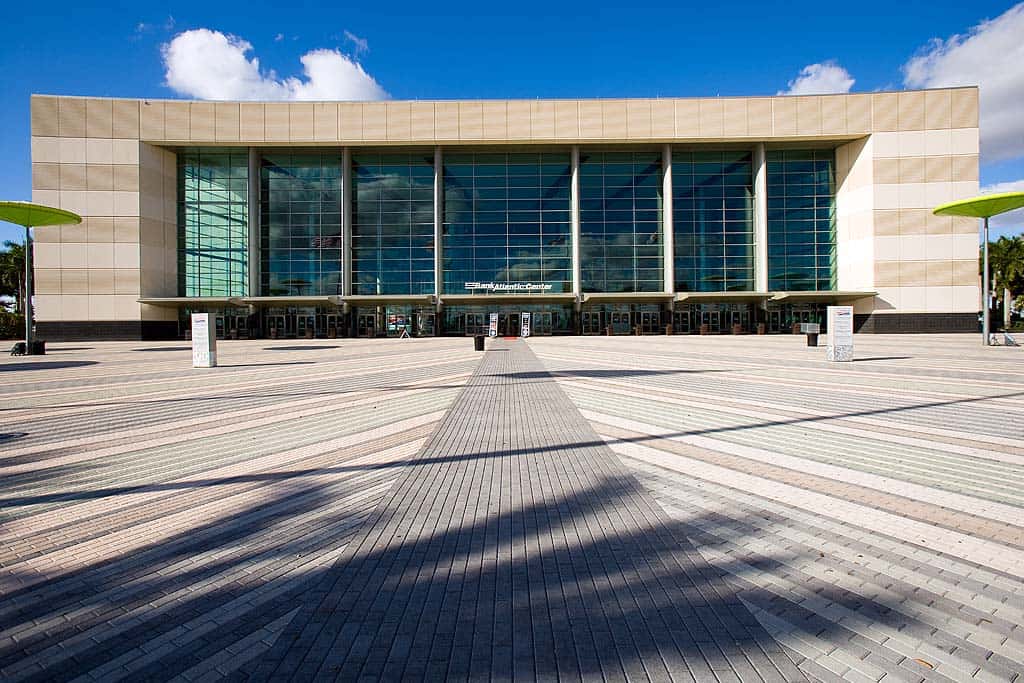
The Panthers' miss hit Broward County and the surrounding South Florida hockey community with a particular sting because the two championship celebrations had transformed the fan base and the atmosphere at Amerant Bank Arena in Sunrise. The team's 2024 and 2025 title runs generated the kind of civic pride and sports enthusiasm that had been relatively rare in a South Florida market historically more associated with the Heat, Dolphins, and Marlins than with hockey. The championship victories brought tens of thousands of fans to outdoor watch parties, generated national media coverage of South Florida as a legitimate hockey market, and drove record season-ticket sales and merchandise revenue for the franchise.
The 2025-26 season saw attendance remain solid at Amerant Bank Arena, supported by fans who had become invested in the franchise during the championship years. But the on-ice product could not match the championship-caliber performances fans had grown to expect, and as the team fell further out of playoff position during the second half of the season, the energy that had defined the arena during the title runs was more muted. Team officials said the franchise remains committed to the South Florida market and to returning to championship competition as quickly as the roster's health and development allow.
The Road Back to Contention
The Panthers' path forward hinges primarily on the return of Barkov and Tkachuk to full health and competitive form. Barkov's ACL and MCL repair is a significant injury that requires a full recovery timeline typically measured in 9 to 12 months, suggesting that he could return to game action in the fall of 2026 if the rehabilitation progresses on schedule. Tkachuk, whose adductor and hernia surgery was a less catastrophic injury, demonstrated on his January return that he could still perform at an elite level when healthy, and the expectation is that a full offseason of recovery and preparation will have him ready for the full 2026-27 campaign.
The front office led by general manager Bill Zito and the ownership group of Vincent Viola will evaluate the roster during the offseason with an eye toward determining which components of the championship-era team remain best positioned to compete and which changes might improve the franchise's odds of returning to the postseason in 2026-27. The core of the championship team, including Bobrovsky, the defensive corps anchored by veterans like Aaron Ekblad, and the depth forwards who contributed to the title runs, provides a foundation that a healthy return by Barkov and Tkachuk would significantly strengthen.
The Panthers' championship pedigree and the organizational infrastructure built during the Zito-Maurice era means that the franchise enters the offseason as a team expected to rebound rather than one facing a fundamental rebuild. The 15-point miss and the historic distinction of being the first two-time defending champion to miss the playoffs are painful and memorable, but they also reflect circumstances so clearly tied to specific injuries that the hockey world is not treating the Panthers' 2026 miss as evidence of structural decline. The question for the franchise and its fans is how quickly the road back to Stanley Cup competition can be traveled, and whether the 2026-27 season will see the Panthers re-emerge as one of the Eastern Conference's premier teams.
What's Next
The NHL Draft and free agency period will shape the Panthers' offseason activity. The team holds picks in the 2026 draft and will look to use those selections to add to the prospect pipeline while also addressing specific roster needs through free agency and potential trades. Barkov's rehabilitation progress will be a constant storyline through the summer and into fall training camp, with the franchise and fan base watching closely for any indication of his expected return date and the pace of his recovery from the knee injury that ended his season before it began.
Spotted an issue with this article?
Have something to say about this story?
Write us a letterComments
No comments yet. Be the first to weigh in.
Related Coverage
John Carlson scores twice, Dennis Hildeby makes 34 saves as Lightning hold off Wild 3-2
1h ago
Winless Dolphins host Bengals at Hard Rock Stadium seeking first win under Jeff Hafley
20h ago
Hurricane Isaias Scrambles Florida Sports: FSU Cancels Pensacola Games, FAMU Moves to Friday
1d ago

Florida State faces Louisville on the road Friday night as Ashton Daniels and Seminoles try to end road skid
1d ago