Florida Remains Central to Federal Immigration Detention Expansion
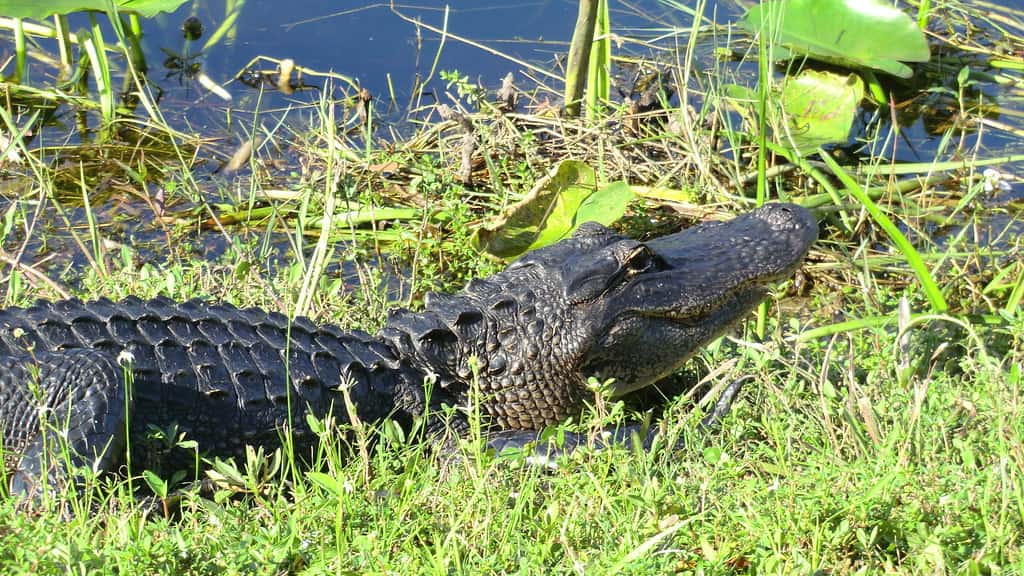
Florida sits at the center of the federal government's immigration detention buildout, both as a host for facilities and as a state whose government has built detention capacity of its own. Documents reported by Time on July 20 indicate that Immigration and Customs Enforcement is seeking new or expanded detention facilities at 14 sites, including Guantanamo Bay, as the administration pushes arrest numbers higher.
Within Florida, the state has operated a detention site in the Everglades that officials nicknamed Alligator Alcatraz, has developed a second facility at Camp Blanding, the Florida National Guard's primary training base roughly 30 miles southwest of Jacksonville, and Gov. Ron DeSantis has discussed a third site in the Panhandle. ICE has said detainees at the Everglades facility were moved to other facilities.
At the county level, the arrangements that determine how long local jails can hold people for federal immigration authorities are being renegotiated. A new agreement took effect in Orange County on July 1 under which someone arrested by ICE can be held at the county jail for up to 48 hours, down from the agency's internal standard of 72 hours.
The Florida detention footprint
Florida's approach has been distinctive among states. Rather than solely hosting federal facilities, the state government has directly developed and operated detention capacity, with the expectation of federal reimbursement.
The Everglades site drew national attention for its remote location, its rapid construction and the conditions reported by attorneys and advocates who sought access to detainees. The American Civil Liberties Union has characterized the facility as secretive, citing difficulties in obtaining information about who is held there and under what conditions.
Camp Blanding, the second site, is a Florida National Guard installation, and state planning contemplated holding roughly 2,000 detainees there. Using a National Guard training base for immigration detention represents an unusual blending of state military infrastructure with federal civil immigration enforcement.
The Panhandle site, which DeSantis has referred to as the Panhandle Pokey, has not had a location or timeline publicly identified, and state officials have indicated it depends on approval from the Department of Homeland Security for the reimbursement arrangement to work.
The county jail question
The less visible but broadly consequential piece of immigration detention runs through county jails.
When local law enforcement arrests someone on state charges and that person is identified as removable, ICE may issue a detainer requesting that the jail hold them beyond the point they would otherwise be released, so federal officers can take custody.
The legal question that has driven litigation across the country is how long a jail may hold someone on a detainer without a judicial warrant. Federal courts in multiple jurisdictions have found that holding someone past their release date on an administrative detainer alone can raise Fourth Amendment problems, and counties have faced liability.
Florida law requires local governments to cooperate with federal immigration authorities and prohibits sanctuary policies, which removes the option counties in some other states have taken of declining to honor detainers. What remains negotiable is the operational detail, including the duration of holds, and Orange County's move to a 48-hour standard reflects that narrower space.
Local officials have also raised cost questions, since housing federal detainees consumes jail capacity and staff time, and reimbursement arrangements vary.
The economic dimension in Florida
Immigration enforcement has direct economic consequences in a state with Florida's industry mix.
Agriculture is the clearest case. Florida's citrus, vegetable, sugarcane and nursery sectors depend substantially on immigrant labor, including both documented seasonal workers under the H-2A program and undocumented workers. Growers in South Florida and the interior counties have reported labor availability concerns during periods of intensified enforcement.
Construction is the second. Florida's building industry, which has run at high volume through years of population growth, employs a substantial immigrant workforce. Labor shortages raise costs and extend timelines, which flows into housing supply and prices.
Hospitality is the third. Hotels, restaurants and attractions across Orlando, Miami and the state's tourism markets depend on a workforce with significant immigrant participation.
Business groups have generally taken a cautious public position, supporting legal immigration pathways and workforce availability while avoiding direct confrontation with enforcement policy.
What communities are experiencing
The visible effects of enforcement operations concentrate in specific communities. In Homestead, in southern Miami-Dade County, immigrant advocates have circulated video of enforcement operations and have urged residents to remain alert for unmarked vehicles with tinted windows used during operations. CBS News Miami reported witnessing an ICE detention in Homestead in early July, with agents handcuffing a man and escorting him into an unmarked truck.
Homestead's agricultural economy and large immigrant population make it a recurring focus, and community organizations there have reported effects that extend beyond those directly detained, including reduced attendance at schools, clinics and businesses during periods of heightened enforcement activity.
Similar dynamics have been reported in other Florida communities with concentrated immigrant populations, including parts of Central Florida and the agricultural areas around Lake Okeechobee.
Legal service organizations across the state have described difficulty maintaining contact with detained clients, particularly when detainees are transferred between facilities, which complicates representation in removal proceedings.
The Orlando facility debate
Proposals to site detention facilities generate local opposition even in a state where enforcement policy is set at the state level.
In Central Florida, a possible immigration detention center in the Orlando area drew pushback, and members of Congress representing the region, including Reps. Darren Soto and Maxwell Frost, sent a letter to the Department of Homeland Security and ICE in February raising concerns about a potential Orlando facility.
That pattern, in which federal or state siting decisions meet local resistance, has repeated across the country. The objections typically combine concerns about conditions and oversight with more conventional land use arguments about traffic, services and property values.
Because Florida law limits local governments' ability to obstruct immigration enforcement, the practical leverage available to local officials is narrower than in other states, and opposition often runs through congressional offices rather than county commissions.
How detention capacity gets built
The mechanics of expanding detention capacity explain why the process moves in the particular way it does.
ICE holds relatively few facilities directly. Most detention capacity comes through contracts with private operators, intergovernmental service agreements with county jails, or arrangements with other government entities. Each of those has different procurement timelines and different oversight structures.
Florida's model, in which the state builds and operates capacity with an expectation of federal reimbursement, is a fourth variant and an unusual one. It allows facilities to come online faster than federal procurement typically permits, because state emergency and procurement authorities can be used in ways that federal contracting cannot.
Speed is what that model buys, and it is also the source of most of the criticism it has drawn. Facilities built quickly under emergency authorities receive less advance scrutiny of design, conditions and access provisions than facilities procured through standard federal processes.
The reimbursement question is the practical constraint. If the Department of Homeland Security does not approve reimbursement, the costs sit with Florida taxpayers, which is why state officials have consistently tied additional sites to federal approval.
What the courts have said
Immigration detention has generated substantial litigation, and Florida's facilities have been part of it.
The recurring legal questions fall into several categories. Conditions of confinement claims argue that detention conditions fall below constitutional or statutory standards, covering medical care, sanitation, heat and access to the outdoors. Access to counsel claims argue that facility location or policies prevent detainees from meeting with attorneys or participating meaningfully in removal proceedings. Environmental and land use claims have been raised against facility siting in sensitive areas.
Detainer litigation is a separate track, addressing how long local jails may hold someone at federal request without a judicial warrant, and it is what has driven counties across the country to renegotiate their arrangements.
Rulings in these cases come from the Southern and Middle Districts of Florida and, on appeal, from the Eleventh Circuit. Because those courts handle a large volume of immigration matters given Florida's population and geography, decisions from them carry weight beyond the state.
Litigation has, at various points, produced orders affecting access to facilities and the movement of detainees. ICE has said detainees at the Everglades facility were relocated to other facilities, though the agency has not tied that movement to any single cause.
Transparency has been a persistent point of friction. Attorneys, journalists and members of Congress have all sought access to state-operated facilities, and the level of access granted has varied. Federal detention facilities operate under established inspection and oversight regimes; state-operated facilities holding federal detainees occupy a less settled position in that framework.
That ambiguity is one of the structural questions Florida's model raises. When a state builds and runs detention capacity for a federal function, it is not automatically clear which oversight rules apply, which agency answers public records requests, or which inspector general has jurisdiction. Those questions have been litigated and remain incompletely resolved.
What's next
The near-term variables are federal. Whether ICE proceeds with expansion at the sites identified in the reported documents, and whether the Department of Homeland Security approves the reimbursement arrangements Florida is seeking for additional state-operated facilities, will determine the trajectory of capacity in the state.
Litigation is the second track. Conditions of confinement, access to counsel and the legality of specific detention arrangements have all generated cases, and rulings from the Southern and Middle Districts of Florida and from the Eleventh Circuit shape what is permissible.
The third is electoral. Florida holds a governor's race and a U.S. Senate special election this year, and immigration enforcement has been a defining feature of the state's governance over the past several years. Whoever succeeds DeSantis will decide whether Florida continues operating detention capacity directly or returns that function entirely to the federal government.
For Floridians, the practical reality is that the state has become both a destination for federal detention expansion and an active participant in building it, a combination that few other states have adopted, and one that makes Florida a bellwether for where national policy goes next.
Spotted an issue with this article?
Have something to say about this story?
Write us a letterComments
No comments yet. Be the first to weigh in.
Related Coverage
Advocates Say ICE Plans to Deport Gravely Ill Krome and Broward Detainees to Africa; DHS Denies It
2h ago
ACA Open Enrollment for 2027 Opens Nov. 1: What Florida, the Nation's Largest Marketplace, Faces
2h ago

Trump Revives Cuba Intervention Talk at Florida Rally, Saying Warships Returning From Iran Could Stop Off the Island
20h ago

Federal organ donation crackdown nears as Florida groups await rankings and Tampa nonprofit appeals court loss
1d ago