Florida Supreme Court's New Rule on AI-Generated Citations Takes Effect Statewide
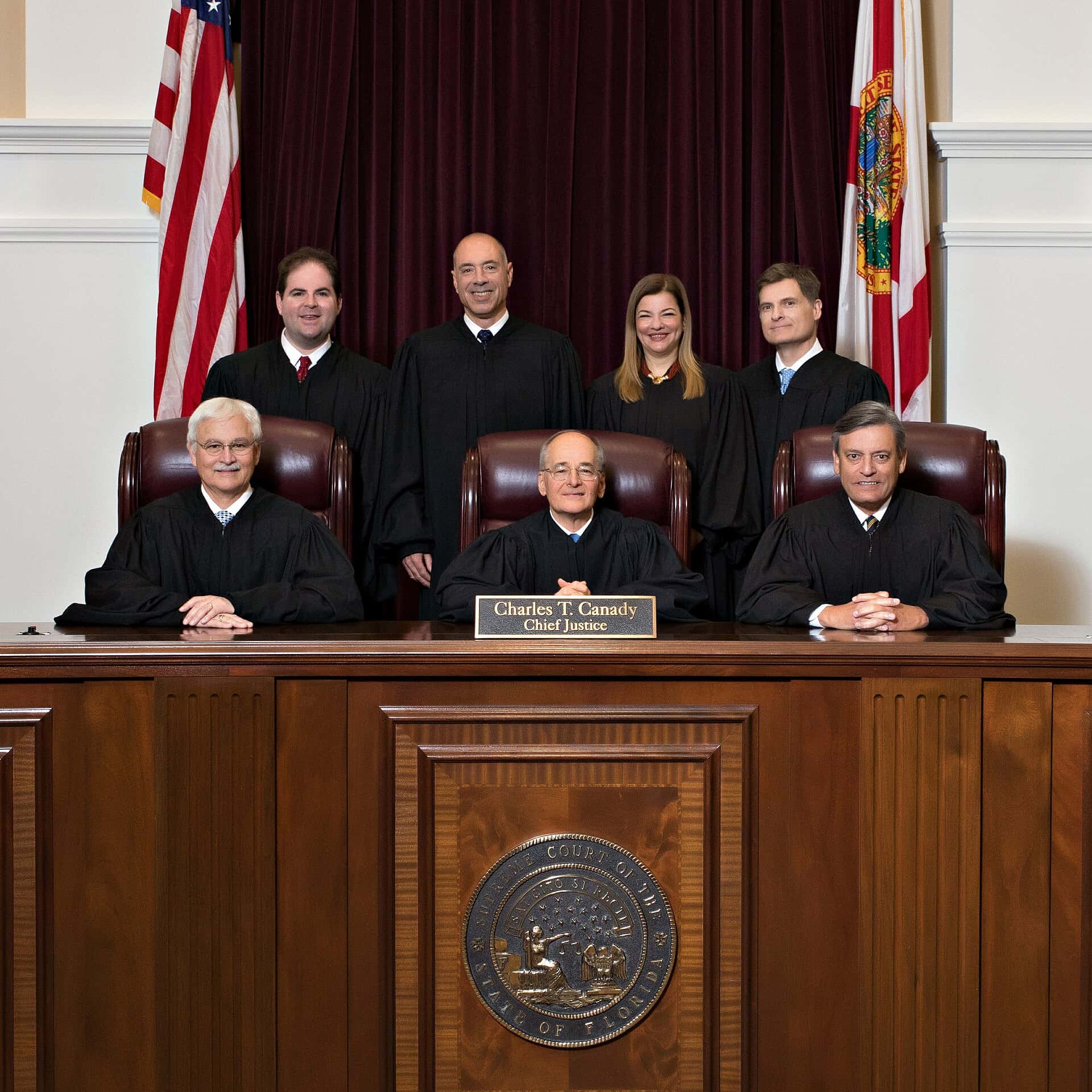
A new Florida Supreme Court rule aimed squarely at the problem of artificial intelligence fabricating legal citations has taken effect across all state courts. Under the amendment, which became effective June 15, the person who signs any document filed in a Florida court must represent that the legal authorities cited in the filing actually exist and are accurately quoted. Courts are now expressly authorized to impose sanctions on anyone whose filing violates that representation.
The change responds to a fast-emerging hazard in the legal profession: generative AI tools that produce confident, well-formatted, and entirely fictitious case citations. As lawyers and self-represented litigants increasingly turn to AI assistants to draft motions and briefs, courts around the country have encountered filings that quote cases which do not exist, a phenomenon often described as a hallucination. Florida's rule is among the more direct judicial responses to the trend.
What the rule requires
At its core, the amended rule attaches a certification to every signature on a court filing. By signing, the filer represents that the legal authorities identified in the document exist and are accurately cited. The representation applies regardless of whether the citations were generated with the help of AI, drawn from a traditional legal database, or written from memory; the obligation rests on the human who signs.
The rule also adds explicit authority for courts to impose sanctions for any filing inconsistent with that required representation. That clarity matters. Judges already had inherent power to sanction misconduct, but by writing the authority directly into the rules, the court has removed ambiguity about whether and how a judge may penalize a litigant who submits fabricated authority. The sanctions framework gives the rule teeth and signals that fabricated citations will be treated as a serious breach rather than an innocent mistake.
Why the court acted
The proliferation of generative AI in legal practice has created both opportunity and risk. The tools can draft documents quickly and help lawyers and unrepresented litigants navigate complex procedures. But the same systems are prone to inventing citations that look authentic, complete with plausible case names, reporter volumes, and page numbers. When such fabrications make their way into filings, they waste judicial resources, mislead opposing parties, and undermine the integrity of the record.
By placing the certification burden on the signer, Florida's rule reinforces a principle that predates AI: lawyers and litigants are responsible for the accuracy of what they file. The technology may be new, but the duty of candor to the court is foundational. The rule effectively tells filers that they cannot outsource that duty to a machine, and that delegating drafting to an AI tool does not excuse a failure to verify the results.
Part of a broader judicial response
Florida's action is one piece of a wider reckoning within the judiciary over how to handle AI in legal work. Courts and bar associations across the country have issued guidance, standing orders, and disclosure requirements as they grapple with the technology. Some judges have required attorneys to disclose when AI was used to prepare a filing or to certify that a human reviewed the output. Florida's approach focuses less on disclosure and more on accountability for accuracy, tying the obligation to the existing act of signing a document.
The Florida Supreme Court has been active on rules matters generally, issuing a series of amendments in recent weeks that also touched areas such as juvenile procedure. The AI citation rule, however, stands out for its direct engagement with a technology that has rapidly reshaped how legal documents are produced.
What it means for Florida lawyers and litigants
For practicing attorneys, the rule reinforces a best practice that careful lawyers already follow: verify every citation before it goes into a filing. The difference is that the verification is now backed by an explicit representation and a clear sanctions mechanism. Attorneys who lean on AI drafting tools will need to build verification into their workflow, checking each cited authority against a reliable database to confirm it exists and that the quoted language is accurate.
The rule may have its most significant practical effect on self-represented litigants, who are increasingly using consumer AI tools to prepare court documents without the training to spot fabricated authority. These filers often lack access to professional legal research databases and may not realize that an AI assistant can invent cases out of whole cloth. The certification requirement applies to them as well, and a fabricated citation could expose an unwary litigant to sanctions even if the error was unintentional.
The broader stakes for the justice system
The integrity of the legal system depends on the reliability of the authorities that courts and parties rely on. When fabricated citations enter the record, judges may waste time chasing nonexistent cases, opposing counsel may expend resources rebutting phantom authority, and the resulting rulings risk being built on a false foundation. Florida's rule is an effort to protect that integrity at the front end, by making clear that the responsibility for accuracy cannot be delegated to software.
The rule also reflects a measured posture toward the technology itself. Rather than banning AI from legal practice, the court has chosen to regulate the conduct that creates harm, the filing of false authority, while leaving practitioners free to use whatever tools they choose so long as they verify the results. That approach mirrors how the legal profession has historically absorbed new technologies, from word processors to electronic research, by adapting professional responsibility standards rather than prohibiting the tools outright.
What's next
With the rule now in force, attention turns to enforcement. How aggressively Florida judges invoke the new sanctions authority, and what penalties they impose, will shape the rule's practical impact. Early cases in which courts sanction filers for fabricated citations are likely to draw attention and to serve as cautionary examples for the bar and for self-represented litigants alike.
The rule is also likely to influence how Florida law firms and legal departments craft internal policies on AI use, prompting many to formalize verification procedures and training. As generative AI continues to advance and embed itself further into legal practice, Florida's certification requirement offers a template that other jurisdictions may study as they weigh their own responses to a technology that is reshaping the profession faster than the rules can keep pace.
Spotted an issue with this article?
Have something to say about this story?
Write us a letterComments
No comments yet. Be the first to weigh in.
Related Coverage

Florida Poly unveils Astro, a piloted electric aircraft it calls the nation's first flying police vehicle
22h ago
Palm Beach County Bets About $15 Million in Public Money on Becoming a Quantum Computing Hub
1d ago

Scammers Clone Osceola Sheriff's Captain's Voice With AI in Fake Arrest Warrant Calls
2d ago

Neil Armstrong Apollo 11 Training Jacket Found in a Closet Goes Up for Auction at Titusville's American Space Museum
3d ago