Florida Water Managers Watch for Red Tide as Summer Rains Test the Everglades Fix
Florida's Gulf Coast has caught a break from red tide so far this summer, with state scientists reporting little to no respiratory irritation along the coastline in recent weeks. But the reprieve is fragile. As the rainy season peaks and water managers weigh discharges from Lake Okeechobee, biologists and clean-water advocates are watching closely for the conditions that can trigger toxic algae blooms and threaten the seagrass beds that sustain Florida's manatees.
The Florida Fish and Wildlife Conservation Commission, which tracks red tide through routine sampling, has reported variable water movement from Pinellas to northern Monroe counties, the kind of shifting pattern that makes forecasting difficult. Short-term predictions from a state and university research collaboration point to changeable conditions rather than a full-blown bloom, but the summer months are historically when nutrient-rich runoff can feed algae along the coast.
A quieter start along the Gulf
For coastal residents and businesses, red tide is more than an environmental abstraction. Blooms of the organism Karenia brevis produce toxins that kill fish, foul beaches and cause coughing and respiratory irritation in people, driving tourists away and hammering local economies during peak season. A quiet start to the summer is welcome news for beach communities from Pinellas County south through Southwest Florida.
State sampling in recent weeks has not detected the widespread respiratory irritation that accompanies significant blooms. That relative calm gives coastal economies a window during the busy summer travel period, when clear water and healthy beaches are central to the region's appeal. Officials caution, however, that conditions can change quickly, and they urge residents to check daily sampling maps and the state's red tide status line before heading to the coast.
The variability in current patterns is itself a reminder that Florida's coastal waters are dynamic. Winds, tides and freshwater inflows all influence whether nutrients concentrate near shore and whether any bloom that forms drifts toward populated beaches or dissipates offshore.
The Lake Okeechobee equation
At the center of Florida's water-quality challenge sits Lake Okeechobee, the vast, shallow lake that anchors the state's plumbing. During the wet season, the Army Corps of Engineers manages lake levels partly through discharges to coastal estuaries, releases that can carry nutrient pollution and, at times, trigger harmful algae blooms in the rivers and along the coasts.
A revised operating manual for the lake, adopted in 2024, was designed to reduce those damaging discharges by sending more water south, where it can be filtered naturally as it moves through the Everglades. The change reflected years of advocacy from communities on both coasts that have suffered through blue-green algae outbreaks and red tide events tied to lake releases.
This summer is an early test of that approach under real-world rainfall. Heavy wet-season rains raise lake levels and increase pressure to release water, and how managers balance flood control, water supply and estuary health will shape the risk of blooms in the months ahead. Clean-water groups are watching to see whether the new manual delivers on its promise of fewer harmful discharges.
Manatees and the seagrass crisis
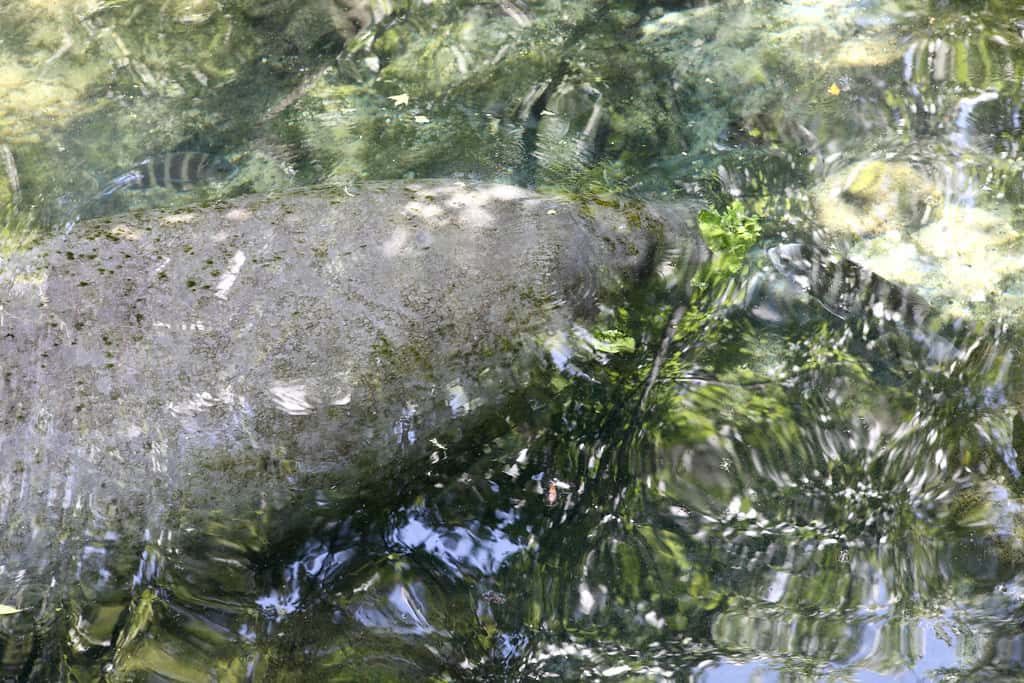
The stakes are especially high for Florida's manatees, the beloved and threatened marine mammals whose survival is tightly linked to water quality. Red tide acts as a neurotoxin in manatees, causing seizures that can lead to drowning. Large blooms also reduce the sunlight that reaches underwater, stunting the growth of the seagrass that manatees depend on for food.
Seagrass loss has been at the heart of a manatee die-off that alarmed biologists in recent years, particularly along the Atlantic coast, where poor water quality decimated the beds. Protecting and restoring seagrass has become a central goal of Florida's water-management strategy, and it is one reason harmful algae blooms draw such intense scrutiny.
Every summer without a major bloom gives seagrass a chance to recover and gives manatees a better shot at finding adequate forage. That makes the current quiet stretch meaningful beyond the beach economy, offering a measure of relief for an ecosystem under long-term strain.
Signs of scientific progress
Amid the challenges, researchers point to encouraging developments. Scientists at Mote Marine Laboratory have been testing treatments aimed at reducing algae levels without harming other marine life, with some trials cutting algae by more than 70 percent in laboratory and field settings. If such methods can be scaled safely, they could give communities a new tool to blunt the worst effects of blooms.
The combination of the revised Lake Okeechobee operating manual, ongoing Everglades restoration and emerging bloom-mitigation research reflects a multi-pronged effort to address a problem that has defied simple solutions. None of these measures alone can eliminate red tide, which is a naturally occurring phenomenon, but together they aim to reduce the human-driven nutrient pollution that can make blooms larger and more persistent.
State and federal investment in Everglades restoration, a recurring priority in Florida's budgets, underpins much of this work. The long-term goal is to restore the natural southward flow of clean water, easing pressure on the coastal estuaries that bear the brunt of harmful discharges.
What residents can do
For Floridians and visitors, staying informed is the first line of defense. The state maintains daily red tide sampling maps and a status line that reports current conditions across the coast, allowing beachgoers to check before making plans. Those sensitive to respiratory irritation, including people with asthma, are advised to avoid areas where a bloom is active.
Residents can also play a role in reducing the nutrient pollution that feeds blooms, from limiting fertilizer use during the rainy season to supporting local water-quality initiatives. Because much of the nutrient load originates on land, individual and community choices add up across a watershed as large as Florida's.
Fishing and boating communities, meanwhile, watch bloom conditions closely, since fish kills and closures can disrupt both recreation and commercial activity. Timely information helps them adapt when conditions shift.
The coastal economy at stake
Red tide is not only an environmental and public-health concern but an economic one. Florida's Gulf Coast communities depend heavily on tourism, and blooms that foul beaches, kill fish and cause respiratory irritation can drive visitors away during the crucial summer season. Hotels, restaurants, charter operations and countless small businesses feel the impact when a bloom takes hold.
The fishing industry, both commercial and recreational, is particularly vulnerable. Fish kills associated with red tide can disrupt harvests and deter anglers, while closures and health advisories can ripple through the businesses that serve the fishing community. The economic stakes give coastal residents and local governments a strong interest in the conditions that scientists monitor.
A quiet stretch, by contrast, allows coastal economies to flourish during peak season, with clear water and healthy beaches drawing the visitors on whom the region depends. That is why the relative calm so far this summer matters beyond its environmental significance, offering a reprieve for communities whose livelihoods are tied to the health of the coast.
Science and long-term restoration
Addressing red tide over the long term requires more than monitoring individual blooms. It involves reducing the nutrient pollution that can make blooms larger and more persistent, a challenge that spans agriculture, urban runoff and wastewater management across a vast watershed. Florida's Everglades restoration efforts, funded through state and federal budgets, aim to restore natural water flows that can help filter and manage that pollution.
Research institutions across the state contribute to the effort, studying the dynamics of blooms and testing potential mitigation strategies. The work at facilities like Mote Marine Laboratory, where treatments have shown promise in reducing algae levels in trials, represents one avenue of hope, though scaling such methods safely remains a work in progress.
The combination of restoration, pollution reduction and scientific innovation reflects a comprehensive approach to a problem that has no simple solution. Red tide is a naturally occurring phenomenon that cannot be eliminated, but reducing the human contributions that worsen it, and developing tools to blunt its effects, offers the best path toward protecting Florida's coasts, its wildlife and its economy.
Red tide's effects extend to public health in ways that reach beyond the beach. The toxins produced by blooms can become airborne, causing coughing, sneezing and respiratory irritation, particularly for people with asthma or other respiratory conditions. During significant blooms, health officials advise vulnerable individuals to avoid affected areas, and some communities experience a noticeable uptick in respiratory complaints. Those health impacts add urgency to monitoring efforts, since timely information allows residents to protect themselves. The absence of widespread respiratory irritation so far this summer is therefore a welcome sign not only for beaches and wildlife but for the health of coastal residents and visitors.
Central to managing red tide is the monitoring network that tracks conditions across the coast. The Florida Fish and Wildlife Conservation Commission conducts routine sampling, and its collaboration with university researchers produces forecasts that help communities anticipate changes. Residents can access daily sampling maps and a status line that reports conditions, tools that allow beachgoers, anglers and businesses to make informed decisions. That infrastructure of monitoring and forecasting has become an essential part of living with red tide, giving communities advance warning and helping them respond as conditions shift. As the summer continues, that network will remain the primary means by which Floridians track the risk along their coasts.
What's next
The coming weeks will reveal how Florida's water managers navigate the peak of the wet season and whether the state's coastal waters remain relatively clear. Much depends on rainfall, lake levels and the decisions surrounding discharges, all of which will influence the risk of blooms into late summer and fall.
For now, the quiet start offers cautious optimism, a chance for seagrass to recover, for manatees to forage and for coastal economies to enjoy an uninterrupted season. But Florida's history with red tide counsels vigilance. State scientists will keep sampling, water managers will keep balancing competing demands, and communities on both coasts will keep hoping the summer stays clear.
Spotted an issue with this article?
Have something to say about this story?
Write us a letterComments
No comments yet. Be the first to weigh in.
Related Coverage
Lead pellets from shot iguanas linked to first known crocodile poisoning death in Florida
2d ago

DeSantis and Cabinet protect more than 10,770 acres, from Putnam County woods to Martin County ranches
5d ago

Record King Tides and Heavy Rain Swamp South Florida Streets as Water Managers Warn the Season Peaks Oct. 27
6d ago

Florida's loggerhead sea turtles set preliminary nesting record
Oct 1