Florida's U.S. Senate Special Election Is Set for November 3 as Ashley Moody Faces Angie Nixon
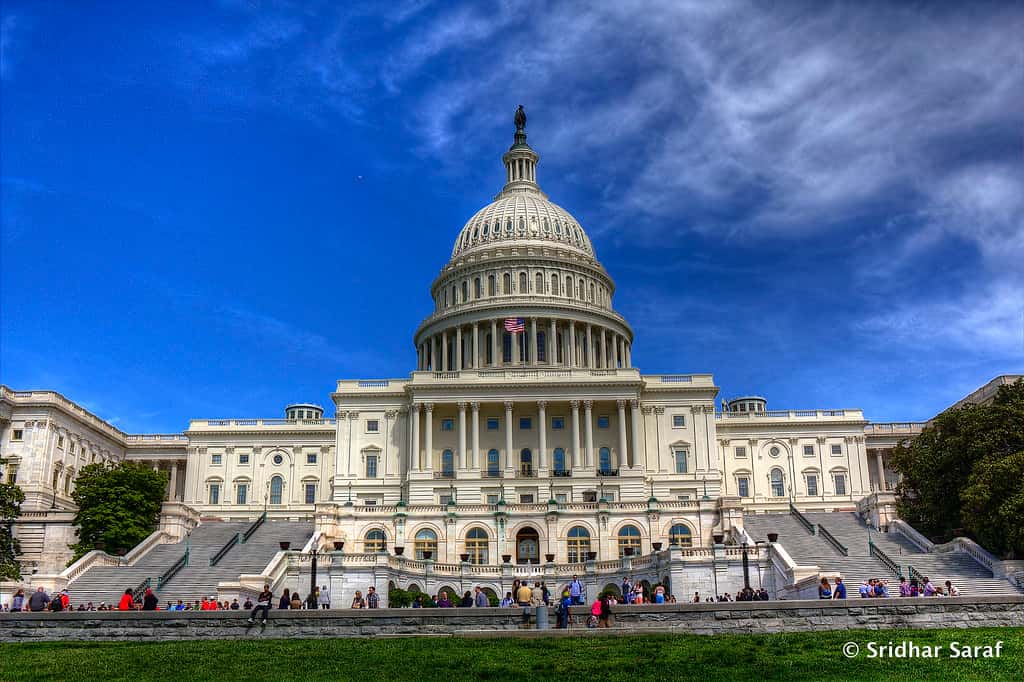
Florida voters will decide a United States Senate special election on November 3, choosing between appointed incumbent Ashley Moody, a Republican, and state Representative Angie Nixon, a Democrat, along with no party affiliation candidate Neil Gillespie. The winner will serve the remainder of the term Marco Rubio was elected to in 2022, which expires in January 2029.
The vacancy arose when Rubio resigned his Senate seat on January 20, 2025, after being confirmed as United States secretary of state. Governor Ron DeSantis appointed Moody, who had served as Florida attorney general from 2019 to 2025, as interim successor the following day.
The race carries direct consequences for Floridians. Senate seats determine federal disaster funding advocacy, judicial confirmations affecting the federal courts that hear Florida cases, and policy on immigration, insurance backstops, and the cruise and aerospace industries that anchor sections of the state's economy.
How the seat came open
Rubio represented Florida in the Senate from 2011 until his resignation in January 2025. His confirmation as secretary of state created a vacancy that Florida law fills by gubernatorial appointment until the next scheduled general election.
Moody's appointment placed a statewide officeholder into the seat. As attorney general she had led Florida's participation in multistate litigation and had a public profile built on consumer protection cases and challenges to federal regulatory actions.
Because the appointment covers only the interval until the next general election, the November contest determines who holds the seat for the remaining roughly two years of the original term. A separate regular election for the full six year term will follow in 2028.
That timing means Florida voters will make a decision about this seat again within two years, and the winner will face reelection quickly.
The candidates
Moody served as Florida's 38th attorney general from 2019 through 2025 before her Senate appointment. Prior to that she served as a circuit judge in Hillsborough County and worked as a federal prosecutor. Her statewide electoral experience includes two attorney general campaigns.
Nixon has served in the Florida House of Representatives since 2020, representing a Jacksonville area district. She has been among the more prominent progressive voices in the Legislature and identifies as a democratic socialist, a positioning that has drawn national attention to the race following her primary victory.
Gillespie appears on the ballot with no party affiliation. Florida's ballot access rules permit unaffiliated candidates who meet petition or fee requirements, and such candidates have occasionally influenced margins in close statewide contests.
Public polling and prediction market pricing have consistently favored Moody by wide margins, reflecting Florida's recent statewide voting patterns.
Why the race matters for Floridians
Senate representation affects Florida in specific, traceable ways. Disaster supplemental appropriations following hurricanes move through Congress, and senators from affected states play direct roles in securing and shaping that funding.
Federal judicial confirmations run through the Senate, and Florida's federal courts, including the Northern, Middle, and Southern districts and the Eleventh Circuit Court of Appeals, hear cases involving state law, immigration enforcement, environmental regulation, and business disputes that affect residents daily.
Policy areas with outsized Florida stakes include immigration, given the state's large immigrant population and its role in enforcement debates; the cruise industry, which is regulated federally and homeports its largest operations at Florida ports; and aerospace, given NASA's Kennedy Space Center and the commercial launch sector on the Space Coast.
Property insurance has increasingly become a federal question as well, through discussions of a federal reinsurance backstop and through the National Flood Insurance Program, which requires periodic congressional reauthorization.
Florida's shifting electorate
Florida was among the most closely contested states in presidential elections for two decades before shifting decisively toward Republicans in recent cycles. Voter registration figures have moved as well, with Republicans surpassing Democrats in active registrations statewide.
That shift has been driven by several factors including in migration patterns, changes in the composition of the Hispanic electorate particularly in Miami-Dade County, and party performance in the Interstate 4 corridor between Tampa and Orlando.
Democratic statewide candidates have not won a Florida race since 2018. That record shapes both parties' resource allocation, with national committees historically reluctant to invest heavily in Florida given the cost of the state's media markets and the recent margins.
Turnout in a November special election held alongside other races on the ballot generally exceeds turnout in standalone specials, which affects the composition of the electorate.
What else is on the ballot
Florida voters will also decide the 2026 gubernatorial election, all 28 United States House seats, state legislative races, and any constitutional amendments that qualified for the ballot.
The gubernatorial race is the highest profile contest, since DeSantis is term limited. That race will drive turnout more than the Senate special election in most parts of the state.
House races in Florida have drawn attention this cycle, and the state's congressional delegation composition affects committee assignments and Florida's collective influence in the chamber.
Voters should confirm registration status and check their sample ballots, which supervisors of elections publish ahead of the election. Florida offers vote by mail, early voting, and election day voting, with deadlines that differ for each.
How Florida fills a Senate vacancy
The mechanism that produced this race is set by the Seventeenth Amendment to the United States Constitution together with state law. The amendment provides that vacancies are filled by election, and permits state legislatures to authorize governors to make temporary appointments until an election occurs.
Florida law authorizes gubernatorial appointment, which is how Moody came to hold the seat. The appointment lasts until the next general election at which the vacancy can be filled, which is November 3.
The winner of that election takes office for the remainder of the unexpired term rather than for a new six year term. Because Rubio was elected in 2022 to a term running through January 2029, the seat will be up again in the 2028 general election.
That structure means the winner has an unusually compressed runway. Rather than the six years a newly elected senator ordinarily has before facing voters again, this winner faces a full term election within roughly two years of taking office.
What the seat does in practice
Senate service involves committee assignments, which determine where a member has meaningful influence, and those assignments follow seniority and party leadership decisions.
For Florida, committees with the most direct relevance include Appropriations, which handles disaster supplementals; Commerce, Science, and Transportation, which has jurisdiction over NOAA, NASA, and maritime matters affecting the cruise industry and Florida's ports; Banking, Housing, and Urban Affairs, which handles flood insurance reauthorization; and Judiciary, which processes judicial nominations for the federal courts serving Florida.
Constituent service is the less visible function. Senate offices assist Floridians with federal agency problems including Social Security, veterans benefits, immigration case inquiries, and passport matters. Those offices maintain locations across the state, and the caseload in Florida is substantial given the population's age profile and the number of federal beneficiaries.
Nominations to positions including United States attorneys and federal district judges in Florida traditionally involve consultation with the state's senators, which gives the seat influence over the federal legal apparatus operating in the state.
Senators also shape federal responses to Florida specific crises, and the state's history of hurricane recovery has made that function unusually prominent for its delegation.
How Florida voters cast ballots
Florida offers three methods of voting, and each carries its own deadlines, which is where most voter problems originate.
Vote by mail requires an affirmative request from the voter. Florida shortened the duration of standing requests in recent years, which means requests must be renewed more often than voters were accustomed to. A request that covered a prior election may not carry forward, and voters who assume otherwise sometimes discover the gap too late.
Returned mail ballots must be received by the supervisor of elections by 7 p.m. on election day. Postmarks do not count. Ballots must be signed on the envelope, and the signature is compared to the one on file, which is why voters who have changed their signature should update it with their supervisor.
Early voting is offered at designated sites within a window set by each county within a state defined range. Any early voting site in a voter's county may be used, unlike election day, when voters must go to their assigned precinct.
Election day voting runs from 7 a.m. to 7 p.m. Anyone in line at 7 p.m. is entitled to vote. Florida requires photo and signature identification at the polls, with a list of acceptable documents published by the Division of Elections, and voters without acceptable identification may cast a provisional ballot.
Registration closes 29 days before the election, and voters can verify status, precinct, and sample ballots through their county supervisor of elections.
What's next
The general election is November 3. Vote by mail requests must be submitted by the statutory deadline, which supervisors of elections publish, and Florida requires voters to renew mail ballot requests more frequently than in past cycles.
Early voting periods are set by county supervisors within a state defined range, so specific dates vary by county. Registration closes 29 days before the election.
Campaign finance reports filed with the Federal Election Commission will show how much each candidate raises and how national committees engage, which is the clearest available signal of whether the race tightens. Outside spending by independent groups is reported separately and often exceeds candidate spending in competitive Senate contests.
Debates, if the campaigns agree to them, would be the highest visibility events before election day. Florida statewide candidates have participated in televised debates in most recent cycles, though frontrunners sometimes limit their number.
Whoever wins takes office promptly, since the seat is currently occupied by appointment and the special election result fills the remainder of the term rather than beginning a new one in January.
Spotted an issue with this article?
Have something to say about this story?
Write us a letterComments
No comments yet. Be the first to weigh in.
Related Coverage
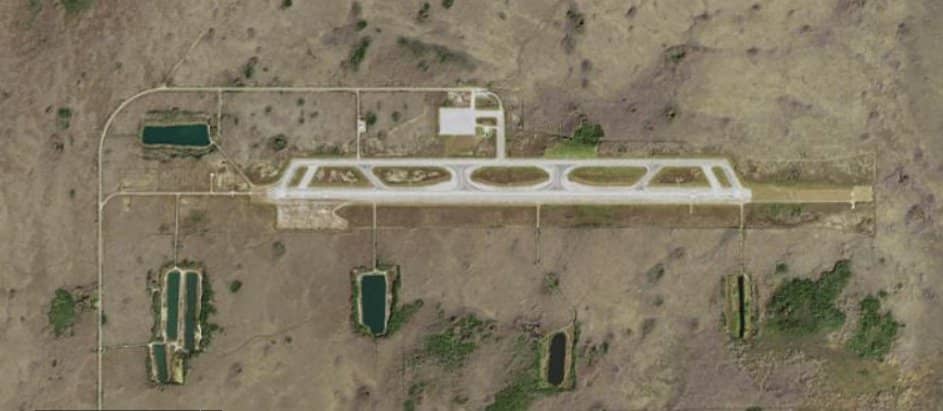
Alligator Alcatraz Is Closed, but Florida Is Still Chasing More Than $500 Million in Federal Reimbursement
22m ago

Florida Voters Face Few New Rules on Nov. 3 as Other GOP States Roll Out Citizenship and ID Laws
22h ago

Florida Leads the Nation in ICE Detainer Arrests as Local Police Take a Growing Role, New Data Show
23h ago
Federal Government Again Asks Miami Judge to Toss Lawsuit by Nearly 1,000 Cubans With I-220A Papers
23h ago