Handyman Returned to Death Row in 2005 Miami-Dade Waitress Killing
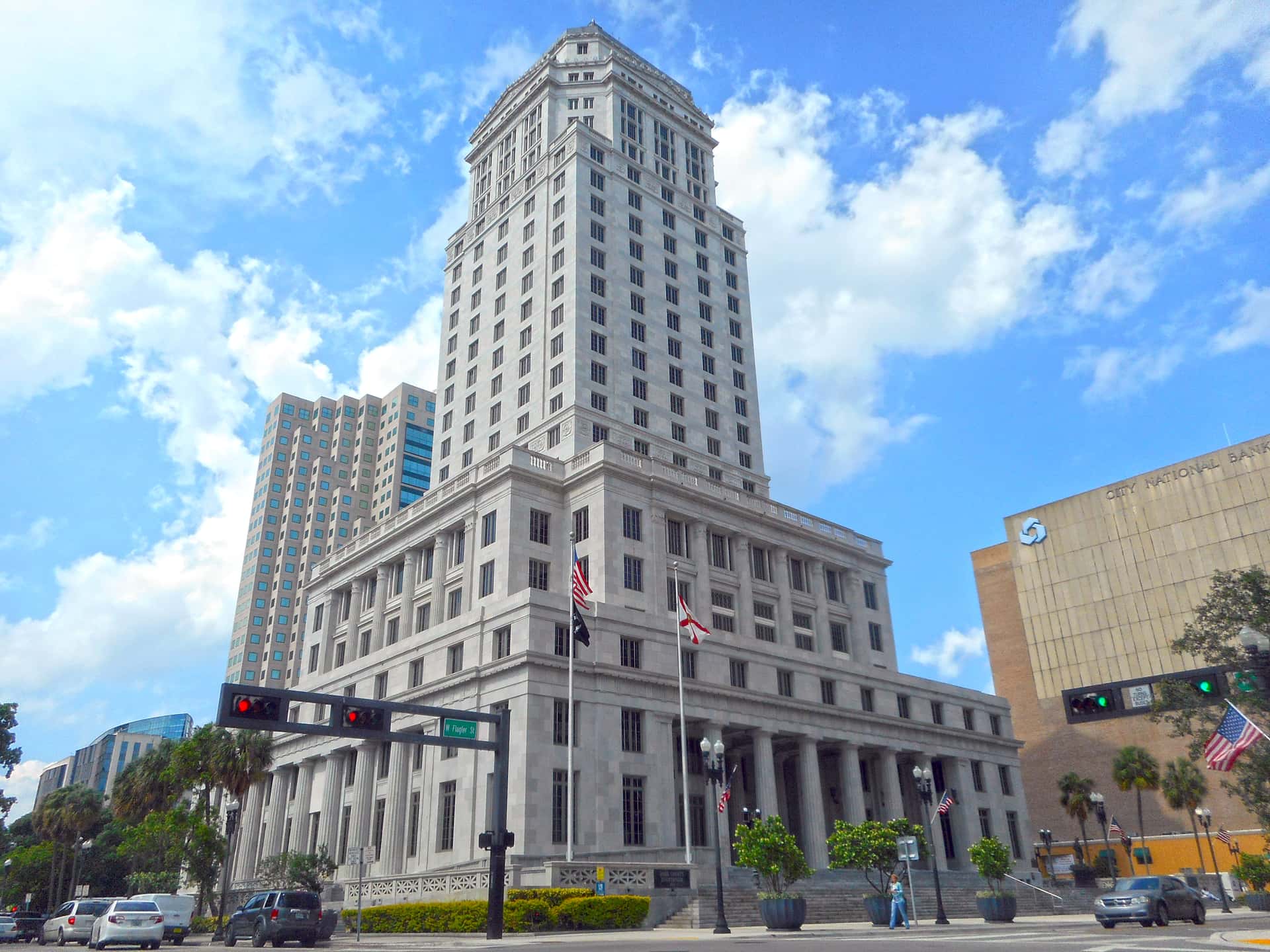
A Miami-Dade judge on Friday sentenced Rafael Andres to death for the 2005 murder of Yvette Farinas, returning him to death row more than a decade after his original death sentence was set aside on appeal. According to court records and prosecutors, it is the first time in more than ten years that a Miami-Dade defendant has been sent to death row.
Andres, 61, was originally sentenced to death in 2015. That sentence was vacated after an appeal, and the Florida Supreme Court ordered a new sentencing proceeding. A new jury heard the case and recommended a death sentence, which the court imposed Friday.
Farinas worked as a waitress at the La Carreta restaurant location at Miami International Airport. Investigators said she had hired Andres, a handyman, to perform renovation work at her home. Prosecutors said Andres beat, stabbed and strangled Farinas with an electrical cord from a rice cooker, left her body in a burning home, and subsequently used her ATM card to withdraw more than $1,600.
Why the case was resentenced
The resentencing traces to a period of significant change in Florida death penalty law.
In 2016, the U.S. Supreme Court decided Hurst v. Florida, holding that Florida's capital sentencing scheme violated the Sixth Amendment because it allowed a judge rather than a jury to find the facts necessary to impose a death sentence. Under the prior system, a jury issued an advisory recommendation and the judge made the findings and imposed sentence.
The Florida Supreme Court subsequently addressed what that ruling meant for defendants already sentenced under the old scheme, and a substantial number of death sentences were vacated for new penalty phase proceedings. Cases sentenced during particular windows were affected differently depending on how the courts drew the retroactivity lines.
The practical effect was that dozens of Florida death row inmates received new sentencing proceedings, in which a new jury heard evidence in aggravation and mitigation and made the determination. Some of those proceedings resulted in life sentences. Others, like this one, resulted in death sentences being reimposed.
These proceedings are demanding for everyone involved. They require reassembling evidence and witnesses from cases that are often decades old, and they require victims' families to participate in a proceeding they may have believed was concluded years earlier.
The Florida death penalty landscape
Florida has one of the largest death row populations in the country and has been among the more active states in capital punishment.
The state's sentencing requirements have changed substantially in recent years. Following the Hurst decision, Florida required a unanimous jury recommendation for a death sentence. The Legislature subsequently changed that standard, allowing a death sentence to be imposed on a jury vote below unanimity, a change that made Florida an outlier among states that retain capital punishment.
That legislative change has generated its own litigation and will continue to be tested on appeal in cases sentenced under the new threshold.
Miami-Dade's near absence from death row over the past decade reflects charging and sentencing patterns rather than an absence of eligible cases. Prosecutorial discretion, jury attitudes in a particular county, and the availability of life without parole as an alternative all shape how often capital sentences are imposed in a given jurisdiction. Florida's death sentences have historically clustered in particular counties.
How capital sentencing works in Florida
A capital case in Florida proceeds in two phases. The guilt phase determines whether the defendant committed first-degree murder. If there is a conviction, a separate penalty phase follows.
In the penalty phase, prosecutors present statutory aggravating circumstances, which are specific factors defined by law that can support a death sentence. Common aggravators include that the murder was committed during another felony such as robbery or arson, that it was especially heinous, atrocious or cruel, or that it was committed for financial gain.
The defense presents mitigating circumstances, which can include mental health history, childhood trauma, absence of prior criminal history, or any other factor relevant to the defendant's character or the circumstances of the offense. Mitigation is not limited to a statutory list.
The jury weighs these and returns a recommendation. The judge then imposes sentence, and Florida law requires the court to enter a written order explaining the findings.
In this case, prosecutors argued for death and the jury agreed, as reported by the Miami-Dade State Attorney's office. The court imposed the sentence Friday.
What happens after a death sentence
A death sentence in Florida triggers an automatic direct appeal to the Florida Supreme Court. That court reviews both the conviction and the sentence, including whether the evidence supported the aggravating circumstances and whether the sentence is proportionate.
After direct appeal, a defendant can pursue postconviction relief in state court, raising claims that could not be raised on direct appeal, most commonly ineffective assistance of counsel. Those proceedings involve an evidentiary hearing in the trial court and further review by the Florida Supreme Court.
Following state postconviction, federal habeas corpus review is available in federal district court, with appeal to the Eleventh Circuit and possible petition to the U.S. Supreme Court.
This process typically takes many years. Because Andres has already been through one round of appellate review that resulted in his original sentence being vacated, the new sentence begins that process again from the direct appeal stage.
Death warrants in Florida are signed by the governor, and execution dates are set only after the appellate process has been substantially exhausted.
The victim and the case's long arc
Yvette Farinas was killed in 2005. The case has now occupied the Miami-Dade court system for more than twenty years, spanning an original trial, a death sentence, an appeal, a vacatur, and a full resentencing proceeding before a new jury.
For victims' families, that duration is its own burden. Each stage requires reengagement with the case, and the resentencing process in particular required the family to sit through a proceeding presenting the facts of the killing again, more than a decade after the original verdict.
Florida law provides victims' family members the right to be heard at sentencing, and victim impact evidence is a recognized part of capital penalty proceedings.
The details prosecutors described, a handyman hired to work on a home who killed the homeowner and then used her bank card, are the kind of facts that support aggravating circumstances involving financial gain and commission during another felony.
The cost and duration of capital cases
Capital prosecutions consume resources on a scale that ordinary murder cases do not, and this case illustrates why.
A death penalty case requires two trials in effect, a guilt phase and a penalty phase, each with its own evidence, witnesses and preparation. Defense counsel in capital cases must investigate the defendant's entire life history to develop mitigation, which involves records collection spanning decades, mental health evaluation and interviews with family and associates.
Appellate review is mandatory and extensive, and postconviction proceedings frequently involve additional evidentiary hearings. Studies across multiple states have consistently found that capital cases cost substantially more than cases where prosecutors seek life without parole, with the difference driven primarily by the length and complexity of review rather than by incarceration costs.
This case has now generated an original trial, a sentencing, an appeal, a vacatur, a full resentencing before a new jury, and the beginning of a new appellate cycle. Twenty-one years after the killing, the case is not concluded.
Where Florida stands on capital punishment
Florida occupies a distinctive position among states that retain the death penalty.
The state has one of the largest death row populations in the country and has carried out executions at a rate that places it among the more active capital punishment states in recent years. It has also produced a substantial number of exonerations from death row, more than any other state by some counts, a record that features prominently in arguments about the system's reliability.
The legal framework has been unusually unsettled. The Hurst decision forced a restructuring of Florida's sentencing scheme, the state then adopted a unanimity requirement, and the Legislature subsequently lowered that threshold below unanimity, making Florida an outlier among capital punishment states on that question.
Each of those changes generates litigation, and defendants sentenced under different frameworks occupy different legal positions depending on when their cases were tried. That is precisely how a 2015 death sentence came to be vacated and retried more than a decade later.
The practical consequence for victims' families is that finality is elusive. A sentence imposed is not a sentence settled, and families are frequently drawn back into proceedings years after they believed the matter was resolved.
Florida's death row is housed within the state corrections system, with condemned inmates held under conditions distinct from the general prison population. The state's execution protocol and its method of execution have themselves been subjects of litigation, as they have in other states.
The interval between sentence and execution in Florida has historically run to decades, driven by the mandatory appellate structure. Inmates sentenced in the 1990s remain on death row, and a defendant sentenced in 2026 would ordinarily expect years of review before any execution date could be set.
What's next
The automatic direct appeal to the Florida Supreme Court will follow. That review is mandatory and does not require the defendant to initiate it.
Issues likely to be raised include the sufficiency of the aggravating circumstances, the handling of mitigation evidence, and any questions about the jury recommendation standard applied in the resentencing proceeding, given the recent changes in Florida law on that threshold.
The broader significance of the case is what it indicates about Miami-Dade. A county that had not produced a death sentence in over a decade has now done so, which will draw attention from both prosecutors and defense organizations tracking capital sentencing patterns across Florida.
Whether it represents a single outcome driven by the specific facts of an unusually severe case, or a shift in how capital cases are charged and tried in Florida's most populous county, will only be answerable over time.
Spotted an issue with this article?
Have something to say about this story?
Write us a letterComments
No comments yet. Be the first to weigh in.
Related Coverage

St. Johns County inmate accused of trying to arrange murder of witness in his drug case
7h ago

Six killed in fiery Florida's Turnpike crash after SUV strikes Road Ranger truck in Orange County
7h ago

12 hurt, including six juveniles, in shooting near FAMU's Bragg Memorial Stadium after homecoming game
11h ago

Self-Proclaimed Witch Shannon Ryan Sentenced to Life Without Parole for 2020 Murder of Young Mother Leila Cavett
1d ago