How Deputized Florida Officers Carry Out Federal Immigration Work
Florida has become the leading example of a policy model in which state and local law enforcement officers are trained and authorized to perform federal immigration functions. The Florida Highway Patrol recorded roughly 9,000 immigration encounters over the past year, the most of any agency in the state, and sheriff's offices across Florida operate under cooperation agreements with United States Immigration and Customs Enforcement.
The arrangements matter to every Florida resident, regardless of immigration status, because they change what a traffic stop or a county jail booking can lead to. They also matter to local budgets and to the relationship between police departments and the communities they serve.
The scale of Florida's participation exceeds that of most states, which makes the state a practical test case for how these agreements function.
What the agreements do
The federal program that authorizes this cooperation allows ICE to train and delegate certain immigration enforcement authorities to state and local officers under written agreements. The delegated authority varies by model.
One model operates within jails, allowing trained corrections officers to identify and process people already booked into custody on other charges for potential immigration action. A second model extends authority to officers in the field, permitting them to question and detain people on immigration grounds during ordinary law enforcement activity.
A third arrangement, sometimes described as a warrant service model, authorizes officers to serve federal administrative warrants on people already in local custody but does not extend field enforcement authority.
The distinctions are not technical trivia. They determine whether immigration enforcement occurs only after someone has been arrested on separate charges or whether it can occur during an initial encounter such as a traffic stop.
Florida's participation
Florida law requires cooperation between state and local agencies and federal immigration authorities, which distinguishes Florida from states where participation is left entirely to local discretion. That statutory framework produces participation rates well above the national average.
The Florida Highway Patrol's roughly 9,000 immigration encounters in a year reflect the agency's statewide jurisdiction and its high volume of traffic stops. A state police agency that patrols interstate highways generates a far larger number of encounters than a municipal department.
Sheriff's offices operate the county jails where booking based screening occurs, which makes them central to the jail model. Coverage across Florida's 67 counties has been broad.
Reporting on how individual agencies apply these authorities has shown variation. National coverage of Walton County in the Panhandle examined how deputies there approach immigration related arrests under their cooperation agreement, illustrating that practice differs even within a state with uniform legal requirements.
What happens in practice
In the jail model, a person booked into a county jail on any charge has their fingerprints run against federal databases, a process that occurs automatically through existing biometric sharing regardless of any local agreement. Where a trained officer is present, additional interviewing and processing may follow.
ICE may then lodge a detainer, a request that the jail hold the person for up to 48 hours beyond when they would otherwise be released so that federal officers can assume custody. In August, ICE lodged detainers for individuals facing charges including alleged fatal stabbings, hit and run offenses, and sex crimes against children in Florida and other states.
In the field model, the encounter can begin differently. An officer with delegated authority may question a person about immigration status during a stop initiated for another reason.
The practical consequence is that the point of contact with immigration enforcement moves earlier in the process, from post conviction to post arrest or, under the field model, to the initial encounter.
The community response
Enforcement activity has drawn organized objection in parts of South Florida. In August, a witness recorded video in Hallandale Beach of ICE agents using a vehicle to pin a man against a fence during a detention, prompting protests at Hallandale Beach City Hall by advocates including the Guatemalan-Maya Center.
Advocates have reported increased enforcement activity across South Broward and North Miami, describing operations in residential neighborhoods rather than at worksites or courthouses.
The recurring policy argument from immigrant advocacy organizations and from some police executives is that enforcement cooperation reduces the willingness of immigrant residents to report crimes or serve as witnesses. That concern is about public safety outcomes rather than about immigration policy itself.
Supporters argue that removing people with criminal charges is a public safety function and that cooperation avoids releasing individuals whom federal authorities are seeking.
What it means for Floridians
For residents regardless of status, the practical effect is that Florida law enforcement agencies function as part of the federal immigration system to a greater degree than in most states. That shapes what any police contact can lead to.
People have constitutional rights during law enforcement encounters that do not depend on immigration status, including the right to remain silent and the right to decline consent to a search of a home absent a judicial warrant. Administrative immigration warrants signed by federal officers do not authorize entry into a home over an occupant's objection in the way a judicial warrant does.
For employers in agriculture, construction, hospitality, and health care, Florida's workforce composition means enforcement activity affects labor availability, and industry groups have raised that concern in Tallahassee.
For local governments, participation carries costs including officer training time and jail bed days, and the extent of federal reimbursement is a recurring budget question at county commission meetings.
The legal landscape
Separate from cooperation agreements, Florida's own immigration statute has been contested in federal court. The Supreme Court declined Florida's request to enforce a state law making it a crime for people who entered the country illegally to enter or remain in the state, leaving in place a federal district judge's order barring implementation.
That litigation concerns state created immigration crimes, which is a different legal question from federal delegation of enforcement authority to local officers. Federal delegation rests on explicit statutory authorization; state created immigration crimes raise preemption questions because immigration is a federal domain.
Detainer practice has generated its own litigation across the country, with courts examining whether holding someone past their release date on a federal request requires probable cause.
Those cases proceed on their own timelines and can change practice without any legislative action.
The economic dimension
Florida's economy depends on immigrant labor in several sectors to a degree that makes enforcement policy an economic question as well as a legal one.
Agriculture is the clearest case. Florida's specialty crop production, including citrus, tomatoes, strawberries, and nursery products, is labor intensive and harvested by hand. The workforce performing that labor includes both citizens and noncitizens, and growers have consistently described labor availability as their binding constraint.
Construction faces a parallel situation, and it intersects with hurricane recovery. Rebuilding after a major storm requires surge capacity in roofing, framing, drywall, and finish trades, and Florida's construction workforce composition means enforcement activity affects the speed of recovery.
Hospitality and food service, which anchor the tourism economy in Orlando, Miami, and the Gulf coast, similarly depend on immigrant workers across skill levels.
Industry associations in these sectors have raised workforce concerns in Tallahassee, and the tension between enforcement policy and labor supply has been an explicit part of Florida's legislative debates. The federal guest worker programs that theoretically address agricultural labor are widely described by growers as slow and administratively burdensome.
What people should know during an encounter
Constitutional protections during law enforcement encounters apply to everyone physically present in the United States, and knowing them is useful regardless of status.
The right to remain silent applies. A person may decline to answer questions about place of birth, immigration status, or how they entered the country. Providing false information to a federal officer is a separate offense, which is why declining to answer is different from and safer than answering untruthfully.
Consent to search a home may be refused. Federal immigration officers frequently carry administrative warrants signed by an immigration official rather than judicial warrants signed by a judge. An administrative warrant does not authorize entry into a residence over the occupant's objection, and occupants may ask to see a warrant through a closed door and to read whether a judge signed it.
The right to speak with an attorney applies in immigration proceedings, though immigration court does not provide appointed counsel at government expense the way criminal court does. Nonprofit legal service organizations operate across Florida and maintain intake lines.
Practical preparation matters for mixed status families. Keeping copies of identification and immigration documents accessible, designating someone with authority to care for children, and maintaining a list of emergency contacts and attorney numbers reduces the chaos that follows an unexpected detention.
People with pending immigration matters should consult counsel before making decisions that could affect their cases, since immigration consequences frequently turn on procedural details.
How Florida compares to other states
The variation among states in this area is substantial, and Florida sits at one end of the range.
Some states have enacted laws limiting or prohibiting local participation in federal immigration enforcement, restricting when agencies may honor detainers and barring officers from inquiring about immigration status in most circumstances. Those states argue the restrictions preserve community trust and keep local resources focused on local crime.
Other states, Florida among them, require cooperation by statute rather than leaving it to local discretion. Florida's approach removes the option for an individual sheriff or police chief to decline participation, which produces uniformity across a state with widely varying local politics.
The practical result is that a person's exposure to immigration enforcement following a routine police contact varies enormously by geography within the United States, and Florida is among the states where that exposure is highest.
Because federal delegation authority is administered by the executive branch, the scope of these programs also changes between administrations without new legislation. State laws requiring cooperation remain in place regardless, but what there is to cooperate with can expand or contract.
For Florida specifically, the combination of a statutory cooperation mandate and broad federal program availability has produced participation levels that make the state the most frequently cited example in national coverage of the policy.
What's next
The number of participating Florida agencies and the models they use are published by ICE and updated periodically, which is the most direct source for residents who want to know their county's status.
Litigation over Florida's state immigration statute continues in the federal courts, and further rulings would affect what state law can independently criminalize.
County commission and sheriff's office budget hearings are where the local costs of participation surface, and those meetings are open to the public.
Federal policy on delegation is set administratively and can change between administrations without congressional action, which means the scope of these agreements is subject to shifts that do not require new legislation.
Spotted an issue with this article?
Have something to say about this story?
Write us a letterComments
No comments yet. Be the first to weigh in.
Related Coverage
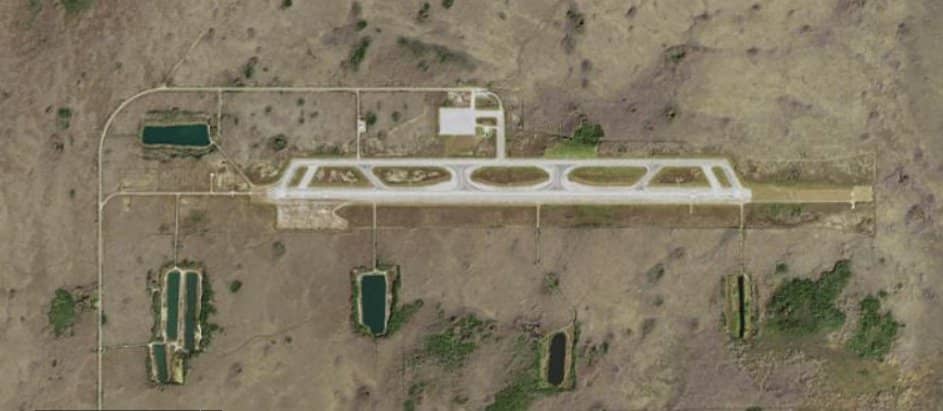
Alligator Alcatraz Is Closed, but Florida Is Still Chasing More Than $500 Million in Federal Reimbursement
3h ago

Florida Voters Face Few New Rules on Nov. 3 as Other GOP States Roll Out Citizenship and ID Laws
1d ago

Florida Leads the Nation in ICE Detainer Arrests as Local Police Take a Growing Role, New Data Show
1d ago

Federal Government Again Asks Miami Judge to Toss Lawsuit by Nearly 1,000 Cubans With I-220A Papers
1d ago