Messi Back in Training at Inter Miami With Leagues Cup Opener a Week Away
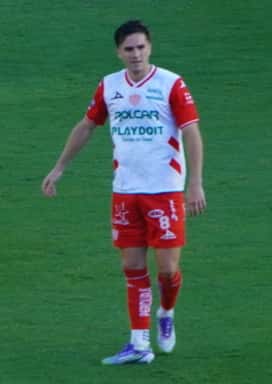
Lionel Messi returned to training with Inter Miami CF on Wednesday, rejoining the club after competing for Argentina at the 2026 World Cup. His return sets up a compressed transition back into club football, with Inter Miami opening its Leagues Cup campaign against Atletico de San Luis on August 5.
Messi's World Cup run was historically significant. He broke the record for most goals scored in the tournament's history, extending a career that has already produced most of the individual and team honors available in the sport.
Reporting on his condition has indicated he is expected to be at full availability when the club's Leagues Cup schedule begins, though the workload management question after a major international tournament is real for any player and particularly for one at Messi's stage of his career.
The Leagues Cup schedule
Inter Miami's group stage assignment runs across roughly a week. The club opens against Atletico de San Luis on August 5, faces Monterrey on August 8, and closes the group stage against Leon on August 12.
Leagues Cup pairs Major League Soccer clubs against sides from Liga MX, and the 2026 edition includes matches held in Mexico for the first time. That expansion changes the competition's travel profile and its commercial reach.
The tournament matters competitively as well as commercially. Leagues Cup results carry qualification implications for CONCACAF continental competition, which gives clubs a concrete reason to field strong lineups rather than treating the event as a midseason exhibition.
For Inter Miami, the competition also carries recent history. Messi's arrival in Major League Soccer in 2023 was announced to the world through a Leagues Cup run in which he scored in six consecutive matches and carried the club to the final, the moment that transformed the franchise's profile.
Coming back from a World Cup
The physical demands of a World Cup are difficult to overstate. Players who go deep into the tournament accumulate matches at maximum intensity across a compressed window, followed by minimal recovery time before returning to club schedules already in progress.
For clubs, the management question is whether to reintegrate a returning international immediately or to build minutes gradually. The answer usually depends on the competitive calendar, and Inter Miami's calendar does not offer much room. Leagues Cup group matches on August 5, 8, and 12 arrive in rapid succession, and the MLS regular season continues around them.
Messi has managed heavy workloads throughout his career, and his club has generally handled his minutes with care. But the combination of a deep World Cup run, summer heat in South Florida, and a three-match competition week is a demanding sequence for any player.
The alternative risk is equally real. A club that holds its most important player out of early group matches can find itself needing results in the final match of the group with less margin.
What it means for South Florida
Inter Miami's matches have become significant regional events since Messi's arrival, drawing crowds and attention well beyond the club's traditional supporter base. Ticket demand for matches involving Messi has consistently exceeded that for comparable fixtures.
The economic footprint extends to hospitality, restaurants, and local businesses around match days. South Florida's large Latin American population, including substantial Argentine, Venezuelan, Colombian, and Mexican communities, has given the club a natural audience for both MLS and Leagues Cup fixtures against Liga MX opposition.
Matches against Mexican clubs carry particular resonance in the market. The Monterrey fixture on August 8 pairs Inter Miami against one of Liga MX's most established sides.
The broader Florida soccer picture
Florida supports two Major League Soccer clubs, Inter Miami and Orlando City SC, along with the Orlando Pride in the National Women's Soccer League. All three participate in a summer calendar that now includes Leagues Cup alongside league play.
The state's soccer profile has risen substantially over the past several years, and the 2026 World Cup, hosted across North America, brought additional attention to the region. Miami was among the host markets, and the tournament's presence in the United States has been a stated objective of MLS growth strategy for a generation.
For Florida soccer supporters, the immediate calendar offers Leagues Cup group matches in early August followed by the resumption of the MLS regular season and the run toward the playoffs.
What to watch
The most informative signal over the coming week will be how Inter Miami distributes Messi's minutes across the three group matches. A full 90 minutes in the opener would indicate the club is confident in his condition. Substitute appearances or a reduced role would indicate a more cautious reintegration.
Squad rotation more broadly will also be worth watching, since three matches in eight days requires depth. Clubs that navigate group stages successfully generally do so by managing loads across the roster rather than relying on a fixed eleven.
Results in the group determine advancement, and the format rewards teams that secure points early. A strong opening result against Atletico de San Luis would give Inter Miami flexibility in how it approaches the Monterrey and Leon fixtures.
How Leagues Cup fits the calendar
Leagues Cup occupies a distinctive place in the North American soccer calendar. Rather than running alongside league play as a midweek cup competition, it interrupts the Major League Soccer regular season, which means clubs commit fully to it rather than rotating heavily.
That structure was designed to give the tournament competitive credibility. A cup that clubs treat as an inconvenience does not attract audiences, and pairing MLS sides against Liga MX opposition only produces meaningful matches if both leagues field genuine teams.
Qualification stakes reinforce that. Results carry implications for CONCACAF continental competition, which gives clubs a concrete competitive reason to prioritize the tournament beyond prize money and prestige.
The 2026 edition's expansion to include matches held in Mexico changes the travel and atmosphere profile, adding away environments that MLS clubs rarely encounter during their domestic season.
The workload question in context
Elite footballers returning from major international tournaments face a well-documented recovery challenge. The accumulated physical load of a deep World Cup run, combined with the psychological demands of knockout football, does not dissipate in days.
Sports science departments manage that through graduated return protocols: reduced training volume, monitored intensity, and careful minute allocation across early matches. Those protocols exist precisely because the injury risk in the weeks after a tournament is elevated.
South Florida's August climate adds a variable. Heat and humidity in the region during late summer are demanding for any athlete, and heat advisories have been in effect across Miami-Dade and Broward counties this week with index values reaching well above 100 degrees.
Match scheduling accounts for that to a degree, with evening kickoffs standard during summer months, and hydration and cooling breaks are part of competition protocol in extreme conditions.
What Inter Miami has become
The club's transformation since 2023 has been the most significant commercial story in Major League Soccer's history. Global broadcast attention, merchandise sales, and the value of the league's media rights have all been affected by a single signing.
On the field, the club has assembled a roster around that signing, and the competitive question has always been whether the supporting structure can convert attention into trophies. Leagues Cup provided the first answer in 2023.
For South Florida, the practical result is a club whose matches function as regional events rather than as ordinary fixtures. That status is not permanent, and the coming weeks are among the reasons it persists. The Leagues Cup group stage begins August 5.
The MLS season structure around the tournament
Major League Soccer runs a regular season from late winter through the fall, followed by a playoff bracket that determines the champion. Leagues Cup interrupts that calendar, which distinguishes it from cup competitions in other countries that run in parallel.
That pause means clubs return to league play afterward with their competitive position unchanged but their fitness and injury picture altered by the tournament. Managing that transition is part of what separates clubs that navigate the summer well from those that do not.
Playoff qualification in MLS depends on regular season points within each conference, and the standings compress tightly enough that a poor run of league form after the tournament can cost a club its position.
For Inter Miami, the objective is straightforward: advance in Leagues Cup without accumulating the injuries or fatigue that would compromise the league run that follows. Squad depth is what makes that possible, and it is what the coming weeks will test.
Attending matches in South Florida summer
Supporters attending Inter Miami matches during August should plan for the conditions. South Florida heat and humidity in late summer are demanding for spectators as well as players, and heat advisories have been in effect across Miami-Dade and Broward counties this week.
Evening kickoffs mitigate the worst of it, though humidity remains high after sunset. Hydration, sun protection for earlier arrivals, and awareness of heat illness symptoms are practical considerations.
Afternoon thunderstorms are also routine in Florida during this period, and lightning within a defined radius suspends play. Matches resume when conditions clear, which can extend an evening considerably. Ticket and stadium information is published by the club.
What's next
Inter Miami opens Leagues Cup play against Atletico de San Luis on August 5, followed by Monterrey on August 8 and Leon on August 12. Match times and broadcast details are published by the club and by the competition.
The MLS regular season continues alongside and after the tournament, with playoff positioning to be determined over the remainder of the year. Inter Miami's league standing and its Leagues Cup performance are separate competitive tracks.
Ticket information for home fixtures is available through the club. The Florida Press will continue covering Inter Miami through the Leagues Cup and the remainder of the season.
Spotted an issue with this article?
Have something to say about this story?
Write us a letterComments
No comments yet. Be the first to weigh in.
Related Coverage
Messi Sets Up De Paul as Inter Miami Beats NYCFC 2-0 and Clinches an MLS Cup Playoff Berth
8h ago
Giannis Antetokounmpo Posts 20, 15 and 9 as Heat Beat Nets 144-128 in Final Home Preseason Game
9h ago
Florida Gators at No. 7 Texas: Aaron Philo Questionable, Vernell Brown III Could Return as Sumrall's Team Tries to Stop a Two-Game Skid
12h ago

Buccaneers Host Aaron Rodgers and the Steelers Sunday as Jalon Daniels Lines Up for a Third Start and Trump Drops Plans to Attend
15h ago