Cape Canaveral Sustains Record Launch Pace as Florida Cements Its Spaceport Role
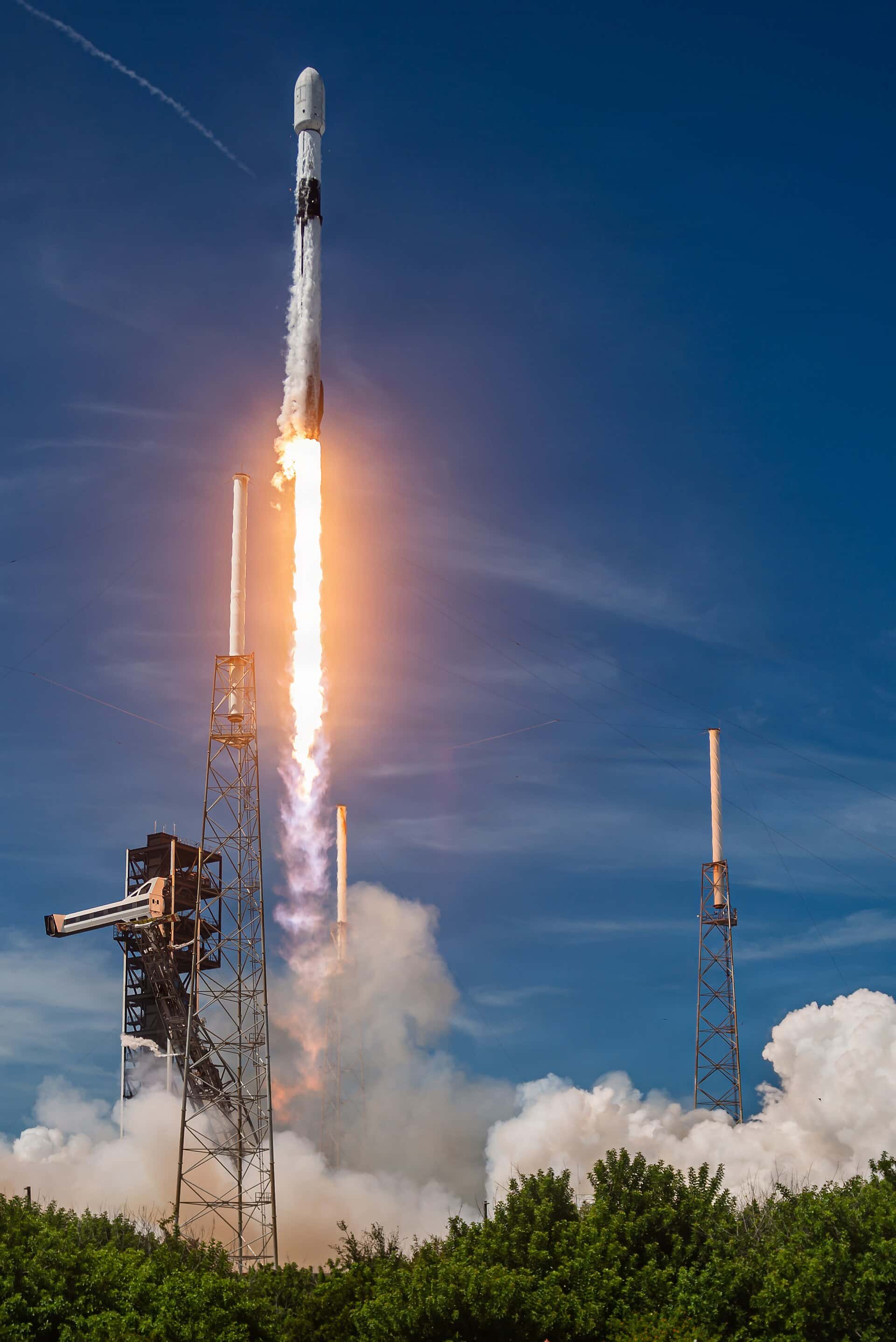
Florida's Space Coast has sustained an intense launch cadence through July, with four Falcon 9 missions flying from Space Launch Complex 40 at Cape Canaveral Space Force Station during the month and at least one more planned. Additional Starlink missions are scheduled from the Cape in early August, continuing a pace that has made Florida the busiest launch site in the world.
The activity is concentrated but not exclusive to SpaceX. United Launch Alliance, Blue Origin, and other operators use Florida launch infrastructure, and NASA's Kennedy Space Center operates Launch Complex 39A and 39B for crewed and heavy-lift missions.
For Brevard County and the broader Central Florida economy, the cadence has translated into sustained employment, supply chain growth, and a tourism draw that did not exist at this scale a decade ago. Launch viewing has become a routine part of the region's visitor economy.
The scale of current operations
SpaceX's Falcon 9 program drives the volume. The company has flown missions at a rate that would have seemed implausible during the Space Shuttle era, when a handful of launches per year represented the program's full capacity.
Reusability is the enabling technology. Falcon 9 first stages return to landing zones or droneships and are refurbished for subsequent flights, with individual boosters accumulating dozens of missions. A booster flying its 28th mission launched a Starlink batch from Cape Canaveral in mid-July.
The company reached a milestone this month with the 600th flight of a flight-proven Falcon booster, a figure that captures how thoroughly reuse has reshaped launch economics. Turnaround times between flights of the same booster have compressed substantially.
Starlink deployment accounts for a large share of missions. The satellite constellation requires continuous replenishment as older satellites deorbit, which creates a baseline launch demand independent of customer missions.
Florida's launch infrastructure
Cape Canaveral Space Force Station and Kennedy Space Center occupy adjacent property on Florida's Atlantic coast in Brevard County. The Space Force operates the Eastern Range, providing tracking, safety, and range services for launches from both facilities.
Space Launch Complex 40 is SpaceX's primary Falcon 9 pad at the Cape, and the company also operates Launch Complex 39A at Kennedy Space Center for crewed Dragon missions and Falcon Heavy flights. Pad availability and turnaround are among the practical constraints on cadence.
The geographic advantage is physics. Launching eastward from Florida takes advantage of Earth's rotation, adding velocity toward orbit, and the trajectory carries over open ocean rather than populated areas. That combination is why the site was selected in the 1940s and why it remains preferred.
Range capacity has become a scheduling question as cadence has increased. The Space Force has invested in modernizing range systems, including automated flight safety systems that reduce the personnel and time required between launches.
The economic footprint in Brevard County
Brevard County's economy has been substantially reshaped by the commercial space sector. The county experienced significant job losses when the Space Shuttle program ended in 2011, and the commercial launch expansion has more than replaced that employment base.
Employment spans manufacturing, integration, launch operations, range services, engineering, and support functions. Wages in the sector generally exceed Florida's median, which affects household income patterns across the county.
Space Florida, the state's aerospace development authority, works to attract additional companies to the corridor and finances infrastructure. The state has treated aerospace as a priority sector in economic development, including in international recruitment such as the recent trade mission to the Farnborough International Airshow.
Housing demand has followed. Brevard County has experienced population growth and rising home prices as the sector expanded, along with the infrastructure pressures that accompany growth, including school capacity and roadway congestion.
Tourism and community effects
Launch viewing has become a substantial visitor draw. Titusville, Cocoa Beach, Cape Canaveral, and Playalinda Beach in Canaveral National Seashore all serve as viewing locations, and launch schedules now factor into travel planning for visitors to Central Florida.
Kennedy Space Center Visitor Complex operates as a paid attraction with substantial annual attendance, offering close viewing for some launches along with permanent exhibits including the Space Shuttle Atlantis display.
The frequency has changed the character of the experience. When launches were rare, each drew enormous crowds. At current cadence, routine Starlink missions attract far less attention than crewed flights or heavy-lift missions, which still fill viewing areas.
Local effects include traffic on launch days, particularly for high-profile missions, and sonic booms from returning boosters that are audible across a wide area of the Space Coast and sometimes into Orlando's eastern suburbs.
What it means for Florida
The state's position as the primary U.S. launch site carries strategic weight. National security space launches, NASA science and crewed missions, and commercial satellite deployment all route through Florida infrastructure, which gives the state a durable role in federal space policy.
NASA's Artemis program, aimed at returning crews to the Moon, launches from Kennedy Space Center's Launch Complex 39B using the Space Launch System. Those missions bring substantially larger workforce and contractor activity than routine commercial flights.
Competition from other states exists but is limited by geography. Vandenberg Space Force Base in California serves polar and sun-synchronous orbits, and other sites have developed for smaller vehicles, but Florida's advantages for equatorial and geostationary missions remain structural.
Environmental considerations accompany the growth. Launch activity occurs adjacent to Merritt Island National Wildlife Refuge and Canaveral National Seashore, and the interaction between industrial activity and protected habitat is managed through federal environmental review processes.
NASA's role on the Space Coast
Kennedy Space Center remains NASA's primary launch site for crewed missions and for large science payloads. The center employs thousands of civil servants and contractors and operates Launch Complex 39A and 39B, the pads built for the Apollo program and later adapted for the Space Shuttle.
The Artemis program, aimed at returning astronauts to the lunar surface, launches the Space Launch System from Launch Complex 39B. Those missions involve substantially larger processing operations than commercial launches, including the Vehicle Assembly Building and crawler transporters.
NASA also manages commercial crew and cargo missions to the International Space Station, flown by contractors from Florida pads. Those flights carry astronauts and supplies and have made Florida the departure point for U.S. crewed spaceflight again after the shuttle retirement.
Science missions launch from the Cape as well, including planetary probes, Earth observation satellites, and space telescopes. Those launches carry payloads representing years of development and billions of dollars of investment.
Workforce and education pipeline
The sector's growth has driven demand for engineers, technicians, and skilled trades in Brevard County. Employers have recruited nationally while also building local pipelines through partnerships with Florida institutions.
Eastern Florida State College operates programs in aerospace technology and related technical fields serving the region. The Florida Institute of Technology in Melbourne and Embry-Riddle Aeronautical University in Daytona Beach produce engineering graduates who feed the sector.
The University of Central Florida in Orlando is among the largest universities in the country by enrollment and supplies substantial numbers of engineering graduates to Central Florida employers, including aerospace firms.
Technical roles including welders, machinists, avionics technicians, and quality inspectors have been in demand alongside engineering positions. Those roles are accessible through technical programs that require less time than a four-year degree.
Risks and constraints on growth
Launch cadence depends on range capacity, pad availability, and weather. Florida summer convective activity delays launches routinely, and hurricane season can force extended stand-downs when a storm threatens the coast.
Infrastructure at the Cape includes facilities dating to the 1960s alongside modern construction. Maintenance and modernization of range instrumentation, roads, and utilities require sustained federal investment.
Environmental considerations accompany operations adjacent to Merritt Island National Wildlife Refuge and Canaveral National Seashore. Federal environmental review processes address noise, emissions, and habitat effects from launch activity.
Concentration risk is the strategic concern. A significant portion of U.S. launch capability operates from a single stretch of hurricane-exposed coastline, which is why federal planning maintains alternative capability at Vandenberg and elsewhere.
Beyond SpaceX on the Space Coast
United Launch Alliance, a joint venture of Boeing and Lockheed Martin, operates from Cape Canaveral and has flown national security and civil missions from Florida for years. Its Vulcan vehicle succeeded the Atlas V and Delta IV families.
Blue Origin has developed launch and manufacturing facilities in Florida, including a rocket production plant near Kennedy Space Center and a launch site at the Cape for its New Glenn vehicle. That investment added manufacturing employment alongside launch operations.
Smaller launch providers and payload processing companies have also established Florida operations, and Space Florida has worked to attract satellite manufacturing and in-space servicing companies to the corridor.
A geosynchronous robotic servicing satellite launched from Florida in July, illustrating the range of missions now flying from the state beyond communications constellations and government payloads.
What's next
Additional Starlink missions are scheduled from Cape Canaveral in early August, continuing the cadence. Launch schedules are published by operators and tracked by industry outlets including Spaceflight Now, though dates shift routinely with weather and technical issues.
Weather is a persistent constraint in Florida summer. Afternoon convective activity and lightning within range of the pad regularly delay launches, and hurricane season adds the possibility of extended stand-downs if a storm approaches the coast.
Longer-term, infrastructure expansion continues. Additional pad development, processing facilities, and range modernization are underway to support projected increases in launch demand across multiple operators.
For Florida, the practical result is an industry that has grown from a federal government program employing thousands into a commercial sector operating at a cadence measured in launches per week, anchored on a stretch of Brevard County coastline.
Spotted an issue with this article?
Have something to say about this story?
Write us a letterComments
No comments yet. Be the first to weigh in.
Related Coverage
NASA leaders to update Artemis acceleration and 2028 Moon landing plan at Kennedy on Oct. 23
27m ago

Jacksonville woman gets 15 months in federal prison for punching trooper during ICE operation
2h ago

Eight states sue OpenAI over ChatGPT's harm to children, following Florida's lead
6h ago

Coast Guard Cutter Tampa offloads $226.7 million in cocaine and marijuana at Port Everglades
6h ago