Brightline Sets Ridership Records in Florida Even as a Multibillion-Dollar Debt Load Looms
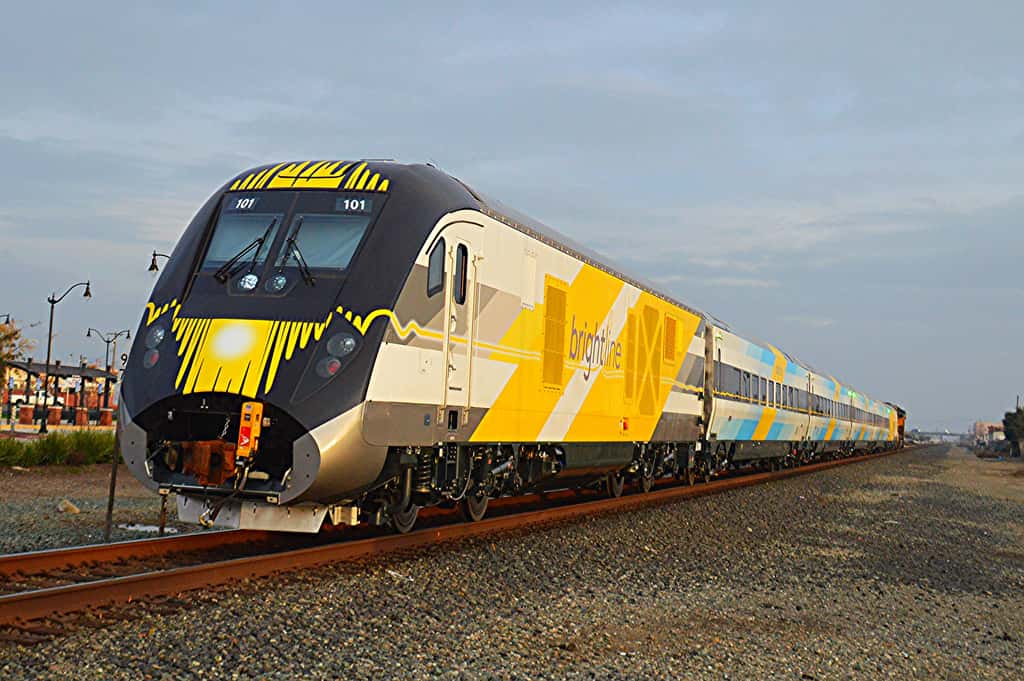
Brightline, the private higher-speed passenger railroad linking Miami and Orlando, opened 2026 with the busiest quarter in its history, carrying more than 900,000 passengers and booking a record $61.2 million in revenue in the first three months of the year. The company said quarterly revenue rose about 12 percent from the same period in 2025, and that ridership from January through May ran roughly 27 percent ahead of the comparable stretch in 2024. For Florida's most ambitious experiment in intercity rail, the numbers are the clearest sign yet that demand for a train alternative to Interstate 95 and the state's crowded highways is real and growing.
Yet the record ridership arrives alongside a financial reckoning. Brightline reported a net loss of about $233 million in 2025 and carries roughly $5.5 billion in total debt, and it has deferred certain interest payments as it works to stay current with lenders. Analysts and creditors have warned that a debt restructuring, whether negotiated out of court or through a Chapter 11 bankruptcy filing, is possible within months. The result is a striking split screen: full trains and rising revenue on one side, a balance sheet under severe strain on the other.
The stakes reach well beyond one company. Brightline has become a test case for whether privately financed passenger rail can work in the United States, and Florida is the proving ground. The outcome will shape the state's transportation future, the fate of a planned extension toward Tampa, and the confidence of investors weighing similar projects elsewhere in the country.
A Record-Breaking Start to 2026
The first-quarter figures represent a milestone for a service that only connected Miami and Orlando in late 2023. Surpassing 900,000 riders in a single quarter and $61.2 million in revenue suggests the long-haul route between South Florida and Central Florida, a roughly 235-mile trip that competes directly with a congested drive, is finding a durable audience among tourists, business travelers, and families visiting Orlando's attractions.
The growth appears broad rather than a one-time spike. With January-through-May ridership reported up about 27 percent over the same months in 2024, the trend points to steadily rising familiarity with the service and to the maturing of the Orlando station, which connects the line to the region's tourism economy and Orlando International Airport. Peak travel periods around holidays and events have repeatedly set single-month records, and reporting indicated that March 2026 stood as the company's best month to date, with well over 300,000 riders in a single month.
Revenue growth of about 12 percent year over year in the first quarter shows the company is not simply discounting its way to higher passenger counts. A mix of ticket sales, premium seating, and ancillary revenue has helped lift the top line, and Brightline has continued to refine fares and schedules to capture both leisure and business demand along the corridor.
For Florida, the ridership story validates a bet that many transportation planners once doubted: that enough travelers would choose rail over car or plane on an in-state route to sustain frequent service. The operational success has become the central argument Brightline's supporters make as the company confronts its financial troubles.
The Debt Overhang
Behind the ridership headlines sits a balance sheet that has alarmed the credit markets. The reported $233 million net loss for 2025 underscores that strong and rising revenue has not yet translated into profitability, and the roughly $5.5 billion debt load, built up to finance construction of the Miami-to-Orlando system, demands large and recurring interest payments.
Financial reporting has indicated that Brightline drew on reserves to keep up with interest on senior bonds and a substantial slug of corporate notes, and that those cushions are being depleted. Deferred interest payments and warnings tied to the company's ability to meet obligations over the coming year have intensified scrutiny from bondholders, some of whom have reportedly begun positioning for a restructuring.
Analysts quoted in financial coverage have described the current path as unsustainable without a change to the capital structure, and have said a restructuring or Chapter 11 filing could come within months. Such a move would not necessarily stop the trains; companies frequently continue operating through Chapter 11 while renegotiating debt. But it would mark a dramatic chapter for a project that once symbolized private-sector optimism about American passenger rail.
The core tension is a familiar one for capital-intensive infrastructure: even healthy operating growth can be overwhelmed by the fixed cost of servicing debt taken on to build the asset in the first place. Brightline's challenge is to bridge the gap between improving operations and a debt burden assembled during construction and expansion. Bond-market observers have noted that the company's fate now rests as much on financial engineering as on how many people ride the trains, an unusual position for a business posting record demand.
Betting on Growth With New Trains
Even amid the financial pressure, Brightline has continued to invest in capacity. The company ordered 30 additional Siemens Venture coaches to accommodate expected growth, a signal that management believes rising demand justifies expanding the fleet rather than retrenching. The Venture equipment is designed to meet and exceed accessibility standards, and the added cars would allow longer or more frequent trains along the existing corridor.
The equipment order reflects a strategic wager that the operational trajectory, not the current balance sheet, defines the company's long-term value. More seats can translate into more revenue if demand holds, and a larger, more reliable fleet strengthens the service's appeal to travelers weighing the train against driving or flying within the state.
Critics might question the wisdom of expanding capacity while deferring interest payments, but supporters argue that abandoning growth would undercut the very ridership momentum that gives Brightline a case for survival. In a restructuring scenario, a growing and improving operating business can be a crucial asset in negotiations with creditors who must decide whether the enterprise is worth preserving.
The Sunshine Corridor and the Tampa Question
Brightline's next frontier is the long-discussed extension from Orlando to Tampa, a project tied to a broader Central Florida vision known as the Sunshine Corridor. That plan envisions coordinating with SunRail, the region's publicly operated commuter service, to link Orlando International Airport with major tourism and business destinations before pushing west toward Tampa Bay.
Proposed stations under study have included stops near the Orange County Convention Center, along South International Drive in the heart of Orlando's tourism district, and at Orlando International Airport, which would tie the airport, the convention corridor, and the theme park economy into a single rail spine. The extension would open a new market of both tourists and commuters and could reshape how visitors move through Central Florida.
The Tampa extension remains under study rather than under construction, and its timing is inevitably clouded by the company's financial condition. Building westward would require substantial new financing, a difficult proposition for a company already straining under existing debt. For Tampa Bay leaders who have championed a rail link to Orlando and its airport, the project's fate is now entangled with Brightline's broader survival.
Still, the strategic logic of connecting Florida's two large interior metropolitan regions by rail has not faded. If Brightline can stabilize its finances, the Sunshine Corridor represents the kind of high-demand route that could strengthen the entire network. If it cannot, the extension could stall or fall to other operators and public agencies.
Why Florida's Transportation Future Is at Stake
Brightline's trajectory matters to Florida because the state faces relentless population growth and worsening highway congestion. Interstate 95 and Interstate 4 carry heavy traffic between the state's population centers, and adding highway capacity is expensive, slow, and politically fraught. A viable intercity rail alternative offers a pressure valve that few other options can match.
The service also carries economic weight. Brightline's stations have spurred development interest, its Orlando airport connection knits rail into the state's tourism engine, and a future Tampa link would broaden that reach. Thousands of jobs, real estate investment, and the convenience calculus of millions of travelers are bound up in whether the network expands or contracts.
There is a national dimension as well. Brightline is the most prominent privately financed intercity passenger railroad in the modern United States, and its Florida performance is watched closely by investors and policymakers considering similar ventures. Its ridership success bolsters the case that Americans will ride fast, frequent trains; its debt struggles illustrate how hard it is to make the underlying finances work.
For Florida officials, the ideal outcome is continuity: trains that keep running and expanding regardless of how the corporate finances are ultimately resolved. Because a Chapter 11 process can preserve operations while restructuring debt, the more pressing question for riders may be less whether the trains run and more who owns and finances them over the long term.
What's Next
In the coming months, the central drama will play out in negotiations between Brightline and its creditors. Bondholders, corporate noteholders, and company management face decisions about whether to restructure the debt consensually or through a court-supervised process, and the choices they make will determine the company's capital structure for years to come.
Riders, meanwhile, are likely to see little immediate change on the Miami-to-Orlando line, where trains continue to run and the new Siemens coaches are slated to expand capacity. The operational story of record ridership is expected to continue, at least in the near term, even as the corporate story grows more complicated.
The Sunshine Corridor and the Tampa extension will hinge on how the financial questions are resolved. A successful restructuring that stabilizes the balance sheet could revive momentum for building west; a prolonged crisis could freeze those ambitions. Either way, Florida's boldest bet on passenger rail is entering a decisive stretch, with its record-setting trains and its record-setting debt pulling in opposite directions.
Spotted an issue with this article?
Have something to say about this story?
Write us a letterComments
No comments yet. Be the first to weigh in.
Related Coverage

Isaias Insured Losses Estimated at $1 Billion to $3 Billion, Far Below Pre-Storm Forecasts and Hurricane Michael
21h ago

DeSantis Awards $27 Million in Rural Infrastructure Grants to 14 Communities as Panhandle Recovers From Isaias
23h ago

Alonzo Mourning's Courtside II Opens in Overtown, Adding 120 Affordable Apartments With Rents From $683
4d ago

Bern's Steak House, South Howard Businesses Sue Tampa to Halt $100 Million Flood Relief Project
5d ago