Manatee County Backs $80 Million Ice and Sports Complex for Lakewood Ranch
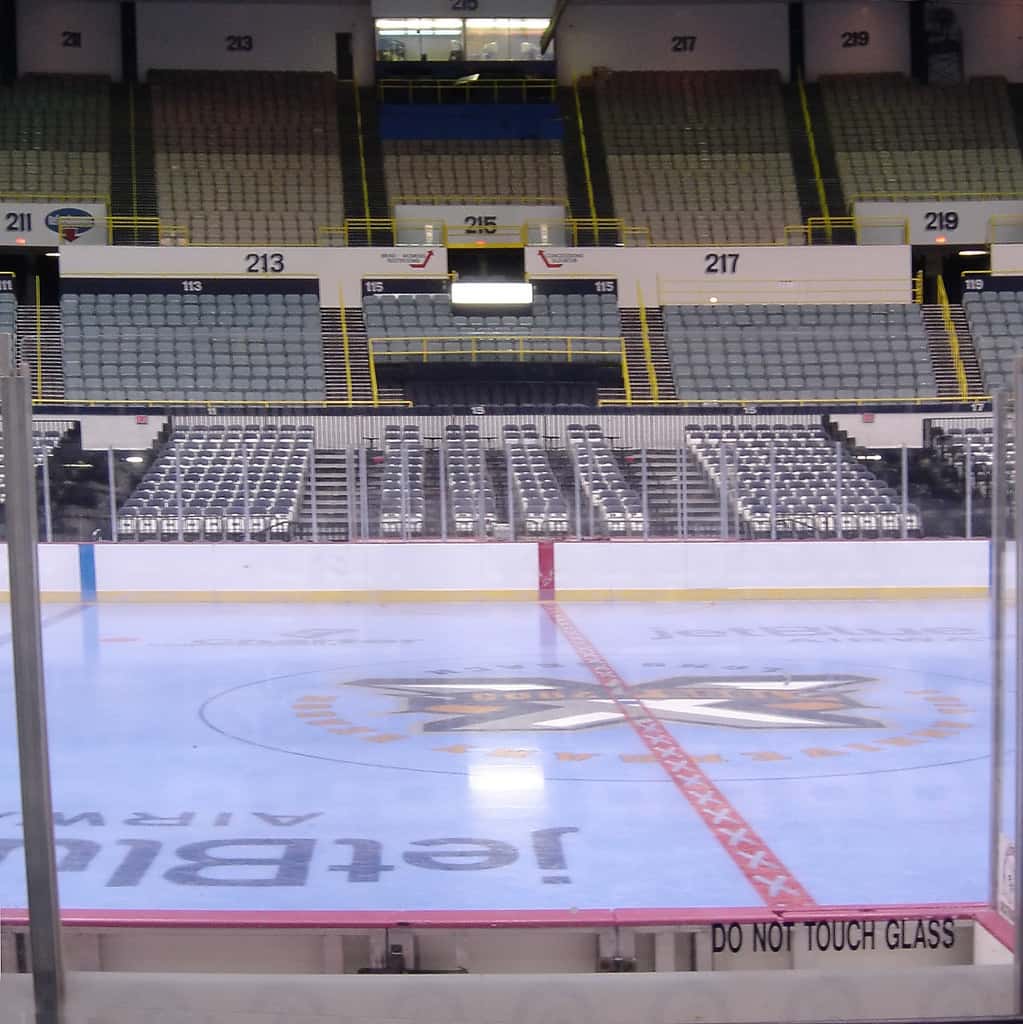
Manatee County commissioners voted unanimously to endorse a public-private partnership aimed at advancing a roughly $80 million indoor sports and entertainment complex in Lakewood Ranch, moving one of the region's most ambitious recreation projects a significant step closer to reality. The centerpiece of the plan is a four-rink ice and sports multiplex, a facility designed to host hockey, figure skating and a range of indoor competitions in the subtropical heart of Florida's Gulf Coast.
The vote does not by itself put a shovel in the ground. According to the framing offered at the meeting, the project still must clear additional steps before construction can begin, and specifics on financing, design and timeline remain subject to change. What the unanimous endorsement does is signal that the county's elected leadership is willing to partner with private interests to make the complex happen, a meaningful vote of confidence that developers and investors watch closely.
For Florida, and for the fast-growing communities straddling Manatee and Sarasota counties, the project is less about ice than about economics. A multi-rink complex of this scale is fundamentally a youth and amateur sports tourism engine, the kind of venue that draws traveling teams, fills hotel rooms and pumps spending into surrounding restaurants and shops. In a region that has built much of its identity on planned growth and lifestyle amenities, that is a familiar and appealing pitch.
What the commissioners endorsed
The action commissioners took was an endorsement of a public-private partnership, a structure in which a government and one or more private entities share the cost, risk and operation of a project that neither would easily build alone. In this model the public side typically contributes land, financing support or other incentives, while the private side brings capital, development expertise and ongoing management. The roughly $80 million figure represents the scale of the undertaking rather than a final, locked budget.
The unanimity of the vote is its own signal. When a county commission lines up behind a project without dissent, it tells the marketplace that the political risk of the partnership is low and that the local government intends to be a willing participant rather than an obstacle. For a complex that still has hurdles ahead, that kind of clarity can be the difference between a proposal that stalls and one that secures the financing and approvals it needs.
Several details remain tentative and should be treated as such. The exact mix of public and private dollars, the construction timeline, the operator and the final design have not been presented as settled facts. The endorsement is best understood as a green light to keep moving, not a ribbon-cutting. Remaining steps, additional approvals, agreements and financing arrangements, still stand between the vote and a grand opening.
Even so, advancing a project of this size to the partnership stage is a substantive milestone. It converts an idea into a commitment of political will, and it puts the county on record as wanting the complex built within its borders rather than ceding it to a neighbor.
The economics of a sports complex
The business case for a multi-rink facility rests on sports tourism, an industry that has quietly become one of the most reliable drivers of local spending across the country. Youth and amateur tournaments bring entire families to town for days at a time, and those visitors do far more than watch games. They book hotel rooms, eat in restaurants, shop and buy gas, generating a ripple of spending that reaches well beyond the venue itself.
A four-rink layout is purpose-built for this model. Multiple sheets of ice allow a single facility to run large tournaments with many simultaneous games, the format that maximizes the number of traveling teams a venue can host. The more games a complex can stage at once, the more out-of-town visitors it draws, and the more hotel nights and restaurant tabs it generates. Capacity, in this business, translates directly into economic impact.
Construction itself delivers an early and tangible benefit. An $80 million build supports construction jobs and contracts during the development phase, injecting money into the local economy before the first puck drops. Once open, the facility creates ongoing operational employment and becomes an anchor that can attract complementary businesses, the hotels and eateries that cluster around reliable visitor traffic.
There is risk in any project of this scale, and the economics depend on the complex actually drawing the tournament volume its backers envision. But the underlying logic, that a regional sports destination can convert ice time into hotel nights and restaurant revenue, is the same logic that has made sports tourism a sought-after prize for communities across Florida and beyond.
The public-private structure is itself a hedge against that risk. By sharing the cost and operation with private partners, the county avoids shouldering the full financial exposure of an $80 million venue on its own, while still capturing the tax base, jobs and visitor spending the complex is meant to generate. That arrangement is increasingly common for large recreation projects precisely because it spreads the bet, aligning public incentives with private capital and management expertise rather than asking taxpayers to underwrite the whole gamble.
Hockey and skating under the Florida sun
There is an undeniable novelty in building four sheets of ice in subtropical Florida, and that contrast is part of the appeal. Indoor ice sports thrive precisely where the outdoor climate makes them impossible, and a year-round, climate-controlled complex offers something the Florida sun cannot: a dependable winter sport in a summer state. For families relocating from colder regions, a place to play hockey and skate can be a genuine draw.
Florida's hockey culture has grown alongside its population, and the Gulf Coast region has welcomed waves of new residents from the Northeast and Midwest, many of whom arrive with hockey and skating already woven into family life. A facility that serves that community, while introducing the sports to newcomers, taps into a demand that the region's rapid growth has only strengthened.
Ice complexes also tend to serve more than hockey. Figure skating, learn-to-skate programs, recreational public sessions and a variety of indoor sports can share the building, broadening the base of users beyond competitive teams. That versatility helps a venue stay busy across the calendar, which matters for the economics of keeping ice frozen in a hot climate.
The symbolism is not lost on the region either. A marquee ice complex signals ambition, the idea that Lakewood Ranch and Manatee County are building amenities to match their population and aspirations rather than settling for the minimum. In a competitive market for residents and visitors, that signal carries weight.
The climate angle also shapes the operating model. Keeping multiple sheets of ice frozen through a Florida summer is an energy-intensive undertaking, and the facilities that succeed tend to run nearly around the clock to justify that cost, packing the calendar with leagues, lessons, public sessions and tournaments. A four-rink layout gives operators the flexibility to do exactly that, slicing the building into different uses at different hours so the ice rarely sits idle. That intensity of use is what separates a thriving complex from an expensive one, and it is part of why scale matters so much in this business.
Lakewood Ranch and a booming region
The chosen site, Lakewood Ranch, is one of the most consequential pieces of the story. The master-planned community straddles Manatee and Sarasota counties and has repeatedly ranked among the top-selling master-planned communities in the nation. That status is not incidental: it reflects sustained demand, steady population growth and a development model built around amenities that attract families.
A sports complex fits naturally into that model. Master-planned communities compete in part on lifestyle, and a major recreation destination strengthens the pitch to prospective residents while serving those already there. For Lakewood Ranch, an $80 million ice and sports multiplex is both an amenity for the community and a regional attraction capable of pulling visitors from well outside its boundaries.
The cross-county geography adds a wrinkle worth noting. Because Lakewood Ranch spans Manatee and Sarasota counties, projects there can involve overlapping jurisdictions and shared interests. The Manatee County commission's endorsement places that county at the forefront of advancing the complex, anchoring the partnership on the Manatee side of a community that does not stop at the county line.
The broader regional context is one of rapid, sustained growth along Florida's Gulf Coast. As population climbs, so does demand for the kind of large-scale amenities that smaller communities cannot support. A four-rink complex is the sort of project that becomes viable only when the surrounding region reaches a certain size, and the Sarasota-Manatee area has plainly crossed that threshold.
What's next
With the commission's endorsement secured, attention turns to the remaining steps that stand between the partnership and a completed building. Those include finalizing the financing structure, nailing down design and operational details, and clearing the additional approvals that a project of this magnitude requires. Each of those milestones will test whether the momentum from the unanimous vote can carry the complex through to construction.
Backers will also need to demonstrate that the sports-tourism math holds up, that the facility can attract the tournament volume and visitor traffic the economic case depends on. The most successful complexes elsewhere have become regional fixtures that draw teams for years; the goal here is plainly to replicate that, turning Lakewood Ranch into a Gulf Coast destination for ice and indoor sports.
For now, the project sits at a hopeful but unfinished stage. The county has signaled it wants the complex, the partnership framework is in place, and the location is one of the strongest in the state. What remains is execution, the unglamorous work of turning an endorsement into ice, and that is where the next chapter of this story will be written.
Spotted an issue with this article?
Have something to say about this story?
Write a letter to the editor