Florida's Jobless Rate Falls for the First Time Since 2024, but the State's Labor Picture Stays Mixed

Florida's unemployment rate declined for the first time since the end of 2024, easing to 4.7 percent in June from 4.8 percent in each of the prior two months. The state added roughly 11,100 net positions between May and June, with growth concentrated in restaurants, hotels, health care, transportation, and warehousing.
The reversal ends a run of steadily rising joblessness that had made Florida an outlier among large states. Over the preceding period, Florida's unemployment rate climbed more than a full percentage point, rising faster than in nearly any other state while the national rate remained comparatively flat.
A single month of improvement does not establish a trend, and the underlying pressures that drove the increase have not fully resolved. But the direction of the change matters after a stretch in which every monthly report moved the wrong way.
What is driving the numbers
The sectors adding jobs in June are the ones that have long carried Florida's economy. Leisure and hospitality, which encompasses restaurants and hotels, remains among the state's largest employment categories and responds directly to tourism volume. Health care employment has grown consistently as Florida's population ages and demand for services expands. Transportation and warehousing reflect both consumer goods movement and the logistics infrastructure serving the state's ports and distribution corridors.
What is notable is what is largely absent from the growth categories. Construction, which powered a substantial share of Florida job creation during the pandemic-era migration surge, has not been a leading contributor. Higher interest rates have slowed both residential and commercial development activity, and the pipeline of projects that sustained construction employment through 2022 and 2023 has thinned.
Professional and business services, another significant Florida employment category, has similarly not been a standout in recent reports.
Why Florida diverged from the nation
Several factors combined to push Florida's unemployment rate up faster than the national rate over the past two years.
Affordability is the most frequently cited. Housing costs across Florida rose dramatically during the migration wave that followed 2020, and property insurance costs compounded the increase. The combination pushed the cost of living in many Florida metros well above what wages in the state's dominant service industries can comfortably support, affecting both household finances and employers' ability to fill positions.
Immigration enforcement has been a significant factor in specific sectors. Florida's agriculture, construction, and hospitality industries have historically drawn heavily on immigrant labor, and a sustained increase in enforcement activity across the state has affected labor availability in those industries. Employers in several sectors have reported difficulty filling positions.
Tourism has also shown signs of slowing from the exceptional levels of the immediate post-pandemic period, when pent-up travel demand produced record visitation. A return toward more normal patterns removes a source of employment growth that had been unusually strong.
Migration itself has decelerated sharply. Net domestic migration to Florida totaled just 22,517 people in the year through July 1, 2025, a fraction of the flows recorded during the peak years. Population growth drives demand for housing, retail, health care, and services, and slower growth means slower job creation across all of those categories.
What it means for Florida workers
A 4.7 percent unemployment rate is not, by historical standards, a distressed labor market. It sits within the range economists generally associate with a functioning economy, and it is far removed from recession-level readings.
The experience of that number differs sharply by industry and region. Workers in health care and skilled trades continue to face favorable conditions, with employers competing for candidates. Workers in construction and in white-collar categories affected by hiring slowdowns face a considerably tighter market than they did two years ago.
Wage growth is the variable that matters most for household finances. Florida wages have risen in nominal terms, but the state's cost of living, driven principally by housing and insurance, has risen alongside them. For many households the practical question is not whether work is available but whether available work covers the cost of living where the work is located.
Florida's minimum wage continues to step up annually toward $15 per hour under the constitutional amendment approved by voters in 2020, which has raised the floor for the state's large low-wage workforce.
Regional differences across the state
Florida's labor market varies substantially by metro area.
Orlando's economy remains heavily concentrated in tourism and hospitality, making it particularly sensitive to visitation trends at the theme parks and the convention business that fills hotel rooms midweek.
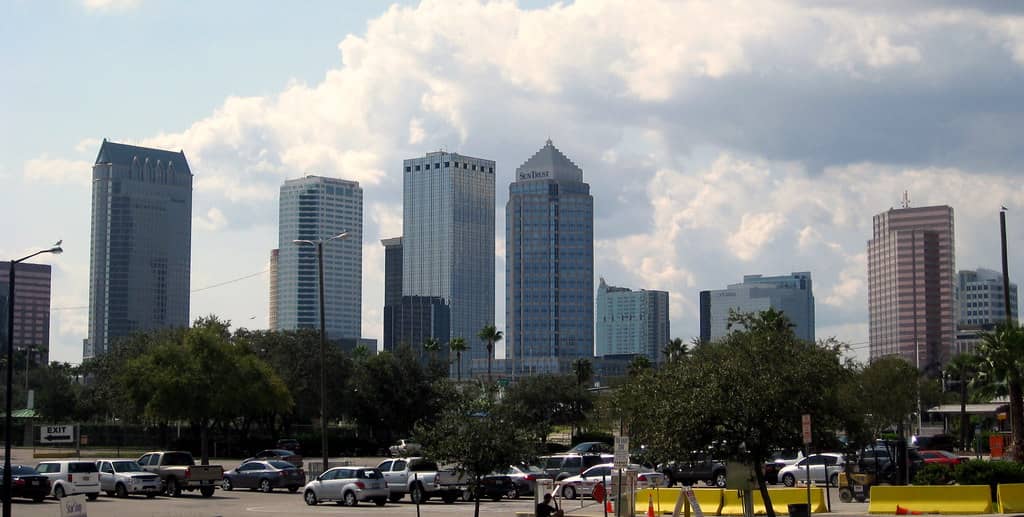
Tampa Bay has built a more diversified base spanning health care, financial services, defense contracting tied to MacDill Air Force Base, and a growing technology sector, which has generally made the region more resilient.
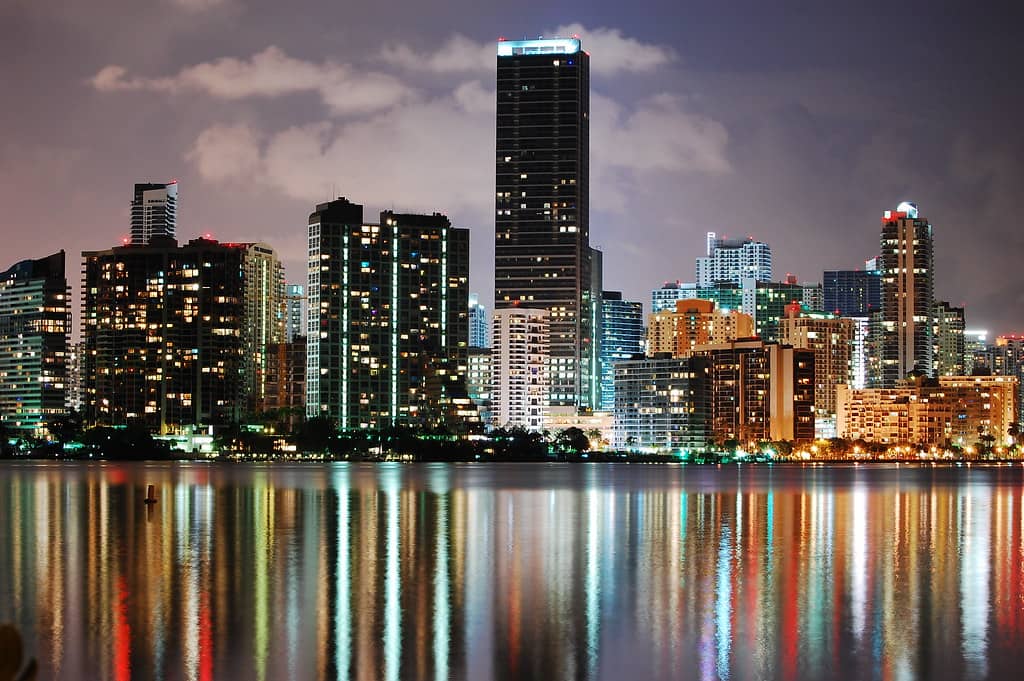
Miami-Dade and Broward counties combine international trade, banking, health care, and tourism, with the added dynamic of Latin American commercial ties that respond to conditions across the hemisphere.
Jacksonville's economy leans on logistics, given the port and its rail connections, along with financial services back-office operations and a substantial military presence.
Rural counties and agricultural regions face a different set of pressures entirely, including labor availability, commodity prices, and the long-term contraction of Florida's citrus industry under disease pressure.
The high-profile relocations
Florida's rising unemployment rate coincided with a period in which the state continued to attract corporate relocations and expansions, a juxtaposition that has drawn attention.
The apparent contradiction resolves once scale is considered. Corporate headquarters relocations generate a few hundred to a few thousand positions, frequently at high wages, and they carry substantial symbolic weight. The state's labor force numbers in the millions. A relocation that adds 1,000 jobs is meaningful for the community that receives it and statistically small against statewide employment.
Those relocations do matter for the composition of Florida's economy over time. Financial services firms in particular have expanded operations in South Florida, adding a category of high-wage employment the state historically had less of.
What economists are watching
The labor force participation rate is a key indicator that unemployment alone does not capture. If the jobless rate falls because people leave the labor force rather than because they find work, the improvement is illusory. Analysts will look at whether June's decline reflects genuine hiring or a shrinking labor force.
Continuing claims for unemployment insurance provide a real-time signal of whether laid-off workers are finding new positions quickly or remaining unemployed for extended periods.
Housing and construction indicators matter disproportionately in Florida given the sector's outsized role. Building permit volumes and residential starts offer an early read on construction employment several months forward.
How Florida's economy is structured
Understanding why Florida's labor market behaves as it does requires looking at what the state's economy actually consists of.
Tourism and hospitality form the most visible pillar, supporting employment across theme parks, hotels, restaurants, cruise operations, and the transportation networks serving visitors. The sector employs enormous numbers of people, generates substantial sales tax revenue, and pays wages that skew toward the lower end of the distribution.
Health care is the pillar that has grown most consistently. Florida's demographic profile, with a large and expanding population of retirees, generates sustained demand for hospitals, physician practices, skilled nursing, home health, and the full range of medical services. Health care employment tends to be recession-resistant, which stabilizes the state's labor market.
Real estate and construction have historically driven Florida's growth cycles and its downturns. The sector expands dramatically when migration and credit conditions align and contracts sharply when either reverses, which is a substantial part of why Florida has experienced deeper housing-driven recessions than most states.
International trade, agriculture, aerospace along the Space Coast, defense contracting around military installations, and a growing financial services presence in South Florida round out the picture.
The revenue implication
Florida's labor market matters for state finances in a way that differs from most states, because Florida has no personal income tax.
State revenue depends principally on sales tax, which means the budget tracks consumer spending rather than wages directly. Documentary stamp taxes on real estate transactions add a second significant source, one that swings dramatically with housing market activity.
That structure has consequences. Employment weakness translates into reduced consumer spending and lower sales tax collections. A housing slowdown reduces documentary stamp revenue at the same time. The two sources tend to move together, which amplifies the effect on the state budget rather than smoothing it.
Tourism partially insulates the state, since visitors pay Florida sales tax on lodging, meals, admissions, and purchases while contributing nothing to the demand for state services that residents generate. That dynamic is a genuine structural advantage.
The Legislature builds its budget on revenue estimating conferences that project these streams forward, and the estimates are revised as data arrives. Sustained labor market weakness would show up in those revisions.
What workers can do in this market
For Floridians navigating the current labor market, several practical considerations apply.
Credential programs at Florida state colleges have expanded substantially, with short-term certifications in health care support roles, skilled trades, information technology, and logistics designed to move people into employment quickly. Many are funded through state workforce programs that reduce or eliminate cost to the student.
CareerSource Florida operates regional workforce boards across the state that provide job matching, training referrals, and support services. These are underused resources relative to what they offer.
Geographic flexibility carries real value in Florida because labor market conditions vary so much by metro area. A worker in a soft local market may find substantially better conditions in another part of the state, though housing costs complicate that calculation.
For workers in industries affected by the slowdown, particularly construction, the adjacent sectors that are hiring frequently value transferable skills. Logistics and warehousing in particular have absorbed workers from other physical trades.
What's next
Monthly employment data for Florida is released by the state in coordination with the federal Bureau of Labor Statistics, and July figures will show whether June's improvement carries forward.
The Federal Reserve's decision to hold its benchmark rate at 3.5 to 3.75 percent at its July meeting, the fifth consecutive pause, means borrowing costs are unlikely to provide near-term relief to interest-sensitive sectors including construction and real estate.
For Florida households, the practical picture is a labor market that has stopped deteriorating without yet clearly improving. Work is available, particularly in health care, hospitality, and logistics. Whether that work covers the cost of living in Florida remains the harder question, and one that a tenth of a percentage point in the unemployment rate does not answer.
Spotted an issue with this article?
Have something to say about this story?
Write a letter to the editor