Mortgage Rates Stuck Near 6.5 Percent Keep Pressure on Florida Homebuyers
The cost of borrowing to buy a home remains stubbornly high for Floridians, with the average 30-year fixed mortgage rate standing at 6.48% as of June 4, 2026, according to Freddie Mac, and the Federal Reserve showing little inclination to lower its benchmark rate soon. The central bank has held the federal funds rate steady at around 3.5% to 3.75%, and most analysts do not expect a cut in the near term, citing a still-strong job market and inflation that has not yet returned to the Fed's 2% target. For Florida households, the combination means continued pressure on affordability, a cooling housing market, and rising costs that reach from the closing table to the gas pump.
The picture is one of an economy caught between competing forces. A resilient labor market and persistent inflation give the Fed reason to hold rates rather than ease, while elevated borrowing costs weigh on the housing market and on the budgets of would-be buyers. Layered on top is upward pressure on rates tied in part to elevated oil prices amid an ongoing conflict involving Iran, a geopolitical factor whose effects remain uncertain but bear watching.
For Florida, a state that has drawn waves of new residents and built much of its economy around housing and tourism, these dynamics carry particular weight. High mortgage rates dampen home sales and construction, subdued builder confidence signals caution ahead, and rising gas prices squeeze both households and the tourism industry that depends on people traveling. Understanding how these threads connect helps explain the affordability strain many Floridians now feel.
The Fed Holds Its Ground
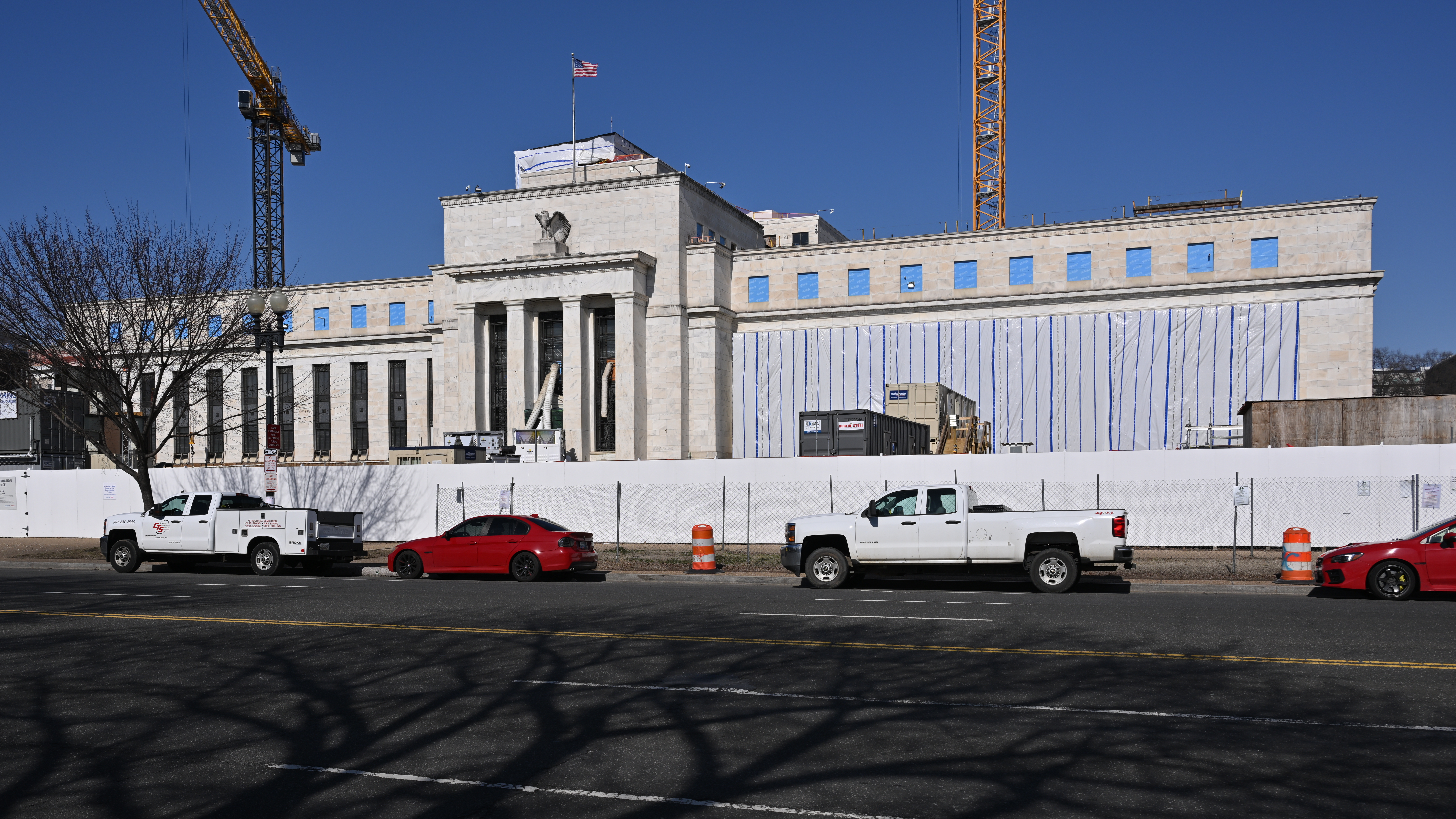
The Federal Reserve has kept its benchmark federal funds rate steady at roughly 3.5% to 3.75%, a level it has maintained as it weighs the competing risks of inflation and economic slowdown. The central bank's rate decisions ripple through the broader economy, influencing the cost of borrowing for everything from mortgages to car loans to business credit. By holding rather than cutting, the Fed signals that it does not yet see conditions warranting easier policy.
The rationale rests on two pillars. The job market remains strong, reducing the urgency to stimulate the economy through lower rates, and inflation has not yet returned to the Fed's 2% target, meaning the work of restoring price stability is not finished. Cutting rates prematurely risks reigniting inflation, a concern that has kept the central bank cautious despite pressure from some quarters to ease.
Most analysts, as a result, do not anticipate a rate cut in the near future, expecting the Fed to wait for clearer evidence that inflation is firmly under control. That expectation shapes financial markets and, by extension, the rates households face. For borrowers hoping that relief from high mortgage rates is imminent, the message is one of patience, with no quick reprieve in sight.
What 6.48 Percent Means for Florida Buyers
The 30-year fixed mortgage rate of 6.48% reported by Freddie Mac as of June 4 represents a significant cost for Florida homebuyers. At that level, the monthly payment on a typical home loan is far higher than it was during the era of historically low rates, sharply reducing the purchasing power of buyers. A given monthly budget now buys less house than it did just a few years ago, pushing some buyers to the sidelines.
The effect compounds Florida's existing affordability challenges. Home prices in many parts of the state climbed substantially during years of strong in-migration, and elevated mortgage rates layered on top of those prices put homeownership out of reach for a growing number of residents. First-time buyers, who lack the equity from a prior home sale to offset higher costs, feel the squeeze especially acutely.
The rates were also under upward pressure tied in part to elevated oil prices amid the ongoing conflict involving Iran, a factor that adds uncertainty to the outlook. Energy prices can feed into inflation expectations, which in turn influence the bond market that drives mortgage rates. The connection is indirect and the effects difficult to predict, but it points to the way global events can reverberate through the cost of a Florida home loan.
A Cooling Housing Market
Elevated borrowing costs have contributed to a cooling in the housing market, as higher rates dampen demand and slow the pace of sales. When financing is expensive, fewer buyers can afford to purchase, and some who might otherwise sell choose to stay put rather than trade a low-rate mortgage for a costlier one. The result is a market with reduced activity compared with the frenzied conditions of recent years.
The slowdown carries broad implications for Florida's economy, given how central housing has been to the state's growth. A market with fewer transactions affects not only buyers and sellers but the many industries tied to real estate, from agents and lenders to contractors and suppliers. The ripple effects extend through the economy, tempering activity in a sector that has long been a driver of the state's expansion.
At the same time, a cooling market can bring some moderation in the rapid price growth of recent years, which over time could improve affordability if rates eventually ease. The balance between softer demand and the resulting effect on prices will shape how the market evolves. For now, the dominant story is one of reduced activity as high rates weigh on both buyers and sellers across Florida.
Subdued Builder Confidence
Builder confidence has remained subdued, with the NAHB/Wells Fargo Housing Market Index registering around 37 in May 2026, a reading that signals caution among homebuilders. The index reflects builders' assessments of current sales, expected sales, and buyer traffic, and a reading at that level indicates that more builders view conditions as poor than as good. The pessimism reflects the strain that high rates and affordability challenges place on new construction.
Subdued confidence among builders has consequences for housing supply. When builders are cautious, they may slow the pace of new construction, limiting the addition of homes to a market where supply constraints have long contributed to affordability problems. In Florida, where population growth has fueled demand for housing, a pullback in construction could deepen the mismatch between supply and demand over time.
The reluctance to build also affects the construction sector itself, a significant source of employment in Florida. Slower homebuilding means reduced activity for the workers, contractors, and suppliers tied to new construction, with effects that extend through the regional economy. The health of the homebuilding industry is closely linked to the broader affordability picture, and subdued confidence signals caution ahead.
Gas Prices and the Tourism Connection
The same elevated oil prices that add upward pressure to mortgage rates also raise costs at the gas pump, with direct effects on Florida drivers and the state's tourism industry. Higher fuel prices increase the cost of daily life for households already stretched by housing costs, eroding the budgets of residents across the state. For a population that relies heavily on cars, the impact is felt widely.
For tourism, a pillar of Florida's economy, gas prices carry particular significance. Many visitors drive to Florida or rent vehicles once they arrive, and higher fuel costs can influence travel decisions and discretionary spending. When the cost of getting to and around the state rises, some travelers may scale back trips or spending, with consequences for the hospitality businesses that depend on visitor dollars.
The geopolitical roots of the elevated oil prices, tied in part to the ongoing conflict involving Iran, make the outlook uncertain. Energy markets can shift quickly in response to global developments, and the trajectory of prices is difficult to predict. The uncertainty itself complicates planning for households and businesses alike, adding to the broader sense of strain on Florida's cost of living.
The Squeeze on Cost of Living
Taken together, high mortgage rates, persistent inflation, and rising gas prices add up to a meaningful squeeze on the cost of living for Floridians. Households face higher costs to buy homes, higher prices for goods and services as inflation lingers above target, and higher expenses at the pump, all at once. The cumulative effect strains budgets across income levels and reshapes financial decisions.
The strain is especially acute for those trying to enter the housing market or manage tight budgets. The combination of elevated home prices and high mortgage rates pushes the dream of homeownership further out of reach for many, while everyday costs continue to press on household finances. For renters, too, the dynamics of the housing market and broader inflation affect affordability and stability.
The interconnected nature of these pressures means that relief in one area could ease the broader picture, but the path is uncertain. Lower mortgage rates would help affordability, but the Fed's caution suggests that easing is not imminent, while energy prices depend on volatile global conditions. For now, Floridians face a cost-of-living environment shaped by forces largely beyond their control.
What's Next
Attention turns to upcoming economic data and Federal Reserve decisions, which will shape the trajectory of interest rates and, by extension, mortgage costs. Should inflation moderate and the job market soften, the Fed could eventually move toward cutting rates, but most analysts expect patience rather than imminent action. Floridians watching for relief on mortgage rates will need to track those developments closely.
The housing market's evolution will also bear watching, as the interplay of high rates, subdued construction, and shifting demand determines whether affordability improves or deteriorates. Builder confidence and home prices will offer signals about the market's direction in the months ahead, with implications for buyers, sellers, and the broader Florida economy.
The geopolitical situation involving Iran and its effect on oil prices adds a wildcard that could influence both inflation and gas prices. Developments on that front, difficult to forecast, could shift the outlook for rates and the cost of living. For Floridians, the coming months will reveal whether the current squeeze eases or persists, with much depending on forces that extend well beyond the state's borders.
Spotted an issue with this article?
Have something to say about this story?
Write a letter to the editor