Florida Needs Rules for License Plate Cameras Before It Needs More Cameras
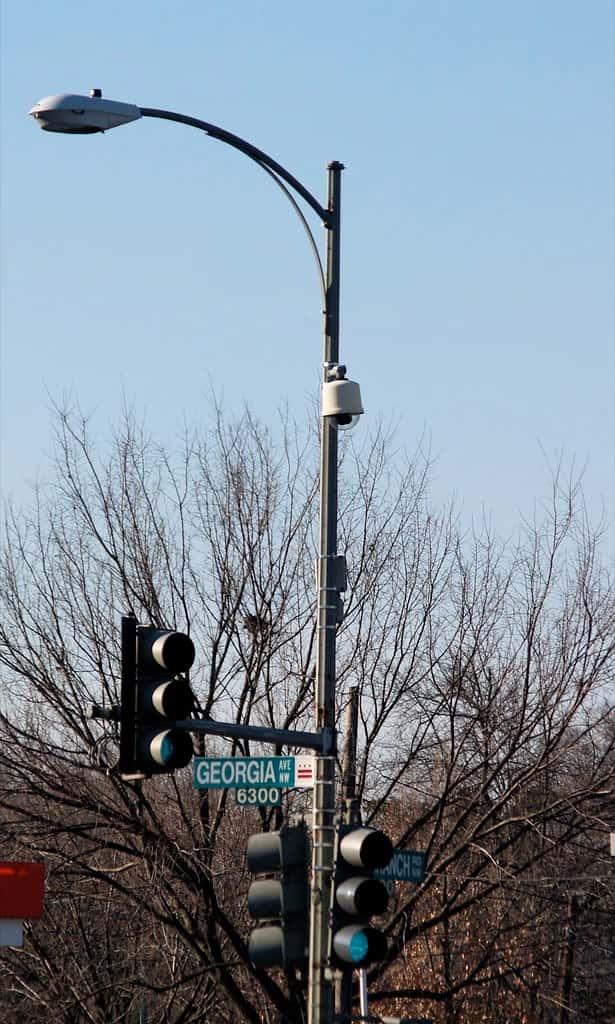
Florida now hosts roughly 7,500 automated license plate readers, one of the densest deployments in the United States. In the same week that reporting mapped where those cameras sit across Central and Northeast Florida, a sheriff's detective in Sumter County was arrested and fired over allegations that she used the license plate network, along with two other restricted law enforcement databases, to gather information about her husband's ex-wife.
Those two facts belong in the same sentence, and Florida's policymakers should read them that way. The state has built a comprehensive vehicle movement tracking system across dozens of jurisdictions without building a corresponding governance framework. That imbalance is the problem, and it is fixable.
This is not an argument that the technology should be banned. License plate readers have helped locate stolen vehicles, find missing people and identify suspects in serious crimes, and those are real public benefits. It is an argument that a tool this powerful requires rules written by the Legislature rather than terms negotiated in individual vendor contracts by hundreds of separate agencies.
What the Sumter case actually demonstrates
Supporters of the technology will note, correctly, that the alleged misuse in Sumter County was caught by an internal audit and produced criminal charges. The detective faces counts of official misconduct and offenses against computer users, and she is presumed innocent unless the state proves its case. The accountability mechanism functioned.
But look at what investigators say the mechanism had to overcome. According to the sheriff's office, the searches were accompanied by official electronic records that falsely represented them as legitimate agency investigations. If that allegation is accurate, the access control was not a technical barrier. It was an honor system with paperwork attached, and it was defeated by filling out the paperwork dishonestly.
An audit that catches misconduct after the fact is better than no audit. It is not the same as a control that prevents it. And the fact that the sheriff responded by suspending the agency's use of the entire Flock system while a full database review proceeds suggests the office itself was not confident the problem was contained to one employee.
The scale changes the stakes
A single camera at a single intersection logging plates is a modest capability. Seventy-five hundred cameras across a state, queryable by any participating agency, is something categorically different. The distinction is not about any individual search. It is about what becomes possible when the records are aggregated.
A person's vehicle movement history reveals where they worship, which doctor they see, which lawyer they visited, whether they attended a protest, where they slept last Tuesday. None of those facts is secret in isolation. Assembled into a timeline, they describe a life in a way that no individual observation does. Courts have recognized this aggregation problem in other surveillance contexts, and the reasoning applies here.
Florida agencies can and do query records logged by other jurisdictions nationally, and reporting has indicated they generally do so without a warrant. Whatever one thinks about the appropriate legal standard, that is a policy decision of real consequence, and it was not made by any Florida legislature. It emerged from the accumulated terms of commercial contracts.
Local governments are already voting on this
Leon County commissioners voted unanimously this month to pull roughly $440,000 that would have expanded reader coverage, and rejected a federal grant that would have funded cameras in Wakulla, Jefferson, Liberty and Taylor counties. A separate Homeland Security grant of about $1.6 million was delayed to September. The money was not local tax revenue, which means the decision was made on principle rather than on budget pressure.
Commission Chair Christian Caban framed his position plainly, saying he supports law enforcement but views the cameras as an invasion of privacy. A packed public hearing produced substantial opposition. That is what a policy debate looks like when it happens in the open, and it stands in contrast to the way most reader deployments across Florida have been approved, as routine procurement items.
The politics are notably scrambled. Gubernatorial candidates Byron Donalds and James Fishback have both criticized the technology, as have candidates across the field in Florida's Second Congressional District. When skepticism of a surveillance program runs across the ideological spectrum, that usually indicates the concern is structural rather than partisan.
What reasonable rules would look like
The Legislature could address most of the current gap with a handful of provisions, none of which would prevent police from using the technology for its stated purposes.
- A statutory retention limit, so that records of people never suspected of anything are deleted on a defined schedule rather than held indefinitely at a vendor's discretion.
- A documented case number requirement for every query, verified against an actual open case rather than against a free-text field the searching officer fills in.
- Mandatory periodic audits with published aggregate results, so the public can see query volumes and misuse findings without seeing individual records.
- A clear standard governing out-of-jurisdiction and out-of-state queries, and a prohibition on sharing Florida-collected data for purposes Florida law does not authorize.
- Criminal and civil penalties for misuse that are specific to this category of data rather than borrowed from general computer crime statutes.
None of that is exotic. Several states have adopted versions of these provisions, and law enforcement agencies operate under comparable constraints for other sensitive databases. The Driver and Vehicle Information Database already carries audit and training requirements through its memoranda of understanding, which is precisely why the Sumter allegations involve falsified justifications rather than unrestricted access.
The argument for acting now
The usual objection to regulating a law enforcement tool is that restrictions cost investigations. That objection deserves a serious answer, and the answer is that the rules described above do not prevent a single legitimate search. An officer investigating a homicide, a carjacking or a missing child has a case number. The requirement costs nothing.
What the rules would prevent is the search with no case behind it, which is the category the Sumter County allegations fall into and which is the category that erodes public trust in the tool overall. Every agency that uses these cameras has an interest in the network not becoming politically radioactive, and the surest path to that outcome is a series of misuse scandals with no framework in place to point to as a response.
Trust is also operationally valuable. Communities that believe surveillance infrastructure is governed cooperate with police more readily than communities that believe it is not. Departments that have watched local governments cancel contracts elsewhere in the country understand this dynamic well.
The comparison that should guide legislators
Florida already regulates an analogous system, and the comparison is instructive. Access to the Driver and Vehicle Information Database operates under memoranda of understanding requiring quarterly audits, documented training and reporting of misuse. Those requirements exist because the Legislature and the Department of Highway Safety and Motor Vehicles concluded that personal information held by the state needed protection beyond agency discretion.
License plate reader data is at least as sensitive. It reveals movement rather than static identity information, and movement over time is precisely the category courts have treated most seriously in other surveillance contexts. Yet the governing rules come from vendor contracts negotiated separately by hundreds of agencies with varying levels of legal sophistication.
The Sumter County allegations involve both systems, which makes the contrast concrete. Whatever ultimately gets proven in that case, the fact that the same alleged pattern touched a regulated state database and a largely unregulated commercial network in the same conduct is an argument for closing the gap between them.
What the technology is genuinely good at
Any honest argument for rules has to acknowledge what the tool does well, because the case for regulation is weakened by pretending the benefits are illusory. License plate readers have located stolen vehicles quickly, identified suspects in shootings and homicides, and helped find people at risk during silver and amber alerts. Those are not hypothetical uses.
The technology is particularly effective in exactly the circumstances where traditional investigation is weakest: a crime with no witnesses, a partial vehicle description and a narrow time window. A reader network can convert that into a specific plate in minutes. Detectives who have worked cases both with and without the capability describe the difference in stark terms.
None of the rules proposed here would interfere with any of that. A homicide detective has a case number. A missing person investigation has a case number. The searches that would be blocked by a documented case requirement are precisely the searches with no case behind them, which by definition are not solving crimes.
That is why the framing of this debate as police versus privacy is wrong. The interests align. Agencies that want to keep using a valuable tool have every reason to support a framework that prevents the misuse cases that get contracts canceled, and departments in other states have learned that lesson the expensive way.
What Floridians can do
Residents who want to know whether readers operate in their community can generally find out through public records requests to their city or county, though agencies have often been reluctant to publicize specific camera locations. Contract terms, retention policies and audit results are also public records in most cases.
The more direct lever is local. Reader deployments and contract renewals go before city commissions and county commissions, and those meetings accept public comment. Leon County demonstrated this month that public participation at that level changes outcomes.
The Legislature returns for its next regular session in early 2027. Bills addressing automated license plate readers have been filed in previous sessions without passing. Between now and then, Florida will add more cameras. It should also add rules.
Spotted an issue with this article?
Have something to say about this story?
Write us a letterComments
No comments yet. Be the first to weigh in.
Related Coverage

Florida's Insurance Recovery Is Real, and It Rests Entirely on Storms That Have Not Come
Sep 27

A Hurricane Season Without a Hurricane Is Borrowed Time, Not a Reprieve
Sep 25
Editorial: Florida's Summer Primary Belongs to the Few Who Show Up
Aug 14

A Quiet Hurricane Season Is the Worst Reason to Skip Preparation
Aug 13