NASA Names Artemis III Crew, Keeping Florida's Space Coast at Center of Moon Return
NASA announced the crew for its Artemis III mission on June 9, 2026 and delivered a fresh update on the program's path back to the Moon, a milestone that once again places Florida's Space Coast at the heart of America's human spaceflight ambitions. The announcement kept Kennedy Space Center and Brevard County in the national spotlight, reaffirming that the long road to the lunar surface still runs through Florida.
Artemis III, now targeted for roughly 2027, is being framed by the agency as a mission focused on complex testing in Earth orbit, a set of demonstrations that NASA considers critical groundwork before any later crewed landing near the lunar South Pole. Rather than rushing astronauts to the surface, the agency has emphasized validating the systems and procedures that a sustainable lunar presence will demand.
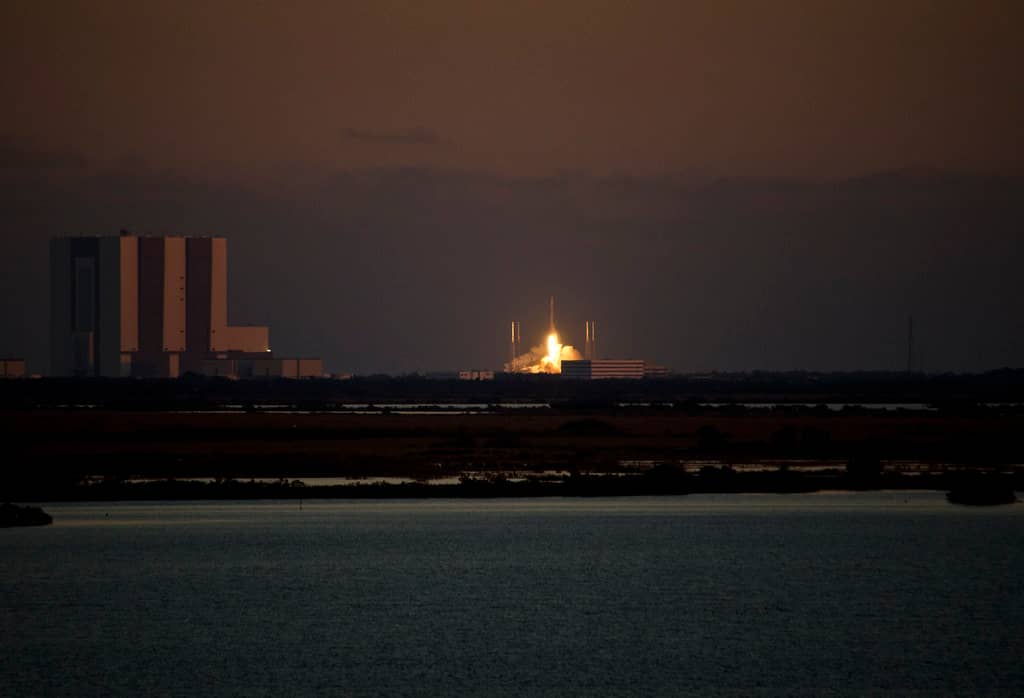
The June update followed the historic flight of Artemis II, the first crewed mission to travel around the Moon in more than half a century. That spacecraft lifted off from Kennedy Space Center's Launch Complex 39B in Florida on April 1, 2026 and returned later that month, an event that drew worldwide attention and underscored why the Space Coast remains indispensable to the program.
For Florida, the significance reaches far beyond the rocket and the headlines. Each Artemis milestone ripples through Brevard County's economy, its workforce, its tourism industry and a launch corridor that is busier in 2026 than at any point in its storied history.
Artemis II returns to Florida's launch heritage
The Artemis II mission carried NASA astronauts Reid Wiseman, Victor Glover and Christina Koch, along with Canadian Space Agency astronaut Jeremy Hansen, on a journey around the Moon. Its April 1, 2026 liftoff from Launch Complex 39B revived a tradition of crewed lunar exploration that had been dormant since the Apollo era, and it did so from the same Florida coastline that sent the first astronauts toward the Moon.
The flight was not a landing. It was a crewed flyby designed to test the spacecraft, its systems and the human factors of deep-space travel with astronauts aboard for the first time in the modern program. Returning the crew safely in April validated work that thousands of engineers, technicians and contractors had poured into the effort, much of it on the ground in Florida.
For Kennedy Space Center, the mission was a reminder of the facility's central role. Launch Complex 39B, the pad that hosted the liftoff, sits within a sprawling spaceport that has been the departure point for generations of American crews. Seeing astronauts ride a rocket from that pad toward the Moon reconnected the present program with a legacy that residents along the Space Coast regard with deep pride.
The success of Artemis II set the stage for everything that followed in June, including the crew announcement and the revised mission plan. It demonstrated that the architecture works with people on board, clearing a path toward the more ambitious objectives still ahead.
Artemis III and a deliberate path to the South Pole
With Artemis II complete, attention has turned to Artemis III, the mission whose crew NASA named on June 9. The agency described the flight, targeted for around 2027, as one centered on complex tests in Earth orbit, demonstrations the agency views as essential before astronauts attempt the far more difficult task of landing near the Moon's South Pole on later missions.
That sequencing reflects a deliberate approach. The lunar South Pole is a scientifically rich but operationally demanding destination, and NASA has signaled that it wants to prove out critical systems and procedures closer to home first. By treating Artemis III as a proving ground rather than a sprint to the surface, the agency is building toward a sustainable presence rather than a single triumphant moment.
The crew named for the mission will carry the program's next chapter, though the specific assignments will continue to be refined as training intensifies. What matters for Florida is that the preparation, integration and launch operations for Artemis III will once again concentrate enormous activity at Kennedy Space Center, keeping the spaceport humming through the rest of the decade.
The measured pace also carries practical benefits for the Space Coast. A program built around a steady cadence of complex missions, rather than a one-off spectacular, promises a longer horizon of work, investment and public interest than a single landing ever could.
The Space Coast economy rides on Artemis
Brevard County's economy is tightly woven into the fortunes of the space program. Kennedy Space Center anchors a workforce of engineers, technicians, suppliers and support staff whose jobs depend on a robust launch schedule and a steady flow of federal and commercial missions. Every Artemis milestone reinforces the demand for that talent and the businesses that serve it.
The ripple effects extend well beyond the gates of the spaceport. Restaurants, hotels, retailers and service providers across the county benefit when launches draw crowds and when the workforce expands. Housing, education and infrastructure planning in Brevard all bend around the rhythms of the launch corridor, making the health of the space program a community-wide concern rather than a niche industry story.
Tourism is a particularly visible piece of the picture. The Kennedy Space Center Visitor Complex draws visitors from around the world eager to witness launches and walk among the artifacts of American spaceflight. High-profile Artemis missions amplify that draw, turning launch days into regional events that fill hotels and pump money into the local economy.
For a county whose identity is bound up with rockets, the Artemis program is more than a federal initiative. It is an economic engine, a source of civic pride and a magnet for the kind of skilled workforce that sustains long-term prosperity along the coast.
A record launch boom at Cape Canaveral
Artemis is not the only force driving activity on Florida's coast. Cape Canaveral is in the midst of a launch boom, with SpaceX flying from the Cape at a record pace in 2026. The combination of NASA's flagship program and a surging commercial launch business has turned the corridor into one of the busiest spaceports on the planet.
That intensity creates both opportunity and complexity. A higher launch cadence means more work for the contractors, range personnel and support services that keep the corridor running, but it also demands careful coordination of pads, airspace, infrastructure and safety operations. Managing a crowded manifest is its own achievement, and Florida's spaceport has become a case study in scaling up.
The mix of government and commercial flights also diversifies the region's economic base. Where the Space Coast once rose and fell with a single program, it now benefits from multiple streams of activity, cushioning the local economy against the gaps that historically followed the end of major NASA initiatives.
For residents, the boom is unmistakable. Frequent launches have become part of daily life, visible streaks across the sky that signal a corridor operating at historic levels. That backdrop makes the Artemis announcements land not as isolated events but as the marquee chapter in a much larger Florida space story.
Tourism and public engagement on the rise
The public's appetite for spaceflight has grown alongside the launch cadence, and Florida is the prime beneficiary. The Kennedy Space Center Visitor Complex serves as the front door for that enthusiasm, offering visitors a chance to connect with the Artemis program and the broader history of human exploration. Each major mission renews interest and brings new waves of visitors to Brevard County.
Launch days have a way of transforming the region. Crowds gather along beaches, causeways and viewing areas to watch rockets climb, and that influx supports a hospitality sector built around the spectacle. For families planning trips, the prospect of witnessing a launch tied to the Moon program adds a powerful incentive to choose Florida's coast.
The engagement is not purely commercial. The Artemis missions have rekindled a sense of national purpose around exploration, and Florida sits at the center of that revival. Schoolchildren, space enthusiasts and curious travelers alike find in the Space Coast a tangible link to one of the country's most ambitious undertakings.
As Artemis III moves through preparation and training, that public interest is likely to intensify, keeping the Visitor Complex and the surrounding tourism economy positioned to capitalize on the momentum the program continues to generate.
A workforce built for the long haul
Sustaining a program of this ambition requires a deep bench of skilled workers, and the Space Coast has spent decades cultivating exactly that. Engineers, technicians and specialists who once supported earlier eras of spaceflight have given way to new generations trained for the demands of the Artemis age, and the steady cadence of missions keeps that talent pipeline flowing through Brevard County.
The presence of both NASA's program and a thriving commercial launch sector strengthens that workforce further. Workers can move among projects and employers within the same corridor, building careers that do not depend on any single mission or contract. That flexibility helps the region retain expertise that might otherwise drift elsewhere when one initiative winds down.
For Florida, the human capital concentrated along the coast is among the most valuable byproducts of the space program. The skills honed on Artemis and the commercial launches at the Cape position the region to compete for future work, ensuring that the Space Coast remains not just a launch site but a center of aerospace expertise for years to come.
What's next
The road ahead points toward Artemis III's complex Earth-orbit testing, targeted for around 2027, with the recently named crew now beginning the long preparation that such a mission requires. NASA's deliberate approach suggests a steady drumbeat of activity at Kennedy Space Center as engineers and technicians ready the systems that later South Pole landing missions will depend upon.
For Florida, the coming years promise continuity rather than a single climactic event. The combination of Artemis milestones and a record commercial launch pace at the Cape positions the Space Coast for sustained activity, with the attendant benefits for jobs, tourism and the regional economy.
The larger question is how fully Florida can convert this moment into lasting advantage, building the workforce, infrastructure and visitor experiences that a long-term lunar program demands. If the current trajectory holds, Kennedy Space Center and Brevard County will remain not just participants in America's return to the Moon but the launching ground from which that return takes flight.
Spotted an issue with this article?
Have something to say about this story?
Write a letter to the editor