Rep Maxwell Frost Leads House Probe of ICE 'Hold Loophole' Abuses in Orlando
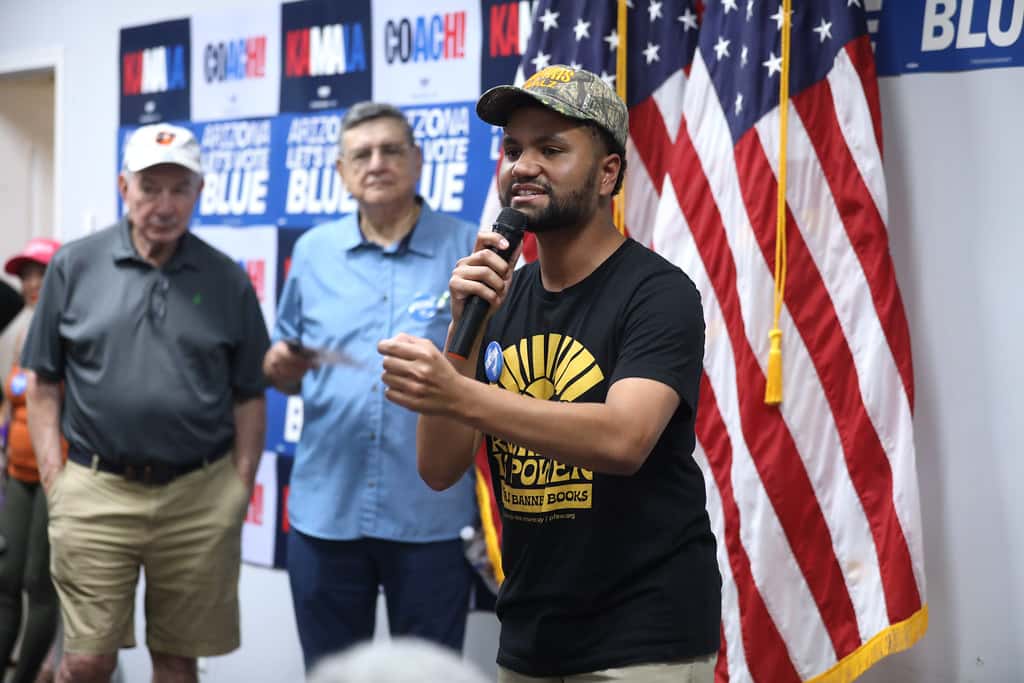
U.S. Representative Maxwell Frost led a delegation of House Oversight Committee members to Orlando on May 11, 2026, to announce a federal investigation into Immigration and Customs Enforcement detention practices and to introduce new legislation aimed at ending what the lawmaker described as an ICE practice of indefinitely holding detainees by shuttling them between county jails and federal vans. The choice of Orlando as the launch venue underscored the central Florida region's role at the front line of immigration enforcement, given that Florida hosts 345 of the 471 active federal 287(g) agreements nationwide.
Frost, who represents Florida's 10th Congressional District, framed the visit as the opening move of a sustained Oversight Committee inquiry into the operational mechanics of ICE detainer holds in local jails. The Florida congressman was joined by Oversight Committee colleagues from outside the state who, according to a release from Frost's office, plan to examine records and conduct hearings on whether the practice circumvents legal limits on warrantless federal custody.
The visit coincided with the introduction of the No Illegal Captivity and Extensions Act, the NICE Act, a bill written to end ICE's practice of moving detainees between vans and county jail cells in ways that the bill's sponsors argue function as indefinite captivity outside the statutory rules that govern federal immigration custody. The legislation lands in a state where county sheriffs have historically embraced cooperative agreements with ICE.
What the investigation is examining
According to a press release from Frost's office, the Oversight Committee investigation is focused on the operational mechanics of ICE detainer holds in local jails and on the practice of cycling detainees between federal transport vehicles and county lockups. The bill's sponsors describe that cycling pattern as a hold loophole that allows ICE to keep individuals in custody beyond the periods authorized by warrants or judicial review.
The investigation is expected to collect records from ICE field offices, county jails operating under 287(g) agreements, and federal contractors that handle detainee transport. Oversight Committee staff intend to review case files, intake and release logs, and internal ICE communications related to the holding and movement of detainees who have not been formally charged within statutory windows. Hearings in Washington are anticipated as the document review progresses.
Florida's heavy concentration of 287(g) agreements makes the state a primary source of records and case studies for the inquiry. The 287(g) program deputizes selected local law enforcement officers to perform certain federal immigration functions inside county jails, and Florida sheriffs have signed onto the program at a rate that far outpaces other states. That density gives congressional investigators a deep operational record to examine.
Oversight staff are also expected to ask for data on detainee transfers between in-state facilities and out-of-state federal contract beds. Florida's 287(g) network frequently feeds into a national chain of contracted detention facilities operated by private companies, and the movements between those facilities have historically been difficult to track from outside the federal system.
What the NICE Act would do
The No Illegal Captivity and Extensions Act, as described by its sponsors, would impose explicit limits on the duration of ICE holds in local jails and would prohibit the practice of cycling detainees between federal vehicles and detention facilities in ways that effectively extend custody without judicial review. The bill is designed to close what the sponsors describe as an operational loophole that has allowed ICE to keep individuals in custody for periods beyond the windows the statutes envision.
The legislation would require ICE to either bring detainees before an immigration judge within statutorily defined windows or release them. It would also create reporting requirements for ICE field offices and for local jails operating under 287(g) agreements, with the goal of producing public data on hold durations, transfers, and case outcomes.
Frost's office said the bill is intended to complement, not replace, existing legal protections for individuals in immigration custody. The legislation does not modify the underlying authority of ICE to enforce immigration law, but it does aim to discipline how that authority is exercised in the operational space where federal agents work alongside local jail staff.
The NICE Act also includes provisions that would standardize the way federal vehicles used for detainee transport are tracked and audited. Sponsors said those provisions are designed to give attorneys, courts, and detainees' families a more reliable way to locate individuals in federal custody during the periods when they are physically in transit between jails and processing facilities.
Why this matters for Florida
Florida hosts 345 of the 471 federal 287(g) agreements in effect across the country, a concentration that reflects state leadership's posture and the willingness of county sheriffs across the state to enter into the cooperative arrangements with ICE. That concentration makes Florida the most consequential state for any congressional investigation into the operational mechanics of immigration detention in local jails.
The 287(g) network in Florida spans urban and rural counties, with sheriffs in Polk, Lee, Pasco, Hernando, Sarasota, and many other counties holding agreements. The arrangements vary in scope, with some giving local officers authority to identify and process individuals for immigration enforcement inside the jail and others granting more limited functions. The variety produces a complex picture for any federal investigation focused on operational consistency.
The Orlando metropolitan area, which Frost represents, sits at the demographic and political center of the debate. Central Florida is home to large Puerto Rican, Mexican, Venezuelan, and Haitian populations, and to a sizable Brazilian community in suburbs east and west of the city. Immigration enforcement practices in the region touch families across documented and undocumented status lines and have shaped local political conversations for years.
The Orlando metro also hosts a federal courthouse and several immigration legal services providers that handle a steady caseload of detention-related matters. Bond hearings and habeas petitions filed on behalf of detainees held in surrounding counties frequently pass through the central Florida federal docket, giving local attorneys and judges direct exposure to the operational patterns the new federal investigation aims to examine.
Reactions from Florida officials
State officials in Tallahassee have generally supported expansive cooperation with federal immigration enforcement. Governor Ron DeSantis has signed legislation requiring state agencies to coordinate with ICE on certain operations, and state law enforcement leaders have publicly defended the use of 287(g) agreements as a public safety tool. According to past statements from the governor's office, those positions are likely to inform any state response to a federal Oversight inquiry that touches Florida operations.
Sheriffs in counties with active 287(g) agreements have routinely defended their participation in the program as voluntary cooperation that allows their offices to assist federal investigations while maintaining local control over jail operations. Several sheriff associations in the state have indicated they intend to engage with any congressional document requests through standard intergovernmental channels and to participate in hearings if invited.
Democratic members of the Florida congressional delegation, including Frost, have repeatedly raised concerns about how the practices of ICE field offices intersect with the rights of detainees and with the operational independence of county jails. The new investigation appears designed to consolidate those concerns into a structured federal record that can support targeted legislation and oversight.
Reactions from advocates and legal observers
Immigration legal aid organizations across central Florida welcomed the investigation. Several of those organizations have spent years documenting the cases of clients who reported being moved between facilities under conditions that made it difficult for attorneys to locate them or to file timely habeas petitions. Advocates have argued that those movement patterns can interfere with the constitutional protections that govern federal custody.
Civil liberties organizations including the American Civil Liberties Union of Florida have published reports describing operational concerns with 287(g) implementation. Those reports document instances of prolonged holds, delayed access to counsel, and complications around bond hearings for individuals processed through county jails operating under the federal agreements. Several of those organizations are expected to share their case files with Oversight investigators.
Religious and community organizations across the Orlando region have also voiced support for closer scrutiny of detention practices. Catholic Charities of Central Florida, several evangelical networks, and community groups serving Haitian and Venezuelan populations have all built case management capacity around immigration detention, and they routinely encounter clients whose experiences would inform an Oversight investigation.
Local impact across central Florida
Central Florida's economy depends on industries with significant immigrant workforces, including hospitality, agriculture, construction, and home health care. Operational uncertainty around immigration enforcement affects hiring practices, workforce retention, and the broader stability of family households that include both U.S. citizens and noncitizens. Business associations across the region have engaged with both sides of the immigration enforcement debate in recent years.
Orlando-area school districts, hospitals, and faith communities also experience the downstream effects of immigration detention. When a parent is held in a county jail under an ICE detainer, school counselors and emergency room social workers often become the first contacts for the affected family. Those institutions accumulate frontline observations about how detention practices play out across the region.
County jail administrators in central Florida operate at the intersection of state corrections requirements, federal immigration enforcement, and local oversight. The Orange County Jail, the Osceola County Jail, and other facilities in the region balance their operational needs with the demands of an immigration enforcement environment that has grown more complex over the past decade.
Public defenders and private criminal defense attorneys across central Florida regularly handle cases that intersect with ICE custody questions, including cases in which detention status complicates plea negotiations, bail proceedings, and trial scheduling. Several local bar associations have organized training sessions in recent years to help attorneys navigate the procedural rules that connect the state criminal system to federal immigration enforcement.
What is next
The House Oversight Committee is expected to begin formal document requests in the coming weeks, with hearings anticipated as the document review proceeds. Oversight investigations of this scope typically generate a public record over several months that includes testimony from federal officials, local law enforcement leaders, and affected individuals or their attorneys.
The NICE Act will need committee consideration in both chambers before reaching a floor vote. Bills addressing immigration detention practices have historically faced steep procedural challenges in Congress, and the legislation's path forward will depend in part on whether it can attract bipartisan support from members representing border districts and from those representing communities with large immigrant populations.
The Orlando-area focus is expected to continue. Frost's district sits at the political and demographic center of the investigation, and the congressman has built constituent service operations that interact with immigration cases on a regular basis. As the federal inquiry develops, additional visits, town halls, and field hearings in central Florida are likely, reinforcing the region's role as the operational center of gravity for the national conversation about ICE detention practices.
State-level responses will also shape the trajectory of the inquiry. If Tallahassee directs state and local agencies to limit cooperation with federal records requests, the investigation could face procedural friction that slows document collection. If state officials choose to engage, the volume of available material from Florida's heavily networked 287(g) operations could become a defining feature of the federal record that emerges over the coming months.
Spotted an issue with this article?
Have something to say about this story?
Write us a letterComments
No comments yet. Be the first to weigh in.
Related Coverage

Isaias Shuts Pensacola and Okaloosa Airports as Airlines Waive Fees and Tolls Lift on Panhandle Bridges
7h ago

Ex-CIA official pleads guilty in $194 million fraud, will forfeit $102 million in Palm Beach and Hobe Sound real estate
8h ago

11th Circuit voids septic permit ban in Indian River Lagoon manatee case after federal 'harm' rule rollback
8h ago

Trump ties disaster aid to midterm campaign as Hurricane Isaias nears Florida Panhandle
1d ago