Rick Scott Breaks With Trump and Rubio Over Venezuela Sanctions, Demands Reinstatement After Death of Political Prisoner
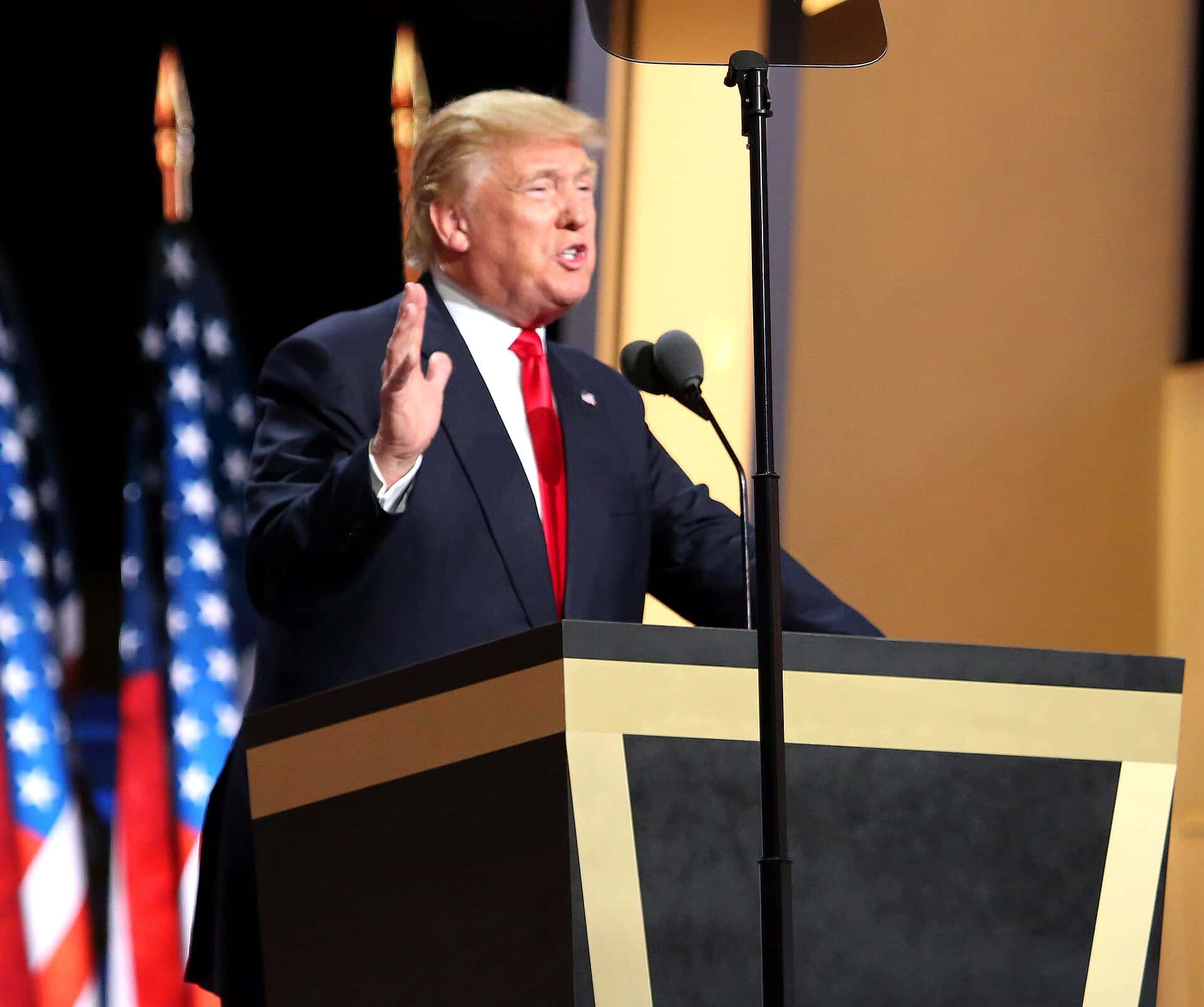
Florida Sen. Rick Scott broke publicly with President Donald Trump and Secretary of State Marco Rubio in early May 2026, demanding the reinstatement of sanctions against Venezuelan government official Delcy Rodriguez and sharply criticizing the Trump administration's evolving policy toward the Maduro government. The split marked one of the most visible intra-Republican foreign policy confrontations of the Trump second term and carried particular resonance in Florida, where hundreds of thousands of Venezuelan exiles and their families have settled and where Venezuela policy ranks among the most emotionally and politically charged issues in the state's large Latino electorate.
Scott's break was precipitated by the death of Venezuelan political prisoner Victor Hugo Quero Navas, who died in custody and was reportedly buried in secret without his family's knowledge or consent. Scott cited Quero Navas's death as evidence that engagement with the Maduro government and its officials was morally indefensible, and he called on the Trump administration to reverse the decision to lift sanctions on Rodriguez, whom he described as the head of a cartel and despicable. The senator's language was unusually blunt for an intra-party dispute, and his willingness to challenge the direction of Rubio, a longtime ally and fellow Florida Republican, underscored the depth of his opposition to the administration's posture toward Caracas.
Background: The Sanctions Decision and Rodriguez's Role
The roots of Scott's challenge lie in a significant shift in U.S. policy toward Venezuela that the Trump administration implemented in the months before the public confrontation. In March 2026, the administration lifted sanctions against Rodriguez, a senior Venezuelan government official who had served in high-level roles under Nicolas Maduro, and recognized her in a context that allowed Venezuela to regain control of certain diplomatic missions and state assets abroad. The decision was framed within a broader diplomatic effort by the administration to manage migration flows and other bilateral concerns with Caracas, an approach that represented a notable departure from the hardline posture that characterized U.S. Venezuela policy during both the first Trump term and the Biden years.
Rubio, who vacated his Florida Senate seat to become Secretary of State, had built his political identity in part on an uncompromising stance toward Maduro's government and other authoritarian governments in the Western Hemisphere. His involvement in the sanctions relief decision surprised many observers who had expected him to maintain the hawkish Cuba, Venezuela, and Nicaragua posture that defined his Senate career. The decision also put him in direct conflict with Scott, who had worked alongside Rubio for years on a shared anti-authoritarian platform and who viewed any accommodation of Maduro's inner circle as a betrayal of the Venezuelan people and the exile community that had placed enormous trust in Florida's Republican delegation.
Rodriguez has been a central figure in Venezuela's governing structure under Maduro, occupying roles that critics and human rights organizations have associated with repression, economic mismanagement, and the suppression of political dissent. Scott's characterization of her as the head of a cartel reflected the view held by many Venezuelan opposition figures and exile organizations that her government was not a legitimate diplomatic interlocutor but a criminal enterprise that had destroyed the country's democratic institutions and driven millions of its own citizens into exile.
Victor Hugo Quero Navas and the Human Cost of Venezuela's Political Prisons
The immediate trigger for Scott's public break was the reported death of Victor Hugo Quero Navas in Venezuelan government custody. Quero Navas had been held as a political prisoner, one of thousands of Venezuelans detained by the Maduro government over the years on charges that human rights organizations routinely describe as politically motivated. His death in custody, followed by his secret burial without proper notification to his family, represented for Scott and for the Venezuelan diaspora exactly the kind of human rights atrocity that made any diplomatic engagement with the Maduro government unconscionable.
Cases like that of Quero Navas are not isolated in Venezuela's political prison system. Human rights organizations monitoring Venezuela have documented systematic patterns of arbitrary detention, torture, and denial of due process against individuals perceived as opponents of or threats to the Maduro government. The secretive nature of his burial deprived his family of the ability to grieve, recover his remains, or seek any accountability for the circumstances of his death. For the Venezuelan exile community in Florida, many of whom have relatives still in Venezuela or who fled the country in fear of exactly this kind of treatment, the case was both a personal and a political provocation.
Scott used Quero Navas's death to anchor his demand for policy reversal. His argument was not merely that Rodriguez was an unpleasant diplomatic partner but that the administration's decision to lift sanctions against her had been made in the context of a government that was actively killing political prisoners and then burying them in secret. He framed the sanctions relief as an implicit endorsement of conduct that the United States government had, under both Republican and Democratic administrations, treated as a disqualifying offense for normal diplomatic relations.
Florida's Venezuelan Diaspora and the Political Stakes
Scott's confrontation with the Trump administration on Venezuela is impossible to understand without accounting for the extraordinary concentration of Venezuelan immigrants and exiles in South Florida, particularly in Miami-Dade County. Miami has become one of the largest Venezuelan diaspora communities in the world, with tens of thousands of Venezuelans who fled Maduro's government taking up residence in the region over the past decade. That community spans the political and economic spectrum but is overwhelmingly opposed to the Maduro government and deeply attentive to U.S. policy toward Caracas.
The Venezuelan diaspora in South Florida includes professionals, entrepreneurs, journalists, former government officials, and political activists who left Venezuela under duress and who maintain close ties to opposition networks inside the country. Many have family members who remain in Venezuela and who are therefore directly affected by any change in the conditions the Maduro government operates under, including the sanctions regime that the United States has used for years as a tool to pressure the government to release political prisoners, hold free elections, and restore democratic institutions.
For this community, the Trump administration's decision to lift sanctions on Rodriguez was not an abstraction of foreign policy but a tangible signal about whether the United States government would continue to stand with Venezuelans who had risked everything to oppose a government that had imprisoned, tortured, and killed its own citizens. Scott's willingness to publicly challenge the administration on this point gave voice to a community that had invested enormous faith in Florida's Republican political leaders and that felt the sanctions relief had undercut the commitments those leaders had made.
The political arithmetic of South Florida amplifies the stakes of this dispute significantly. Miami-Dade County has undergone a pronounced shift toward the Republican Party in recent election cycles, driven in substantial part by Latino voters, including Venezuelan Americans, who have moved away from the Democratic Party over concerns about socialism, government overreach, and policy toward authoritarian Latin American governments. That political realignment has made Miami-Dade a competitive county in statewide races where it was once reliably Democratic, and the Venezuelan community's engagement and cohesion as a voting bloc has been a meaningful factor in that shift.
The Intra-Republican Split on Latin American Policy
Scott's public disagreement with Trump and Rubio on Venezuela reflects a broader and growing tension within the Republican Party on foreign policy toward authoritarian governments in the Western Hemisphere. The tension runs between two distinct camps whose differences on this specific issue became harder to paper over as the Trump second term developed a more transactional approach to Latin American diplomacy.
One camp, which Scott represents on the Venezuela question, holds to a hardline anti-authoritarian position that treats diplomatic recognition of and engagement with governments like Maduro's as a moral failure and a strategic mistake. This position was the dominant one in Republican foreign policy for most of the period from the mid-2010s through the early years of the Trump second term, and it drew heavily on the testimony and political engagement of exile communities from Cuba, Venezuela, and Nicaragua who brought firsthand accounts of political repression to the attention of American policymakers.
The other camp, which reflects the isolationist and transactional instincts that have grown more prominent in the Trump political movement, is less focused on democratic governance in other countries and more interested in bilateral arrangements that serve specific U.S. interests, including migration management, energy supply, and the return of nationals subject to deportation from the United States. From this perspective, lifting sanctions on a single official may be an acceptable cost if it facilitates a practical agreement on issues that the administration views as higher priorities.
Rubio's position is particularly complex because his public career was built almost entirely on the first camp's premises. His decision as Secretary of State to operate within the second camp's logic on this issue created a schism with allies like Scott who had followed Rubio's lead on Latin American policy for years. That schism is a genuine realignment within Florida's Republican political world, and its resolution will say much about which faction of the party ultimately shapes U.S. policy toward the authoritarian governments of the hemisphere.
The 2026 Florida Senate Special Election Context
The political dimension of Scott's confrontation with the Trump administration cannot be separated from the approaching 2026 Florida Senate special election scheduled for November 3, 2026. When Rubio left the Senate to become Secretary of State, his seat was vacated and will be filled through a special election. The race is taking place in a political environment where Venezuela policy, immigration, and the loyalty of the South Florida Latino community are live and contested questions.
Florida's electorate includes one of the most politically engaged Latino communities in the United States, concentrated in South Florida but present across the state. Venezuelan Americans, Cuban Americans, Colombian Americans, and other diaspora communities with firsthand experience of authoritarian governments have been a critical component of the Republican coalition in Florida's recent electoral successes. Those communities are watching the Venezuela sanctions dispute closely, and the signals they take from it will influence their engagement and enthusiasm in the November special election and in the 2026 midterm elections more broadly.
Scott, as Florida's senior senator and one of the state's most prominent Republican voices, is positioning himself within this debate in a way that aligns him with the exile community's preferences and against the transactional direction of the administration's Latin America policy. Whether that positioning reflects a genuine policy conviction, a strategic calculation about Florida's electoral landscape, or both, the effect is to keep the Venezuela issue alive as a point of accountability in Florida politics at exactly the moment when the state's Senate seat and broader electoral alignment are in motion.
The dispute between Scott and the Trump administration over Rodriguez and Venezuela is unlikely to be resolved quickly. Scott has called for the reinstatement of sanctions, a step that would require the administration to reverse a decision it has already made and publicly defended. The administration, for its part, has not indicated any willingness to revisit the sanctions relief, leaving Scott in the position of a dissenting voice within his own party on one of the issues his state's diaspora communities care about most. That position will define an important dimension of Florida's political landscape as the state heads toward a consequential election cycle in the fall of 2026.
Spotted an issue with this article?
Have something to say about this story?
Write us a letterComments
No comments yet. Be the first to weigh in.
Related Coverage

Isaias Shuts Pensacola and Okaloosa Airports as Airlines Waive Fees and Tolls Lift on Panhandle Bridges
3h ago

Ex-CIA official pleads guilty in $194 million fraud, will forfeit $102 million in Palm Beach and Hobe Sound real estate
3h ago

11th Circuit voids septic permit ban in Indian River Lagoon manatee case after federal 'harm' rule rollback
3h ago
Trump ties disaster aid to midterm campaign as Hurricane Isaias nears Florida Panhandle
23h ago