Rubio Announces New Cuba Sanctions Targeting 11 Officials and 3 Agencies, Miami Cuban Community Calls It a Step Forward
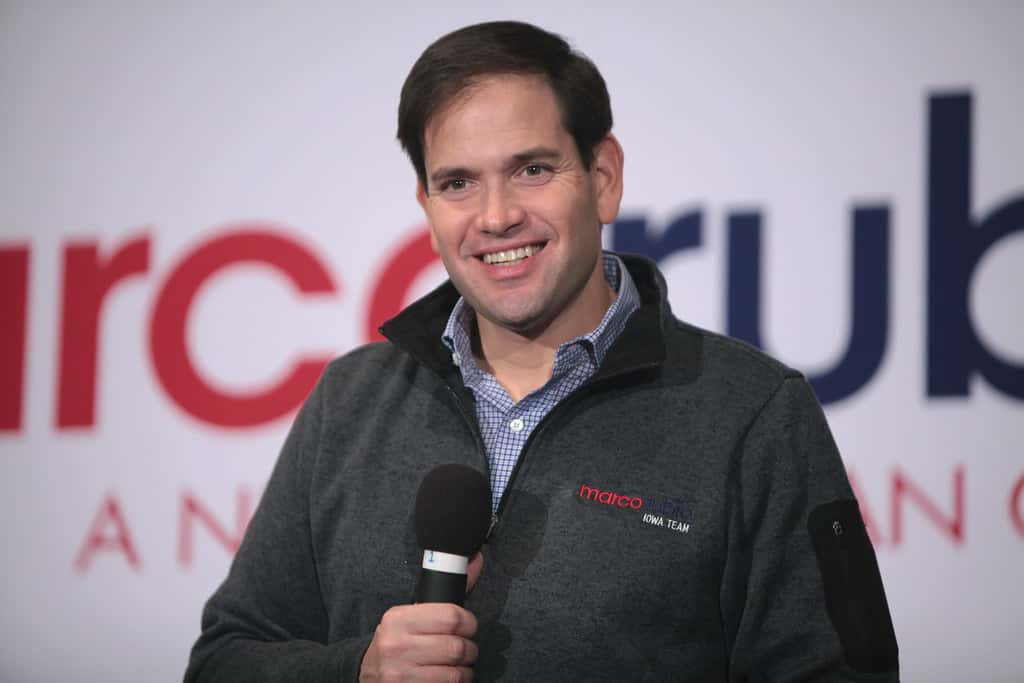
Secretary of State Marco Rubio announced on May 18 that the United States is imposing sanctions on 11 senior members of Cuba's communist government and three security organizations responsible for what the State Department described as the brutal repression of the Cuban people. The sanctions list includes the Cuban Interior Ministry, the National Revolutionary Police, and the Directorate of Intelligence, along with ministers, deputy ministers, military generals, and Communist Party officials. Rubio, who represents Florida's interests as the nation's top diplomat and whose Cuban heritage has shaped his approach to Western Hemisphere policy, said additional sanctions targeting the regime can be expected in the coming days and weeks.
Who Was Sanctioned
The 11 individuals sanctioned in the May 18 designation include some of the most senior figures in Cuba's governmental and security apparatus. The list reaches the president of the National Assembly, along with the ministers of communications, mines and energy, and justice. Several individuals working within the Cuban armed forces are included, among them the deputy minister of defense and three generals. Members of the Cuban Communist Party's central structures are also named in the designations.
The three sanctioned organizations, the Interior Ministry, the National Revolutionary Police, and the Directorate of Intelligence, represent core pillars of the Cuban state's coercive capacity. These agencies are responsible for surveillance, detention, interrogation, and enforcement activities that human rights organizations have documented as the primary instruments used to suppress political dissent, restrict movement and expression, and detain activists, journalists, and ordinary citizens who challenge the government. Sanctioning the organizations along with named individuals sends a signal that the administration is targeting the institutional structure of repression rather than treating human rights violations as the conduct of rogue actors.
The State Department said the sanctions are part of the Trump administration's comprehensive campaign to address what it describes as pressing national security threats posed by Cuba's communist regime and to hold accountable both the regime and those who provide material support. Under Rubio's leadership, the State Department has escalated pressure on Cuba across multiple fronts, including visa restrictions, financial sanctions, and diplomatic isolation measures that mark a significant shift from the Obama-era engagement policies that the current administration has formally abandoned.
Miami's Cuban American Community Responds
South Florida's Cuban American community, the largest in the United States and the most politically influential Cuban diaspora community in the world, responded to the sanctions with broad approval and calls for even more aggressive action. Leaders in Miami praised the designations as a meaningful step while emphasizing that the scale of repression in Cuba demands a response that goes beyond the 11 individuals and three organizations named in the first round of sanctions.
Miguel Cossio, the executive director of the American Museum of the Cuban Diaspora in South Florida, noted that the sanction targets appeared carefully chosen. Cossio said the museum and the Foundation for Human Rights in Cuba had prepared a dossier recommending dozens of Cuban officials for sanctions designation, and that seeing names from that list included in the official announcement suggested the State Department was incorporating input from diaspora organizations with detailed knowledge of the Cuban security apparatus's structure and personnel.
Activists in Miami's Cuban American community said the sanctions strike at the core of the repressive dictatorship by targeting the organizational structures and the specific officials who carry out surveillance, detention, and violence against dissidents. Community leaders at CBS Miami said the designations are a step in the right direction while calling for continued escalation and for the international community to join the United States in holding Cuba's leadership accountable. Rubio's personal credibility with the Cuban American community, rooted in his family's experience leaving Cuba before the revolution took full hold, gives the sanctions particular resonance in South Florida beyond their technical legal effect.
Florida's Unique Stake in US-Cuba Policy
No state in the country has a greater stake in US-Cuba policy than Florida. Miami-Dade County is home to the largest concentration of Cuban Americans in the world outside of Cuba itself, with more than one million people of Cuban heritage living in the region. The community's political engagement, economic success, and organizational sophistication have made it one of the most influential diaspora communities in American foreign policy history, shaping multiple presidential elections and driving Congressional attention to Cuba issues for decades.
The sanctions carry practical implications for Floridians with family in Cuba, for Cuban Americans doing business across the Straits, and for the diplomatic and policy environment that governs how Cuba is governed from Havana and engaged from Washington. When the United States imposes sanctions on Cuban officials, it affects the ability of those officials to travel to the United States, access the American financial system, and conduct transactions with American persons and entities. For a diaspora community in South Florida that includes many people with ongoing family connections to Cuba, the policy environment that shapes what kinds of engagement are legally permissible has direct personal consequences.
Florida's two US senators, Rubio as Secretary of State and Rick Scott in his Senate role, have both maintained the hardline position on Cuba that has characterized much of the state's political establishment across both parties in recent decades. Scott has been a consistent advocate for maintaining and expanding economic and diplomatic pressure on Havana, and his position has generally aligned with Rubio's approach to the issue in the executive branch. That alignment gives Florida's interests particular representation in the policy process, though critics note that the sanctions-only approach has not produced political change in Cuba over six decades of application.
The Broader Context of US-Cuba Tensions
The May 18 sanctions come at a moment of escalating tensions between Washington and Havana that has featured a range of American pressure measures in the months leading up to the designations. Reporting from investigative outlets has documented dozens of American spy flights over Cuba in recent months, and US economic pressure has driven some foreign companies to exit the Cuban market rather than risk US sanctions exposure. The cumulative effect of these measures has increased economic strain in Cuba, where shortages of food, medicine, fuel, and basic goods have reached severe levels that human rights organizations and journalists have documented through direct reporting from the island.
Rubio's announcement that additional sanctions will follow in the coming days and weeks suggests that the May 18 designations are the opening phase of a sustained escalation rather than a standalone action. The State Department's approach under Rubio's leadership has combined overt sanctions with broader diplomatic pressure, including efforts to build coalitions with European and Latin American governments that had historically maintained more engagement with Cuba than Washington's posture allows. Some of those efforts have produced limited results, as Cuba retains diplomatic relationships and economic ties with Russia, China, and other countries that do not share Washington's approach.
Cuba's government denounced the sanctions through its state media apparatus, characterizing them as an extension of decades of American hostility intended to destabilize the island and damage its economy. The official Cuban response followed a predictable pattern of attributing domestic economic problems to American embargo and sanctions policy rather than acknowledging the role of government mismanagement and authoritarian governance in producing the conditions that have led millions of Cubans to flee to Florida and other parts of the United States in recent years.
What the Sanctions Mean Legally
The sanctions designations announced by Rubio operate under the Global Magnitsky Human Rights Accountability Act and other executive authorities that allow the administration to restrict the financial and travel access of designated individuals and entities. Sanctioned persons and organizations are blocked from accessing the US financial system, cannot conduct transactions with American persons or companies, and are denied entry to the United States. US persons who do business with sanctioned entities can face penalties under the enforcement authority of the Treasury Department's Office of Foreign Assets Control.
The practical effect on the sanctioned Cuban officials is primarily symbolic given that the individuals in question are not typically traveling to the United States, holding assets in the American financial system, or conducting transactions with US companies. The designations carry more weight as a statement of American policy and as potential deterrents to third-country entities and individuals who might otherwise do business with the sanctioned officials or organizations. European financial institutions and companies that have extensive access to the US financial system have historically been sensitive to American sanctions designations, and the inclusion of specific Cuban officials on the US list creates compliance obligations for those entities that can effectively limit the sanctioned parties' access to the global financial system beyond just the direct US relationship.
What's Next
Rubio's explicit statement that more sanctions will follow gives the Cuban government and the international community a clear signal that the pressure campaign is ongoing. South Florida's Cuban American advocacy organizations, which have submitted lists of recommended designation targets to the State Department, said they expect to see the additional rounds of sanctions address a broader range of the Cuban security and government apparatus. The Foundation for Human Rights in Cuba and similar organizations are expected to continue working with the State Department to provide documentation of specific individuals' roles in repressive acts that meet the legal standard for sanctions designation under US law.
Spotted an issue with this article?
Have something to say about this story?
Write us a letterComments
No comments yet. Be the first to weigh in.
Related Coverage

Isaias Shuts Pensacola and Okaloosa Airports as Airlines Waive Fees and Tolls Lift on Panhandle Bridges
3h ago

Ex-CIA official pleads guilty in $194 million fraud, will forfeit $102 million in Palm Beach and Hobe Sound real estate
4h ago
11th Circuit voids septic permit ban in Indian River Lagoon manatee case after federal 'harm' rule rollback
4h ago
Trump ties disaster aid to midterm campaign as Hurricane Isaias nears Florida Panhandle
23h ago