Rubio Huddles With SOUTHCOM Chief on Operation Southern Spear, Florida Diaspora Watches Closely
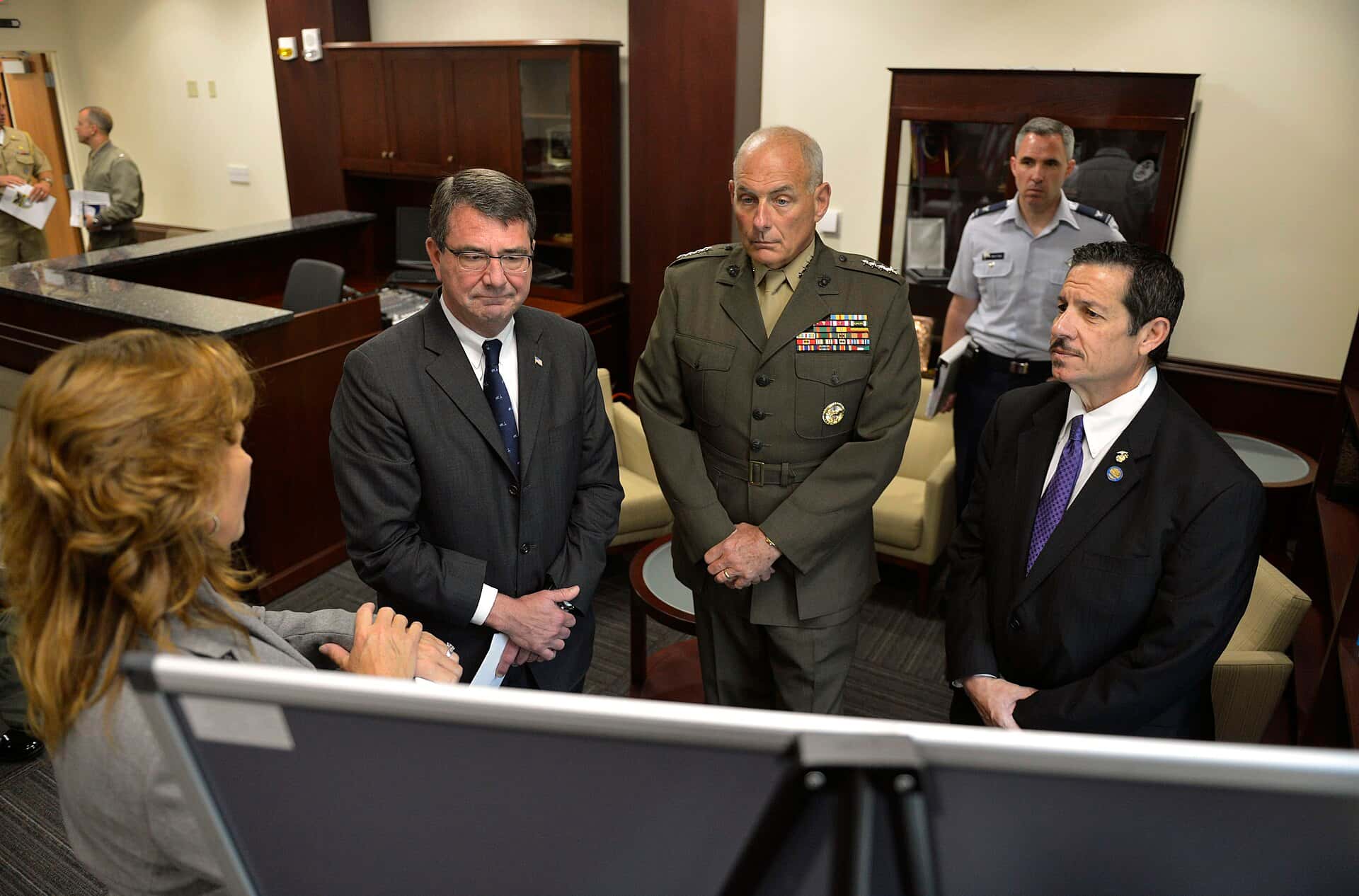
U.S. Secretary of State Marco Rubio met with U.S. Southern Command's senior leadership in early May 2026 to coordinate on Operation Southern Spear, the U.S. military campaign targeting Venezuela and the drug trafficking networks the Trump administration has tied to the Maduro government. The session with General Francis L. Donovan, the four-star Marine commander who leads SOUTHCOM from its Doral headquarters in Miami-Dade County, placed Florida at the center of one of the most consequential Western Hemisphere security operations of the current administration.
For Florida, the meeting carried unmistakable political weight. Rubio is the former U.S. senator from Florida who now leads American diplomacy under President Trump, and he is widely seen as the most influential federal voice on policy toward Cuba, Venezuela, and the Caribbean. Operation Southern Spear plays out in waters and through diplomatic channels that touch the daily lives of more than one million Cuban Americans, Venezuelan Americans, and Nicaraguan Americans who live in South Florida and have followed regime conflicts in their home countries for decades.
What happened in the meeting
Rubio and Donovan met as part of the regular coordination cycle between the State Department and SOUTHCOM on hemispheric security matters. Operation Southern Spear, the named military campaign announced in late 2025, has involved a buildup of U.S. naval and air assets in the Caribbean and adjacent waters and has been publicly framed by the administration as a counter-drug operation targeting narcotics trafficking organizations operating out of Venezuela. The State Department's role focuses on diplomatic coordination with partner nations across the Caribbean and Latin America, while SOUTHCOM executes the military operational components.
The session followed a period of heightened activity in the operation. U.S. Navy ships, Coast Guard cutters, and supporting aviation assets have been operating in the Caribbean in numbers not seen in decades, and the administration has authorized lethal strikes against vessels suspected of trafficking narcotics. Several strikes since late 2025 have generated international attention and legal scrutiny, with the administration defending the actions as consistent with U.S. law and international authorities and critics arguing the operations have stretched legal frameworks.
Specific outcomes of the Rubio-Donovan meeting were not publicly released. State Department and SOUTHCOM coordination meetings typically address intelligence sharing, diplomatic engagement with regional partners, and the boundaries between diplomatic and military action. Both officials have spoken publicly in recent weeks about the importance of partner-nation cooperation across the Caribbean basin. The meeting is one of several coordination touchpoints between the State Department and the combatant command, including regular policy review sessions and ad hoc discussions tied to specific operational developments.
The administration has framed Operation Southern Spear within a broader doctrine of pressure against the Maduro government and the trafficking networks the White House has identified as targets. That doctrine combines economic sanctions administered through Treasury Department channels, diplomatic pressure coordinated through the State Department, and military presence and action coordinated through SOUTHCOM. Rubio's role places him at the diplomatic apex of that framework, with regular interaction across the inter-agency process.
Why this matters for Florida
Few American states have a more direct stake in the outcome of Operation Southern Spear than Florida. The state is home to roughly 1.3 million Cuban Americans, the largest concentration outside Cuba itself, and to one of the largest Venezuelan diaspora communities in the United States. South Florida cities including Doral, Hialeah, Miami, and Sweetwater have been organizing centers for opposition activity against the Maduro and Castro-era regimes for years. Venezuelan immigrant business owners, Cuban-American radio hosts, and exile political organizations have helped shape U.S. policy debates from outside Washington.
SOUTHCOM's location in Doral places the four-star combatant command headquarters inside Miami-Dade County, in the heart of one of the largest Latin American diaspora populations in the country. The headquarters complex employs thousands of military and civilian personnel and serves as the nerve center for U.S. military activity across the entire Latin American and Caribbean theater. Decisions made at SOUTHCOM ripple through embassies, partner-nation militaries, and refugee policy across the Western Hemisphere.
Florida's economy is also entwined with the broader hemispheric context. PortMiami and Port Everglades are among the busiest cargo and cruise ports in the Western Hemisphere, with extensive trade and passenger ties across the Caribbean and Latin America. Miami International Airport is the largest single hub for travel between the United States and Latin America. Any sustained military operation that touches the maritime and aviation environment around the region has implications for Florida commerce, even when the operation is framed primarily as a counter-drug effort.
Reaction from Florida communities
South Florida's Cuban American and Venezuelan American political organizations have generally supported the administration's aggressive posture toward the Maduro government. Groups including the Cuban American National Foundation, Venezuelan opposition organizations operating from Doral, and Hialeah-based political action committees have lobbied for years for tougher U.S. action against the regimes in Havana and Caracas. The escalation of Operation Southern Spear has been welcomed in many of those circles as evidence of meaningful federal engagement.
Other voices have raised legal and humanitarian concerns. South Florida-based immigration attorneys, human rights organizations, and some clergy leaders have called for clearer legal authorities for the operation's lethal strikes and have warned that escalation could destabilize fragile partner-nation governments across the Caribbean. Some Venezuelan opposition figures have publicly cautioned against military action that could give the Maduro government a propaganda victory or destabilize neighboring countries.
Florida's congressional delegation has weighed in across party lines. Republican members representing South Florida districts have generally supported the administration's posture and pushed for additional sanctions and operational authorities. Some Democratic members have raised process and oversight questions, particularly about the lethal strikes and the legal frameworks governing them. The Senate and House intelligence and armed services committees have received classified briefings on the operation.
Broader context
Operation Southern Spear sits within a longer arc of U.S. policy toward Venezuela that has unfolded across multiple administrations. The United States stopped recognizing Nicolas Maduro as Venezuela's legitimate president in 2019 and has maintained an extensive sanctions regime targeting senior Venezuelan officials and the state oil company. The current administration has escalated both the sanctions framework and the military footprint in the region, framing the trafficking-related strikes as falling within established counter-narcotics authorities.
The military component of the operation has placed significant U.S. naval and air assets in the Caribbean and adjacent waters. Reporting on the deployment has described aircraft carriers, amphibious ships, attack submarines, and supporting aviation operating in numbers not seen in routine peacetime postures. SOUTHCOM and the Navy have publicly highlighted exercises with partner nations including Trinidad and Tobago, Guyana, and others as part of the operational presence.
The diplomatic dimension is equally complex. Several Caribbean nations have publicly questioned aspects of the U.S. military buildup, citing concerns about regional sovereignty and the potential for civilian harm from lethal strikes. Other nations have welcomed the U.S. presence as a counterweight to Venezuelan and Cuban influence in the region. The State Department, under Rubio's direction, has been engaged in extensive partner-nation outreach to manage the diplomatic challenges around the operation. Embassies across the Caribbean basin have been active venues for those engagements, with U.S. ambassadors and senior diplomats hosting partner-nation officials on a near-weekly basis through the spring.
Congressional oversight has tracked the operation since its public announcement. The Senate Foreign Relations Committee, the House Foreign Affairs Committee, and the armed services and intelligence committees in both chambers have received classified briefings, held public hearings, and corresponded with the administration on the operation's legal authorities and conduct. Members from Florida's delegation, several of whom serve on relevant committees, have used those settings to press for additional information and to advocate for their preferred policy approaches.
Rubio's role as Secretary versus senator
One important distinction in the current moment is the nature of Rubio's authority. As Secretary of State, Rubio is the senior diplomat of the executive branch, charged with implementing the administration's foreign policy and managing diplomatic relations with other countries. That role is distinct from the position he held for more than a decade as a U.S. senator from Florida, where his primary tools were legislation, oversight hearings, and public advocacy.
As Secretary, Rubio chairs the diplomatic side of the Operation Southern Spear coordination and is the administration's principal interlocutor with foreign governments on the operation. His engagement with General Donovan reflects the executive branch's standard process for synchronizing diplomatic and military activity. His past expertise as a senator who specialized in Western Hemisphere policy has informed how he approaches the role, but the institutional levers are different.
For South Florida political watchers, the shift in Rubio's role has changed the way the diaspora community engages with federal Cuba and Venezuela policy. Constituents who once called the senator's office in Doral or Tallahassee now route their concerns through congressional offices held by other elected officials, while advocacy aimed at executive policy flows through different channels. The new arrangement has reshaped some of the political infrastructure that has historically connected South Florida's diaspora communities to Washington.
What is next
The administration is expected to maintain the operational tempo of Operation Southern Spear into the summer, with continued maritime patrols, partner-nation engagement, and the possibility of additional sanctions actions. State Department announcements in coming weeks may further detail diplomatic initiatives with Caribbean partners and any new measures targeting the Venezuelan oil and financial sectors. Congressional oversight hearings on the operation's legal authorities are likely to continue.
For South Florida, the political environment around Cuba and Venezuela policy remains highly engaged. Mayoral and city council elections in Doral, Hialeah, and Miami often turn in part on candidates' positions on hemispheric policy, and the federal debate over Operation Southern Spear is feeding directly into those local conversations. Diaspora community organizations are continuing to organize public events, candidate forums, and lobbying trips to Washington focused on the operation and its consequences.
The broader question of how the operation ends, whether through a negotiated transition in Caracas, a continued grinding sanctions and military posture, or some unexpected development, remains open. Rubio's coordination with SOUTHCOM is one piece of a complicated picture that involves Congress, the courts, partner nations across the hemisphere, and the resilience of the Maduro government itself. For Florida residents whose family histories and political identities are tied to events in Cuba and Venezuela, the developments are being watched as closely as any foreign policy story of the past decade.
Spotted an issue with this article?
Have something to say about this story?
Write us a letterComments
No comments yet. Be the first to weigh in.
Related Coverage

Isaias Shuts Pensacola and Okaloosa Airports as Airlines Waive Fees and Tolls Lift on Panhandle Bridges
7h ago

Ex-CIA official pleads guilty in $194 million fraud, will forfeit $102 million in Palm Beach and Hobe Sound real estate
8h ago
11th Circuit voids septic permit ban in Indian River Lagoon manatee case after federal 'harm' rule rollback
8h ago
Trump ties disaster aid to midterm campaign as Hurricane Isaias nears Florida Panhandle
1d ago