Rubio Takes Center Stage on Budget and World Cup Diplomacy, Boosting Florida Clout
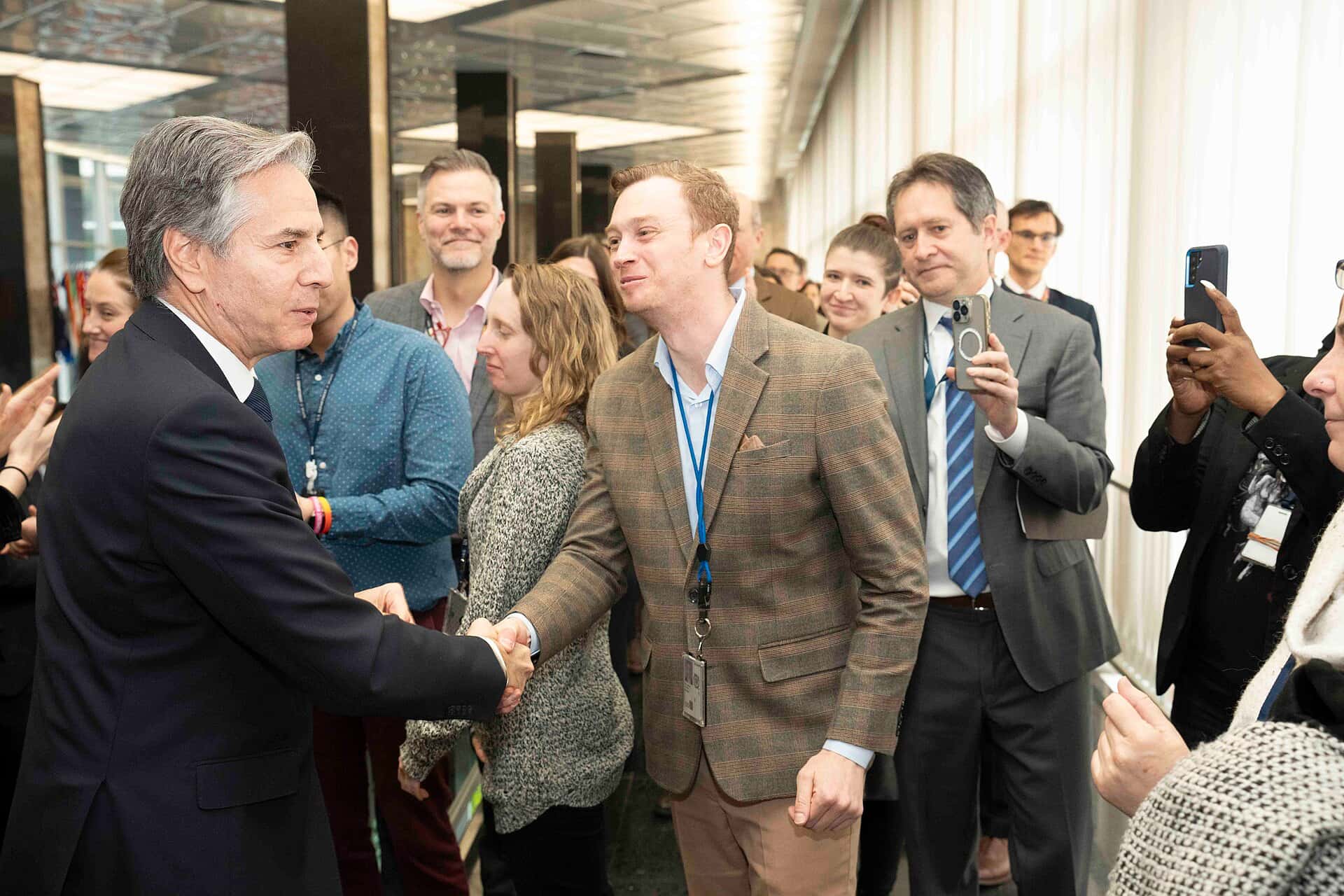
Marco Rubio, Florida's former United States senator and now the nation's secretary of state, moved to the center of Washington's foreign-policy debate in early June 2026, testifying before House and Senate committees on the proposed fiscal year 2027 budget for the Department of State and preparing to lead American delegations into the diplomacy surrounding the 2026 World Cup. For Floridians, Rubio's prominence carries practical weight: a Floridian in one of the most senior posts in the federal government gives the state an outsized voice in decisions about foreign aid, trade, security, and the global events now unfolding on American soil, including matches in Miami Gardens.
The week's events placed Rubio at the intersection of two storylines that matter to the state. The budget testimony, delivered around June 2 and 3, put him at the helm of an effort to defend and reshape the State Department's spending priorities before lawmakers. The World Cup travel, planned for June 12 and 13 in Los Angeles, casts him as the public face of American sports diplomacy at a tournament that has turned cities such as Miami into international stages. Both threads run through Florida's interests in tourism, commerce, and its standing in national politics.
For a state that has often measured its influence in Washington by the seniority of its congressional delegation, having a former senator atop the diplomatic establishment marks a notable shift. The secretary of state shapes how the country engages the world, and Rubio's roots in South Florida, with its dense ties to Latin America and the Caribbean, give that engagement a distinctly Floridian flavor. The result is a moment when the state's interests and the nation's foreign policy appear unusually aligned.
A Floridian Atop the State Department
Rubio's path from the Florida legislature to the United States Senate and now to secretary of state reflects a steady rise that has kept the state in the national conversation. As the country's chief diplomat, he oversees embassies, foreign-aid programs, and the day-to-day conduct of relations with governments around the world. The post is among the most visible in the executive branch, and its occupant helps set the tone for how the United States presents itself abroad.
For Florida, the appointment translates into proximity to power. State officials, business leaders, and advocacy groups often find that access flows more easily when a senior federal official shares their region's perspective. Issues that resonate strongly in Florida, from policy toward Latin American governments to trade ties and migration, sit squarely within the State Department's remit, giving the state a natural channel into those debates.
That influence is not guaranteed to produce specific outcomes, and the secretary of state must balance national priorities against any single state's interests. Still, the symbolic and practical value of a Floridian in the role is significant. It elevates the state's profile in foreign-policy circles and ensures that perspectives common in South Florida and across the state are represented at the highest levels of diplomatic decision-making.
Defending the FY27 State Department Budget
The budget testimony in early June placed Rubio before House and Senate committees to make the case for the administration's fiscal year 2027 request for the State Department. Budget hearings of this kind are a central ritual of Washington governance, giving lawmakers a chance to question the department's priorities and giving the secretary a platform to defend them. The outcome shapes funding for diplomacy, foreign assistance, and the global infrastructure that supports American interests abroad.
The debate over State Department funding carries stakes that reach into Florida. Foreign-aid programs, security cooperation, and trade promotion all affect the regions and industries with which the state does business, particularly across Latin America and the Caribbean. Decisions about how much to spend, and where, can influence stability and economic conditions in places closely tied to Florida's economy and its large immigrant communities.
Lawmakers on both sides of the aisle typically scrutinize such requests closely, weighing competing priorities against fiscal constraints. The specifics of the FY27 request and its reception in Congress will play out over the coming months as the appropriations process advances. For now, Rubio's testimony marked the opening of that conversation and underscored his role as the administration's lead advocate for the department's resources.
The testimony also placed Rubio in a familiar setting from a new vantage point. Having served in the Senate, he is accustomed to the rhythms of congressional hearings, but he now appears as a witness defending an administration's priorities rather than as a lawmaker posing the questions. That shift in perspective gives him a distinctive command of the process, and it gives Florida an advocate who understands both sides of the table on which federal spending decisions are made.
Leading World Cup Diplomacy
Rubio was scheduled to travel to Los Angeles on June 12 and 13 to lead the United States delegation to the U.S. Men's National Team's first match of the 2026 World Cup, against Paraguay. The trip illustrates how major sporting events have become venues for diplomacy, drawing heads of state and senior officials together around a shared global spectacle. With the tournament co-hosted by the United States, Mexico, and Canada, American officials have a prominent role to play on home soil.
The visit was also expected to include a meeting with Paraguay's president aimed at advancing bilateral ties on security, trade, and technology. Sideline meetings of this kind are a common feature of high-profile events, allowing leaders to discuss cooperation in a setting that pairs formal diplomacy with public goodwill. The agenda items, spanning security, commerce, and technology, reflect the practical substance that often underlies such gatherings.
For Florida, the World Cup diplomacy angle resonates because the state is itself a major host, with Miami Gardens scheduled to stage seven matches. The convergence of a Floridian secretary of state leading the nation's sports diplomacy while South Florida hosts a significant share of the tournament reinforces the state's visibility on the world stage. The tournament becomes both an economic event for Florida and a backdrop for the foreign-policy work Rubio now leads.
The choice of Paraguay as the focus of a sideline meeting also points toward Latin America, a region central to Rubio's portfolio and to Florida's interests. South Florida's deep ties to the hemisphere mean that engagement with Latin American governments carries particular relevance for the state's communities and economy. A meeting framed around security, trade, and technology speaks to the practical substance of relationships that matter to many Floridians with roots across the region.
A UFC Memorandum and the Reach of Soft Power
Rubio was also set to take part in the signing of a memorandum of understanding with UFC on June 11. Agreements of this nature signal the ways in which culture, sports, and entertainment increasingly intersect with public diplomacy and the projection of American influence abroad. The details and scope of the understanding will determine its practical significance, but its timing alongside the World Cup underscores a broader emphasis on engagement through high-profile platforms.
Soft power, the ability to shape preferences through appeal rather than coercion, has long been a tool of American diplomacy, and sports and entertainment figure prominently in it. Partnerships with major organizations can extend the reach of that influence and create opportunities for engagement that traditional diplomacy alone may not provide. The approach reflects a recognition that global audiences are reached through many channels.
Floridians have a particular stake in these intersections given the state's prominence as a hub for sports, entertainment, and international travel. Events and partnerships that raise the country's profile abroad can also raise Florida's, drawing visitors and attention to a state that markets itself as a global destination. The practical effects of any single agreement remain to be seen, but the pattern points to diplomacy conducted across an expanding range of arenas.
What Rubio's Rise Means for Florida
The combination of budget leadership and World Cup diplomacy showcases the breadth of Rubio's portfolio and, by extension, the reach of Florida's influence in Washington. A state that sends a former senator to lead the State Department gains a vantage point on national and international affairs that few others enjoy. That position can amplify Florida's voice on issues from foreign aid to trade to migration policy.
The benefits are not automatic. A secretary of state serves the entire country, and the demands of the role require balancing many competing interests. Yet the alignment between Florida's outlook, shaped by its deep international ties, and the responsibilities of the office creates a natural overlap. The state's perspective is more likely to be present in high-level deliberations when one of its own holds the post.
For residents, the practical upshot is harder to measure but real. Decisions about diplomacy and foreign assistance ripple through Florida's economy and communities, and having a Floridian shaping those decisions raises the odds that the state's concerns are heard. The long-term value lies in the state's elevated standing in the national conversation about America's place in the world.
What's Next
In the near term, attention turns to Rubio's Los Angeles trip and the meetings expected on its sidelines, which will offer an early read on the administration's diplomatic priorities at the World Cup. The substance of any agreements reached with Paraguay's government will become clearer in the weeks that follow, as will the practical scope of the UFC memorandum signed June 11.
On the budget front, the fiscal year 2027 request now enters the lengthy appropriations process, where lawmakers will debate funding levels and priorities for the State Department. The outcome will shape the resources available for diplomacy and foreign assistance, with implications for the regions and industries tied to Florida. That process will unfold over the coming months.
For Floridians, the larger story is the state's continued prominence in Washington through Rubio's role. As the World Cup plays out across the country, including in Miami Gardens, and as the budget debate advances, the state will have a familiar figure near the center of both. How that influence is used, and what it yields, will become clearer as the summer progresses.
Spotted an issue with this article?
Have something to say about this story?
Write us a letterComments
No comments yet. Be the first to weigh in.
Related Coverage

Federal organ donation crackdown nears as Florida groups await rankings and Tampa nonprofit appeals court loss
4h ago

Air defense systems deployed at Mar-a-Lago as intelligence memo to Rubio warns of advanced Iranian plots
4h ago

South Florida Federal Judge Enters $668,390 Penalty Against Honduran Woman Who Ignored Deportation Order
21h ago
RFK Jr. and Dr. Oz Unveil Rewritten Federal Alzheimer's Plan at Broward Health as Florida Cases Near 580,000
22h ago