The Space Coast Keeps a Record Launch Pace as Cape Canaveral Adds Drone Defenses
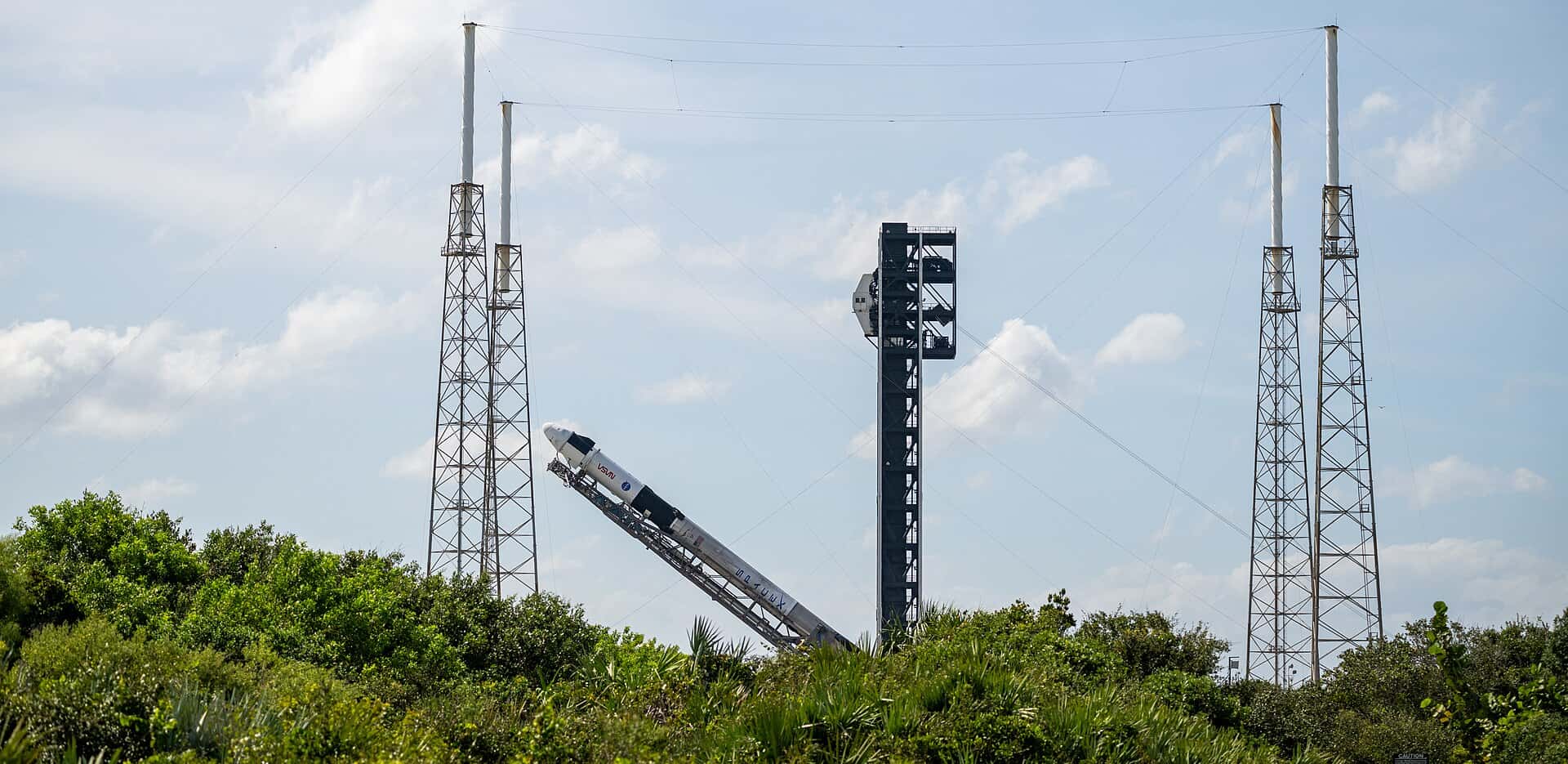
Florida's Space Coast is sustaining a launch cadence near the record pace it set in 2025, when the region hosted 109 orbital launches. A Falcon 9 mission on September 13 carrying O3b mPOWER satellites from Space Launch Complex 40 was the 105th Falcon 9 flight of 2026 and part of an overall global total that had reached 217 orbital launch attempts for the year. The Space Force, meanwhile, has said it is building up counter-drone defenses at Cape Canaveral, reflecting how the range's operational tempo has changed what securing it requires.
Where the launch numbers stand
The September 13 Falcon 9 launch from Space Launch Complex 40 was the 105th Falcon 9 flight of 2026. Space Launch Complex 40 alone has now hosted more than 345 Falcon 9 launches over the pad's operational life.
Those figures cover SpaceX's Falcon 9 globally rather than launches from Florida specifically, since the company also flies from Vandenberg Space Force Base in California. The Florida share is substantial but not the whole total.
The Space Coast set its record in 2025 with 109 orbital launches from Cape Canaveral Space Force Station and Kennedy Space Center combined, across all providers. That figure included SpaceX alongside United Launch Alliance and other operators.
A comprehensive 2026 year-to-date total for all Space Coast launches across all providers is not readily available from public summaries, and the figures cited here should be read as indicative of pace rather than as a precise count.
How the cadence was built
The Space Coast's launch rate has risen by roughly an order of magnitude over the past decade, driven principally by reusable rocket operations that allow the same booster to fly repeatedly with short turnaround.
Satellite constellation deployment is the demand driver. Broadband constellations require hundreds or thousands of satellites, and replenishment continues indefinitely as spacecraft reach end of life.
Commercial customers have joined government ones. The September 13 O3b mPOWER mission carried commercial communications satellites, a category that now represents a substantial share of the manifest.
Launch infrastructure has been developed to match. Multiple pads operate at Cape Canaveral Space Force Station and Kennedy Space Center, with range operations coordinating traffic that would have been unimaginable in earlier eras.
What a record pace requires
Range operations are the limiting factor as much as vehicle availability. Each launch requires airspace and maritime closures, tracking assets, and safety analysis, and the Space Force has invested in automating parts of that process.
Turnaround between launches from the same pad has compressed dramatically. SpaceX set a record in August by launching two Falcon 9 rockets 38 minutes apart, a cadence that would have been considered impossible a decade ago.
Workforce demands scale with cadence. Launch operations, payload processing, range support, and recovery operations all require trained personnel, and Brevard County's aerospace workforce has grown accordingly.
Supply chain capacity constrains the upper limit. Rocket production, satellite manufacturing, and propellant supply all have to sustain the rate that launch operations can theoretically support.
The counter-drone development
The Space Force has said it is building up counter-drone defenses at Cape Canaveral. Unauthorized drone activity near launch operations presents both a safety risk and a security concern for national security payloads.
Range safety is the immediate issue. A drone in restricted airspace during a launch window can force a scrub, which carries substantial cost and disrupts a manifest built around narrow windows.
Security considerations apply to national security launches specifically, where the payload and its operations are classified and where surveillance concerns are distinct from safety.
The infrastructure investment reflects how the range's role has changed. A facility hosting more than a hundred launches annually, including national security missions, faces a different threat picture than one hosting a handful.
Brevard County's economy
The Space Coast economy is built around the launch industry in a way few American regions are built around a single sector. Launch operations, aerospace manufacturing, engineering services, and the supply chain serving them dominate employment.
Patrick Space Force Base and Cape Canaveral Space Force Station add a military component that reinforces the civilian and commercial activity. The three sectors share workforce and infrastructure.
Governor Ron DeSantis recently announced nearly $23 million in awards to strengthen Florida's defense workforce, military communities, and defense industrial base, funding that reaches the Space Coast among other regions.
The state also announced the launch of federal Workforce Pell Grant funding for short-term training, with aviation and marine maintenance among the eligible fields. That announcement was made at Eastern Florida State College on the Space Coast.
The visitor economy
Launches have become a tourism draw in their own right. Cape Canaveral and Kennedy Space Center draw visitors specifically to watch, and the Kennedy Space Center Visitor Complex operates as a major attraction.
Brevard County hotels, restaurants, and beach communities benefit from launch-driven visitation, which is distributed across the year rather than concentrated in traditional tourist seasons.
That diversification matters given conditions elsewhere in Florida tourism, where Orlando theme park operators have reported divergent results and one has described softening across the broader market since June.
Launch schedules are subject to change on short notice, which complicates trip planning for visitors traveling specifically to watch. Published schedules from range operators and launch providers are the reliable source.
What comes after Artemis II
NASA launched Artemis II from Launch Complex 39B at Kennedy Space Center on April 1, 2026, carrying astronauts Reid Wiseman, Victor Glover, and Christina Koch along with Canadian Space Agency astronaut Jeremy Hansen on an approximately ten-day mission around the Moon.
That flight was the first crewed mission toward the Moon since Apollo 17 in 1972, and it established Kennedy Space Center as the departure point for the current generation of lunar exploration.
Crewed operations to the International Space Station continue from Florida as well, with Crew Dragon missions launching from Cape Canaveral and Kennedy on a regular cadence.
The combination of crewed exploration, commercial constellation deployment, and national security launch gives the Space Coast a manifest diversity that no other American launch site matches.
What it means for Florida
For Brevard County, the launch rate is the primary economic variable. Employment, real estate demand, and local government revenue all track the industry's activity level.
For the state, aerospace represents a sector that is expanding while others are flat. Florida's unemployment rate at 4.5 percent sits above the national average, and growth sectors carry disproportionate weight.
For residents across the eastern peninsula, launches are visible from a wide area, and the frequency has made them a routine part of life rather than an event.
How reusability changed the economics
The launch rate the Space Coast now sustains would not be possible under the expendable model that governed the industry for most of its history. Under that model, each flight consumed a vehicle that took months to build, which capped cadence at whatever the factory could produce.
Booster recovery and reflight broke that constraint. A recovered first stage returns to service after inspection and refurbishment rather than being replaced, which decouples launch rate from production rate for the most expensive component.
The downstream effect has been on price, which in turn has expanded the set of missions that make economic sense. Constellations of hundreds or thousands of satellites became viable only when the cost per kilogram to orbit fell far enough.
Recovery operations themselves have become routine infrastructure, with droneships and landing zones supporting a tempo that requires its own logistics chain along Florida's coast.
Competition on the range
SpaceX accounts for the majority of Space Coast launches, but it is not the only operator. United Launch Alliance flies from Cape Canaveral, Blue Origin has developed facilities in the area, and additional providers have pursued pad access.
That competition matters for the range's long-term position. A launch site dependent on a single provider carries concentration risk; one hosting multiple operators has a more durable basis for continued investment.
Pad availability has become a genuine constraint as the manifest has grown. Launch complexes are finite, refurbishing older pads for new vehicles takes years, and providers compete for the sites that exist.
Space Florida, the state's aerospace development authority, works on infrastructure and business development intended to keep operators choosing Florida over alternative sites, which is the state-level version of the same competition.
What a launch does to the surrounding area
Each launch requires closing airspace and maritime areas downrange, which affects commercial aviation routing out of Orlando and the Space Coast as well as fishing and recreational boating along the coast.
Road traffic is the more visible local effect. Popular viewing locations along the Brevard County coastline fill before high-profile launches, and causeways and beach access roads experience congestion that local agencies now plan around routinely.
Sonic booms from returning boosters have become a regular feature of life in the region. Landings at Cape Canaveral produce booms audible across a wide area, and local agencies publish notices ahead of them.
Environmental monitoring accompanies the operational tempo, covering launch emissions, noise, and effects on the wildlife refuge land that surrounds much of the launch infrastructure. Merritt Island National Wildlife Refuge shares its boundaries with Kennedy Space Center.
What's next
The launch manifest through the remainder of 2026 includes continued constellation deployment, commercial missions, national security launches, and crewed operations. Whether the Space Coast exceeds its 2025 record will depend on the final quarter.
Counter-drone infrastructure at Cape Canaveral will develop alongside the operational tempo, as will range automation intended to support higher launch rates.
Published launch schedules from the range and from individual providers remain the most reliable source for anyone planning to watch, given how frequently dates move.
Spotted an issue with this article?
Have something to say about this story?
Write us a letterComments
No comments yet. Be the first to weigh in.
Related Coverage

FEMA Sends Florida $94 Million for Hurricane Repairs and Storm Hardening as Panhandle Awaits Isaias Decision
1h ago

DeSantis' map was built to flip four Florida House seats to the GOP. Here's where the races stand
2h ago
Blue Origin Seeks FAA Approval for Up to 50 New Glenn Launches a Year From Cape Canaveral
3h ago
Second Kennedy Space Center Contractor Plans Layoffs as NASA Brings Work In-House
22h ago