SpaceX Launches Starfall Demo From Cape Canaveral, Testing Capsules That Bring Cargo Home From Orbit
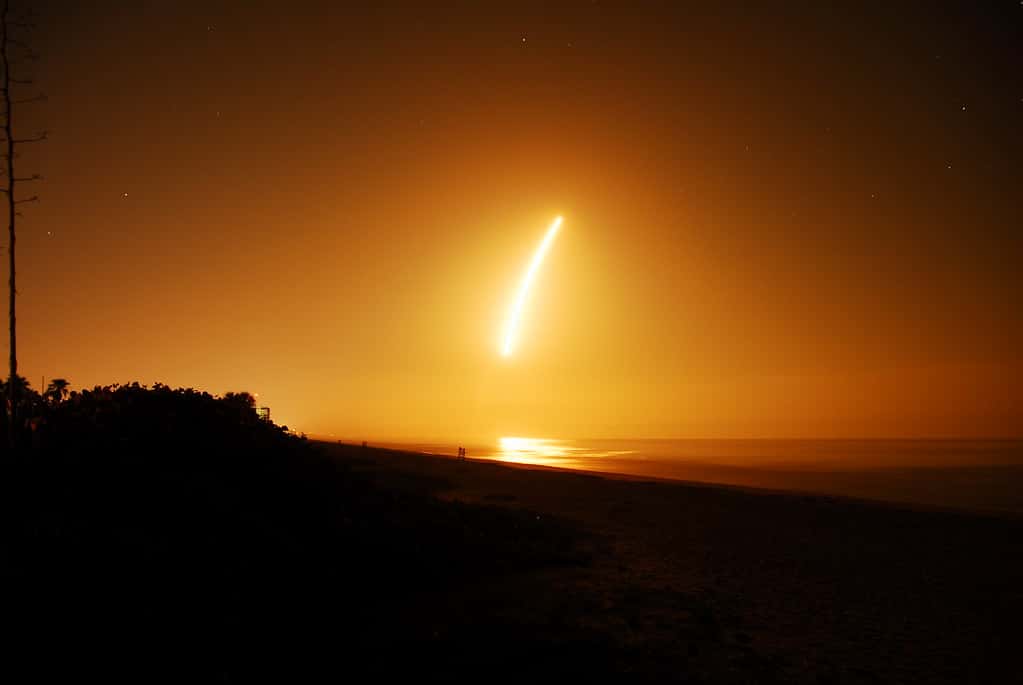
SpaceX launched its Project Starfall demonstration mission to low-Earth orbit on June 23, 2026, lifting off at sunrise from Space Launch Complex 40 at Cape Canaveral Space Force Station. The roughly 6:43 a.m. liftoff window, according to local coverage, sent a new class of technology toward orbit and added another marquee mission to the busy schedule that defines Florida's Space Coast. For Brevard County and the broader Florida aerospace economy, the flight is more than a single spectacle in the predawn sky. It is an early test of a capability that backers say could expand what the state's launch corridor does for a living.
Project Starfall aims to mass-produce reentry capsules designed to autonomously transport valuable customer experiments and other payloads safely back from space to Earth. Where much of the modern launch business has focused on delivering satellites and crew to orbit, Starfall is pointed in the opposite direction, at the return trip. The capsules are intended to carry the products of in-orbit manufacturing, scientific samples, and other high-value cargo down through the atmosphere and back to a recoverable landing, all without a human pilot aboard.
The demonstration flight is meant to validate the systems that make that round trip possible, from the orbital hardware to the heat protection and guidance needed for a controlled descent. If the approach proves out at scale, it would knit Florida's launch infrastructure into a longer supply chain that begins on the Space Coast, runs to orbit, and ends with manufactured goods or research coming back to Earth. That is a different proposition than launch alone, and one with potential to broaden the kinds of work the region supports.
What Project Starfall Is Trying to Prove
The central idea behind Starfall is returnability at volume. Sending material to orbit has grown dramatically cheaper and more routine over the past decade, but bringing things back has remained comparatively rare and expensive. A fleet of mass-produced reentry capsules is intended to change that calculus, turning the descent from orbit into a repeatable, schedulable service rather than a bespoke engineering project for each payload.
For customers pursuing in-orbit manufacturing, the return leg is the whole point. Certain materials, crystals, and biological products are thought to form differently in microgravity, and the commercial value depends on getting the finished goods back to a laboratory or factory on the ground. A reliable capsule that can autonomously carry those products home is the missing link between an experiment in orbit and a product on a shelf.
The June 23 mission is framed as a demonstration, meaning the priority is gathering data and proving the concept rather than running a full commercial operation. Engineers will be watching how the hardware performs across each phase of flight, the kind of information that shapes whether and how quickly the capsules move toward routine service. Success would strengthen the case that Florida's launch sites can anchor not just departures but arrivals.
Mass production is a defining ambition of the program, and it sets Starfall apart from one-off recovery efforts. Building capsules at volume is intended to drive down the cost of each return trip and to make the service predictable enough that customers can plan around it. That manufacturing emphasis also has implications for Florida, since producing and refurbishing a fleet of capsules at scale tends to require facilities, suppliers, and skilled workers located near the launch corridor where the hardware flies.
A Launch Cadence That Rarely Pauses
The Starfall demo arrives amid a launch tempo on the Space Coast that has become a near-constant feature of life in Brevard County. Just weeks earlier, on June 4, 2026, a Falcon 9 launched the Starlink 10-43 mission from the same Space Launch Complex 40, carrying 29 broadband satellites to orbit. The two flights, separated by less than three weeks from the same pad, illustrate how frequently the region's infrastructure is now cycling through missions.
That cadence matters because it turns Cape Canaveral and the surrounding facilities into something closer to an operating transportation hub than an occasional event venue. High flight rates keep launch teams, range crews, and supporting contractors continuously engaged, and they make the Space Coast a dependable departure point for operators planning missions far in advance.
The steady rhythm also underpins the case for new ventures like Starfall. A capsule service built on returning payloads needs frequent, reliable access to orbit on the front end, and the established pace of launches from SLC-40 helps make that plausible. The same pads that loft Starlink satellites can serve as the on-ramp for missions whose defining feature is the trip home.
For Brevard County residents, the frequency has reshaped expectations of what a normal week looks like. Launches that once would have drawn statewide attention now occur with enough regularity that they have become part of the local backdrop, even as each one still sends a visible signal of the region's standing in the space industry. The recurring activity keeps the supply chains, range services, and ground crews that support launches in continuous operation rather than spinning up and down between rare events.
Brevard County's Aerospace Economy
Florida's Space Coast, anchored in Brevard County, has built much of its modern identity and a large share of its economy around the launch corridor that includes Cape Canaveral Space Force Station and Kennedy Space Center. The facilities and the companies that work alongside them support a regional workforce that spans engineering, manufacturing, range operations, logistics, and the many service businesses that grow up around a major industrial cluster.
Each mission flown from the area reinforces the value of that base. A frequent and varied launch schedule sustains specialized jobs that depend on continuous activity, and it gives the region a reason to keep investing in the facilities, training, and supply relationships that make complex spaceflight possible. The presence of both a federal launch range and NASA's Kennedy Space Center gives Brevard a depth of capability that few places can match.
New lines of business carry the prospect of widening that economic footprint. A returnable-capsule program and the in-orbit manufacturing it is meant to enable would draw on Florida's existing aerospace strengths while potentially creating demand for new kinds of facilities and skills tied to recovering and processing payloads that come back from space. That is the kind of expansion local officials and industry boosters have long sought as they work to diversify the Space Coast economy beyond launch alone.
Tourism and the Public Spectacle
Beyond payrolls and contracts, the launch schedule has become a draw for visitors. Liftoffs from Cape Canaveral pull crowds to beaches, causeways, and viewing areas across Brevard County, and a sunrise launch like the Starfall demonstration offers the kind of dramatic backdrop that brings people out before dawn. The flow of spectators supports hotels, restaurants, and attractions throughout the region.
The connection between launches and tourism gives the cadence a second economic dimension. When missions fly often, the Space Coast can market itself as a place where visitors have a real chance of seeing a rocket go up, rather than hoping to time a trip around a rare event. That reliability strengthens the area's appeal as a destination tied to spaceflight.
The novelty of programs like Starfall can add to the interest. A mission centered on bringing cargo back from orbit is a different story than a routine satellite deployment, and the public attention around new capabilities can reinforce the region's reputation as a center of cutting-edge space activity. That reputation, in turn, feeds the visitor economy that has grown alongside the launch business.
The In-Orbit Manufacturing Connection
One of the most consequential threads running through the Starfall demonstration is its link to in-orbit manufacturing, an emerging field built on the idea that the unique environment of space can produce materials and products that are difficult or impossible to make on the ground. The commercial promise of that field has always depended on a practical way to bring the results home.
By focusing on reentry capsules that can autonomously deliver payloads back to Earth, Starfall is positioned at exactly that bottleneck. If the capsules can return manufactured goods reliably and at reasonable cost, they would help turn in-orbit manufacturing from an aspiration into a workable business model, with Florida's launch corridor serving as the gateway in both directions.
For the state, the implications reach beyond any single company. A maturing market for returnable payloads could attract firms that want to be close to the launch sites and recovery operations, deepening the aerospace ecosystem already concentrated around Cape Canaveral and Kennedy Space Center. The demonstration mission is an early step, but it points toward a future in which the Space Coast handles more of the full life cycle of space-based industry.
The research dimension adds another reason for Florida to watch the program closely. Universities, laboratories, and commercial researchers who want to run experiments in microgravity need a dependable way to recover their samples, and a steady capsule service would lower the barrier to that kind of work. Should Florida become the place where such payloads both launch and return, the state could position itself as a natural home for the institutions and companies that build their work around access to space.
What's Next
With the demonstration flight launched, attention turns to the data it produces and how that information shapes the path toward operational service. Engineers will assess how the capsule technology performed against expectations, and those results will inform decisions about scaling production and moving from a demonstration footing toward routine missions that carry paying customers' payloads back from orbit.
The pace of activity at Cape Canaveral suggests the region will keep providing the frequent orbital access that a returnable-capsule program requires. With missions like the June 4 Starlink launch and the June 23 Starfall demo flying from the same complex within weeks of each other, the infrastructure to support an expanding range of mission types is already in steady use, and additional flights are a constant on the Space Coast calendar.
For Florida, the longer-term question is how much of the new business takes root locally. If returnable capsules and in-orbit manufacturing grow into established markets, Brevard County stands to benefit from jobs, investment, and tourism tied not only to launches but to the products and research returning from space. The Starfall demonstration is one mission among many on the Space Coast schedule, but it offers an early look at a capability that could broaden what Florida's aerospace sector does in the years ahead.
Spotted an issue with this article?
Have something to say about this story?
Write a letter to the editor