Tampa Bay Rays Post Franchise-Best Start at 31-15, Lead AL East in Triumphant Return to Tropicana Field
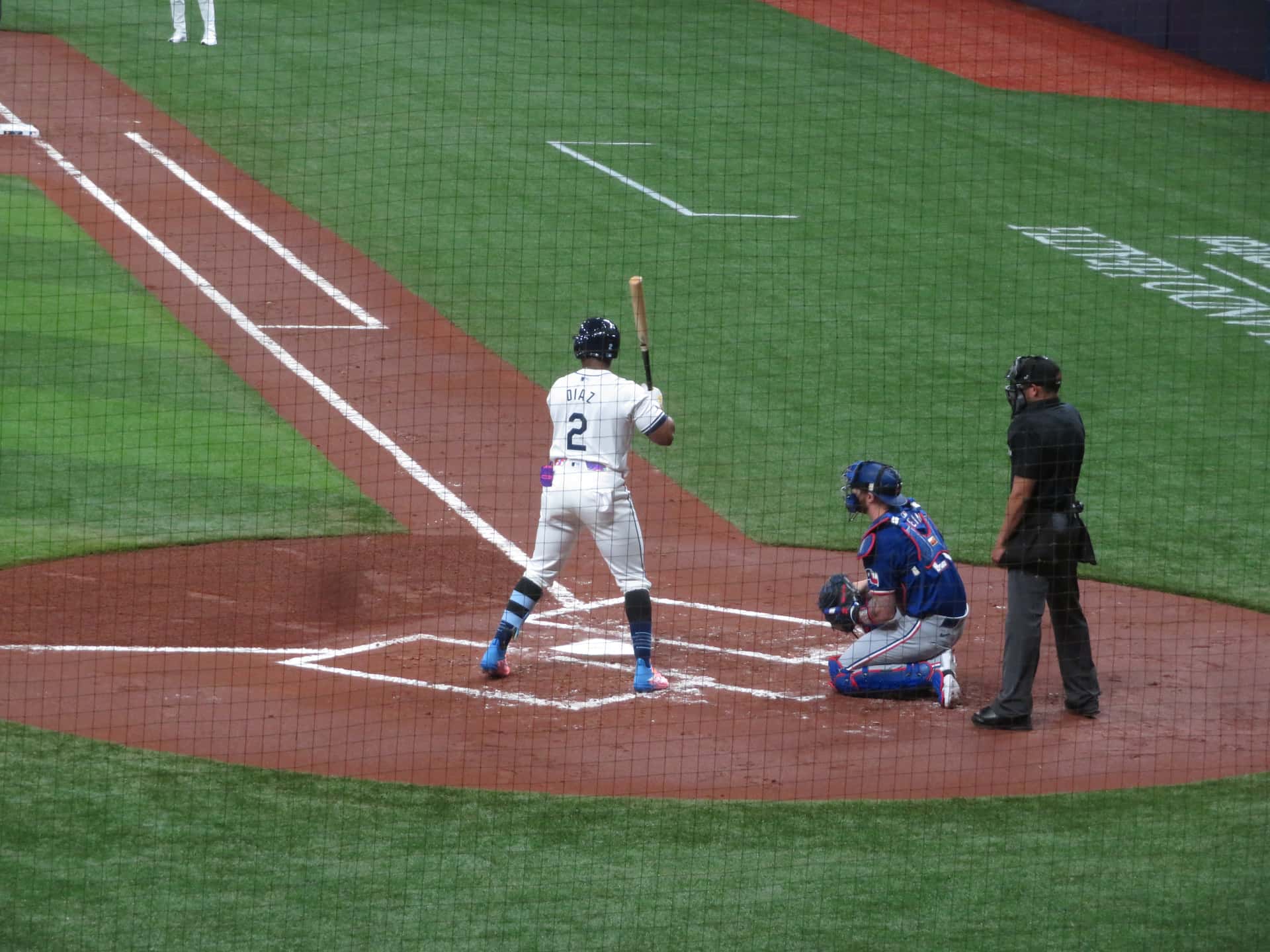
The Tampa Bay Rays are playing some of the best baseball in the American League in 2026, posting a 31-15 record through their first 46 games to sit atop the AL East division. The strong start comes in the team's first season back at Tropicana Field in St. Petersburg after a year-long absence while the domed stadium was repaired and upgraded following damage from Hurricane Milton in October 2024. With a rotation featuring the best collective ERA in the major leagues and a remarkable 9-1 record in one-run games, the Rays have demonstrated the resilience and pitching depth that has made them perennial contenders despite one of the smallest payrolls in baseball.
A Triumphant Return to the Trop
The Rays' return to Tropicana Field on April 6, 2026, carried emotional weight that extended well beyond the opening game. A sellout crowd of 25,114 packed the freshly renovated stadium for the home opener against the Chicago Cubs, with a pregame ceremony that honored the workers who repaired the roof, the first responders who had assisted during the storm's aftermath, and the team staff who kept the organization running through a displaced season. St. Petersburg Mayor Ken Welch and Tampa Mayor Jane Castor jointly threw out the ceremonial first pitches, reflecting the civic pride attached to the stadium's restoration.
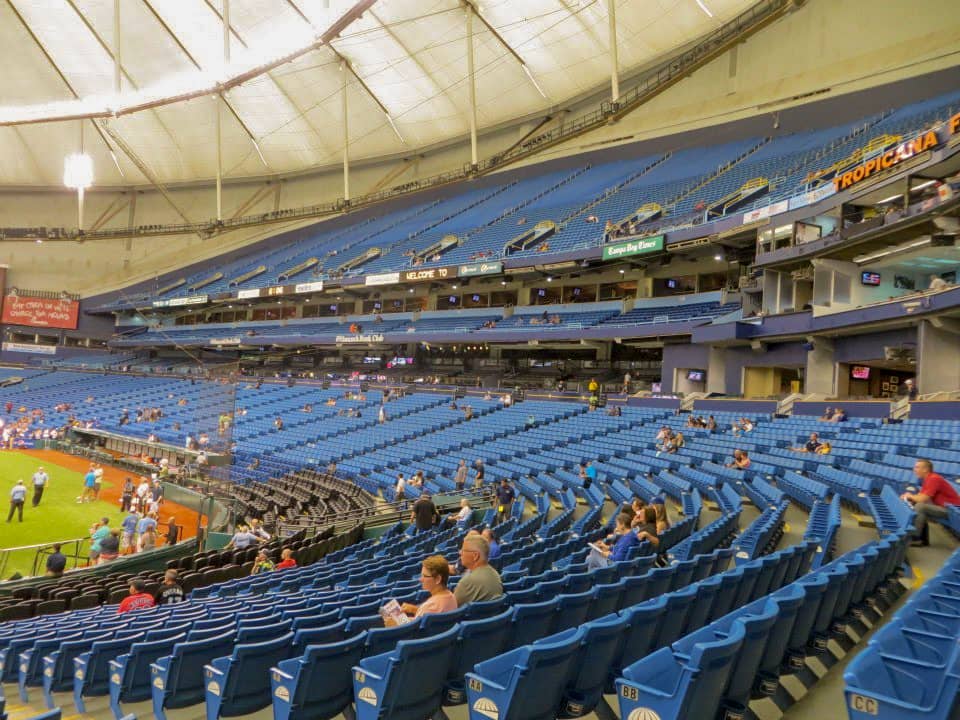
Country singer Eric Church performed the national anthem at the home opener, which the Rays won 6-4 to give the sold-out crowd the result it had come for. The victory set a tone that the team has largely sustained through the early weeks of the season. Tropicana Field, which has been a polarizing venue among fans and players alike over the years, was received warmly in its renovated form, with upgrades including an expanded main videoboard, new video displays behind home plate and along both foul poles, a new sound system, and updated suite interiors that significantly modernize the fan experience inside the dome.
The stadium repairs following Hurricane Milton were extensive, requiring the complete replacement of the roof, installation of new artificial turf, and remediation of significant water damage throughout the interior. The Rays played their entire 2025 home schedule at George M. Steinbrenner Field in Tampa, the spring training home of the New York Yankees, while the restoration work was completed. The return to St. Petersburg was celebrated by the local community as both a baseball milestone and a symbol of the region's recovery from a difficult hurricane season.
The Numbers Behind the Hot Start
A 31-15 record represents a winning percentage of .674, a pace that would project to approximately 109 wins over a full 162-game season. While maintaining that pace for the full season would be exceptional, the Rays' underlying statistics suggest the hot start is not a product of luck. Their 9-1 record in one-run games reflects an ability to win close games that typically requires strong pitching, sharp defense, and timely offensive execution, precisely the areas in which the Rays have built their organizational identity over the past decade.
The team's run differential, another indicator of genuine quality, is also strongly positive through the first 46 games. Teams that consistently win more runs than they allow tend to maintain strong records throughout the season, while teams that are winning games by close margins on the back of an unsustainably good record in one-run games typically see their winning percentages regress toward their true quality. The Rays' combination of strong run differential and success in close games suggests their record is legitimately reflective of their ability.
Offensively, the team has received contributions from across the roster rather than from a small number of individual stars, a hallmark of the Rays' approach to roster construction. The organization has long emphasized versatility, on-base percentage, and the ability to manufacture runs through sequencing rather than relying on home run power, and the 2026 edition of the team appears to be executing that philosophy effectively. The new ownership under Patrick Zalupski has provided stability at the organizational level while allowing the baseball operations staff to continue implementing the Rays' analytics-driven approach.
Pitching Excellence Drives the Run
The statistical centerpiece of the Rays' 2026 season is the starting rotation's collective ERA of 3.03, which ranks as the best mark among all 30 major league teams through the first 46 games. The rotation has provided the length and consistency that allows a team to win games regularly, limiting the burden on the bullpen and keeping the Rays in close games even when the offense is quiet. The identity of the individual starters contributing to that ERA was not fully detailed in team releases, but the organizational depth in pitching development has been a consistent strength that has survived multiple personnel turnovers at the major league level.
Florida's warm climate and the Rays' relationship with their spring training facility in Port Charlotte have long supported a robust pitching development pipeline. The organization has been known for identifying and developing starting pitchers who outperform their draft pedigree and pre-signing expectations, a strategy that keeps payroll costs manageable while maintaining on-field quality. The 2026 rotation appears to be another expression of that developmental success.
The bullpen has complemented the starting rotation with solid performance, though roster moves have been necessary to manage workload and injuries as in any early-season stretch. The injury to pitcher Joe Boyle, who was placed on the 15-day injured list with an elbow issue, represents one of the early challenges the team has navigated, with Triple-A Durham providing depth through the promotion of Jesse Scholtens. The Rays' organizational depth in pitching has historically allowed them to absorb individual injuries without significant degradation in team performance.
New Ownership, Fresh Chapter
The 2026 season marks the first full year of operation under new team owner Patrick Zalupski, who completed his acquisition of the Rays franchise before the season began. Zalupski, a Florida-based businessman, took over from Stuart Sternberg, who had owned the team since 2005 and guided it through the transformation from a perennial last-place finisher to one of baseball's most consistently competitive teams. The ownership transition was accompanied by expressions of commitment to keeping the team in the Tampa Bay area, a significant reassurance for a fan base that has long wrestled with uncertainty about the franchise's long-term future in St. Petersburg.
The new ballpark features introduced for 2026, including the MaintenX SkyDeck above left field and the premium Home Plate Box with in-seat food and beverage delivery, reflect an investment in the fan experience that new ownership has prioritized. These additions represent a recognition that Tropicana Field, while structurally restored, benefits from new amenities that make it more competitive with modern ballpark standards. Season ticket sales for 2026 were reported to be strong ahead of the home opener, reflecting fan enthusiasm for the team's return and the stadium's renewal.
The combination of a successful on-field product and a reinvigorated stadium experience has made the early weeks of the 2026 season feel like a new chapter for the franchise. Tampa Bay's sports culture has historically been enthusiastic about winning teams, and the Rays' hot start has energized a fan base that also supports the Tampa Bay Lightning and Tampa Bay Buccaneers. A sustained push toward the postseason would test whether the market can generate consistent attendance at the levels the team's ownership will need to sustain long-term investment in the roster.
AL East Race
The American League East is historically one of the most competitive divisions in baseball, featuring large-market teams including the New York Yankees, Boston Red Sox, and Toronto Blue Jays alongside the Rays and Baltimore Orioles. The Rays' 31-15 start has positioned them at the top of the division, ahead of teams that typically outspend them significantly on payroll. Sustaining that position through the full 162-game schedule against this level of competition would be a significant achievement and would likely require the Rays to maintain their pitching quality while also finding enough offensive production to keep pace with the division's heavier-hitting teams.
The Yankees and Red Sox, both of whom have invested heavily in their rosters during the offseason, are expected to be formidable opponents over the full season. The Rays have historically built leads in the early part of the season and then been tested severely in the second half when their depth is strained by injuries and the accumulation of fatigue. How the team navigates those challenges in 2026 will determine whether the hot start translates into a strong playoff position or another season of near-misses.
The Rays have made the postseason in multiple recent years, consistently competing with rosters that punch above their payroll weight. A strong finish to 2026 would add to that tradition and give Zalupski's new ownership group an early signature achievement that could pay dividends in building the fan base and generating the commercial support that sustains a small-market franchise over the long term.
What's Next
The Rays face a challenging schedule as summer approaches, with division series against the Yankees and Red Sox that will test the depth of the rotation and the team's ability to maintain its record in close games. The All-Star break in mid-July provides a natural evaluation point at which the team's first-half performance will be assessed and decisions about trade deadline acquisitions will begin to take shape. If the Rays remain in contention through July, general manager Peter Bendix is expected to be active in exploring ways to add depth for a postseason run.
On the stadium front, the Rays and city officials in St. Petersburg continue to work through long-term planning for the franchise's future home. A new ballpark has been a subject of discussion for years, with various proposals for sites in the Tampa Bay region. The restored Tropicana Field buys additional time for those deliberations, but the question of a permanent, modern stadium remains a background issue that will need resolution in the years ahead if the franchise is to maintain its competitive footing on and off the field.
For now, the Rays' 31-15 record and first-place position in the AL East represent the story of a team executing at a high level in all phases of the game, playing in a revived home stadium before a reinvigorated fan base, and adding the first chapter of a new ownership era on an encouraging note. Tampa Bay sports fans, who have experienced both triumph and heartbreak with their franchises in recent years, have reason for considerable optimism as the summer of 2026 approaches.
Spotted an issue with this article?
Have something to say about this story?
Write us a letterComments
No comments yet. Be the first to weigh in.
Related Coverage
Rays await Guardians or White Sox in ALCS after sweeping Yankees; Game 1 Monday at Tropicana Field
52m ago
John Carlson scores twice, Dennis Hildeby makes 34 saves as Lightning hold off Wild 3-2
2h ago
Winless Dolphins host Bengals at Hard Rock Stadium seeking first win under Jeff Hafley
21h ago
Hurricane Isaias Scrambles Florida Sports: FSU Cancels Pensacola Games, FAMU Moves to Friday
1d ago