Tampa's CENTCOM at the Center as Iran Ceasefire Holds Over the Strait of Hormuz
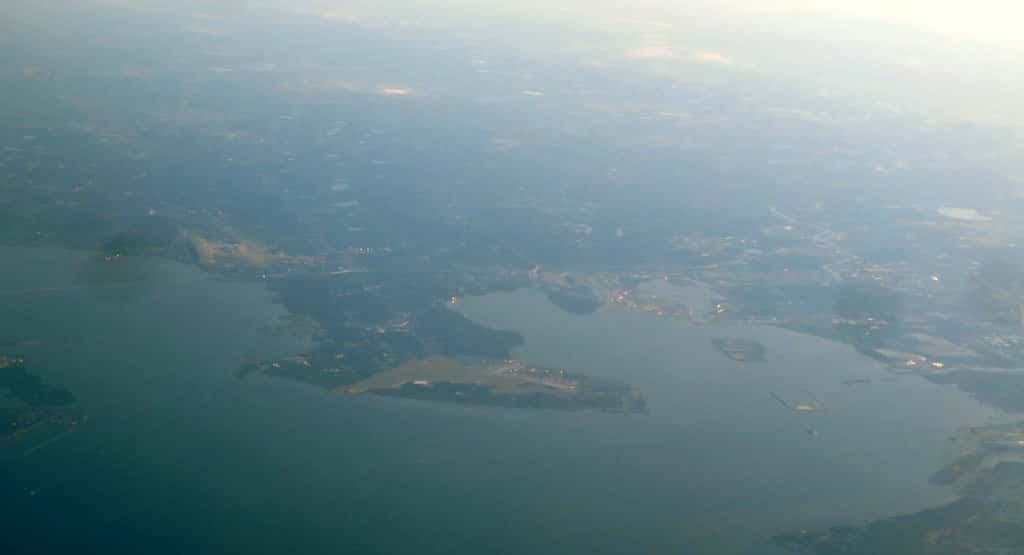
U.S. Central Command, headquartered at MacDill Air Force Base in Tampa, has served as the nerve center coordinating the American military response throughout the 2026 conflict with Iran, placing Florida's Gulf Coast at the heart of one of the most consequential national security episodes in recent memory. As an agreement to de-escalate the war takes hold, the command and the thousands of personnel tied to it remain on alert, with officials cautioning that the ceasefire is still being tested over the contested waters of the Strait of Hormuz.
The arrangement, announced the weekend of June 20 and 21, followed weeks of escalating exchanges that drew direct American military involvement. According to CENTCOM public releases, forces under the command intercepted missiles and drones launched by Iran during the height of the confrontation, and later carried out what officials described as proportional self-defense strikes after an Iranian drone brought down a U.S. Army Apache helicopter patrolling over the Strait. For Tampa Bay, where the command's footprint touches tens of thousands of military families, contractors, and local businesses, the developments have carried unusual immediacy.
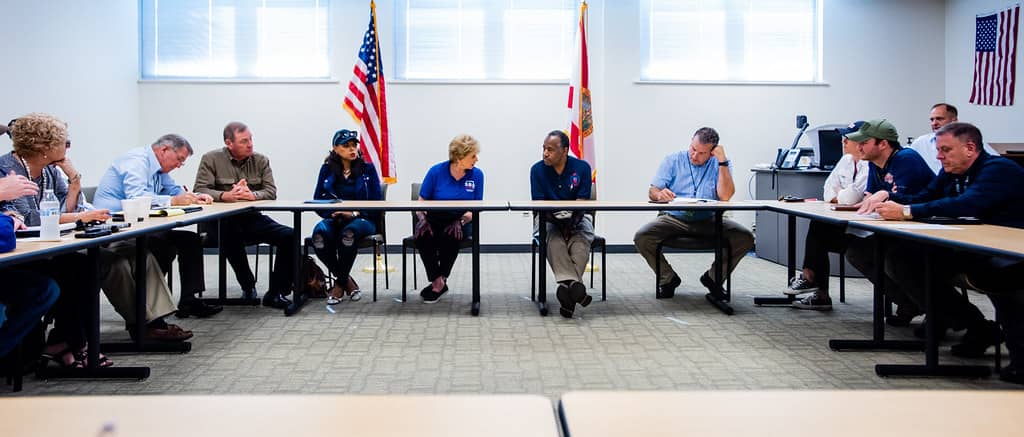
Defense Secretary Pete Hegseth made statements regarding the operations while at MacDill Air Force Base, underscoring the base's central role in directing and explaining the American posture. The choice of Tampa as the backdrop for those remarks reflected a reality that residents of the region have long understood: when the United States acts militarily across the Middle East, the planning and command flow through a campus on the shores of Tampa Bay.
The Command on Tampa Bay
U.S. Central Command is one of the Pentagon's geographic combatant commands, responsible for American military activity across a sprawling region that stretches from Egypt through the Arabian Peninsula and into Central Asia. Its headquarters at MacDill Air Force Base has anchored the southern Tampa peninsula for decades, making the installation one of the most strategically significant military sites in the country and a fixture of the local economy.
MacDill is among Florida's most prominent employers, supporting a workforce that includes active-duty service members, civilian defense employees, and a dense network of contractors and support firms. The base's presence ripples through Hillsborough County in housing, schools, healthcare, and small businesses that cater to military families, giving the Tampa Bay community a personal stake in events unfolding thousands of miles away.
During the 2026 conflict, that connection became sharper than usual. Decisions about force posture, intercepts, and strikes were coordinated from the command, and the public-facing explanations of American actions repeatedly originated in Tampa. For families with loved ones deployed in the CENTCOM area of responsibility, the steady stream of releases from the command offered both information and anxiety as the situation evolved by the hour.
Officials have emphasized that CENTCOM's role is operational rather than political, executing decisions made at the national level and defending American forces and partners in the region. Even so, the command's geographic home ensures that Tampa Bay is woven into the story of the conflict in a way few other American communities are.
How the Confrontation Escalated
The chain of events that pulled CENTCOM into direct combat operations centered on the Strait of Hormuz, the narrow waterway at the mouth of the Persian Gulf through which a substantial share of the world's seaborne oil passes. According to CENTCOM, an Iranian drone struck and brought down a U.S. Army Apache helicopter that had been patrolling over the Strait, an attack that triggered a significant American response.
In the aftermath, CENTCOM forces launched self-defense strikes against Iran. The command characterized the action as a proportional response to Iranian aggression, language intended to signal that the United States sought to deter further attacks rather than to widen the war. The framing matters in a fast-moving environment where each side's interpretation of proportionality can shape whether tensions ease or spiral.
CENTCOM also reported that its forces defeated missiles and drones launched by Iran during the broader confrontation, pointing to the integrated air and missile defense systems that protect American personnel and partners across the region. Those defensive operations, conducted alongside the offensive strikes, formed the military backdrop against which diplomacy eventually advanced.
Throughout, officials urged caution in characterizing the situation, noting that conditions remained volatile and that the picture could change quickly. That careful posture has carried into the ceasefire period, with the command and the broader government treating the de-escalation as a process to be verified rather than a conclusion to be assumed.
The Strait of Hormuz at the Heart of the Crisis
The Strait of Hormuz has been the geographic flashpoint of the crisis, and the dispute over its status illustrates how contested the facts on the ground remain. Iran's military declared the Strait closed on June 20, a move that, if enforced, would have threatened a major artery of global energy trade. Yet Iran's foreign ministry said shipping was operating normally, leaving observers to reconcile two competing official messages from Tehran.
Adding to the picture, Vice President JD Vance said that 16 million barrels of oil transited the Strait on June 21, which he described as a single-day record. The figure suggested that, whatever the declarations from Iran's military, the physical flow of oil through the chokepoint had not halted and may have accelerated as the de-escalation took shape.
For CENTCOM, the security of the Strait is a longstanding mission. The waterway sits squarely within the command's area of responsibility, and ensuring freedom of navigation through it has been a recurring task across multiple administrations. The 2026 confrontation tested that mission under combat conditions, with the helicopter that was brought down having been patrolling the very waters now at the center of diplomatic attention.
The conflicting claims over the Strait also underscore why officials have framed the ceasefire as something to be watched closely. A genuine, durable de-escalation would be reflected in normal, uninterrupted shipping and a reduction in military incidents around the waterway, conditions that remained under scrutiny as the agreement settled into place.
Diplomacy Moves to Switzerland
Alongside the military de-escalation, a diplomatic track opened. According to officials, U.S. and Iranian technical delegations began negotiations in Switzerland on implementing a June 17 memorandum of understanding. The talks were described as covering Iran's uranium stockpile, an enrichment moratorium, and verification by the International Atomic Energy Agency.
The structure of the negotiations, focused on technical implementation rather than broad political declarations, signaled an effort to translate the high-level agreement into concrete and verifiable steps. Discussions over a uranium stockpile, an enrichment pause, and outside verification touch the core nuclear concerns that have animated American policy toward Iran for years.
While the diplomatic delegations worked in Switzerland, the military posture coordinated from Tampa remained the backstop. The relationship between the two tracks is familiar in American statecraft: diplomacy advances under the shadow of credible military capability, with CENTCOM providing the regional deterrent that gives negotiators leverage at the table.
Officials offered no guarantees about the pace or outcome of the talks, and the careful, technical framing reflected the difficulty of the issues involved. For Florida observers, the parallel tracks reinforced how the state's military and diplomatic ties intersect, with the command in Tampa anchoring the security dimension of a crisis whose resolution was being negotiated an ocean away.
What It Means for Tampa Bay
For the Tampa Bay region, the conflict has been more than a distant headline. The community's deep ties to MacDill mean that the base's tempo of operations is felt locally, from the rhythms of military households to the contractors and small businesses that depend on the installation. A period of elevated operations tends to register across the region even when specifics remain classified.
The economic ripples of the broader crisis have reached Florida as well. Disruptions and uncertainty around a major oil chokepoint feed directly into energy prices, which in turn affect Floridians at the gas pump and across a tourism-driven economy that depends on affordable travel. The de-escalation, if it holds, would ease those pressures, while renewed conflict would do the opposite.
Local pride in MacDill's role coexists with the strain that conflict places on military families. Deployments, extended duty, and the constant uncertainty of an active confrontation weigh on the households that make up a meaningful share of the Tampa Bay community. For many residents, the news from CENTCOM is not abstract policy but a reflection of where their family members are and what they are being asked to do.
That blend of civic connection and personal stake is what sets Tampa Bay apart from most American communities watching the same events. The command's presence ensures that the region is both a witness to and a participant in the unfolding story of the United States and Iran.
What's Next
The immediate question is whether the ceasefire holds. Officials have framed the de-escalation as a process to be tested, and the clearest indicators will be the absence of new military incidents and the uninterrupted flow of shipping through the Strait of Hormuz. The competing claims from Iran about whether the waterway is open or closed make that verification all the more important.
The technical talks in Switzerland will be the second measure of durability. Progress on the uranium stockpile, the enrichment moratorium, and IAEA verification would suggest that the June 17 memorandum is moving from paper to practice, while a breakdown could quickly raise tensions again. CENTCOM's posture in the region is expected to remain calibrated to the state of those negotiations.
For Tampa Bay, the path forward means continued attention to a command that has rarely been so visibly central to a national crisis. Whether the focus is on the security of the Strait, the safety of deployed personnel, or the economic effects rippling back to Florida, the campus at MacDill remains the place where much of the American response is coordinated.
As the situation continues to evolve, officials have counseled patience and caution, treating the de-escalation as fragile rather than final. For the residents of Tampa Bay, that careful tone is familiar, reflecting both the gravity of the mission carried out in their community and the uncertainty that still surrounds the effort to end the war with Iran.
Spotted an issue with this article?
Have something to say about this story?
Write a letter to the editor