USDA Final Forecast Shows Florida Orange Crop Climbing Back
Florida's orange growers finished the 2025-26 season with a crop the U.S. Department of Agriculture estimated at 12.9 million boxes, an increase of roughly 5 percent over the prior season and the clearest sign in years that the state's signature agricultural industry has found a floor. The figure comes from the final forecast of the season issued by the USDA Agricultural Statistics Board through its Florida field office, which works in cooperation with the Florida Department of Agriculture and Consumer Services.
The total breaks down into 4.77 million boxes of non-Valencia oranges, a category that includes early, mid-season, and Navel varieties, and 8.15 million boxes of Valencias, the later-maturing variety that dominates juice production. Both categories came in above the April forecast, with Valencias up 650,000 boxes and non-Valencias up 70,000.
Grapefruit, the state's second citrus crop, finished at 1.35 million boxes, split between 1.25 million boxes of red varieties and 100,000 boxes of white. Tangerines and mandarins together came in at 460,000 boxes.
How far the industry has fallen
The 12.9 million box figure reads as recovery only against the recent past. Florida produced more than 240 million boxes of oranges in the 2003-04 season. The decline since then represents one of the most dramatic contractions of a major American agricultural industry in living memory, and it happened for reasons that are well understood and difficult to reverse.
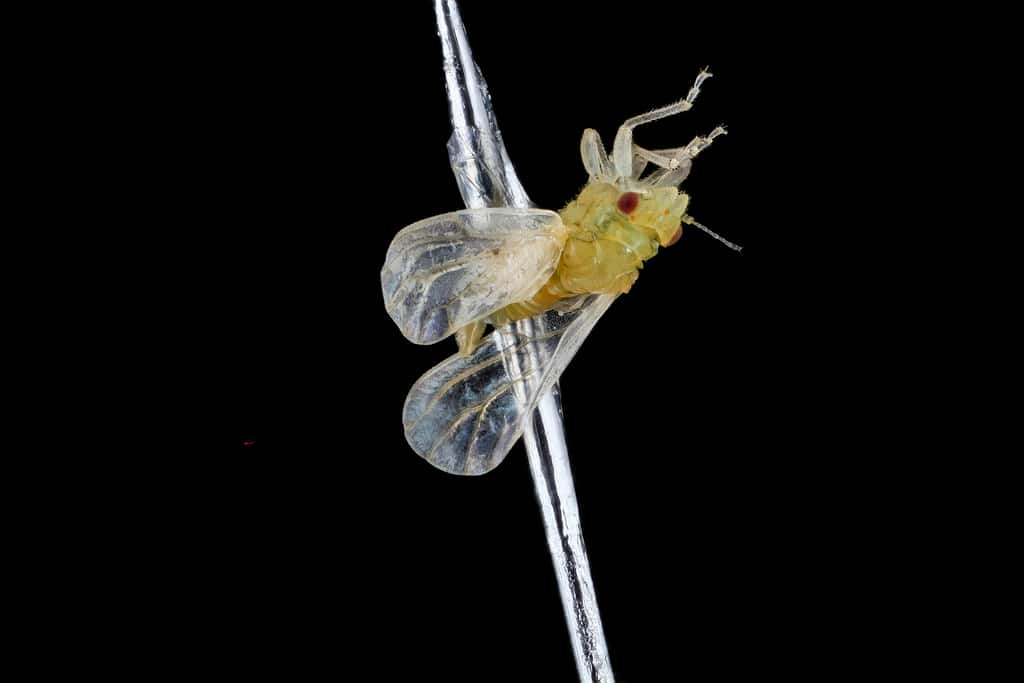
The primary cause is huanglongbing, commonly called citrus greening, a bacterial disease spread by the Asian citrus psyllid. Greening was first confirmed in Florida in 2005 and spread through the state's groves within a few years. Infected trees produce smaller, misshapen, bitter fruit that drops early, and the trees decline over a period of years until they are no longer commercially productive.
Hurricanes accelerated the damage. Hurricane Irma in 2017 and Hurricane Ian in 2022 both cut directly through the citrus belt in the interior peninsula, stripping fruit and destroying trees in groves that were already weakened by disease. Ian in particular hit during the growing season and produced a crop failure in the affected counties.
Land economics finished the job in many areas. Grove land in Polk, Highlands, DeSoto, Hardee, and Hendry counties has been worth more as residential and commercial development than as citrus production, particularly along the I-4 corridor, and thousands of acres have converted permanently.
Why this season improved
Growers reported better tree health and improved fruit quality across the 2025-26 harvest. Several factors contributed, and researchers have been careful not to attribute the improvement to any single intervention.
Management practices have evolved substantially. Individual protective covers on young trees, which physically exclude psyllids during the vulnerable establishment years, have become standard in new plantings. Enhanced nutritional programs, improved irrigation, and more aggressive psyllid control have extended the productive life of infected trees even without curing the disease.
Research has also advanced. Work at the University of Florida's Citrus Research and Education Center in Lake Alfred and at USDA facilities has produced tolerant rootstock and scion combinations, along with trunk-injection treatments using oxytetracycline that have shown measurable effects on fruit retention and quality in field trials.
Weather cooperated as well. The 2025-26 season did not bring a direct hurricane strike through the heart of the citrus belt, which by itself is worth several million boxes relative to a season that does.
What it means for the industry
A 5 percent increase does not restore the economics of the industry, but it changes the calculation for growers deciding whether to replant. Citrus is a long-horizon crop; a newly planted tree takes several years to bear commercially and does not reach full production for the better part of a decade. Growers will not replant into a market they expect to keep shrinking.
Processing capacity has contracted alongside production. Florida's juice industry consolidated as volume fell, and the state's remaining processors depend on a minimum throughput to operate efficiently. That creates a floor problem: below a certain production level, the processing infrastructure that makes commercial citrus viable in Florida becomes uneconomic.
Brazil now supplies the majority of the world's orange juice concentrate, and Brazilian production and currency movements set the price environment Florida growers operate in. Florida's remaining advantage is proximity to the U.S. market and the not-from-concentrate segment, where freshness matters and Florida fruit commands a premium.
Employment in the sector has fallen with production. Harvest labor, grove management, packing, and processing jobs concentrated in the interior counties have declined substantially, and those counties have had limited success replacing them with comparable wages.
The counties that depend on it
Polk County remains the largest citrus-producing county in the state and has been the epicenter of both the decline and the recovery effort. It also sits directly in the path of Central Florida's residential expansion, which is why grove conversion pressure is most acute there.
Hendry, DeSoto, Highlands, Hardee, and Collier counties in the southern interior account for a large share of remaining acreage. These are among Florida's most rural counties, with agriculture-dependent economies and populations that skew toward lower incomes than the state average.
Indian River County and the Treasure Coast produce the state's premium grapefruit, grown in a distinct soil and climate band along the east coast. That segment has its own market dynamics, oriented toward fresh fruit and export rather than juice.
For these counties, the citrus number is not an abstraction. It determines seasonal employment, agricultural support businesses, tax base, and in several cases the identity of the community.
State and federal support
Florida has directed substantial state funding toward citrus research and grower assistance over the past decade, and the Florida Department of Agriculture and Consumer Services has treated greening response as a priority. Federal support has come through USDA research programs, disaster assistance following hurricanes, and specialty crop block grants.
The Florida Department of Citrus, funded by a grower assessment known as the box tax, handles marketing and research coordination. That funding mechanism has its own difficulty: as production falls, assessment revenue falls with it, reducing the resources available exactly when they are most needed.
Legislators from citrus districts have consistently pushed for research funding and for disaster provisions that account for the multi-year nature of tree crop losses, since a destroyed grove is not restored by a single season's payment.
Whether that support continues at current levels as the industry shrinks is a recurring question in Tallahassee budget negotiations.
How the forecast is produced
The citrus forecast carries real market weight, and the methodology behind it is more rigorous than a survey of grower expectations.
The USDA's National Agricultural Statistics Service Florida field office conducts an objective yield survey built on physical measurement. Enumerators visit a randomly selected sample of groves across the production area, count fruit on designated limbs, and measure fruit size and droppage over the course of the season.
Those measurements feed a model that projects total production, and the estimate is revised monthly from October through the final forecast in July as fruit sizes and drop rates become better known. Fruit drop has been the most volatile variable in the greening era, since infected trees shed fruit before maturity at rates that vary by grove and by season.
Market participants use the forecast directly. Juice processors, futures traders on the frozen concentrated orange juice contract, and packing operations all set expectations around the monthly releases, and a significant revision moves prices.
The July figure being higher than the April forecast, with Valencias up 650,000 boxes, means fruit held on the trees better than the model projected at midseason. That is a favorable indicator for tree health independent of the headline production number.
What replaced the groves
The land that left citrus production did not sit idle. Understanding where it went explains why the industry's contraction is difficult to reverse even if the disease problem is eventually solved.
Residential development claimed the largest share, particularly in Polk, Lake, and Osceola counties along the I-4 corridor and in the Orlando commuter shed. Grove land in those areas is flat, cleared, already served by roads, and situated in the path of the fastest population growth in the state, which makes it close to ideal for subdivision development.
Other acreage converted to different agricultural uses. Cattle grazing, sod production, blueberries, and vegetable row crops have all absorbed former citrus land, in each case producing lower revenue per acre than citrus did at its peak but requiring less capital and carrying less disease risk.
Solar generation has emerged as a growing use, with utilities acquiring or leasing large contiguous parcels in the interior counties for photovoltaic installations. Those arrangements provide landowners stable long-term income without the operational risk of farming, and once a parcel is converted, it does not return to groves.
What's next
The USDA will begin issuing forecasts for the 2026-27 season in October, with monthly updates through the harvest. The October estimate is the first read on whether the improvement in tree health carries into another season.
The most important variable between now and then is the weather. Hurricane season runs through November 30, and a storm tracking through the interior peninsula during the fruit set and maturation period would undo the gains this forecast records. The Atlantic basin is entering its climatological peak.
Longer term, the industry's future depends on whether the research pipeline produces a durable solution to greening rather than a set of management practices that slow it. Field trials of tolerant varieties and treatment protocols continue, and commercial-scale results over the next several seasons will determine whether replanting accelerates.
For now, growers have something they have not had often in two decades: a season that ended better than it was projected to, and a number that moved in the right direction.
Spotted an issue with this article?
Have something to say about this story?
Write a letter to the editor