AI Data Center Projects Target Florida Power and Land
Florida is emerging as a target for the wave of artificial intelligence data center construction reshaping the American industrial landscape, with multibillion-dollar projects advancing in the Tampa area, the Orlando region and several Central Florida counties. The shift reflects a broader industry recalculation as established hubs such as Northern Virginia run into constraints on available electrical capacity and developable land.
The largest of the Florida proposals is a project that has been publicly identified by the working name Project Tango, backed by an estimated $2.6 billion to $2.8 billion investment. Plans describe between 1.9 million and 4.4 million square feet of data center space across eight buildings, with development targeted for 2027 and 2028.
Other proposals are smaller but numerous. A 15.2-megawatt facility has been proposed in Miami-Dade County, and La Rosa Holdings, a Florida-based company, announced a contract to purchase land in Osceola County for data center development.
Why Florida is drawing interest now
Data center siting turns on a short list of factors, and power availability leads it. AI training and inference workloads consume electricity at a scale that distinguishes them from traditional data centers, and the industry's growth has run ahead of transmission and generation capacity in the regions where it first concentrated.
Northern Virginia, long the world's largest data center market, has reached the point where utilities cannot connect new large loads on the timelines developers want. That constraint has pushed developers to evaluate secondary markets, and 2026 is being described within the industry as a potential tipping point for geographic diversification.
Florida offers competitive electricity rates and a large, growing grid. The state also provides a sales tax exemption for qualifying large data centers, generally requiring investment above roughly $150 million and an IT load of at least 15 megawatts.
Land availability matters as well. Central Florida counties outside the immediate metropolitan cores have substantial tracts of developable land at prices well below those in constrained coastal markets, and highway and fiber infrastructure has improved considerably.
The oversight debate
Florida lawmakers have weighed data center expansion against calls for greater oversight, and the questions being raised track those in other states facing rapid development.
Electricity demand is the central concern. A single large AI data center campus can draw power comparable to a small city, and utilities must plan generation and transmission to serve that load. The question policymakers face is how the cost of that buildout is allocated between data center operators and other ratepayers.
Water use is the second issue. Many data center cooling designs consume significant water, and Florida's water supply is managed through regional districts with their own permitting constraints. Proposals in areas with existing water supply pressure face additional scrutiny.
A third question concerns local land use. Data centers generate substantial property tax revenue and construction employment but relatively modest permanent employment relative to their footprint. County commissions evaluating proposals have to weigh that tradeoff against alternative uses of the same land.
Florida enacted new data center legislation this year, and a proposed AI facility near Florida International University brought the debate into a specific neighborhood context in Miami-Dade County.
Where projects are concentrating
The Tampa Bay region has drawn substantial interest, with the metropolitan area's combination of fiber infrastructure, power availability and land at the metropolitan edge fitting the siting profile developers seek.
Central Florida counties around Orlando represent the other primary cluster. Osceola County in particular has attracted attention, with available land, proximity to the Orlando metropolitan area's infrastructure and county leadership that has courted technology investment.
Miami-Dade County presents a different case. Land is scarce and expensive, which argues against large campuses, but the county's position as a connectivity hub between North America and Latin America gives it value for facilities where network proximity matters more than scale.
What it means for Floridians
The most immediate effects are local and fiscal. Data centers generate significant property tax revenue for counties, and in jurisdictions with modest commercial tax bases, a large facility can meaningfully change budget arithmetic. That prospect carries added weight this year with Amendment 3 on the ballot, which would reduce homestead property tax revenue for local governments.
Employment effects are more mixed. Construction phases employ substantial numbers of skilled trades workers for extended periods. Permanent operational staffing is comparatively lean, typically numbering in the dozens to low hundreds for a large campus, though those positions pay well.
The ratepayer question affects everyone. If utilities build generation and transmission capacity primarily to serve data center load, how that investment is recovered through rates determines whether residential customers subsidize industrial expansion or whether costs are assigned to the loads that drive them. Florida's Public Service Commission reviews utility rate structures, and this is likely to become a recurring subject before it.
The environmental dimension
Power consumption at this scale has emissions implications that depend on Florida's generation mix. The state's electricity comes substantially from natural gas, with a growing solar component and nuclear generation at existing facilities.
Several data center operators have committed to matching consumption with renewable procurement, and Florida's solar resource is strong. Utility-scale solar development in the state has expanded considerably, though solar generation profiles do not align with the around-the-clock demand data centers present, which raises storage questions.
Water consumption for cooling varies enormously by design. Air-cooled facilities use minimal water but more electricity. Water-cooled designs are more energy efficient but draw significant volumes. Permitting decisions in water-constrained parts of Florida will turn substantially on which approach a developer proposes.
What a large data center requires
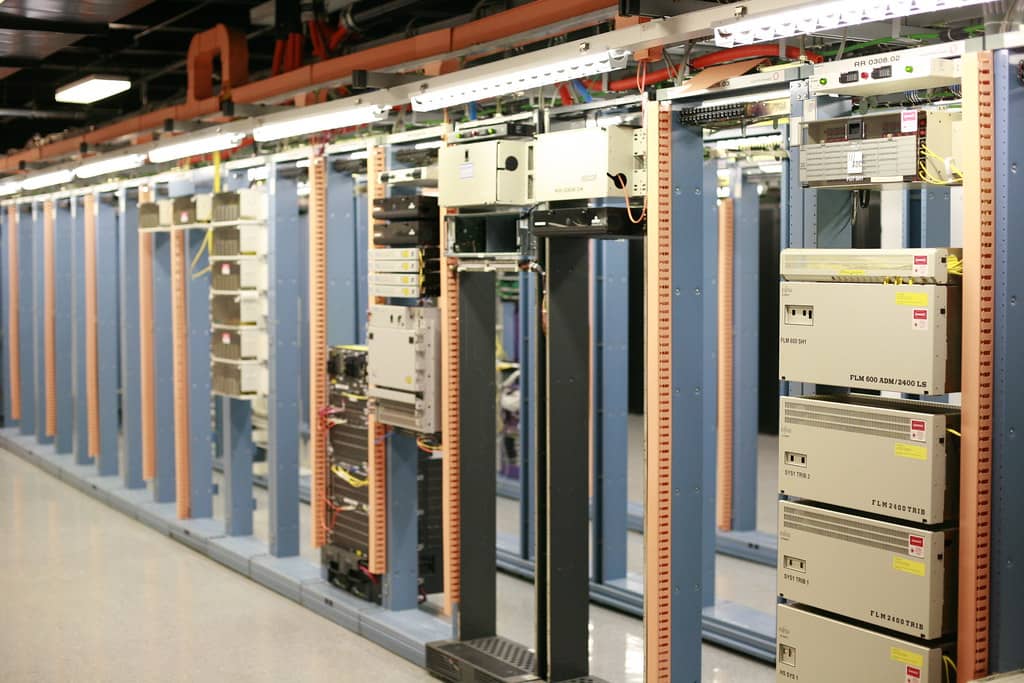
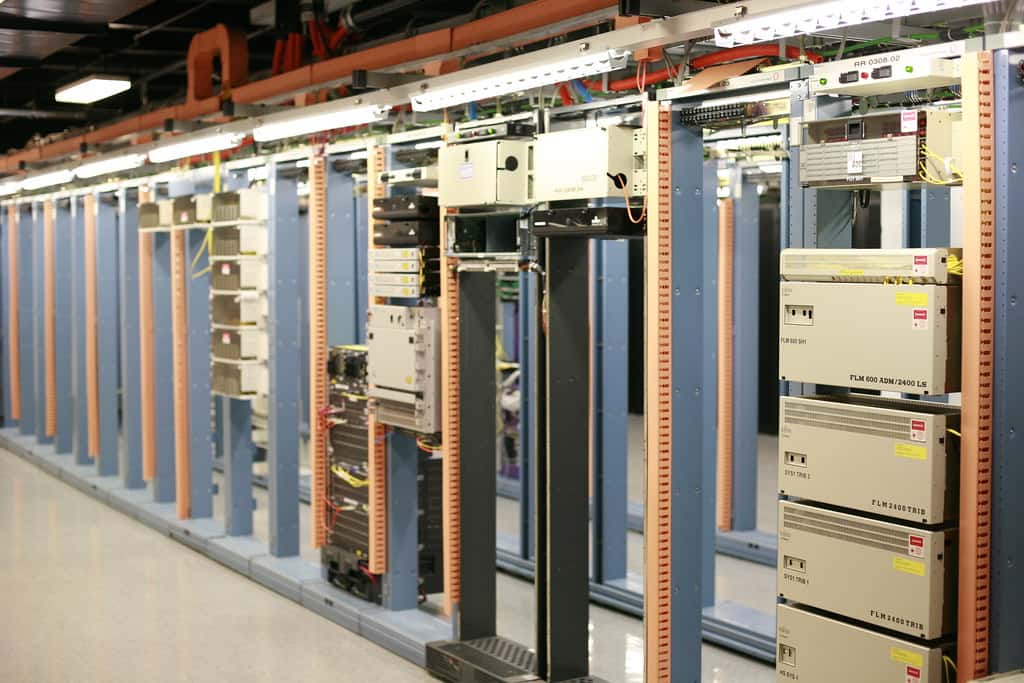
The physical demands of an AI-focused facility explain most of the siting decisions and most of the controversy. These buildings are, functionally, large electrical loads housed in structures designed to move heat.
Power is the binding constraint. A campus drawing hundreds of megawatts requires transmission infrastructure that may not exist at the chosen site, and building it involves utility planning cycles, regulatory approval and construction timelines measured in years rather than months.
Cooling follows from power. Nearly all electricity consumed becomes heat that must be removed, and the method chosen determines water consumption. Evaporative cooling is efficient but consumes water. Closed-loop and air-cooled designs conserve water but consume more electricity.
Network connectivity is the third requirement. Facilities need high-capacity fiber routes, and proximity to existing backbone infrastructure reduces the cost of establishing that connection. Florida's position as a landing point for submarine cables connecting to Latin America gives parts of the state an advantage here.
The employment question in context
Economic development debates around data centers frequently turn on job numbers, and the figures require care to interpret.
Construction employment is substantial and real. A multibillion-dollar campus employs hundreds to low thousands of skilled trades workers across a multi-year build, including electricians, pipefitters, ironworkers and general construction labor. Those are well-paying jobs, and Florida's construction workforce has capacity.
Permanent operational employment is much smaller. Data centers are designed to run with minimal human intervention, and staffing typically covers facilities engineering, security and technical operations. Figures in the dozens to low hundreds are typical even for very large campuses.
The revenue case is stronger than the employment case. Property tax receipts from a facility representing billions in assessed value can transform a county's budget, and that revenue continues annually without the service demands that residential development creates.
Counties weighing proposals are effectively choosing between a large tax base contribution with modest employment and alternative uses that might generate more jobs but less revenue per acre.
How Florida compares
Florida enters this competition against states that have been at it longer. Virginia, Ohio, Texas, Arizona and Georgia all host substantial data center clusters, and each offers its own combination of incentives, power availability and regulatory posture.
Florida's advantages include electricity costs that remain competitive, a large and growing grid, no state personal income tax and a sales tax exemption for qualifying facilities. Its hurricane exposure is the most frequently cited disadvantage, though operators note that facilities are built to withstand storms and that backup power is standard.
Water availability varies considerably within the state. Central Florida's water supply has been under pressure for years, and the regional water management districts have tightened permitting. Proposals in water-constrained areas face a harder path than those in areas with greater capacity.
What residents are asking
County commission hearings on data center proposals across Florida have surfaced a consistent set of resident concerns, most of them practical rather than ideological.
Noise is among the most frequently raised. Cooling equipment operates continuously, and residents near existing facilities in other states have reported persistent low-frequency sound. Setback requirements and equipment specifications can address this, and it is a standard subject of conditional approval terms.
Traffic during construction is a second concern, particularly on rural roads not built for heavy equipment. Construction traffic is temporary but can extend across years for a large campus.
Visual impact matters in areas transitioning from agricultural to industrial use. Data centers are large windowless structures, and landscaping and setback conditions are common subjects of negotiation.
Longer term, residents ask what happens if the facility becomes obsolete. Technology infrastructure has a shorter useful life than most industrial buildings, and the question of what a decommissioned campus becomes has no settled answer.
What's next
Most of the announced Florida projects remain in permitting and land acquisition stages, with construction targeted for 2027 and beyond. Between announcement and operation, proposals of this kind routinely change in scale or fail to proceed, and the announced pipeline should not be read as a construction schedule.
County commissions in the affected jurisdictions will hold the decisive votes on land use approvals, and those proceedings will be where residents have the most direct input.
At the state level, the 2027 legislative session is likely to revisit the framework, with proposals expected on utility cost allocation, water use reporting and the scope of the sales tax exemption. How Florida resolves those questions will influence whether the current interest translates into sustained investment or proves to be a brief look at a market that ultimately proved harder to build in than it appeared.
Spotted an issue with this article?
Have something to say about this story?
Write a letter to the editor