Artemis 3 Hardware Arrives at Kennedy as NASA Targets 2027
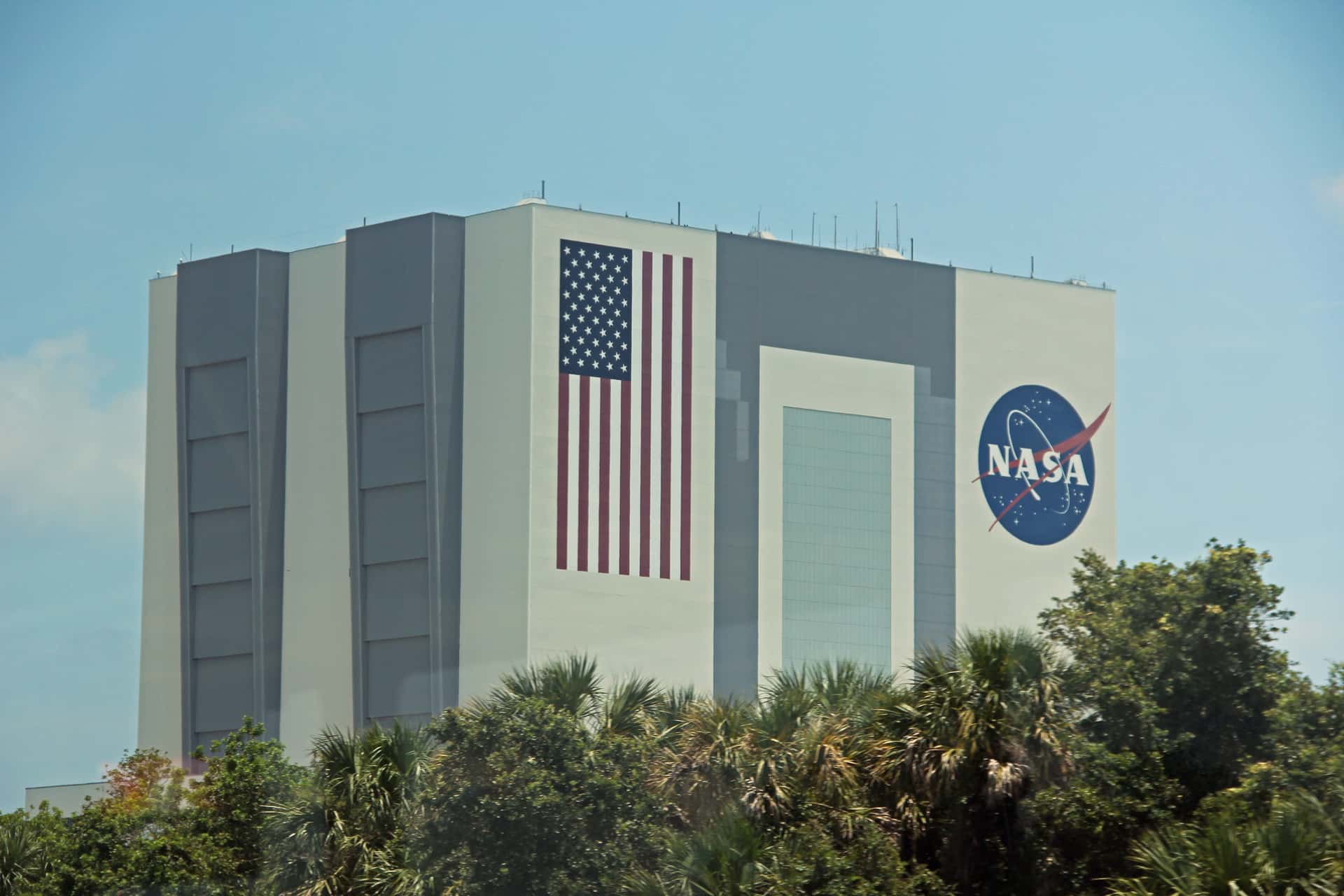
Hardware for NASA's Artemis 3 mission continued arriving at Kennedy Space Center through August, with the forward aerodynamic assemblies for the twin solid rocket boosters delivered to the Vehicle Assembly Building on Aug. 13. Earlier in the month, the Exploration Ground Systems team conducted a cryogenic propellant loading simulation, rehearsing the procedures for loading super-cooled liquid hydrogen and liquid oxygen into the Space Launch System core stage.
NASA's administrator said in mid-August that the agency is extremely confident in an Artemis 3 launch in 2027, the mission intended to return American astronauts to the surface of the Moon for the first time since 1972.
For Florida, the program represents the most significant sustained federal investment in the state's aerospace sector, and the activity at Kennedy comes as commercial launch cadence on the Space Coast is shifting.
What arrived and what it does
The components delivered in August are the nose cones that sit atop the SLS solid rocket boosters. Their function is aerodynamic: they give the boosters a smooth, pointed profile that reduces drag and helps maintain vehicle stability during ascent through the dense lower atmosphere.
The boosters themselves are the largest solid rocket motors ever flown on a human-rated launch vehicle, derived from Space Shuttle heritage hardware with an added segment. They provide the majority of thrust during the first two minutes of flight before separating.
The Vehicle Assembly Building, where the components arrived, is the structure NASA has used to stack launch vehicles since the Apollo program. Assembly occurs on a mobile launcher platform, and the completed stack is transported to the launch pad by crawler-transporter, a process that remains among the more remarkable logistics operations in American engineering.
The fueling rehearsal
The cryogenic propellant loading simulation conducted Aug. 5 addressed what has historically been among the most troublesome phases of SLS operations. The core stage burns liquid hydrogen and liquid oxygen, propellants that must be loaded at extremely low temperatures.
Liquid hydrogen presents particular difficulty. It must be held near minus 423 degrees Fahrenheit, it has an extremely small molecular size that allows it to escape through seals that would contain other fluids, and it causes materials to contract as they cool, which can open gaps in connections that were tight at ambient temperature.
Hydrogen leaks during fueling delayed the Artemis 1 launch repeatedly in 2022, and the experience made propellant loading a focus of subsequent preparation. Rehearsals allow teams to practice procedures, validate ground systems and identify problems on a schedule rather than during a launch countdown.
How the Artemis 3 mission is structured
Artemis 3 is more complex than a single launch. The mission profile involves multiple vehicles and requires capabilities that have not previously been demonstrated together.
The crew launches aboard SLS in the Orion spacecraft from Kennedy Space Center. Separately, a lander must be positioned in lunar orbit for the crew to transfer into for descent to the surface. Reporting indicates the mission architecture begins with the launch of Blue Origin's New Glenn rocket, sending a test version of the Blue Moon Mark 2 lander into low Earth orbit.
The dependency on multiple vehicles from multiple providers is the program's principal schedule risk. Artemis 3 cannot proceed until the lander system is demonstrated, which means the mission's timeline is governed by whichever element is furthest from readiness rather than by SLS and Orion alone.
The mission targets a landing near the lunar south pole, a region of interest because permanently shadowed craters there are believed to contain water ice. Water on the Moon would be significant for sustained presence, since it can supply drinking water, breathable oxygen and rocket propellant components without launching mass from Earth.
What Artemis means for Florida
Kennedy Space Center is among the largest federal employment sites in Florida, and Artemis operations sustain a workforce spanning NASA civil servants and contractors across engineering, ground operations, logistics and facilities.
The program's economic effect extends beyond direct employment. Launch preparation and execution draw suppliers, support contractors and specialized services, and Artemis launches generate visitor traffic on a scale that exceeds routine commercial launches. Artemis 1 drew large crowds to Brevard County across multiple attempts.
The timing matters given other developments on the Space Coast. SpaceX has ended Falcon 9 Starlink launches from Florida, shifting that cadence to California while preparing the Cape for Starship, a transition expected to reduce Florida's monthly launch count substantially in the interim. Sustained Artemis activity partially offsets that reduction.
The program's cost and criticism
Artemis has drawn sustained criticism regarding cost and schedule. Government audits have documented per-launch costs for the SLS and Orion system that substantially exceed original projections, and the program has been repeatedly delayed relative to initial timelines.
The core criticism concerns the expendable architecture. SLS is discarded after each flight, and critics have argued that developing an expendable heavy-lift vehicle while commercial providers pursued reusability locked the program into an expensive approach. Supporters counter that SLS provides capability that did not exist when the program was authorized and that no operational alternative currently matches it for crewed lunar missions.
The debate has practical consequences for Florida, since the program's funding level determines employment at Kennedy. Congressional support for Artemis has been durable across administrations, driven partly by the distribution of program work across multiple states, but budget pressure remains a recurring feature.
The international and competitive context
Artemis operates within a broader international framework. The Artemis Accords, a set of principles for cooperative space exploration, have been signed by a substantial number of countries, and international partners contribute hardware including the European Service Module that provides Orion's propulsion and life support.
China has stated an intention to land astronauts on the Moon before 2030 and has advanced a program with demonstrated capability in robotic lunar missions, including sample return from the lunar far side. That timeline has been cited in American policy discussion as a reason to sustain Artemis funding.
Whether framing lunar exploration as a competition produces good policy is debated, but the practical effect on Florida is straightforward: sustained political support for the program means sustained activity at Kennedy Space Center.
What it means for Floridians
For Space Coast residents, Artemis represents the most stable component of the region's launch activity during a period when commercial cadence is in transition. Program work continues regardless of month-to-month launch counts.
For visitors, an Artemis launch is a substantially different event from a routine commercial launch. The vehicle is far larger, launches are far less frequent, and viewing demand exceeds available capacity. Anyone planning to attend should expect crowds, book accommodation well in advance and prepare for the possibility of scrubs, since first attempts frequently do not launch.
For Florida students, the program continues to function as a recruiting mechanism for technical fields. State universities including the University of Central Florida, Florida Institute of Technology and Embry-Riddle Aeronautical University maintain aerospace programs with pipelines into the industry, and Kennedy Space Center's proximity provides internship and employment paths that few regions can match.
What Kennedy Space Center does day to day
Public attention to Kennedy Space Center concentrates on launch days, but the facility's routine work is processing and integration. Hardware arrives from manufacturers across the country, is inspected, tested and assembled into flight configuration, then moved to the pad. That sequence occupies the overwhelming majority of the program calendar.
The center operates a set of facilities purpose-built for that work, including the Vehicle Assembly Building, the Launch Control Center, the Operations and Checkout Building where Orion spacecraft are processed, and the crawlerway that carries assembled vehicles to the pads. Much of the infrastructure dates to the Apollo era and has been modified repeatedly for successive programs.
Kennedy has also become a multi-user site. Commercial operators lease facilities, including launch complexes previously used by NASA programs, which means the center supports government and private activity simultaneously. That model has kept infrastructure in use through periods when NASA's own launch cadence was low.
Lessons carried forward from Artemis 1
The Artemis 1 campaign in 2022 produced a set of operational lessons that shaped preparation for subsequent missions. The vehicle faced multiple scrubbed attempts, primarily from hydrogen leaks during propellant loading, and it rolled back to the Vehicle Assembly Building more than once, including for a hurricane.
Weather rollbacks are a distinctly Florida constraint. An assembled SLS stack cannot remain at the pad through a significant storm, and moving it back to shelter takes many hours and cannot be started at the last minute. Launch planning during hurricane season therefore incorporates decision points about when to commit a vehicle to the pad.
The eventual Artemis 1 flight performed well, with Orion completing its lunar trajectory and returning through atmospheric entry. Analysis of the heat shield performance during that entry generated engineering work that fed into subsequent mission planning, illustrating how a successful test flight still produces a substantial list of items to address.
What's next
Artemis 2, a crewed flight around the Moon without a landing, precedes Artemis 3 and serves to validate Orion's life support and the deep space operations the landing mission requires. Its outcome will heavily influence the Artemis 3 schedule.
Assembly of Artemis 3 hardware continues at Kennedy as components arrive, and additional integrated testing including further propellant loading rehearsals is expected as the vehicle comes together.
Schedule confidence in spaceflight has a specific history worth remembering. Artemis 1 launched years after its original target, and comparable programs have experienced similar slips. The administrator's expressed confidence in 2027 reflects the current plan, and the actual date will be determined by hardware readiness across multiple vehicles from multiple providers.
Spotted an issue with this article?
Have something to say about this story?
Write us a letterComments
No comments yet. Be the first to weigh in.
Related Coverage

FHA Home Loans to Non-Permanent Residents Collapse in Orlando, Lakeland and Miami After HUD Rule Change
1h ago

Federal Appeals Court Upholds Florida Bar's Higher Fees for Experienced Out-of-State Lawyers
2h ago

ATF Ends Registration for Suppressors and Short-Barreled Rifles, Leaving Florida's Federal-Linked Gun Law in Limbo
3h ago
Appeals Court Lowers the Bar for Proving U.S. Jurisdiction in High-Seas Cocaine Cases Prosecuted in Florida
3h ago