NASA Begins Stacking Artemis III Moon Rocket Boosters at Kennedy Space Center
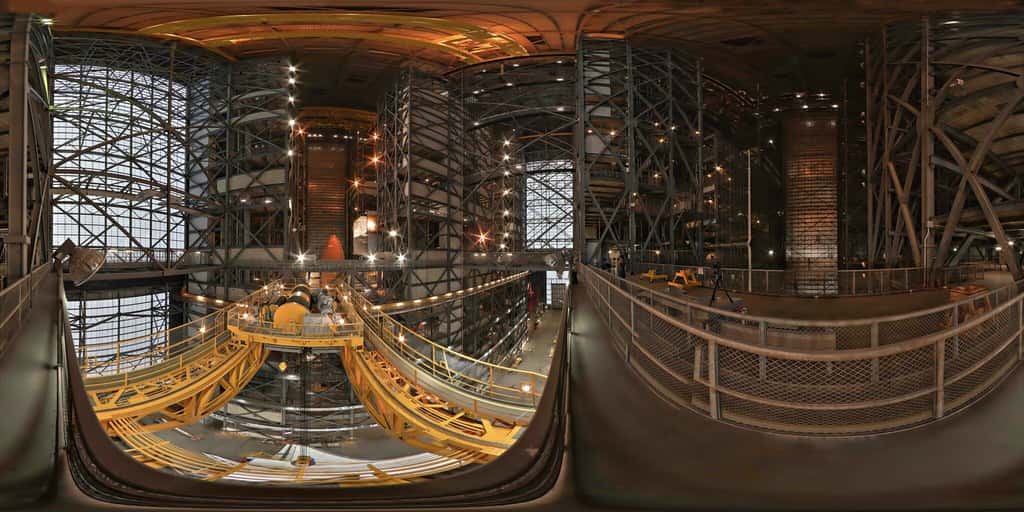
NASA has begun stacking the twin Space Launch System solid rocket booster segments for the Artemis III mission inside the Vehicle Assembly Building at Kennedy Space Center, marking one of the first major hardware milestones for the flight that aims to return astronauts to the surface of the Moon. Teams in July 2026 started with the left-hand aft assembly, the foundational piece that anchors the towering boosters to the mobile launcher and sets the alignment for every segment that follows. The work signals that Florida's Space Coast is once again the staging ground for a crewed lunar mission.
The milestone arrives as several major pieces of Artemis III hardware move through processing at Kennedy at the same time. While booster stacking proceeds in the Vehicle Assembly Building, the Orion spacecraft that will carry the crew has reached its own key threshold inside a separate facility on the same campus. Together, the parallel efforts point to a mission that Florida has been preparing for across years of construction, testing, and workforce buildup.
Artemis III is targeted for around 2027 and is designed to land astronauts near the lunar south pole, a region prized for the water ice thought to be locked in its permanently shadowed craters. If it succeeds, it would be the first time humans have walked on the Moon in more than 50 years. For Brevard County and the communities that ring Kennedy Space Center, the stakes are both national and deeply local.
Booster stacking begins in the Vehicle Assembly Building
The Space Launch System relies on two solid rocket boosters that flank its core stage and provide the bulk of the thrust needed to lift the vehicle off the pad. Each booster is assembled from multiple segments that must be stacked in precise order atop the mobile launcher inside the Vehicle Assembly Building, the cavernous structure that has defined the Kennedy skyline since the Apollo era. NASA said crews began the Artemis III stacking sequence with the left-hand aft assembly, the lowest booster element and the one that carries the load of the segments placed above it.
Stacking is a painstaking operation. Cranes lift each segment high into the assembly bay and lower it onto the section below, where technicians verify alignment, secure the joints, and complete a battery of inspections before the next piece is added. The aft assemblies at the base include the nozzles and the hardware that connects the boosters to the launch platform, which is why they are set first. The sequence establishes the geometry that the rest of the rocket will be built around.
The Vehicle Assembly Building has served as the integration point for American Moon rockets and space shuttles alike, and its role in Artemis extends that lineage. Once the boosters are complete, the core stage and upper elements are added to form the full Space Launch System, after which the vehicle is rolled to the launch pad for testing. The start of booster stacking is a visible sign that Artemis III has moved from planning into physical assembly on Florida soil.
Orion heat shield reaches a key milestone
Inside Kennedy's Neil Armstrong Operations and Checkout Building, the Artemis III Orion spacecraft has completed installation of its heat shield, the protective barrier that must survive the searing temperatures of a return from the Moon. Orion reenters Earth's atmosphere at far higher speeds than spacecraft coming back from low Earth orbit, and the heat shield is the component that stands between the crew and that heat. Finishing its installation is a significant step toward readying the capsule for flight.
The Artemis III heat shield uses an upgraded version of the Avcoat material, applied in blocks, after engineers studied unexpected behavior observed on the shield flown during Artemis I. That uncrewed test flight sent an Orion capsule around the Moon and back, and analysis of the returned hardware revealed that the heat shield had charred in ways the teams had not fully anticipated. The findings prompted a detailed engineering review and informed the changes now built into later spacecraft.
Avcoat is an ablative material, meaning it is designed to char and erode away in a controlled manner during reentry, carrying heat away from the capsule as it burns. The Artemis III design reflects lessons drawn from that earlier flight, an example of the iterative testing that NASA has said underpins the Artemis approach. Getting the heat shield right is essential because it protects the astronauts during the most punishing phase of the journey home.
Astronauts visit the Space Coast
The people who will fly the mission have been on hand in Florida as the hardware takes shape. Artemis III astronauts Randy Bresnik and Andre Douglas visited Kennedy's Multi-Payload Processing Facility on July 10, 2026, one of the sites where equipment and payloads bound for the mission are prepared. Crew visits allow astronauts to familiarize themselves with the hardware and facilities they will depend on and to work alongside the teams processing their spacecraft.
Bresnik and Douglas are part of the crew designated for the landing mission, which is intended to put astronauts on the lunar surface for the first time in the Artemis program. Time spent at Kennedy connects the crew directly to the Florida workforce that builds, tests, and launches the vehicles, reinforcing the state's role as the home of American human spaceflight. The visit was one of a series of steps that bring astronauts into contact with mission hardware as launch approaches.
The Multi-Payload Processing Facility handles items that must be readied and loaded for flight, and a crew walkthrough there reflects how many separate pieces must come together for a single mission. From the boosters in the Vehicle Assembly Building to the Orion capsule in the Operations and Checkout Building to the payloads processed elsewhere on the campus, Artemis III is being assembled across multiple Kennedy facilities at once.
What Artemis III aims to achieve
Artemis III is designed to carry astronauts to the vicinity of the Moon and land a crew near the lunar south pole, a destination never before visited by humans. The south pole draws intense scientific interest because its permanently shadowed regions are believed to hold water ice, a resource that could support future exploration and that offers clues about the history of the Moon and the wider solar system. A successful landing would open a part of the Moon that earlier missions never reached.
The mission is built to be the first crewed lunar landing in more than five decades, a return to the surface that the Apollo program last accomplished in the early 1970s. Rather than repeating the Apollo model, Artemis is structured around sustained exploration, with the south pole chosen in part for its potential to support longer and more frequent activity. NASA has framed the effort as the beginning of a durable human presence around the Moon rather than a single visit.
To reach the surface, Artemis III relies on a commercial human landing system, a lander developed by industry to carry astronauts from lunar orbit down to the surface and back. The Space Launch System and Orion deliver the crew to the Moon's vicinity, where they transfer to the landing system for the descent. That division of labor between the government rocket and commercial landers marks a shift in how the United States is approaching lunar exploration.
The complexity of coordinating the rocket, the spacecraft, and the lander helps explain why the launch target sits around 2027 and why individual milestones like booster stacking and heat shield installation draw close attention. Each element must be ready, tested, and integrated before the mission can fly. The work underway at Kennedy represents the government side of that equation moving toward the pad.
Building on Artemis II
Artemis III follows Artemis II, the mission that returned earlier in 2026 as NASA's first crewed flight around the Moon in decades. Artemis II carried astronauts on a lunar flyby without landing, testing the Space Launch System and Orion with a crew aboard for the first time and validating the systems that will be pushed further on the landing mission. Its completion cleared a major hurdle on the path to putting boots back on the Moon.
The progression from an uncrewed test on Artemis I, to a crewed flyby on Artemis II, to a crewed landing on Artemis III reflects the step-by-step structure of the program. Each flight is meant to demonstrate capabilities that the next mission depends on, reducing risk before astronauts attempt the more demanding surface landing. The heat shield changes flowing from Artemis I into Artemis III are one concrete example of how data from earlier flights shapes later hardware.
With Artemis II behind it, the program's attention has turned to the hardware now being assembled at Kennedy for the landing attempt. The boosters rising in the Vehicle Assembly Building and the Orion capsule progressing through the Operations and Checkout Building are the tangible next chapter after the flyby. For a program measured in multiyear increments, the parallel milestones of July 2026 mark real forward motion.
What it means for Florida's Space Coast
Kennedy Space Center anchors the economy of the Space Coast in Brevard County, and Artemis work is a major driver of that activity. The program supports thousands of jobs spread across NASA, its contractors, and the surrounding communities, from engineers and technicians to the service businesses that depend on a busy spaceport. Every stacking operation and every processing milestone represents sustained employment for the region.
Florida's position as the launch site for United States human spaceflight gives the state an outsized role in the Artemis campaign. The rockets that carry American astronauts beyond low Earth orbit are assembled and launched from Kennedy, which keeps the Space Coast at the center of the nation's return to the Moon. That role has reinforced Brevard County's identity as a hub for aerospace work and attracted continued investment tied to the spaceport.
For residents of the Space Coast, the boosters taking shape inside the Vehicle Assembly Building are more than a national headline. They are a sign of continued work at the facility that defines the local economy and of Florida's enduring place at the front of American space exploration. The mission's progress and the region's prospects remain closely linked.
What's next
In the coming months, teams at Kennedy are expected to continue stacking the remaining Space Launch System booster segments inside the Vehicle Assembly Building, building upward from the aft assemblies now in place. As the boosters are completed, attention will turn to integrating the core stage and the rest of the rocket, followed by the steps that bring the full vehicle together for testing ahead of rollout to the launch pad.
The Artemis III Orion spacecraft, with its heat shield now installed, will move through further assembly and testing inside the Operations and Checkout Building before it is readied to join the launch vehicle. Meanwhile, the commercial human landing system and the other elements of the mission continue their own development on separate tracks that must eventually converge for the flight to proceed.
NASA has pointed to a launch target of around 2027 for Artemis III, though the schedule depends on the pace of hardware readiness and testing across every element of the mission. For Florida, each milestone reached at Kennedy keeps the Space Coast at the center of the effort to land astronauts near the lunar south pole and to open a new chapter of exploration from the state that has long served as the launch site for American human spaceflight.
Spotted an issue with this article?
Have something to say about this story?
Write us a letterComments
No comments yet. Be the first to weigh in.
Related Coverage

Coconut Grove art dealer Leslie Roberts gets 46 months for selling fake Warhols
1h ago

Angie Nixon says Trump deported over 13,000 Cubans; available data puts the total near 12,000
2h ago

U.S. Exports to Cuba Hit a Record $202.5 Million in August as Fuel Sold to Private Firms Makes America the Island's Top Supplier
21h ago
Seven Florida Cases Are Part of the Justice Department's Largest Push Yet to Strip Citizenship From Naturalized Americans
21h ago